Compare commits
78
Commits
| Author | SHA1 | Date | |
|---|---|---|---|
 zxhlyh zxhlyh
|
735290538f | ||
|
zxhlyh
|
3c00a0e508 | ||
|
zxhlyh
|
546921bd35 | ||
|
zxhlyh
|
b1379fcc48 | ||
|
zxhlyh
|
c037e35e5d | ||
|
zxhlyh
|
c9f1880baf | ||
|
hjlarry
|
2d3975917c | ||
|
|
cd26156694 | ||
|
|
c7ea94ca12 | ||
|
NeatGuyCodingandhjlarry
|
c932589acf | ||
|
yihongandhjlarry
|
ccab29ba9b | ||
|
Yongtao Huangandhjlarry
|
ad1e5ddbb3 | ||
|
NeatGuyCodingandhjlarry
|
261ebf8952 | ||
|
Yongtao Huangandhjlarry
|
fc78ac6482 | ||
|
|
64d941544b | ||
|
KVOJJJinandhjlarry
|
772e52b723 | ||
|
|
513dd11f33 | ||
|
Asuka Minatoandhjlarry
|
a3ae25886d | ||
|
|
71c946c630 | ||
|
zxhlyh
|
17a0df3bf2 | ||
|
autofix-ci[bot]andGitHub
|
fce114f6ae | ||
|
hjlarry
|
5696d5c9ba | ||
|
hjlarry
|
a83da3770f | ||
|
zxhlyh
|
b3e5a4ecb7 | ||
|
autofix-ci[bot]andGitHub
|
ca0d04b841 | ||
|
hjlarry
|
533c804ed0 | ||
|
hjlarry
|
d861cc761f | ||
|
hjlarry
|
b9a6bf89ef | ||
|
hjlarry
|
416b2634ed | ||
|
hjlarry
|
4caf52de8c | ||
|
hjlarry
|
592b2f59d5 | ||
|
zxhlyh
|
a7532fdc83 | ||
|
zxhlyh
|
7bddf323e1 | ||
|
zxhlyh
|
6463b3d051 | ||
|
hjlarry
|
fe655ef89a | ||
|
hjlarry
|
d4c2003450 | ||
|
zxhlyh
|
ad37863183 | ||
|
zxhlyh
|
9e6c846bf3 | ||
|
hjlarry
|
e1dacc6a6a | ||
|
hjlarry
|
eab2c08f1f | ||
|
NeatGuyCodingandGitHub
|
60cc82aff1 | ||
|
Asuka MinatoandGitHub
|
ebd2c8236d | ||
|
|
a2537ba4fd | ||
|
|
a3a041ef6f | ||
|
|
c0702aacac | ||
|
zxhlyh
|
6aa5273c5e | ||
|
zxhlyh
|
473b465efb | ||
|
He WangandGitHub
|
670d479e32 | ||
|
|
ae7de7d36b | ||
|
|
ef5decc98a | ||
|
-LAN-andGitHub
|
4445460eca | ||
|
crazywoolaandGitHub
|
8288b1dcab | ||
|
|
16d1289a0a | ||
|
|
ba775a1c90 | ||
|
GuanMuandGitHub
|
b0e58f9da7 | ||
|
Junyan Qin (Chin)andGitHub
|
531e784a92 | ||
|
HyaCinthandGitHub
|
5e8fe30035 | ||
|
JoelandGitHub
|
f5033c5a0e | ||
|
|
26d7654851 | ||
|
Bo WuandGitHub
|
790a6ec203 | ||
|
|
de9c5f10b3 | ||
|
zxhlyh
|
2e28a64d38 | ||
|
zxhlyh
|
3f57e4a643 | ||
|
zxhlyh
|
4e02abf784 | ||
|
zxhlyh
|
61be6f5d2c | ||
|
zxhlyh
|
e69797d738 | ||
|
zxhlyh
|
415178fb0d | ||
|
zxhlyh
|
1a642084b5 | ||
|
zxhlyh
|
d9ccd74f0b | ||
|
zxhlyh
|
4e6cb26778 | ||
|
zxhlyh
|
12083de2ab | ||
|
zxhlyh
|
3522eb51b6 | ||
|
zxhlyh
|
8e1ea671bd | ||
|
zxhlyh
|
d2eda60e0e | ||
|
zxhlyh
|
b73487dd67 | ||
|
zxhlyh
|
7ad64bfb60 | ||
|
zxhlyh
|
1aec17f912 | ||
|
zxhlyh
|
c1c7a43191 |
@@ -1,23 +1,26 @@
|
||||
# Development with devcontainer
|
||||
|
||||
This project includes a devcontainer configuration that allows you to open the project in a container with a fully configured development environment.
|
||||
Both frontend and backend environments are initialized when the container is started.
|
||||
|
||||
## GitHub Codespaces
|
||||
|
||||
[](https://codespaces.new/langgenius/dify)
|
||||
|
||||
you can simply click the button above to open this project in GitHub Codespaces.
|
||||
|
||||
For more info, check out the [GitHub documentation](https://docs.github.com/en/free-pro-team@latest/github/developing-online-with-codespaces/creating-a-codespace#creating-a-codespace).
|
||||
|
||||
|
||||
## VS Code Dev Containers
|
||||
|
||||
[](https://vscode.dev/redirect?url=vscode://ms-vscode-remote.remote-containers/cloneInVolume?url=https://github.com/langgenius/dify)
|
||||
|
||||
if you have VS Code installed, you can click the button above to open this project in VS Code Dev Containers.
|
||||
|
||||
You can learn more in the [Dev Containers documentation](https://code.visualstudio.com/docs/devcontainers/containers).
|
||||
|
||||
|
||||
## Pros of Devcontainer
|
||||
|
||||
Unified Development Environment: By using devcontainers, you can ensure that all developers are developing in the same environment, reducing the occurrence of "it works on my machine" type of issues.
|
||||
|
||||
Quick Start: New developers can set up their development environment in a few simple steps, without spending a lot of time on environment configuration.
|
||||
@@ -25,11 +28,13 @@ Quick Start: New developers can set up their development environment in a few si
|
||||
Isolation: Devcontainers isolate your project from your host operating system, reducing the chance of OS updates or other application installations impacting the development environment.
|
||||
|
||||
## Cons of Devcontainer
|
||||
|
||||
Learning Curve: For developers unfamiliar with Docker and VS Code, using devcontainers may be somewhat complex.
|
||||
|
||||
Performance Impact: While usually minimal, programs running inside a devcontainer may be slightly slower than those running directly on the host.
|
||||
|
||||
## Troubleshooting
|
||||
|
||||
if you see such error message when you open this project in codespaces:
|
||||

|
||||
|
||||
|
||||
+10
-12
@@ -17,27 +17,25 @@ diverse, inclusive, and healthy community.
|
||||
Examples of behavior that contributes to a positive environment for our
|
||||
community include:
|
||||
|
||||
* Demonstrating empathy and kindness toward other people
|
||||
* Being respectful of differing opinions, viewpoints, and experiences
|
||||
* Giving and gracefully accepting constructive feedback
|
||||
* Accepting responsibility and apologizing to those affected by our mistakes,
|
||||
- Demonstrating empathy and kindness toward other people
|
||||
- Being respectful of differing opinions, viewpoints, and experiences
|
||||
- Giving and gracefully accepting constructive feedback
|
||||
- Accepting responsibility and apologizing to those affected by our mistakes,
|
||||
and learning from the experience
|
||||
* Focusing on what is best not just for us as individuals, but for the
|
||||
- Focusing on what is best not just for us as individuals, but for the
|
||||
overall community
|
||||
|
||||
Examples of unacceptable behavior include:
|
||||
|
||||
* The use of sexualized language or imagery, and sexual attention or
|
||||
- The use of sexualized language or imagery, and sexual attention or
|
||||
advances of any kind
|
||||
* Trolling, insulting or derogatory comments, and personal or political attacks
|
||||
* Public or private harassment
|
||||
* Publishing others' private information, such as a physical or email
|
||||
- Trolling, insulting or derogatory comments, and personal or political attacks
|
||||
- Public or private harassment
|
||||
- Publishing others' private information, such as a physical or email
|
||||
address, without their explicit permission
|
||||
* Other conduct which could reasonably be considered inappropriate in a
|
||||
- Other conduct which could reasonably be considered inappropriate in a
|
||||
professional setting
|
||||
|
||||
## Language Policy
|
||||
|
||||
To facilitate clear and effective communication, all discussions, comments, documentation, and pull requests in this project should be conducted in English. This ensures that all contributors can participate and collaborate effectively.
|
||||
|
||||
|
||||
|
||||
@@ -1,8 +1,8 @@
|
||||
> [!IMPORTANT]
|
||||
>
|
||||
> 1. Make sure you have read our [contribution guidelines](https://github.com/langgenius/dify/blob/main/CONTRIBUTING.md)
|
||||
> 2. Ensure there is an associated issue and you have been assigned to it
|
||||
> 3. Use the correct syntax to link this PR: `Fixes #<issue number>`.
|
||||
> 1. Ensure there is an associated issue and you have been assigned to it
|
||||
> 1. Use the correct syntax to link this PR: `Fixes #<issue number>`.
|
||||
|
||||
## Summary
|
||||
|
||||
@@ -12,7 +12,7 @@
|
||||
|
||||
| Before | After |
|
||||
|--------|-------|
|
||||
| ... | ... |
|
||||
| ... | ... |
|
||||
|
||||
## Checklist
|
||||
|
||||
|
||||
@@ -23,6 +23,9 @@ jobs:
|
||||
uv run ruff check --fix-only .
|
||||
# Format code
|
||||
uv run ruff format .
|
||||
- name: ast-grep
|
||||
run: |
|
||||
uvx --from ast-grep-cli sg --pattern 'db.session.query($WHATEVER).filter($HERE)' --rewrite 'db.session.query($WHATEVER).where($HERE)' -l py --update-all
|
||||
|
||||
- uses: autofix-ci/action@635ffb0c9798bd160680f18fd73371e355b85f27
|
||||
|
||||
|
||||
@@ -8,7 +8,6 @@ on:
|
||||
- "deploy/enterprise"
|
||||
- "build/**"
|
||||
- "release/e-*"
|
||||
- "deploy/rag-dev"
|
||||
tags:
|
||||
- "*"
|
||||
|
||||
|
||||
@@ -4,7 +4,7 @@ on:
|
||||
workflow_run:
|
||||
workflows: ["Build and Push API & Web"]
|
||||
branches:
|
||||
- "deploy/rag-dev"
|
||||
- "deploy/dev"
|
||||
types:
|
||||
- completed
|
||||
|
||||
@@ -12,13 +12,12 @@ jobs:
|
||||
deploy:
|
||||
runs-on: ubuntu-latest
|
||||
if: |
|
||||
github.event.workflow_run.conclusion == 'success' &&
|
||||
github.event.workflow_run.head_branch == 'deploy/rag-dev'
|
||||
github.event.workflow_run.conclusion == 'success'
|
||||
steps:
|
||||
- name: Deploy to server
|
||||
uses: appleboy/ssh-action@v0.1.8
|
||||
with:
|
||||
host: ${{ secrets.RAG_SSH_HOST }}
|
||||
host: ${{ secrets.SSH_HOST }}
|
||||
username: ${{ secrets.SSH_USER }}
|
||||
key: ${{ secrets.SSH_PRIVATE_KEY }}
|
||||
script: |
|
||||
|
||||
@@ -197,6 +197,8 @@ sdks/python-client/dify_client.egg-info
|
||||
!.vscode/README.md
|
||||
pyrightconfig.json
|
||||
api/.vscode
|
||||
# vscode Code History Extension
|
||||
.history
|
||||
|
||||
.idea/
|
||||
|
||||
|
||||
Vendored
+4
-4
@@ -4,10 +4,10 @@ This `launch.json.template` file provides various debug configurations for the D
|
||||
|
||||
## How to Use
|
||||
|
||||
1. **Create `launch.json`**: If you don't have one, create a file named `launch.json` inside the `.vscode` directory.
|
||||
2. **Copy Content**: Copy the entire content from `launch.json.template` into your newly created `launch.json` file.
|
||||
3. **Select Debug Configuration**: Go to the Run and Debug view in VS Code / Cursor (Ctrl+Shift+D or Cmd+Shift+D).
|
||||
4. **Start Debugging**: Select the desired configuration from the dropdown menu and click the green play button.
|
||||
1. **Create `launch.json`**: If you don't have one, create a file named `launch.json` inside the `.vscode` directory.
|
||||
1. **Copy Content**: Copy the entire content from `launch.json.template` into your newly created `launch.json` file.
|
||||
1. **Select Debug Configuration**: Go to the Run and Debug view in VS Code / Cursor (Ctrl+Shift+D or Cmd+Shift+D).
|
||||
1. **Start Debugging**: Select the desired configuration from the dropdown menu and click the green play button.
|
||||
|
||||
## Tips
|
||||
|
||||
|
||||
@@ -7,6 +7,7 @@ This file provides guidance to Claude Code (claude.ai/code) when working with co
|
||||
Dify is an open-source platform for developing LLM applications with an intuitive interface combining agentic AI workflows, RAG pipelines, agent capabilities, and model management.
|
||||
|
||||
The codebase consists of:
|
||||
|
||||
- **Backend API** (`/api`): Python Flask application with Domain-Driven Design architecture
|
||||
- **Frontend Web** (`/web`): Next.js 15 application with TypeScript and React 19
|
||||
- **Docker deployment** (`/docker`): Containerized deployment configurations
|
||||
@@ -46,6 +47,7 @@ pnpm test # Run Jest tests
|
||||
## Testing Guidelines
|
||||
|
||||
### Backend Testing
|
||||
|
||||
- Use `pytest` for all backend tests
|
||||
- Write tests first (TDD approach)
|
||||
- Test structure: Arrange-Act-Assert
|
||||
@@ -53,11 +55,13 @@ pnpm test # Run Jest tests
|
||||
## Code Style Requirements
|
||||
|
||||
### Python
|
||||
|
||||
- Use type hints for all functions and class attributes
|
||||
- No `Any` types unless absolutely necessary
|
||||
- Implement special methods (`__repr__`, `__str__`) appropriately
|
||||
|
||||
### TypeScript/JavaScript
|
||||
### TypeScript/JavaScript
|
||||
|
||||
- Strict TypeScript configuration
|
||||
- ESLint with Prettier integration
|
||||
- Avoid `any` type
|
||||
@@ -73,10 +77,11 @@ pnpm test # Run Jest tests
|
||||
## Common Development Tasks
|
||||
|
||||
### Adding a New API Endpoint
|
||||
|
||||
1. Create controller in `/api/controllers/`
|
||||
2. Add service logic in `/api/services/`
|
||||
3. Update routes in controller's `__init__.py`
|
||||
4. Write tests in `/api/tests/`
|
||||
1. Add service logic in `/api/services/`
|
||||
1. Update routes in controller's `__init__.py`
|
||||
1. Write tests in `/api/tests/`
|
||||
|
||||
## Project-Specific Conventions
|
||||
|
||||
|
||||
+21
-17
@@ -34,11 +34,11 @@ Don't forget to link an existing issue or open a new issue in the PR's descripti
|
||||
|
||||
How we prioritize:
|
||||
|
||||
| Issue Type | Priority |
|
||||
| ------------------------------------------------------------ | --------------- |
|
||||
| Bugs in core functions (cloud service, cannot login, applications not working, security loopholes) | Critical |
|
||||
| Non-critical bugs, performance boosts | Medium Priority |
|
||||
| Minor fixes (typos, confusing but working UI) | Low Priority |
|
||||
| Issue Type | Priority |
|
||||
| ------------------------------------------------------------ | --------------- |
|
||||
| Bugs in core functions (cloud service, cannot login, applications not working, security loopholes) | Critical |
|
||||
| Non-critical bugs, performance boosts | Medium Priority |
|
||||
| Minor fixes (typos, confusing but working UI) | Low Priority |
|
||||
|
||||
### Feature requests
|
||||
|
||||
@@ -52,23 +52,25 @@ How we prioritize:
|
||||
|
||||
How we prioritize:
|
||||
|
||||
| Feature Type | Priority |
|
||||
| ------------------------------------------------------------ | --------------- |
|
||||
| High-Priority Features as being labeled by a team member | High Priority |
|
||||
| Popular feature requests from our [community feedback board](https://github.com/langgenius/dify/discussions/categories/feedbacks) | Medium Priority |
|
||||
| Non-core features and minor enhancements | Low Priority |
|
||||
| Valuable but not immediate | Future-Feature |
|
||||
| Feature Type | Priority |
|
||||
| ------------------------------------------------------------ | --------------- |
|
||||
| High-Priority Features as being labeled by a team member | High Priority |
|
||||
| Popular feature requests from our [community feedback board](https://github.com/langgenius/dify/discussions/categories/feedbacks) | Medium Priority |
|
||||
| Non-core features and minor enhancements | Low Priority |
|
||||
| Valuable but not immediate | Future-Feature |
|
||||
|
||||
## Submitting your PR
|
||||
|
||||
### Pull Request Process
|
||||
|
||||
1. Fork the repository
|
||||
2. Before you draft a PR, please create an issue to discuss the changes you want to make
|
||||
3. Create a new branch for your changes
|
||||
4. Please add tests for your changes accordingly
|
||||
5. Ensure your code passes the existing tests
|
||||
6. Please link the issue in the PR description, `fixes #<issue_number>`
|
||||
7. Get merged!
|
||||
1. Before you draft a PR, please create an issue to discuss the changes you want to make
|
||||
1. Create a new branch for your changes
|
||||
1. Please add tests for your changes accordingly
|
||||
1. Ensure your code passes the existing tests
|
||||
1. Please link the issue in the PR description, `fixes #<issue_number>`
|
||||
1. Get merged!
|
||||
|
||||
### Setup the project
|
||||
|
||||
#### Frontend
|
||||
@@ -82,12 +84,14 @@ For setting up the backend service, kindly refer to our detailed [instructions](
|
||||
#### Other things to note
|
||||
|
||||
We recommend reviewing this document carefully before proceeding with the setup, as it contains essential information about:
|
||||
|
||||
- Prerequisites and dependencies
|
||||
- Installation steps
|
||||
- Configuration details
|
||||
- Common troubleshooting tips
|
||||
|
||||
Feel free to reach out if you encounter any issues during the setup process.
|
||||
|
||||
## Getting Help
|
||||
|
||||
If you ever get stuck or get a burning question while contributing, simply shoot your queries our way via the related GitHub issue, or hop onto our [Discord](https://discord.gg/8Tpq4AcN9c) for a quick chat.
|
||||
|
||||
+18
-18
@@ -34,12 +34,11 @@
|
||||
|
||||
优先级划分:
|
||||
|
||||
| 问题类型 | 优先级 |
|
||||
| -------------------------------------------------- | ---------- |
|
||||
| 核心功能 bug(云服务、登录失败、应用无法使用、安全漏洞) | 紧急 |
|
||||
| 非关键 bug、性能优化 | 中等优先级 |
|
||||
| 小修复(拼写错误、界面混乱但可用) | 低优先级 |
|
||||
|
||||
| 问题类型 | 优先级 |
|
||||
| -------------------------------------------------- | ---------- |
|
||||
| 核心功能 bug(云服务、登录失败、应用无法使用、安全漏洞) | 紧急 |
|
||||
| 非关键 bug、性能优化 | 中等优先级 |
|
||||
| 小修复(拼写错误、界面混乱但可用) | 低优先级 |
|
||||
|
||||
### 功能请求
|
||||
|
||||
@@ -53,12 +52,12 @@
|
||||
|
||||
优先级划分:
|
||||
|
||||
| 功能类型 | 优先级 |
|
||||
| -------------------------------------------------- | ---------- |
|
||||
| 被团队成员标记为高优先级的功能 | 高优先级 |
|
||||
| 来自[社区反馈板](https://github.com/langgenius/dify/discussions/categories/feedbacks)的热门功能请求 | 中等优先级 |
|
||||
| 非核心功能和小改进 | 低优先级 |
|
||||
| 有价值但非紧急的功能 | 未来特性 |
|
||||
| 功能类型 | 优先级 |
|
||||
| -------------------------------------------------- | ---------- |
|
||||
| 被团队成员标记为高优先级的功能 | 高优先级 |
|
||||
| 来自[社区反馈板](https://github.com/langgenius/dify/discussions/categories/feedbacks)的热门功能请求 | 中等优先级 |
|
||||
| 非核心功能和小改进 | 低优先级 |
|
||||
| 有价值但非紧急的功能 | 未来特性 |
|
||||
|
||||
## 提交 PR
|
||||
|
||||
@@ -67,12 +66,12 @@
|
||||
### PR 提交流程
|
||||
|
||||
1. Fork 本仓库
|
||||
2. 在提交 PR 之前,请先创建 issue 讨论你想要做的修改
|
||||
3. 为你的修改创建一个新的分支
|
||||
4. 请为你的修改添加相应的测试
|
||||
5. 确保你的代码能通过现有的测试
|
||||
6. 请在 PR 描述中关联相关 issue,格式为 `fixes #<issue编号>`
|
||||
7. 等待合并!
|
||||
1. 在提交 PR 之前,请先创建 issue 讨论你想要做的修改
|
||||
1. 为你的修改创建一个新的分支
|
||||
1. 请为你的修改添加相应的测试
|
||||
1. 确保你的代码能通过现有的测试
|
||||
1. 请在 PR 描述中关联相关 issue,格式为 `fixes #<issue编号>`
|
||||
1. 等待合并!
|
||||
|
||||
#### 前端
|
||||
|
||||
@@ -85,6 +84,7 @@
|
||||
#### 其他注意事项
|
||||
|
||||
我们建议在开始设置之前仔细阅读本文档,因为它包含以下重要信息:
|
||||
|
||||
- 前置条件和依赖项
|
||||
- 安装步骤
|
||||
- 配置细节
|
||||
|
||||
+18
-18
@@ -32,11 +32,11 @@ Vergessen Sie nicht, in der PR-Beschreibung ein bestehendes Issue zu verlinken o
|
||||
|
||||
Unsere Priorisierung:
|
||||
|
||||
| Fehlertyp | Priorität |
|
||||
| ------------------------------------------------------------ | --------------- |
|
||||
| Fehler in Kernfunktionen (Cloud-Service, Login nicht möglich, Anwendungen funktionieren nicht, Sicherheitslücken) | Kritisch |
|
||||
| Nicht-kritische Fehler, Leistungsverbesserungen | Mittlere Priorität |
|
||||
| Kleinere Korrekturen (Tippfehler, verwirrende aber funktionierende UI) | Niedrige Priorität |
|
||||
| Fehlertyp | Priorität |
|
||||
| ------------------------------------------------------------ | --------------- |
|
||||
| Fehler in Kernfunktionen (Cloud-Service, Login nicht möglich, Anwendungen funktionieren nicht, Sicherheitslücken) | Kritisch |
|
||||
| Nicht-kritische Fehler, Leistungsverbesserungen | Mittlere Priorität |
|
||||
| Kleinere Korrekturen (Tippfehler, verwirrende aber funktionierende UI) | Niedrige Priorität |
|
||||
|
||||
### Feature-Anfragen
|
||||
|
||||
@@ -50,24 +50,24 @@ Unsere Priorisierung:
|
||||
|
||||
Unsere Priorisierung:
|
||||
|
||||
| Feature-Typ | Priorität |
|
||||
| ------------------------------------------------------------ | --------------- |
|
||||
| Hochprioritäre Features (durch Teammitglied gekennzeichnet) | Hohe Priorität |
|
||||
| Beliebte Feature-Anfragen aus unserem [Community-Feedback-Board](https://github.com/langgenius/dify/discussions/categories/feedbacks) | Mittlere Priorität |
|
||||
| Nicht-Kernfunktionen und kleinere Verbesserungen | Niedrige Priorität |
|
||||
| Wertvoll, aber nicht dringend | Zukunfts-Feature |
|
||||
| Feature-Typ | Priorität |
|
||||
| ------------------------------------------------------------ | --------------- |
|
||||
| Hochprioritäre Features (durch Teammitglied gekennzeichnet) | Hohe Priorität |
|
||||
| Beliebte Feature-Anfragen aus unserem [Community-Feedback-Board](https://github.com/langgenius/dify/discussions/categories/feedbacks) | Mittlere Priorität |
|
||||
| Nicht-Kernfunktionen und kleinere Verbesserungen | Niedrige Priorität |
|
||||
| Wertvoll, aber nicht dringend | Zukunfts-Feature |
|
||||
|
||||
## Einreichen Ihres PRs
|
||||
|
||||
### Pull-Request-Prozess
|
||||
|
||||
1. Repository forken
|
||||
2. Vor dem Erstellen eines PRs bitte ein Issue zur Diskussion der Änderungen erstellen
|
||||
3. Einen neuen Branch für Ihre Änderungen erstellen
|
||||
4. Tests für Ihre Änderungen hinzufügen
|
||||
5. Sicherstellen, dass Ihr Code die bestehenden Tests besteht
|
||||
6. Issue in der PR-Beschreibung verlinken (`fixes #<issue_number>`)
|
||||
7. Auf den Merge warten!
|
||||
1. Vor dem Erstellen eines PRs bitte ein Issue zur Diskussion der Änderungen erstellen
|
||||
1. Einen neuen Branch für Ihre Änderungen erstellen
|
||||
1. Tests für Ihre Änderungen hinzufügen
|
||||
1. Sicherstellen, dass Ihr Code die bestehenden Tests besteht
|
||||
1. Issue in der PR-Beschreibung verlinken (`fixes #<issue_number>`)
|
||||
1. Auf den Merge warten!
|
||||
|
||||
### Projekt einrichten
|
||||
|
||||
@@ -82,6 +82,7 @@ Für die Einrichtung des Backend-Service folgen Sie bitte unseren detaillierten
|
||||
#### Weitere Hinweise
|
||||
|
||||
Wir empfehlen, dieses Dokument sorgfältig zu lesen, da es wichtige Informationen enthält über:
|
||||
|
||||
- Voraussetzungen und Abhängigkeiten
|
||||
- Installationsschritte
|
||||
- Konfigurationsdetails
|
||||
@@ -92,4 +93,3 @@ Bei Problemen während der Einrichtung können Sie sich gerne an uns wenden.
|
||||
## Hilfe bekommen
|
||||
|
||||
Wenn Sie beim Mitwirken Fragen haben oder nicht weiterkommen, stellen Sie Ihre Fragen einfach im entsprechenden GitHub Issue oder besuchen Sie unseren [Discord](https://discord.gg/8Tpq4AcN9c) für einen schnellen Austausch.
|
||||
|
||||
|
||||
+22
-18
@@ -34,11 +34,11 @@ No olvides vincular un issue existente o abrir uno nuevo en la descripción del
|
||||
|
||||
Cómo priorizamos:
|
||||
|
||||
| Tipo de Issue | Prioridad |
|
||||
| ------------------------------------------------------------ | --------------- |
|
||||
| Errores en funciones principales (servicio en la nube, no poder iniciar sesión, aplicaciones que no funcionan, fallos de seguridad) | Crítica |
|
||||
| Errores no críticos, mejoras de rendimiento | Prioridad Media |
|
||||
| Correcciones menores (errores tipográficos, UI confusa pero funcional) | Prioridad Baja |
|
||||
| Tipo de Issue | Prioridad |
|
||||
| ------------------------------------------------------------ | --------------- |
|
||||
| Errores en funciones principales (servicio en la nube, no poder iniciar sesión, aplicaciones que no funcionan, fallos de seguridad) | Crítica |
|
||||
| Errores no críticos, mejoras de rendimiento | Prioridad Media |
|
||||
| Correcciones menores (errores tipográficos, UI confusa pero funcional) | Prioridad Baja |
|
||||
|
||||
### Solicitudes de funcionalidades
|
||||
|
||||
@@ -52,23 +52,25 @@ Cómo priorizamos:
|
||||
|
||||
Cómo priorizamos:
|
||||
|
||||
| Tipo de Funcionalidad | Prioridad |
|
||||
| ------------------------------------------------------------ | --------------- |
|
||||
| Funcionalidades de alta prioridad etiquetadas por un miembro del equipo | Prioridad Alta |
|
||||
| Solicitudes populares de funcionalidades de nuestro [tablero de comentarios de la comunidad](https://github.com/langgenius/dify/discussions/categories/feedbacks) | Prioridad Media |
|
||||
| Funcionalidades no principales y mejoras menores | Prioridad Baja |
|
||||
| Valiosas pero no inmediatas | Futura-Funcionalidad |
|
||||
| Tipo de Funcionalidad | Prioridad |
|
||||
| ------------------------------------------------------------ | --------------- |
|
||||
| Funcionalidades de alta prioridad etiquetadas por un miembro del equipo | Prioridad Alta |
|
||||
| Solicitudes populares de funcionalidades de nuestro [tablero de comentarios de la comunidad](https://github.com/langgenius/dify/discussions/categories/feedbacks) | Prioridad Media |
|
||||
| Funcionalidades no principales y mejoras menores | Prioridad Baja |
|
||||
| Valiosas pero no inmediatas | Futura-Funcionalidad |
|
||||
|
||||
## Enviando tu PR
|
||||
|
||||
### Proceso de Pull Request
|
||||
|
||||
1. Haz un fork del repositorio
|
||||
2. Antes de redactar un PR, por favor crea un issue para discutir los cambios que quieres hacer
|
||||
3. Crea una nueva rama para tus cambios
|
||||
4. Por favor añade pruebas para tus cambios en consecuencia
|
||||
5. Asegúrate de que tu código pasa las pruebas existentes
|
||||
6. Por favor vincula el issue en la descripción del PR, `fixes #<número_del_issue>`
|
||||
7. ¡Fusiona tu código!
|
||||
1. Antes de redactar un PR, por favor crea un issue para discutir los cambios que quieres hacer
|
||||
1. Crea una nueva rama para tus cambios
|
||||
1. Por favor añade pruebas para tus cambios en consecuencia
|
||||
1. Asegúrate de que tu código pasa las pruebas existentes
|
||||
1. Por favor vincula el issue en la descripción del PR, `fixes #<número_del_issue>`
|
||||
1. ¡Fusiona tu código!
|
||||
|
||||
### Configuración del proyecto
|
||||
|
||||
#### Frontend
|
||||
@@ -82,12 +84,14 @@ Para configurar el servicio backend, por favor consulta nuestras [instrucciones
|
||||
#### Otras cosas a tener en cuenta
|
||||
|
||||
Recomendamos revisar este documento cuidadosamente antes de proceder con la configuración, ya que contiene información esencial sobre:
|
||||
|
||||
- Requisitos previos y dependencias
|
||||
- Pasos de instalación
|
||||
- Detalles de configuración
|
||||
- Consejos comunes de solución de problemas
|
||||
|
||||
No dudes en contactarnos si encuentras algún problema durante el proceso de configuración.
|
||||
|
||||
## Obteniendo Ayuda
|
||||
|
||||
Si alguna vez te quedas atascado o tienes una pregunta urgente mientras contribuyes, simplemente envíanos tus consultas a través del issue relacionado de GitHub, o únete a nuestro [Discord](https://discord.gg/8Tpq4AcN9c) para una charla rápida.
|
||||
Si alguna vez te quedas atascado o tienes una pregunta urgente mientras contribuyes, simplemente envíanos tus consultas a través del issue relacionado de GitHub, o únete a nuestro [Discord](https://discord.gg/8Tpq4AcN9c) para una charla rápida.
|
||||
|
||||
+22
-18
@@ -34,11 +34,11 @@ N'oubliez pas de lier un problème existant ou d'ouvrir un nouveau problème dan
|
||||
|
||||
Comment nous priorisons :
|
||||
|
||||
| Type de Problème | Priorité |
|
||||
| ------------------------------------------------------------ | --------------- |
|
||||
| Bugs dans les fonctions principales (service cloud, impossibilité de se connecter, applications qui ne fonctionnent pas, failles de sécurité) | Critique |
|
||||
| Bugs non critiques, améliorations de performance | Priorité Moyenne |
|
||||
| Corrections mineures (fautes de frappe, UI confuse mais fonctionnelle) | Priorité Basse |
|
||||
| Type de Problème | Priorité |
|
||||
| ------------------------------------------------------------ | --------------- |
|
||||
| Bugs dans les fonctions principales (service cloud, impossibilité de se connecter, applications qui ne fonctionnent pas, failles de sécurité) | Critique |
|
||||
| Bugs non critiques, améliorations de performance | Priorité Moyenne |
|
||||
| Corrections mineures (fautes de frappe, UI confuse mais fonctionnelle) | Priorité Basse |
|
||||
|
||||
### Demandes de fonctionnalités
|
||||
|
||||
@@ -52,23 +52,25 @@ Comment nous priorisons :
|
||||
|
||||
Comment nous priorisons :
|
||||
|
||||
| Type de Fonctionnalité | Priorité |
|
||||
| ------------------------------------------------------------ | --------------- |
|
||||
| Fonctionnalités hautement prioritaires étiquetées par un membre de l'équipe | Priorité Haute |
|
||||
| Demandes populaires de fonctionnalités de notre [tableau de feedback communautaire](https://github.com/langgenius/dify/discussions/categories/feedbacks) | Priorité Moyenne |
|
||||
| Fonctionnalités non essentielles et améliorations mineures | Priorité Basse |
|
||||
| Précieuses mais non immédiates | Fonctionnalité Future |
|
||||
| Type de Fonctionnalité | Priorité |
|
||||
| ------------------------------------------------------------ | --------------- |
|
||||
| Fonctionnalités hautement prioritaires étiquetées par un membre de l'équipe | Priorité Haute |
|
||||
| Demandes populaires de fonctionnalités de notre [tableau de feedback communautaire](https://github.com/langgenius/dify/discussions/categories/feedbacks) | Priorité Moyenne |
|
||||
| Fonctionnalités non essentielles et améliorations mineures | Priorité Basse |
|
||||
| Précieuses mais non immédiates | Fonctionnalité Future |
|
||||
|
||||
## Soumettre votre PR
|
||||
|
||||
### Processus de Pull Request
|
||||
|
||||
1. Forkez le dépôt
|
||||
2. Avant de rédiger une PR, veuillez créer un problème pour discuter des changements que vous souhaitez apporter
|
||||
3. Créez une nouvelle branche pour vos changements
|
||||
4. Veuillez ajouter des tests pour vos changements en conséquence
|
||||
5. Assurez-vous que votre code passe les tests existants
|
||||
6. Veuillez lier le problème dans la description de la PR, `fixes #<numéro_du_problème>`
|
||||
7. Faites fusionner votre code !
|
||||
1. Avant de rédiger une PR, veuillez créer un problème pour discuter des changements que vous souhaitez apporter
|
||||
1. Créez une nouvelle branche pour vos changements
|
||||
1. Veuillez ajouter des tests pour vos changements en conséquence
|
||||
1. Assurez-vous que votre code passe les tests existants
|
||||
1. Veuillez lier le problème dans la description de la PR, `fixes #<numéro_du_problème>`
|
||||
1. Faites fusionner votre code !
|
||||
|
||||
### Configuration du projet
|
||||
|
||||
#### Frontend
|
||||
@@ -82,12 +84,14 @@ Pour configurer le service backend, veuillez consulter nos [instructions détail
|
||||
#### Autres choses à noter
|
||||
|
||||
Nous recommandons de revoir attentivement ce document avant de procéder à la configuration, car il contient des informations essentielles sur :
|
||||
|
||||
- Prérequis et dépendances
|
||||
- Étapes d'installation
|
||||
- Détails de configuration
|
||||
- Conseils courants de dépannage
|
||||
|
||||
N'hésitez pas à nous contacter si vous rencontrez des problèmes pendant le processus de configuration.
|
||||
|
||||
## Obtenir de l'aide
|
||||
|
||||
Si jamais vous êtes bloqué ou avez une question urgente en contribuant, envoyez-nous simplement vos questions via le problème GitHub concerné, ou rejoignez notre [Discord](https://discord.gg/8Tpq4AcN9c) pour une discussion rapide.
|
||||
Si jamais vous êtes bloqué ou avez une question urgente en contribuant, envoyez-nous simplement vos questions via le problème GitHub concerné, ou rejoignez notre [Discord](https://discord.gg/8Tpq4AcN9c) pour une discussion rapide.
|
||||
|
||||
+18
-18
@@ -34,11 +34,11 @@ PRの説明には、既存のイシューへのリンクを含めるか、新し
|
||||
|
||||
優先順位の付け方:
|
||||
|
||||
| 問題の種類 | 優先度 |
|
||||
| ------------------------------------------------------------ | --------- |
|
||||
| コア機能のバグ(クラウドサービス、ログイン不可、アプリケーション不具合、セキュリティ脆弱性) | 最重要 |
|
||||
| 重要度の低いバグ、パフォーマンス改善 | 中程度 |
|
||||
| 軽微な修正(タイプミス、分かりにくいが動作するUI) | 低 |
|
||||
| 問題の種類 | 優先度 |
|
||||
| ------------------------------------------------------------ | --------- |
|
||||
| コア機能のバグ(クラウドサービス、ログイン不可、アプリケーション不具合、セキュリティ脆弱性) | 最重要 |
|
||||
| 重要度の低いバグ、パフォーマンス改善 | 中程度 |
|
||||
| 軽微な修正(タイプミス、分かりにくいが動作するUI) | 低 |
|
||||
|
||||
### 機能リクエスト
|
||||
|
||||
@@ -52,24 +52,24 @@ PRの説明には、既存のイシューへのリンクを含めるか、新し
|
||||
|
||||
優先順位の付け方:
|
||||
|
||||
| 機能の種類 | 優先度 |
|
||||
| ------------------------------------------------------------ | --------- |
|
||||
| チームメンバーによって高優先度とラベル付けされた機能 | 高 |
|
||||
| [コミュニティフィードボード](https://github.com/langgenius/dify/discussions/categories/feedbacks)での人気の機能リクエスト | 中程度 |
|
||||
| 非コア機能と軽微な改善 | 低 |
|
||||
| 価値はあるが緊急性の低いもの | 将来対応 |
|
||||
| 機能の種類 | 優先度 |
|
||||
| ------------------------------------------------------------ | --------- |
|
||||
| チームメンバーによって高優先度とラベル付けされた機能 | 高 |
|
||||
| [コミュニティフィードボード](https://github.com/langgenius/dify/discussions/categories/feedbacks)での人気の機能リクエスト | 中程度 |
|
||||
| 非コア機能と軽微な改善 | 低 |
|
||||
| 価値はあるが緊急性の低いもの | 将来対応 |
|
||||
|
||||
## PRの提出
|
||||
|
||||
### プルリクエストのプロセス
|
||||
|
||||
1. リポジトリをフォークする
|
||||
2. PRを作成する前に、変更内容についてイシューで議論する
|
||||
3. 変更用の新しいブランチを作成する
|
||||
4. 変更に応じたテストを追加する
|
||||
5. 既存のテストをパスすることを確認する
|
||||
6. PRの説明文にイシューをリンクする(`fixes #<issue_number>`)
|
||||
7. マージ完了!
|
||||
1. PRを作成する前に、変更内容についてイシューで議論する
|
||||
1. 変更用の新しいブランチを作成する
|
||||
1. 変更に応じたテストを追加する
|
||||
1. 既存のテストをパスすることを確認する
|
||||
1. PRの説明文にイシューをリンクする(`fixes #<issue_number>`)
|
||||
1. マージ完了!
|
||||
|
||||
### プロジェクトのセットアップ
|
||||
|
||||
@@ -84,6 +84,7 @@ PRの説明には、既存のイシューへのリンクを含めるか、新し
|
||||
#### その他の注意点
|
||||
|
||||
セットアップを進める前に、以下の重要な情報が含まれているため、このドキュメントを注意深く確認することをお勧めします:
|
||||
|
||||
- 前提条件と依存関係
|
||||
- インストール手順
|
||||
- 設定の詳細
|
||||
@@ -94,4 +95,3 @@ PRの説明には、既存のイシューへのリンクを含めるか、新し
|
||||
## サポートを受ける
|
||||
|
||||
貢献中に行き詰まったり、緊急の質問がある場合は、関連するGitHubイシューで質問するか、[Discord](https://discord.gg/8Tpq4AcN9c)で気軽にチャットしてください。
|
||||
|
||||
|
||||
+22
-18
@@ -34,11 +34,11 @@ PR 설명에 기존 이슈를 연결하거나 새 이슈를 여는 것을 잊지
|
||||
|
||||
우선순위 결정 방법:
|
||||
|
||||
| 이슈 유형 | 우선순위 |
|
||||
| ------------------------------------------------------------ | --------------- |
|
||||
| 핵심 기능의 버그(클라우드 서비스, 로그인 불가, 애플리케이션 작동 불능, 보안 취약점) | 중대 |
|
||||
| 비중요 버그, 성능 향상 | 중간 우선순위 |
|
||||
| 사소한 수정(오타, 혼란스럽지만 작동하는 UI) | 낮은 우선순위 |
|
||||
| 이슈 유형 | 우선순위 |
|
||||
| ------------------------------------------------------------ | --------------- |
|
||||
| 핵심 기능의 버그(클라우드 서비스, 로그인 불가, 애플리케이션 작동 불능, 보안 취약점) | 중대 |
|
||||
| 비중요 버그, 성능 향상 | 중간 우선순위 |
|
||||
| 사소한 수정(오타, 혼란스럽지만 작동하는 UI) | 낮은 우선순위 |
|
||||
|
||||
### 기능 요청
|
||||
|
||||
@@ -52,23 +52,25 @@ PR 설명에 기존 이슈를 연결하거나 새 이슈를 여는 것을 잊지
|
||||
|
||||
우선순위 결정 방법:
|
||||
|
||||
| 기능 유형 | 우선순위 |
|
||||
| ------------------------------------------------------------ | --------------- |
|
||||
| 팀 구성원에 의해 레이블이 지정된 고우선순위 기능 | 높은 우선순위 |
|
||||
| 우리의 [커뮤니티 피드백 보드](https://github.com/langgenius/dify/discussions/categories/feedbacks)에서 인기 있는 기능 요청 | 중간 우선순위 |
|
||||
| 비핵심 기능 및 사소한 개선 | 낮은 우선순위 |
|
||||
| 가치 있지만 즉시 필요하지 않은 기능 | 미래 기능 |
|
||||
| 기능 유형 | 우선순위 |
|
||||
| ------------------------------------------------------------ | --------------- |
|
||||
| 팀 구성원에 의해 레이블이 지정된 고우선순위 기능 | 높은 우선순위 |
|
||||
| 우리의 [커뮤니티 피드백 보드](https://github.com/langgenius/dify/discussions/categories/feedbacks)에서 인기 있는 기능 요청 | 중간 우선순위 |
|
||||
| 비핵심 기능 및 사소한 개선 | 낮은 우선순위 |
|
||||
| 가치 있지만 즉시 필요하지 않은 기능 | 미래 기능 |
|
||||
|
||||
## PR 제출하기
|
||||
|
||||
### Pull Request 프로세스
|
||||
|
||||
1. 저장소를 포크하세요
|
||||
2. PR을 작성하기 전에, 변경하고자 하는 내용에 대해 논의하기 위한 이슈를 생성해 주세요
|
||||
3. 변경 사항을 위한 새 브랜치를 만드세요
|
||||
4. 변경 사항에 대한 테스트를 적절히 추가해 주세요
|
||||
5. 코드가 기존 테스트를 통과하는지 확인하세요
|
||||
6. PR 설명에 이슈를 연결해 주세요, `fixes #<이슈_번호>`
|
||||
7. 병합 완료!
|
||||
1. PR을 작성하기 전에, 변경하고자 하는 내용에 대해 논의하기 위한 이슈를 생성해 주세요
|
||||
1. 변경 사항을 위한 새 브랜치를 만드세요
|
||||
1. 변경 사항에 대한 테스트를 적절히 추가해 주세요
|
||||
1. 코드가 기존 테스트를 통과하는지 확인하세요
|
||||
1. PR 설명에 이슈를 연결해 주세요, `fixes #<이슈_번호>`
|
||||
1. 병합 완료!
|
||||
|
||||
### 프로젝트 설정하기
|
||||
|
||||
#### 프론트엔드
|
||||
@@ -82,12 +84,14 @@ PR 설명에 기존 이슈를 연결하거나 새 이슈를 여는 것을 잊지
|
||||
#### 기타 참고 사항
|
||||
|
||||
설정을 진행하기 전에 이 문서를 주의 깊게 검토하는 것을 권장합니다. 다음과 같은 필수 정보가 포함되어 있습니다:
|
||||
|
||||
- 필수 조건 및 종속성
|
||||
- 설치 단계
|
||||
- 구성 세부 정보
|
||||
- 일반적인 문제 해결 팁
|
||||
|
||||
설정 과정에서 문제가 발생하면 언제든지 연락해 주세요.
|
||||
|
||||
## 도움 받기
|
||||
|
||||
기여하는 동안 막히거나 긴급한 질문이 있으면, 관련 GitHub 이슈를 통해 질문을 보내거나, 빠른 대화를 위해 우리의 [Discord](https://discord.gg/8Tpq4AcN9c)에 참여하세요.
|
||||
기여하는 동안 막히거나 긴급한 질문이 있으면, 관련 GitHub 이슈를 통해 질문을 보내거나, 빠른 대화를 위해 우리의 [Discord](https://discord.gg/8Tpq4AcN9c)에 참여하세요.
|
||||
|
||||
+22
-18
@@ -34,11 +34,11 @@ Não se esqueça de vincular um problema existente ou abrir um novo problema na
|
||||
|
||||
Como priorizamos:
|
||||
|
||||
| Tipo de Problema | Prioridade |
|
||||
| ------------------------------------------------------------ | --------------- |
|
||||
| Bugs em funções centrais (serviço em nuvem, não conseguir fazer login, aplicações não funcionando, falhas de segurança) | Crítica |
|
||||
| Bugs não críticos, melhorias de desempenho | Prioridade Média |
|
||||
| Correções menores (erros de digitação, interface confusa mas funcional) | Prioridade Baixa |
|
||||
| Tipo de Problema | Prioridade |
|
||||
| ------------------------------------------------------------ | --------------- |
|
||||
| Bugs em funções centrais (serviço em nuvem, não conseguir fazer login, aplicações não funcionando, falhas de segurança) | Crítica |
|
||||
| Bugs não críticos, melhorias de desempenho | Prioridade Média |
|
||||
| Correções menores (erros de digitação, interface confusa mas funcional) | Prioridade Baixa |
|
||||
|
||||
### Solicitações de recursos
|
||||
|
||||
@@ -52,23 +52,25 @@ Como priorizamos:
|
||||
|
||||
Como priorizamos:
|
||||
|
||||
| Tipo de Recurso | Prioridade |
|
||||
| ------------------------------------------------------------ | --------------- |
|
||||
| Recursos de alta prioridade conforme rotulado por um membro da equipe | Prioridade Alta |
|
||||
| Solicitações populares de recursos do nosso [quadro de feedback da comunidade](https://github.com/langgenius/dify/discussions/categories/feedbacks) | Prioridade Média |
|
||||
| Recursos não essenciais e melhorias menores | Prioridade Baixa |
|
||||
| Valiosos mas não imediatos | Recurso Futuro |
|
||||
| Tipo de Recurso | Prioridade |
|
||||
| ------------------------------------------------------------ | --------------- |
|
||||
| Recursos de alta prioridade conforme rotulado por um membro da equipe | Prioridade Alta |
|
||||
| Solicitações populares de recursos do nosso [quadro de feedback da comunidade](https://github.com/langgenius/dify/discussions/categories/feedbacks) | Prioridade Média |
|
||||
| Recursos não essenciais e melhorias menores | Prioridade Baixa |
|
||||
| Valiosos mas não imediatos | Recurso Futuro |
|
||||
|
||||
## Enviando seu PR
|
||||
|
||||
### Processo de Pull Request
|
||||
|
||||
1. Faça um fork do repositório
|
||||
2. Antes de elaborar um PR, por favor crie um problema para discutir as mudanças que você quer fazer
|
||||
3. Crie um novo branch para suas alterações
|
||||
4. Por favor, adicione testes para suas alterações conforme apropriado
|
||||
5. Certifique-se de que seu código passa nos testes existentes
|
||||
6. Por favor, vincule o problema na descrição do PR, `fixes #<número_do_problema>`
|
||||
7. Faça o merge do seu código!
|
||||
1. Antes de elaborar um PR, por favor crie um problema para discutir as mudanças que você quer fazer
|
||||
1. Crie um novo branch para suas alterações
|
||||
1. Por favor, adicione testes para suas alterações conforme apropriado
|
||||
1. Certifique-se de que seu código passa nos testes existentes
|
||||
1. Por favor, vincule o problema na descrição do PR, `fixes #<número_do_problema>`
|
||||
1. Faça o merge do seu código!
|
||||
|
||||
### Configurando o projeto
|
||||
|
||||
#### Frontend
|
||||
@@ -82,12 +84,14 @@ Para configurar o serviço backend, por favor consulte nossas [instruções deta
|
||||
#### Outras coisas a observar
|
||||
|
||||
Recomendamos revisar este documento cuidadosamente antes de prosseguir com a configuração, pois ele contém informações essenciais sobre:
|
||||
|
||||
- Pré-requisitos e dependências
|
||||
- Etapas de instalação
|
||||
- Detalhes de configuração
|
||||
- Dicas comuns de solução de problemas
|
||||
|
||||
Sinta-se à vontade para entrar em contato se encontrar quaisquer problemas durante o processo de configuração.
|
||||
|
||||
## Obtendo Ajuda
|
||||
|
||||
Se você ficar preso ou tiver uma dúvida urgente enquanto contribui, simplesmente envie suas perguntas através do problema relacionado no GitHub, ou entre no nosso [Discord](https://discord.gg/8Tpq4AcN9c) para uma conversa rápida.
|
||||
Se você ficar preso ou tiver uma dúvida urgente enquanto contribui, simplesmente envie suas perguntas através do problema relacionado no GitHub, ou entre no nosso [Discord](https://discord.gg/8Tpq4AcN9c) para uma conversa rápida.
|
||||
|
||||
+22
-18
@@ -34,11 +34,11 @@ PR açıklamasında mevcut bir sorunu bağlamayı veya yeni bir sorun açmayı u
|
||||
|
||||
Nasıl önceliklendiriyoruz:
|
||||
|
||||
| Sorun Türü | Öncelik |
|
||||
| ------------------------------------------------------------ | --------------- |
|
||||
| Temel işlevlerdeki hatalar (bulut hizmeti, giriş yapamama, çalışmayan uygulamalar, güvenlik açıkları) | Kritik |
|
||||
| Kritik olmayan hatalar, performans artışları | Orta Öncelik |
|
||||
| Küçük düzeltmeler (yazım hataları, kafa karıştırıcı ama çalışan UI) | Düşük Öncelik |
|
||||
| Sorun Türü | Öncelik |
|
||||
| ------------------------------------------------------------ | --------------- |
|
||||
| Temel işlevlerdeki hatalar (bulut hizmeti, giriş yapamama, çalışmayan uygulamalar, güvenlik açıkları) | Kritik |
|
||||
| Kritik olmayan hatalar, performans artışları | Orta Öncelik |
|
||||
| Küçük düzeltmeler (yazım hataları, kafa karıştırıcı ama çalışan UI) | Düşük Öncelik |
|
||||
|
||||
### Özellik İstekleri
|
||||
|
||||
@@ -52,23 +52,25 @@ Nasıl önceliklendiriyoruz:
|
||||
|
||||
Nasıl önceliklendiriyoruz:
|
||||
|
||||
| Özellik Türü | Öncelik |
|
||||
| ------------------------------------------------------------ | --------------- |
|
||||
| Bir ekip üyesi tarafından etiketlenen Yüksek Öncelikli Özellikler | Yüksek Öncelik |
|
||||
| [Topluluk geri bildirim panosundan](https://github.com/langgenius/dify/discussions/categories/feedbacks) popüler özellik istekleri | Orta Öncelik |
|
||||
| Temel olmayan özellikler ve küçük geliştirmeler | Düşük Öncelik |
|
||||
| Değerli ama acil olmayan | Gelecek-Özellik |
|
||||
| Özellik Türü | Öncelik |
|
||||
| ------------------------------------------------------------ | --------------- |
|
||||
| Bir ekip üyesi tarafından etiketlenen Yüksek Öncelikli Özellikler | Yüksek Öncelik |
|
||||
| [Topluluk geri bildirim panosundan](https://github.com/langgenius/dify/discussions/categories/feedbacks) popüler özellik istekleri | Orta Öncelik |
|
||||
| Temel olmayan özellikler ve küçük geliştirmeler | Düşük Öncelik |
|
||||
| Değerli ama acil olmayan | Gelecek-Özellik |
|
||||
|
||||
## PR'nizi Göndermek
|
||||
|
||||
### Pull Request Süreci
|
||||
|
||||
1. Depoyu fork edin
|
||||
2. Bir PR taslağı oluşturmadan önce, yapmak istediğiniz değişiklikleri tartışmak için lütfen bir sorun oluşturun
|
||||
3. Değişiklikleriniz için yeni bir dal oluşturun
|
||||
4. Lütfen değişiklikleriniz için uygun testler ekleyin
|
||||
5. Kodunuzun mevcut testleri geçtiğinden emin olun
|
||||
6. Lütfen PR açıklamasında sorunu bağlayın, `fixes #<sorun_numarası>`
|
||||
7. Kodunuzu birleştirin!
|
||||
1. Bir PR taslağı oluşturmadan önce, yapmak istediğiniz değişiklikleri tartışmak için lütfen bir sorun oluşturun
|
||||
1. Değişiklikleriniz için yeni bir dal oluşturun
|
||||
1. Lütfen değişiklikleriniz için uygun testler ekleyin
|
||||
1. Kodunuzun mevcut testleri geçtiğinden emin olun
|
||||
1. Lütfen PR açıklamasında sorunu bağlayın, `fixes #<sorun_numarası>`
|
||||
1. Kodunuzu birleştirin!
|
||||
|
||||
### Projeyi Kurma
|
||||
|
||||
#### Frontend
|
||||
@@ -82,12 +84,14 @@ Backend hizmetini kurmak için, lütfen `api/README.md` dosyasındaki detaylı [
|
||||
#### Dikkat Edilecek Diğer Şeyler
|
||||
|
||||
Kuruluma geçmeden önce bu belgeyi dikkatlice incelemenizi öneririz, çünkü şunlar hakkında temel bilgiler içerir:
|
||||
|
||||
- Ön koşullar ve bağımlılıklar
|
||||
- Kurulum adımları
|
||||
- Yapılandırma detayları
|
||||
- Yaygın sorun giderme ipuçları
|
||||
|
||||
Kurulum süreci sırasında herhangi bir sorunla karşılaşırsanız bizimle iletişime geçmekten çekinmeyin.
|
||||
|
||||
## Yardım Almak
|
||||
|
||||
Katkıda bulunurken takılırsanız veya yanıcı bir sorunuz olursa, sorularınızı ilgili GitHub sorunu aracılığıyla bize gönderin veya hızlı bir sohbet için [Discord'umuza](https://discord.gg/8Tpq4AcN9c) katılın.
|
||||
Katkıda bulunurken takılırsanız veya yanıcı bir sorunuz olursa, sorularınızı ilgili GitHub sorunu aracılığıyla bize gönderin veya hızlı bir sohbet için [Discord'umuza](https://discord.gg/8Tpq4AcN9c) katılın.
|
||||
|
||||
+20
-20
@@ -22,7 +22,7 @@
|
||||
|
||||
### 錯誤回報
|
||||
|
||||
> [!IMPORTANT]
|
||||
> [!IMPORTANT]\
|
||||
> 提交錯誤回報時,請務必包含以下資訊:
|
||||
|
||||
- 清晰明確的標題
|
||||
@@ -34,15 +34,15 @@
|
||||
|
||||
優先順序評估:
|
||||
|
||||
| 議題類型 | 優先級 |
|
||||
| -------- | ------ |
|
||||
| 核心功能錯誤(雲端服務、無法登入、應用程式無法運作、安全漏洞) | 緊急 |
|
||||
| 非緊急錯誤、效能優化 | 中等 |
|
||||
| 次要修正(拼字錯誤、介面混淆但可運作) | 低 |
|
||||
| 議題類型 | 優先級 |
|
||||
| -------- | ------ |
|
||||
| 核心功能錯誤(雲端服務、無法登入、應用程式無法運作、安全漏洞) | 緊急 |
|
||||
| 非緊急錯誤、效能優化 | 中等 |
|
||||
| 次要修正(拼字錯誤、介面混淆但可運作) | 低 |
|
||||
|
||||
### 功能請求
|
||||
|
||||
> [!NOTE]
|
||||
> [!NOTE]\
|
||||
> 提交功能請求時,請務必包含以下資訊:
|
||||
|
||||
- 清晰明確的標題
|
||||
@@ -52,24 +52,24 @@
|
||||
|
||||
優先順序評估:
|
||||
|
||||
| 功能類型 | 優先級 |
|
||||
| -------- | ------ |
|
||||
| 團隊成員標記為高優先級的功能 | 高 |
|
||||
| 來自[社群回饋板](https://github.com/langgenius/dify/discussions/categories/feedbacks)的熱門功能請求 | 中 |
|
||||
| 非核心功能和小幅改進 | 低 |
|
||||
| 有價值但非急迫的功能 | 未來功能 |
|
||||
| 功能類型 | 優先級 |
|
||||
| -------- | ------ |
|
||||
| 團隊成員標記為高優先級的功能 | 高 |
|
||||
| 來自[社群回饋板](https://github.com/langgenius/dify/discussions/categories/feedbacks)的熱門功能請求 | 中 |
|
||||
| 非核心功能和小幅改進 | 低 |
|
||||
| 有價值但非急迫的功能 | 未來功能 |
|
||||
|
||||
## 提交 PR
|
||||
|
||||
### PR 流程
|
||||
|
||||
1. Fork 專案
|
||||
2. 在開始撰寫 PR 前,請先建立議題討論你想做的更改
|
||||
3. 為你的更改建立新分支
|
||||
4. 請為你的更改新增相應的測試
|
||||
5. 確保你的程式碼通過現有測試
|
||||
6. 請在 PR 描述中連結相關議題,使用 `fixes #<issue_number>`
|
||||
7. 等待合併!
|
||||
1. 在開始撰寫 PR 前,請先建立議題討論你想做的更改
|
||||
1. 為你的更改建立新分支
|
||||
1. 請為你的更改新增相應的測試
|
||||
1. 確保你的程式碼通過現有測試
|
||||
1. 請在 PR 描述中連結相關議題,使用 `fixes #<issue_number>`
|
||||
1. 等待合併!
|
||||
|
||||
### 專案設定
|
||||
|
||||
@@ -84,6 +84,7 @@
|
||||
#### 其他注意事項
|
||||
|
||||
我們建議在開始設定前仔細閱讀此文件,因為它包含以下重要資訊:
|
||||
|
||||
- 前置需求和相依性
|
||||
- 安裝步驟
|
||||
- 設定細節
|
||||
@@ -94,4 +95,3 @@
|
||||
## 尋求協助
|
||||
|
||||
如果你在貢獻過程中遇到困難或有急切的問題,可以透過相關的 GitHub 議題詢問,或加入我們的 [Discord](https://discord.gg/8Tpq4AcN9c) 進行即時交流。
|
||||
|
||||
|
||||
+19
-19
@@ -22,7 +22,7 @@ Hãy tham gia, đóng góp và cùng nhau xây dựng điều tuyệt vời!
|
||||
|
||||
### Báo cáo lỗi
|
||||
|
||||
> [!QUAN TRỌNG]
|
||||
> [!QUAN TRỌNG]\
|
||||
> Vui lòng đảm bảo cung cấp các thông tin sau khi gửi báo cáo lỗi:
|
||||
|
||||
- Tiêu đề rõ ràng và mô tả
|
||||
@@ -34,11 +34,11 @@ Hãy tham gia, đóng góp và cùng nhau xây dựng điều tuyệt vời!
|
||||
|
||||
Cách chúng tôi ưu tiên:
|
||||
|
||||
| Loại vấn đề | Mức độ ưu tiên |
|
||||
| ----------- | -------------- |
|
||||
| Lỗi trong các chức năng cốt lõi (dịch vụ đám mây, không thể đăng nhập, ứng dụng không hoạt động, lỗ hổng bảo mật) | Quan trọng |
|
||||
| Lỗi không nghiêm trọng, cải thiện hiệu suất | Ưu tiên trung bình |
|
||||
| Sửa lỗi nhỏ (lỗi chính tả, UI gây nhầm lẫn nhưng vẫn hoạt động) | Ưu tiên thấp |
|
||||
| Loại vấn đề | Mức độ ưu tiên |
|
||||
| ----------- | -------------- |
|
||||
| Lỗi trong các chức năng cốt lõi (dịch vụ đám mây, không thể đăng nhập, ứng dụng không hoạt động, lỗ hổng bảo mật) | Quan trọng |
|
||||
| Lỗi không nghiêm trọng, cải thiện hiệu suất | Ưu tiên trung bình |
|
||||
| Sửa lỗi nhỏ (lỗi chính tả, UI gây nhầm lẫn nhưng vẫn hoạt động) | Ưu tiên thấp |
|
||||
|
||||
### Yêu cầu tính năng
|
||||
|
||||
@@ -52,24 +52,24 @@ Cách chúng tôi ưu tiên:
|
||||
|
||||
Cách chúng tôi ưu tiên:
|
||||
|
||||
| Loại tính năng | Mức độ ưu tiên |
|
||||
| -------------- | -------------- |
|
||||
| Tính năng ưu tiên cao được gắn nhãn bởi thành viên nhóm | Ưu tiên cao |
|
||||
| Yêu cầu tính năng phổ biến từ [bảng phản hồi cộng đồng](https://github.com/langgenius/dify/discussions/categories/feedbacks) | Ưu tiên trung bình |
|
||||
| Tính năng không cốt lõi và cải tiến nhỏ | Ưu tiên thấp |
|
||||
| Có giá trị nhưng không cấp bách | Tính năng tương lai |
|
||||
| Loại tính năng | Mức độ ưu tiên |
|
||||
| -------------- | -------------- |
|
||||
| Tính năng ưu tiên cao được gắn nhãn bởi thành viên nhóm | Ưu tiên cao |
|
||||
| Yêu cầu tính năng phổ biến từ [bảng phản hồi cộng đồng](https://github.com/langgenius/dify/discussions/categories/feedbacks) | Ưu tiên trung bình |
|
||||
| Tính năng không cốt lõi và cải tiến nhỏ | Ưu tiên thấp |
|
||||
| Có giá trị nhưng không cấp bách | Tính năng tương lai |
|
||||
|
||||
## Gửi PR của bạn
|
||||
|
||||
### Quy trình tạo Pull Request
|
||||
|
||||
1. Fork repository
|
||||
2. Trước khi soạn PR, vui lòng tạo issue để thảo luận về các thay đổi bạn muốn thực hiện
|
||||
3. Tạo nhánh mới cho các thay đổi của bạn
|
||||
4. Vui lòng thêm test cho các thay đổi tương ứng
|
||||
5. Đảm bảo code của bạn vượt qua các test hiện có
|
||||
6. Vui lòng liên kết issue trong mô tả PR, `fixes #<số_issue>`
|
||||
7. Được merge!
|
||||
1. Trước khi soạn PR, vui lòng tạo issue để thảo luận về các thay đổi bạn muốn thực hiện
|
||||
1. Tạo nhánh mới cho các thay đổi của bạn
|
||||
1. Vui lòng thêm test cho các thay đổi tương ứng
|
||||
1. Đảm bảo code của bạn vượt qua các test hiện có
|
||||
1. Vui lòng liên kết issue trong mô tả PR, `fixes #<số_issue>`
|
||||
1. Được merge!
|
||||
|
||||
### Thiết lập dự án
|
||||
|
||||
@@ -84,6 +84,7 @@ Cách chúng tôi ưu tiên:
|
||||
#### Các điểm cần lưu ý khác
|
||||
|
||||
Chúng tôi khuyến nghị xem xét kỹ tài liệu này trước khi tiến hành thiết lập, vì nó chứa thông tin thiết yếu về:
|
||||
|
||||
- Điều kiện tiên quyết và dependencies
|
||||
- Các bước cài đặt
|
||||
- Chi tiết cấu hình
|
||||
@@ -94,4 +95,3 @@ Chúng tôi khuyến nghị xem xét kỹ tài liệu này trước khi tiến h
|
||||
## Nhận trợ giúp
|
||||
|
||||
Nếu bạn bị mắc kẹt hoặc có câu hỏi cấp bách trong quá trình đóng góp, chỉ cần gửi câu hỏi của bạn thông qua issue GitHub liên quan, hoặc tham gia [Discord](https://discord.gg/8Tpq4AcN9c) của chúng tôi để trò chuyện nhanh.
|
||||
|
||||
|
||||
@@ -185,7 +185,8 @@ All of Dify's offerings come with corresponding APIs, so you could effortlessly
|
||||
Use our [documentation](https://docs.dify.ai) for further references and more in-depth instructions.
|
||||
|
||||
- **Dify for enterprise / organizations</br>**
|
||||
We provide additional enterprise-centric features. [Log your questions for us through this chatbot](https://udify.app/chat/22L1zSxg6yW1cWQg) or [send us an email](mailto:business@dify.ai?subject=[GitHub]Business%20License%20Inquiry) to discuss enterprise needs. </br>
|
||||
We provide additional enterprise-centric features. [Log your questions for us through this chatbot](https://udify.app/chat/22L1zSxg6yW1cWQg) or [send us an email](mailto:business@dify.ai?subject=%5BGitHub%5DBusiness%20License%20Inquiry) to discuss enterprise needs. </br>
|
||||
|
||||
> For startups and small businesses using AWS, check out [Dify Premium on AWS Marketplace](https://aws.amazon.com/marketplace/pp/prodview-t22mebxzwjhu6) and deploy it to your own AWS VPC with one click. It's an affordable AMI offering with the option to create apps with custom logo and branding.
|
||||
|
||||
## Staying ahead
|
||||
@@ -230,16 +231,15 @@ Deploy Dify to AWS with [CDK](https://aws.amazon.com/cdk/)
|
||||
|
||||
#### Using Alibaba Cloud Computing Nest
|
||||
|
||||
Quickly deploy Dify to Alibaba cloud with [Alibaba Cloud Computing Nest](https://computenest.console.aliyun.com/service/instance/create/default?type=user&ServiceName=Dify%E7%A4%BE%E5%8C%BA%E7%89%88)
|
||||
Quickly deploy Dify to Alibaba cloud with [Alibaba Cloud Computing Nest](https://computenest.console.aliyun.com/service/instance/create/default?type=user&ServiceName=Dify%E7%A4%BE%E5%8C%BA%E7%89%88)
|
||||
|
||||
#### Using Alibaba Cloud Data Management
|
||||
|
||||
One-Click deploy Dify to Alibaba Cloud with [Alibaba Cloud Data Management](https://www.alibabacloud.com/help/en/dms/dify-in-invitational-preview/)
|
||||
One-Click deploy Dify to Alibaba Cloud with [Alibaba Cloud Data Management](https://www.alibabacloud.com/help/en/dms/dify-in-invitational-preview/)
|
||||
|
||||
#### Deploy to AKS with Azure Devops Pipeline
|
||||
|
||||
One-Click deploy Dify to AKS with [Azure Devops Pipeline Helm Chart by @LeoZhang](https://github.com/Ruiruiz30/Dify-helm-chart-AKS)
|
||||
|
||||
One-Click deploy Dify to AKS with [Azure Devops Pipeline Helm Chart by @LeoZhang](https://github.com/Ruiruiz30/Dify-helm-chart-AKS)
|
||||
|
||||
## Contributing
|
||||
|
||||
|
||||
+13
-12
@@ -52,7 +52,7 @@
|
||||
مشروع Dify هو منصة تطوير تطبيقات الذكاء الصناعي مفتوحة المصدر. تجمع واجهته البديهية بين سير العمل الذكي بالذكاء الاصطناعي وخط أنابيب RAG وقدرات الوكيل وإدارة النماذج وميزات الملاحظة وأكثر من ذلك، مما يتيح لك الانتقال بسرعة من المرحلة التجريبية إلى الإنتاج. إليك قائمة بالميزات الأساسية:
|
||||
</br> </br>
|
||||
|
||||
**1. سير العمل**: قم ببناء واختبار سير عمل الذكاء الاصطناعي القوي على قماش بصري، مستفيدًا من جميع الميزات التالية وأكثر.
|
||||
**1. سير العمل**: قم ببناء واختبار سير عمل الذكاء الاصطناعي القوي على قماش بصري، مستفيدًا من جميع الميزات التالية وأكثر.
|
||||
|
||||
**2. الدعم الشامل للنماذج**: تكامل سلس مع مئات من LLMs الخاصة / مفتوحة المصدر من عشرات من موفري التحليل والحلول المستضافة ذاتيًا، مما يغطي GPT و Mistral و Llama3 وأي نماذج متوافقة مع واجهة OpenAI API. يمكن العثور على قائمة كاملة بمزودي النموذج المدعومين [هنا](https://docs.dify.ai/getting-started/readme/model-providers).
|
||||
|
||||
@@ -139,17 +139,17 @@
|
||||
## استخدام Dify
|
||||
|
||||
- **سحابة </br>**
|
||||
نحن نستضيف [خدمة Dify Cloud](https://dify.ai) لأي شخص لتجربتها بدون أي إعدادات. توفر كل قدرات النسخة التي تمت استضافتها ذاتيًا، وتتضمن 200 أمر GPT-4 مجانًا في خطة الصندوق الرملي.
|
||||
نحن نستضيف [خدمة Dify Cloud](https://dify.ai) لأي شخص لتجربتها بدون أي إعدادات. توفر كل قدرات النسخة التي تمت استضافتها ذاتيًا، وتتضمن 200 أمر GPT-4 مجانًا في خطة الصندوق الرملي.
|
||||
|
||||
- **استضافة ذاتية لنسخة المجتمع Dify</br>**
|
||||
ابدأ سريعًا في تشغيل Dify في بيئتك باستخدام [دليل البدء السريع](#البدء السريع).
|
||||
استخدم [توثيقنا](https://docs.dify.ai) للمزيد من المراجع والتعليمات الأعمق.
|
||||
ابدأ سريعًا في تشغيل Dify في بيئتك باستخدام \[دليل البدء السريع\](#البدء السريع).
|
||||
استخدم [توثيقنا](https://docs.dify.ai) للمزيد من المراجع والتعليمات الأعمق.
|
||||
|
||||
- **مشروع Dify للشركات / المؤسسات</br>**
|
||||
نحن نوفر ميزات إضافية مركزة على الشركات. [جدول اجتماع معنا](https://cal.com/guchenhe/30min) أو [أرسل لنا بريدًا إلكترونيًا](mailto:business@dify.ai?subject=[GitHub]Business%20License%20Inquiry) لمناقشة احتياجات الشركات. </br>
|
||||
نحن نوفر ميزات إضافية مركزة على الشركات. [جدول اجتماع معنا](https://cal.com/guchenhe/30min) أو [أرسل لنا بريدًا إلكترونيًا](mailto:business@dify.ai?subject=%5BGitHub%5DBusiness%20License%20Inquiry) لمناقشة احتياجات الشركات. </br>
|
||||
|
||||
> بالنسبة للشركات الناشئة والشركات الصغيرة التي تستخدم خدمات AWS، تحقق من [Dify Premium على AWS Marketplace](https://aws.amazon.com/marketplace/pp/prodview-t22mebxzwjhu6) ونشرها في شبكتك الخاصة على AWS VPC بنقرة واحدة. إنها عرض AMI بأسعار معقولة مع خيار إنشاء تطبيقات بشعار وعلامة تجارية مخصصة.
|
||||
>
|
||||
|
||||
## البقاء قدمًا
|
||||
|
||||
قم بإضافة نجمة إلى Dify على GitHub وتلق تنبيهًا فوريًا بالإصدارات الجديدة.
|
||||
@@ -157,11 +157,11 @@
|
||||

|
||||
|
||||
## البداية السريعة
|
||||
>
|
||||
|
||||
> قبل تثبيت Dify، تأكد من أن جهازك يلبي الحد الأدنى من متطلبات النظام التالية:
|
||||
>
|
||||
>- معالج >= 2 نواة
|
||||
>- ذاكرة وصول عشوائي (RAM) >= 4 جيجابايت
|
||||
> - معالج >= 2 نواة
|
||||
> - ذاكرة وصول عشوائي (RAM) >= 4 جيجابايت
|
||||
|
||||
</br>
|
||||
|
||||
@@ -212,8 +212,9 @@ docker compose up -d
|
||||
- [AWS CDK بواسطة @tmokmss (ECS based)](https://github.com/aws-samples/dify-self-hosted-on-aws)
|
||||
|
||||
#### استخدام Alibaba Cloud للنشر
|
||||
[بسرعة نشر Dify إلى سحابة علي بابا مع عش الحوسبة السحابية علي بابا](https://computenest.console.aliyun.com/service/instance/create/default?type=user&ServiceName=Dify%E7%A4%BE%E5%8C%BA%E7%89%88)
|
||||
|
||||
|
||||
[بسرعة نشر Dify إلى سحابة علي بابا مع عش الحوسبة السحابية علي بابا](https://computenest.console.aliyun.com/service/instance/create/default?type=user&ServiceName=Dify%E7%A4%BE%E5%8C%BA%E7%89%88)
|
||||
|
||||
#### استخدام Alibaba Cloud Data Management للنشر
|
||||
|
||||
انشر Dify على علي بابا كلاود بنقرة واحدة باستخدام [Alibaba Cloud Data Management](https://www.alibabacloud.com/help/en/dms/dify-in-invitational-preview/)
|
||||
@@ -222,7 +223,6 @@ docker compose up -d
|
||||
|
||||
انشر Dify على AKS بنقرة واحدة باستخدام [Azure Devops Pipeline Helm Chart by @LeoZhang](https://github.com/Ruiruiz30/Dify-helm-chart-AKS)
|
||||
|
||||
|
||||
## المساهمة
|
||||
|
||||
لأولئك الذين يرغبون في المساهمة، انظر إلى [دليل المساهمة](https://github.com/langgenius/dify/blob/main/CONTRIBUTING.md) لدينا.
|
||||
@@ -237,6 +237,7 @@ docker compose up -d
|
||||
</a>
|
||||
|
||||
## المجتمع والاتصال
|
||||
|
||||
- [مناقشة GitHub](https://github.com/langgenius/dify/discussions). الأفضل لـ: مشاركة التعليقات وطرح الأسئلة.
|
||||
- [المشكلات على GitHub](https://github.com/langgenius/dify/issues). الأفضل لـ: الأخطاء التي تواجهها في استخدام Dify.AI، واقتراحات الميزات. انظر [دليل المساهمة](https://github.com/langgenius/dify/blob/main/CONTRIBUTING.md).
|
||||
- [Discord](https://discord.gg/FngNHpbcY7). الأفضل لـ: مشاركة تطبيقاتك والترفيه مع المجتمع.
|
||||
|
||||
+32
-32
@@ -56,53 +56,55 @@
|
||||
ডিফাই একটি ওপেন-সোর্স LLM অ্যাপ ডেভেলপমেন্ট প্ল্যাটফর্ম। এটি ইন্টুইটিভ ইন্টারফেস, এজেন্টিক AI ওয়ার্কফ্লো, RAG পাইপলাইন, এজেন্ট ক্যাপাবিলিটি, মডেল ম্যানেজমেন্ট, মনিটরিং সুবিধা এবং আরও অনেক কিছু একত্রিত করে, যা দ্রুত প্রোটোটাইপ থেকে প্রোডাকশন পর্যন্ত নিয়ে যেতে সহায়তা করে।
|
||||
|
||||
## কুইক স্টার্ট
|
||||
|
||||
> ডিফাই ইনস্টল করার আগে, নিশ্চিত করুন যে আপনার মেশিন নিম্নলিখিত ন্যূনতম কনফিগারেশনের প্রয়োজনীয়তা পূরন করে :
|
||||
>
|
||||
> ডিফাই ইনস্টল করার আগে, নিশ্চিত করুন যে আপনার মেশিন নিম্নলিখিত ন্যূনতম কনফিগারেশনের প্রয়োজনীয়তা পূরন করে :
|
||||
>
|
||||
>- সিপিউ >= 2 কোর
|
||||
>- র্যাম >= 4 জিবি
|
||||
> - সিপিউ >= 2 কোর
|
||||
> - র্যাম >= 4 জিবি
|
||||
|
||||
</br>
|
||||
|
||||
ডিফাই সার্ভার চালু করার সবচেয়ে সহজ উপায় [docker compose](docker/docker-compose.yaml) মাধ্যমে। নিম্নলিখিত কমান্ডগুলো ব্যবহার করে ডিফাই চালানোর আগে, নিশ্চিত করুন যে আপনার মেশিনে [Docker](https://docs.docker.com/get-docker/) এবং [Docker Compose](https://docs.docker.com/compose/install/) ইনস্টল করা আছে :
|
||||
|
||||
```bash
|
||||
cd dify
|
||||
cd docker
|
||||
cp .env.example .env
|
||||
docker compose up -d
|
||||
```
|
||||
|
||||
চালানোর পর, আপনি আপনার ব্রাউজারে [http://localhost/install](http://localhost/install)-এ ডিফাই ড্যাশবোর্ডে অ্যাক্সেস করতে পারেন এবং ইনিশিয়ালাইজেশন প্রক্রিয়া শুরু করতে পারেন।
|
||||
|
||||
#### সাহায্যের খোঁজে
|
||||
|
||||
ডিফাই সেট আপ করতে সমস্যা হলে দয়া করে আমাদের [FAQ](https://docs.dify.ai/getting-started/install-self-hosted/faqs) দেখুন। যদি তবুও সমস্যা থেকে থাকে, তাহলে [কমিউনিটি এবং আমাদের](#community--contact) সাথে যোগাযোগ করুন।
|
||||
ডিফাই সেট আপ করতে সমস্যা হলে দয়া করে আমাদের [FAQ](https://docs.dify.ai/getting-started/install-self-hosted/faqs) দেখুন। যদি তবুও সমস্যা থেকে থাকে, তাহলে [কমিউনিটি এবং আমাদের](#community--contact) সাথে যোগাযোগ করুন।
|
||||
|
||||
> যদি আপনি ডিফাইতে অবদান রাখতে বা অতিরিক্ত উন্নয়ন করতে চান, আমাদের [সোর্স কোড থেকে ডিপ্লয়মেন্টের গাইড](https://docs.dify.ai/getting-started/install-self-hosted/local-source-code) দেখুন।
|
||||
|
||||
## প্রধান ফিচারসমূহ
|
||||
|
||||
**১. ওয়ার্কফ্লো**:
|
||||
ভিজ্যুয়াল ক্যানভাসে AI ওয়ার্কফ্লো তৈরি এবং পরীক্ষা করুন, নিম্নলিখিত সব ফিচার এবং তার বাইরেও আরও অনেক কিছু ব্যবহার করে।
|
||||
ভিজ্যুয়াল ক্যানভাসে AI ওয়ার্কফ্লো তৈরি এবং পরীক্ষা করুন, নিম্নলিখিত সব ফিচার এবং তার বাইরেও আরও অনেক কিছু ব্যবহার করে।
|
||||
|
||||
**২. মডেল সাপোর্ট**:
|
||||
GPT, Mistral, Llama3, এবং যেকোনো OpenAI API-সামঞ্জস্যপূর্ণ মডেলসহ, কয়েক ডজন ইনফারেন্স প্রদানকারী এবং সেল্ফ-হোস্টেড সমাধান থেকে শুরু করে প্রোপ্রাইটরি/ওপেন-সোর্স LLM-এর সাথে সহজে ইন্টিগ্রেশন। সমর্থিত মডেল প্রদানকারীদের একটি সম্পূর্ণ তালিকা পাওয়া যাবে [এখানে](https://docs.dify.ai/getting-started/readme/model-providers)।
|
||||
**২. মডেল সাপোর্ট**:
|
||||
GPT, Mistral, Llama3, এবং যেকোনো OpenAI API-সামঞ্জস্যপূর্ণ মডেলসহ, কয়েক ডজন ইনফারেন্স প্রদানকারী এবং সেল্ফ-হোস্টেড সমাধান থেকে শুরু করে প্রোপ্রাইটরি/ওপেন-সোর্স LLM-এর সাথে সহজে ইন্টিগ্রেশন। সমর্থিত মডেল প্রদানকারীদের একটি সম্পূর্ণ তালিকা পাওয়া যাবে [এখানে](https://docs.dify.ai/getting-started/readme/model-providers)।
|
||||
|
||||

|
||||
|
||||
**3. প্রম্পট IDE**:
|
||||
প্রম্পট তৈরি, মডেলের পারফরম্যান্স তুলনা এবং চ্যাট-বেজড অ্যাপে টেক্সট-টু-স্পিচের মতো বৈশিষ্ট্য যুক্ত করার জন্য ইন্টুইটিভ ইন্টারফেস।
|
||||
**3. প্রম্পট IDE**:
|
||||
প্রম্পট তৈরি, মডেলের পারফরম্যান্স তুলনা এবং চ্যাট-বেজড অ্যাপে টেক্সট-টু-স্পিচের মতো বৈশিষ্ট্য যুক্ত করার জন্য ইন্টুইটিভ ইন্টারফেস।
|
||||
|
||||
**4. RAG পাইপলাইন**:
|
||||
ডকুমেন্ট ইনজেশন থেকে শুরু করে রিট্রিভ পর্যন্ত সবকিছুই বিস্তৃত RAG ক্যাপাবিলিটির আওতাভুক্ত। PDF, PPT এবং অন্যান্য সাধারণ ডকুমেন্ট ফর্ম্যাট থেকে টেক্সট এক্সট্রাকশনের জন্য আউট-অফ-বক্স সাপোর্ট।
|
||||
ডকুমেন্ট ইনজেশন থেকে শুরু করে রিট্রিভ পর্যন্ত সবকিছুই বিস্তৃত RAG ক্যাপাবিলিটির আওতাভুক্ত। PDF, PPT এবং অন্যান্য সাধারণ ডকুমেন্ট ফর্ম্যাট থেকে টেক্সট এক্সট্রাকশনের জন্য আউট-অফ-বক্স সাপোর্ট।
|
||||
|
||||
**5. এজেন্ট ক্যাপাবিলিটি**:
|
||||
LLM ফাংশন কলিং বা ReAct উপর ভিত্তি করে এজেন্ট ডিফাইন করতে পারেন এবং এজেন্টের জন্য পূর্ব-নির্মিত বা কাস্টম টুলস যুক্ত করতে পারেন। Dify AI এজেন্টদের জন্য 50+ বিল্ট-ইন টুলস সরবরাহ করে, যেমন Google Search, DALL·E, Stable Diffusion এবং WolframAlpha।
|
||||
**5. এজেন্ট ক্যাপাবিলিটি**:
|
||||
LLM ফাংশন কলিং বা ReAct উপর ভিত্তি করে এজেন্ট ডিফাইন করতে পারেন এবং এজেন্টের জন্য পূর্ব-নির্মিত বা কাস্টম টুলস যুক্ত করতে পারেন। Dify AI এজেন্টদের জন্য 50+ বিল্ট-ইন টুলস সরবরাহ করে, যেমন Google Search, DALL·E, Stable Diffusion এবং WolframAlpha।
|
||||
|
||||
**6. এলএলএম-অপ্স**:
|
||||
সময়ের সাথে সাথে অ্যাপ্লিকেশন লগ এবং পারফরম্যান্স মনিটর এবং বিশ্লেষণ করুন। প্রডাকশন ডেটা এবং annotation এর উপর ভিত্তি করে প্রম্পট, ডেটাসেট এবং মডেলগুলিকে ক্রমাগত উন্নত করতে পারেন।
|
||||
**6. এলএলএম-অপ্স**:
|
||||
সময়ের সাথে সাথে অ্যাপ্লিকেশন লগ এবং পারফরম্যান্স মনিটর এবং বিশ্লেষণ করুন। প্রডাকশন ডেটা এবং annotation এর উপর ভিত্তি করে প্রম্পট, ডেটাসেট এবং মডেলগুলিকে ক্রমাগত উন্নত করতে পারেন।
|
||||
|
||||
**7. ব্যাকএন্ড-অ্যাজ-এ-সার্ভিস**:
|
||||
ডিফাই-এর সমস্ত অফার সংশ্লিষ্ট API-সহ আছে, যাতে আপনি অনায়াসে ডিফাইকে আপনার নিজস্ব বিজনেস লজিকে ইন্টেগ্রেট করতে পারেন।
|
||||
ডিফাই-এর সমস্ত অফার সংশ্লিষ্ট API-সহ আছে, যাতে আপনি অনায়াসে ডিফাইকে আপনার নিজস্ব বিজনেস লজিকে ইন্টেগ্রেট করতে পারেন।
|
||||
|
||||
## বৈশিষ্ট্য তুলনা
|
||||
|
||||
@@ -172,17 +174,17 @@ docker compose up -d
|
||||
</tr>
|
||||
</table>
|
||||
|
||||
## ডিফাই-এর ব্যবহার
|
||||
## ডিফাই-এর ব্যবহার
|
||||
|
||||
- **ক্লাউড </br>**
|
||||
জিরো সেটাপে ব্যবহার করতে আমাদের [Dify Cloud](https://dify.ai) সার্ভিসটি ব্যবহার করতে পারেন। এখানে সেল্ফহোস্টিং-এর সকল ফিচার ও ক্যাপাবিলিটিসহ স্যান্ডবক্সে ২০০ জিপিটি-৪ কল ফ্রি পাবেন।
|
||||
জিরো সেটাপে ব্যবহার করতে আমাদের [Dify Cloud](https://dify.ai) সার্ভিসটি ব্যবহার করতে পারেন। এখানে সেল্ফহোস্টিং-এর সকল ফিচার ও ক্যাপাবিলিটিসহ স্যান্ডবক্সে ২০০ জিপিটি-৪ কল ফ্রি পাবেন।
|
||||
|
||||
- **সেল্ফহোস্টিং ডিফাই কমিউনিটি সংস্করণ</br>**
|
||||
সেল্ফহোস্ট করতে এই [স্টার্টার গাইড](#quick-start) ব্যবহার করে দ্রুত আপনার এনভায়রনমেন্টে ডিফাই চালান।
|
||||
আরো ইন-ডেপথ রেফারেন্সের জন্য [ডকুমেন্টেশন](https://docs.dify.ai) দেখেন।
|
||||
সেল্ফহোস্ট করতে এই [স্টার্টার গাইড](#quick-start) ব্যবহার করে দ্রুত আপনার এনভায়রনমেন্টে ডিফাই চালান।
|
||||
আরো ইন-ডেপথ রেফারেন্সের জন্য [ডকুমেন্টেশন](https://docs.dify.ai) দেখেন।
|
||||
|
||||
- **এন্টারপ্রাইজ / প্রতিষ্ঠানের জন্য Dify</br>**
|
||||
আমরা এন্টারপ্রাইজ/প্রতিষ্ঠান-কেন্দ্রিক সেবা প্রদান করে থাকি । [এই চ্যাটবটের মাধ্যমে আপনার প্রশ্নগুলি আমাদের জন্য লগ করুন।](https://udify.app/chat/22L1zSxg6yW1cWQg) অথবা [আমাদের ইমেল পাঠান](mailto:business@dify.ai?subject=[GitHub]Business%20License%20Inquiry) আপনার চাহিদা সম্পর্কে আলোচনা করার জন্য। </br>
|
||||
আমরা এন্টারপ্রাইজ/প্রতিষ্ঠান-কেন্দ্রিক সেবা প্রদান করে থাকি । [এই চ্যাটবটের মাধ্যমে আপনার প্রশ্নগুলি আমাদের জন্য লগ করুন।](https://udify.app/chat/22L1zSxg6yW1cWQg) অথবা [আমাদের ইমেল পাঠান](mailto:business@dify.ai?subject=%5BGitHub%5DBusiness%20License%20Inquiry) আপনার চাহিদা সম্পর্কে আলোচনা করার জন্য। </br>
|
||||
|
||||
> AWS ব্যবহারকারী স্টার্টআপ এবং ছোট ব্যবসার জন্য, [AWS মার্কেটপ্লেসে Dify Premium](https://aws.amazon.com/marketplace/pp/prodview-t22mebxzwjhu6) দেখুন এবং এক-ক্লিকের মাধ্যমে এটি আপনার নিজস্ব AWS VPC-তে ডিপ্লয় করুন। এটি একটি সাশ্রয়ী মূল্যের AMI অফার, যাতে কাস্টম লোগো এবং ব্র্যান্ডিং সহ অ্যাপ তৈরির সুবিধা আছে।
|
||||
|
||||
@@ -194,10 +196,10 @@ GitHub-এ ডিফাইকে স্টার দিয়ে রাখুন
|
||||
|
||||
## Advanced Setup
|
||||
|
||||
যদি আপনার কনফিগারেশনটি কাস্টমাইজ করার প্রয়োজন হয়, তাহলে অনুগ্রহ করে আমাদের [.env.example](docker/.env.example) ফাইল দেখুন এবং আপনার `.env` ফাইলে সংশ্লিষ্ট মানগুলি আপডেট করুন। এছাড়াও, আপনার নির্দিষ্ট এনভায়রনমেন্ট এবং প্রয়োজনীয়তার উপর ভিত্তি করে আপনাকে `docker-compose.yaml` ফাইলে সমন্বয় করতে হতে পারে, যেমন ইমেজ ভার্সন পরিবর্তন করা, পোর্ট ম্যাপিং করা, অথবা ভলিউম মাউন্ট করা।
|
||||
যদি আপনার কনফিগারেশনটি কাস্টমাইজ করার প্রয়োজন হয়, তাহলে অনুগ্রহ করে আমাদের [.env.example](docker/.env.example) ফাইল দেখুন এবং আপনার `.env` ফাইলে সংশ্লিষ্ট মানগুলি আপডেট করুন। এছাড়াও, আপনার নির্দিষ্ট এনভায়রনমেন্ট এবং প্রয়োজনীয়তার উপর ভিত্তি করে আপনাকে `docker-compose.yaml` ফাইলে সমন্বয় করতে হতে পারে, যেমন ইমেজ ভার্সন পরিবর্তন করা, পোর্ট ম্যাপিং করা, অথবা ভলিউম মাউন্ট করা।
|
||||
যেকোনো পরিবর্তন করার পর, অনুগ্রহ করে `docker-compose up -d` পুনরায় চালান। ভেরিয়েবলের সম্পূর্ণ তালিকা [এখানে] (https://docs.dify.ai/getting-started/install-self-hosted/environments) খুঁজে পেতে পারেন।
|
||||
|
||||
যদি আপনি একটি হাইলি এভেইলেবল সেটআপ কনফিগার করতে চান, তাহলে কমিউনিটি [Helm Charts](https://helm.sh/) এবং YAML ফাইল রয়েছে যা Dify কে Kubernetes-এ ডিপ্লয় করার প্রক্রিয়া বর্ণনা করে।
|
||||
যদি আপনি একটি হাইলি এভেইলেবল সেটআপ কনফিগার করতে চান, তাহলে কমিউনিটি [Helm Charts](https://helm.sh/) এবং YAML ফাইল রয়েছে যা Dify কে Kubernetes-এ ডিপ্লয় করার প্রক্রিয়া বর্ণনা করে।
|
||||
|
||||
- [Helm Chart by @LeoQuote](https://github.com/douban/charts/tree/master/charts/dify)
|
||||
- [Helm Chart by @BorisPolonsky](https://github.com/BorisPolonsky/dify-helm)
|
||||
@@ -206,7 +208,6 @@ GitHub-এ ডিফাইকে স্টার দিয়ে রাখুন
|
||||
- [YAML file by @wyy-holding](https://github.com/wyy-holding/dify-k8s)
|
||||
- [🚀 নতুন! YAML ফাইলসমূহ (Dify v1.6.0 সমর্থিত) তৈরি করেছেন @Zhoneym](https://github.com/Zhoneym/DifyAI-Kubernetes)
|
||||
|
||||
|
||||
#### টেরাফর্ম ব্যবহার করে ডিপ্লয়
|
||||
|
||||
[terraform](https://www.terraform.io/) ব্যবহার করে এক ক্লিকেই ক্লাউড প্ল্যাটফর্মে Dify ডিপ্লয় করুন।
|
||||
@@ -230,17 +231,16 @@ GitHub-এ ডিফাইকে স্টার দিয়ে রাখুন
|
||||
|
||||
#### Alibaba Cloud ব্যবহার করে ডিপ্লয়
|
||||
|
||||
[Alibaba Cloud Computing Nest](https://computenest.console.aliyun.com/service/instance/create/default?type=user&ServiceName=Dify%E7%A4%BE%E5%8C%BA%E7%89%88)
|
||||
[Alibaba Cloud Computing Nest](https://computenest.console.aliyun.com/service/instance/create/default?type=user&ServiceName=Dify%E7%A4%BE%E5%8C%BA%E7%89%88)
|
||||
|
||||
#### Alibaba Cloud Data Management ব্যবহার করে ডিপ্লয়
|
||||
|
||||
[Alibaba Cloud Data Management](https://www.alibabacloud.com/help/en/dms/dify-in-invitational-preview/)
|
||||
[Alibaba Cloud Data Management](https://www.alibabacloud.com/help/en/dms/dify-in-invitational-preview/)
|
||||
|
||||
#### AKS-এ ডিপ্লয় করার জন্য Azure Devops Pipeline ব্যবহার
|
||||
#### AKS-এ ডিপ্লয় করার জন্য Azure Devops Pipeline ব্যবহার
|
||||
|
||||
[Azure Devops Pipeline Helm Chart by @LeoZhang](https://github.com/Ruiruiz30/Dify-helm-chart-AKS) ব্যবহার করে Dify কে AKS-এ এক ক্লিকে ডিপ্লয় করুন
|
||||
|
||||
|
||||
## Contributing
|
||||
|
||||
যারা কোড অবদান রাখতে চান, তাদের জন্য আমাদের [অবদান নির্দেশিকা] দেখুন (https://github.com/langgenius/dify/blob/main/CONTRIBUTING.md)।
|
||||
@@ -251,9 +251,9 @@ GitHub-এ ডিফাইকে স্টার দিয়ে রাখুন
|
||||
## কমিউনিটি এবং যোগাযোগ
|
||||
|
||||
- [GitHub Discussion](https://github.com/langgenius/dify/discussions) ফিডব্যাক এবং প্রতিক্রিয়া জানানোর মাধ্যম।
|
||||
- [GitHub Issues](https://github.com/langgenius/dify/issues). Dify.AI ব্যবহার করে আপনি যেসব বাগের সম্মুখীন হন এবং ফিচার প্রস্তাবনা। আমাদের [অবদান নির্দেশিকা](https://github.com/langgenius/dify/blob/main/CONTRIBUTING.md) দেখুন।
|
||||
- [Discord](https://discord.gg/FngNHpbcY7) আপনার এপ্লিকেশন শেয়ার এবং কমিউনিটি আড্ডার মাধ্যম।
|
||||
- [X(Twitter)](https://twitter.com/dify_ai) আপনার এপ্লিকেশন শেয়ার এবং কমিউনিটি আড্ডার মাধ্যম।
|
||||
- [GitHub Issues](https://github.com/langgenius/dify/issues). Dify.AI ব্যবহার করে আপনি যেসব বাগের সম্মুখীন হন এবং ফিচার প্রস্তাবনা। আমাদের [অবদান নির্দেশিকা](https://github.com/langgenius/dify/blob/main/CONTRIBUTING.md) দেখুন।
|
||||
- [Discord](https://discord.gg/FngNHpbcY7) আপনার এপ্লিকেশন শেয়ার এবং কমিউনিটি আড্ডার মাধ্যম।
|
||||
- [X(Twitter)](https://twitter.com/dify_ai) আপনার এপ্লিকেশন শেয়ার এবং কমিউনিটি আড্ডার মাধ্যম।
|
||||
|
||||
**অবদানকারীদের তালিকা**
|
||||
|
||||
@@ -265,7 +265,7 @@ GitHub-এ ডিফাইকে স্টার দিয়ে রাখুন
|
||||
|
||||
[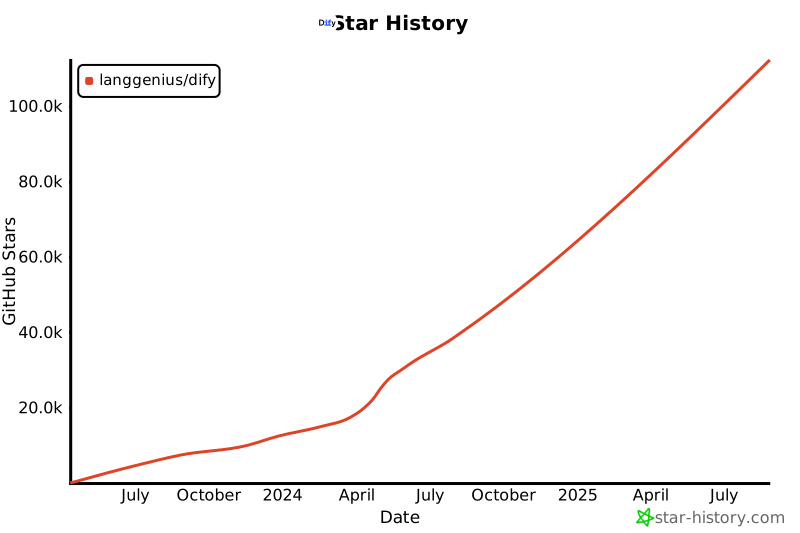](https://star-history.com/#langgenius/dify&Date)
|
||||
|
||||
## নিরাপত্তা বিষয়ক
|
||||
## নিরাপত্তা বিষয়ক
|
||||
|
||||
আপনার গোপনীয়তা রক্ষা করতে, অনুগ্রহ করে GitHub-এ নিরাপত্তা সংক্রান্ত সমস্যা পোস্ট করা এড়িয়ে চলুন। পরিবর্তে, আপনার প্রশ্নগুলি <security@dify.ai> ঠিকানায় পাঠান এবং আমরা আপনাকে আরও বিস্তারিত উত্তর প্রদান করব।
|
||||
|
||||
|
||||
+31
-28
@@ -48,8 +48,7 @@
|
||||
<a href="./README_BN.md"><img alt="README in বাংলা" src="https://img.shields.io/badge/বাংলা-d9d9d9"></a>
|
||||
</div>
|
||||
|
||||
|
||||
#
|
||||
#
|
||||
|
||||
<div align="center">
|
||||
<a href="https://trendshift.io/repositories/2152" target="_blank"><img src="https://trendshift.io/api/badge/repositories/2152" alt="langgenius%2Fdify | 趋势转变" style="width: 250px; height: 55px;" width="250" height="55"/></a>
|
||||
@@ -58,32 +57,31 @@
|
||||
Dify 是一个开源的 LLM 应用开发平台。其直观的界面结合了 AI 工作流、RAG 管道、Agent、模型管理、可观测性功能等,让您可以快速从原型到生产。以下是其核心功能列表:
|
||||
</br> </br>
|
||||
|
||||
**1. 工作流**:
|
||||
在画布上构建和测试功能强大的 AI 工作流程,利用以下所有功能以及更多功能。
|
||||
**1. 工作流**:
|
||||
在画布上构建和测试功能强大的 AI 工作流程,利用以下所有功能以及更多功能。
|
||||
|
||||
**2. 全面的模型支持**:
|
||||
与数百种专有/开源 LLMs 以及数十种推理提供商和自托管解决方案无缝集成,涵盖 GPT、Mistral、Llama3 以及任何与 OpenAI API 兼容的模型。完整的支持模型提供商列表可在[此处](https://docs.dify.ai/getting-started/readme/model-providers)找到。
|
||||
**2. 全面的模型支持**:
|
||||
与数百种专有/开源 LLMs 以及数十种推理提供商和自托管解决方案无缝集成,涵盖 GPT、Mistral、Llama3 以及任何与 OpenAI API 兼容的模型。完整的支持模型提供商列表可在[此处](https://docs.dify.ai/getting-started/readme/model-providers)找到。
|
||||
|
||||

|
||||
|
||||
**3. Prompt IDE**:
|
||||
用于制作提示、比较模型性能以及向基于聊天的应用程序添加其他功能(如文本转语音)的直观界面。
|
||||
|
||||
**3. Prompt IDE**:
|
||||
用于制作提示、比较模型性能以及向基于聊天的应用程序添加其他功能(如文本转语音)的直观界面。
|
||||
**4. RAG Pipeline**:
|
||||
广泛的 RAG 功能,涵盖从文档摄入到检索的所有内容,支持从 PDF、PPT 和其他常见文档格式中提取文本的开箱即用的支持。
|
||||
|
||||
**4. RAG Pipeline**:
|
||||
广泛的 RAG 功能,涵盖从文档摄入到检索的所有内容,支持从 PDF、PPT 和其他常见文档格式中提取文本的开箱即用的支持。
|
||||
**5. Agent 智能体**:
|
||||
您可以基于 LLM 函数调用或 ReAct 定义 Agent,并为 Agent 添加预构建或自定义工具。Dify 为 AI Agent 提供了 50 多种内置工具,如谷歌搜索、DALL·E、Stable Diffusion 和 WolframAlpha 等。
|
||||
|
||||
**5. Agent 智能体**:
|
||||
您可以基于 LLM 函数调用或 ReAct 定义 Agent,并为 Agent 添加预构建或自定义工具。Dify 为 AI Agent 提供了 50 多种内置工具,如谷歌搜索、DALL·E、Stable Diffusion 和 WolframAlpha 等。
|
||||
|
||||
**6. LLMOps**:
|
||||
随时间监视和分析应用程序日志和性能。您可以根据生产数据和标注持续改进提示、数据集和模型。
|
||||
|
||||
**7. 后端即服务**:
|
||||
所有 Dify 的功能都带有相应的 API,因此您可以轻松地将 Dify 集成到自己的业务逻辑中。
|
||||
**6. LLMOps**:
|
||||
随时间监视和分析应用程序日志和性能。您可以根据生产数据和标注持续改进提示、数据集和模型。
|
||||
|
||||
**7. 后端即服务**:
|
||||
所有 Dify 的功能都带有相应的 API,因此您可以轻松地将 Dify 集成到自己的业务逻辑中。
|
||||
|
||||
## 功能比较
|
||||
|
||||
<table style="width: 100%;">
|
||||
<tr>
|
||||
<th align="center">功能</th>
|
||||
@@ -153,14 +151,15 @@ Dify 是一个开源的 LLM 应用开发平台。其直观的界面结合了 AI
|
||||
## 使用 Dify
|
||||
|
||||
- **云 </br>**
|
||||
我们提供[ Dify 云服务](https://dify.ai),任何人都可以零设置尝试。它提供了自部署版本的所有功能,并在沙盒计划中包含 200 次免费的 GPT-4 调用。
|
||||
我们提供[ Dify 云服务](https://dify.ai),任何人都可以零设置尝试。它提供了自部署版本的所有功能,并在沙盒计划中包含 200 次免费的 GPT-4 调用。
|
||||
|
||||
- **自托管 Dify 社区版</br>**
|
||||
使用这个[入门指南](#快速启动)快速在您的环境中运行 Dify。
|
||||
使用我们的[文档](https://docs.dify.ai)进行进一步的参考和更深入的说明。
|
||||
使用这个[入门指南](#%E5%BF%AB%E9%80%9F%E5%90%AF%E5%8A%A8)快速在您的环境中运行 Dify。
|
||||
使用我们的[文档](https://docs.dify.ai)进行进一步的参考和更深入的说明。
|
||||
|
||||
- **面向企业/组织的 Dify</br>**
|
||||
我们提供额外的面向企业的功能。[给我们发送电子邮件](mailto:business@dify.ai?subject=[GitHub]Business%20License%20Inquiry)讨论企业需求。 </br>
|
||||
我们提供额外的面向企业的功能。[给我们发送电子邮件](mailto:business@dify.ai?subject=%5BGitHub%5DBusiness%20License%20Inquiry)讨论企业需求。 </br>
|
||||
|
||||
> 对于使用 AWS 的初创公司和中小型企业,请查看 [AWS Marketplace 上的 Dify 高级版](https://aws.amazon.com/marketplace/pp/prodview-t22mebxzwjhu6),并使用一键部署到您自己的 AWS VPC。它是一个价格实惠的 AMI 产品,提供了使用自定义徽标和品牌创建应用程序的选项。
|
||||
|
||||
## 保持领先
|
||||
@@ -199,30 +198,35 @@ docker compose up -d
|
||||
使用 [Helm Chart](https://helm.sh/) 版本或者 Kubernetes 资源清单(YAML),可以在 Kubernetes 上部署 Dify。
|
||||
|
||||
- [Helm Chart by @LeoQuote](https://github.com/douban/charts/tree/master/charts/dify)
|
||||
|
||||
- [Helm Chart by @BorisPolonsky](https://github.com/BorisPolonsky/dify-helm)
|
||||
|
||||
- [Helm Chart by @magicsong](https://github.com/magicsong/ai-charts)
|
||||
|
||||
- [YAML 文件 by @Winson-030](https://github.com/Winson-030/dify-kubernetes)
|
||||
|
||||
- [YAML file by @wyy-holding](https://github.com/wyy-holding/dify-k8s)
|
||||
|
||||
- [🚀 NEW! YAML 文件 (支持 Dify v1.6.0) by @Zhoneym](https://github.com/Zhoneym/DifyAI-Kubernetes)
|
||||
|
||||
|
||||
|
||||
#### 使用 Terraform 部署
|
||||
|
||||
使用 [terraform](https://www.terraform.io/) 一键将 Dify 部署到云平台
|
||||
|
||||
##### Azure Global
|
||||
|
||||
- [Azure Terraform by @nikawang](https://github.com/nikawang/dify-azure-terraform)
|
||||
|
||||
##### Google Cloud
|
||||
|
||||
- [Google Cloud Terraform by @sotazum](https://github.com/DeNA/dify-google-cloud-terraform)
|
||||
|
||||
#### 使用 AWS CDK 部署
|
||||
|
||||
使用 [CDK](https://aws.amazon.com/cdk/) 将 Dify 部署到 AWS
|
||||
|
||||
##### AWS
|
||||
##### AWS
|
||||
|
||||
- [AWS CDK by @KevinZhao (EKS based)](https://github.com/aws-samples/solution-for-deploying-dify-on-aws)
|
||||
- [AWS CDK by @tmokmss (ECS based)](https://github.com/aws-samples/dify-self-hosted-on-aws)
|
||||
|
||||
@@ -242,7 +246,6 @@ docker compose up -d
|
||||
|
||||
[](https://star-history.com/#langgenius/dify&Date)
|
||||
|
||||
|
||||
## Contributing
|
||||
|
||||
对于那些想要贡献代码的人,请参阅我们的[贡献指南](https://github.com/langgenius/dify/blob/main/CONTRIBUTING.md)。
|
||||
@@ -262,10 +265,10 @@ docker compose up -d
|
||||
|
||||
- [GitHub Discussion](https://github.com/langgenius/dify/discussions). 👉:分享您的应用程序并与社区交流。
|
||||
- [GitHub Issues](https://github.com/langgenius/dify/issues)。👉:使用 Dify.AI 时遇到的错误和问题,请参阅[贡献指南](CONTRIBUTING.md)。
|
||||
- [电子邮件支持](mailto:hello@dify.ai?subject=[GitHub]Questions%20About%20Dify)。👉:关于使用 Dify.AI 的问题。
|
||||
- [电子邮件支持](mailto:hello@dify.ai?subject=%5BGitHub%5DQuestions%20About%20Dify)。👉:关于使用 Dify.AI 的问题。
|
||||
- [Discord](https://discord.gg/FngNHpbcY7)。👉:分享您的应用程序并与社区交流。
|
||||
- [X(Twitter)](https://twitter.com/dify_ai)。👉:分享您的应用程序并与社区交流。
|
||||
- [商业许可](mailto:business@dify.ai?subject=[GitHub]Business%20License%20Inquiry)。👉:有关商业用途许可 Dify.AI 的商业咨询。
|
||||
- [商业许可](mailto:business@dify.ai?subject=%5BGitHub%5DBusiness%20License%20Inquiry)。👉:有关商业用途许可 Dify.AI 的商业咨询。
|
||||
|
||||
## 安全问题
|
||||
|
||||
|
||||
+33
-33
@@ -56,10 +56,11 @@
|
||||
Dify ist eine Open-Source-Plattform zur Entwicklung von LLM-Anwendungen. Ihre intuitive Benutzeroberfläche vereint agentenbasierte KI-Workflows, RAG-Pipelines, Agentenfunktionen, Modellverwaltung, Überwachungsfunktionen und mehr, sodass Sie schnell von einem Prototyp in die Produktion übergehen können.
|
||||
|
||||
## Schnellstart
|
||||
|
||||
> Bevor Sie Dify installieren, stellen Sie sicher, dass Ihr System die folgenden Mindestanforderungen erfüllt:
|
||||
>
|
||||
>- CPU >= 2 Core
|
||||
>- RAM >= 4 GiB
|
||||
>
|
||||
> - CPU >= 2 Core
|
||||
> - RAM >= 4 GiB
|
||||
|
||||
</br>
|
||||
|
||||
@@ -75,37 +76,38 @@ docker compose up -d
|
||||
Nachdem Sie den Server gestartet haben, können Sie über Ihren Browser auf das Dify Dashboard unter [http://localhost/install](http://localhost/install) zugreifen und den Initialisierungsprozess starten.
|
||||
|
||||
#### Hilfe suchen
|
||||
|
||||
Bitte beachten Sie unsere [FAQ](https://docs.dify.ai/getting-started/install-self-hosted/faqs), wenn Sie Probleme bei der Einrichtung von Dify haben. Wenden Sie sich an [die Community und uns](#community--contact), falls weiterhin Schwierigkeiten auftreten.
|
||||
|
||||
> Wenn Sie zu Dify beitragen oder zusätzliche Entwicklungen durchführen möchten, lesen Sie bitte unseren [Leitfaden zur Bereitstellung aus dem Quellcode](https://docs.dify.ai/getting-started/install-self-hosted/local-source-code).
|
||||
|
||||
## Wesentliche Merkmale
|
||||
**1. Workflow**:
|
||||
Erstellen und testen Sie leistungsstarke KI-Workflows auf einer visuellen Oberfläche, wobei Sie alle der folgenden Funktionen und darüber hinaus nutzen können.
|
||||
|
||||
**2. Umfassende Modellunterstützung**:
|
||||
Nahtlose Integration mit Hunderten von proprietären und Open-Source-LLMs von Dutzenden Inferenzanbietern und selbstgehosteten Lösungen, die GPT, Mistral, Llama3 und alle mit der OpenAI API kompatiblen Modelle abdecken. Eine vollständige Liste der unterstützten Modellanbieter finden Sie [hier](https://docs.dify.ai/getting-started/readme/model-providers).
|
||||
**1. Workflow**:
|
||||
Erstellen und testen Sie leistungsstarke KI-Workflows auf einer visuellen Oberfläche, wobei Sie alle der folgenden Funktionen und darüber hinaus nutzen können.
|
||||
|
||||
**2. Umfassende Modellunterstützung**:
|
||||
Nahtlose Integration mit Hunderten von proprietären und Open-Source-LLMs von Dutzenden Inferenzanbietern und selbstgehosteten Lösungen, die GPT, Mistral, Llama3 und alle mit der OpenAI API kompatiblen Modelle abdecken. Eine vollständige Liste der unterstützten Modellanbieter finden Sie [hier](https://docs.dify.ai/getting-started/readme/model-providers).
|
||||
|
||||

|
||||
|
||||
**3. Prompt IDE**:
|
||||
Intuitive Benutzeroberfläche zum Erstellen von Prompts, zum Vergleichen der Modellleistung und zum Hinzufügen zusätzlicher Funktionen wie Text-to-Speech in einer chatbasierten Anwendung.
|
||||
|
||||
**3. Prompt IDE**:
|
||||
Intuitive Benutzeroberfläche zum Erstellen von Prompts, zum Vergleichen der Modellleistung und zum Hinzufügen zusätzlicher Funktionen wie Text-to-Speech in einer chatbasierten Anwendung.
|
||||
**4. RAG Pipeline**:
|
||||
Umfassende RAG-Funktionalitäten, die alles von der Dokumenteneinlesung bis zur -abfrage abdecken, mit sofort einsatzbereiter Unterstützung für die Textextraktion aus PDFs, PPTs und anderen gängigen Dokumentformaten.
|
||||
|
||||
**4. RAG Pipeline**:
|
||||
Umfassende RAG-Funktionalitäten, die alles von der Dokumenteneinlesung bis zur -abfrage abdecken, mit sofort einsatzbereiter Unterstützung für die Textextraktion aus PDFs, PPTs und anderen gängigen Dokumentformaten.
|
||||
**5. Fähigkeiten des Agenten**:
|
||||
Sie können Agenten basierend auf LLM Function Calling oder ReAct definieren und vorgefertigte oder benutzerdefinierte Tools für den Agenten hinzufügen. Dify stellt über 50 integrierte Tools für KI-Agenten bereit, wie zum Beispiel Google Search, DALL·E, Stable Diffusion und WolframAlpha.
|
||||
|
||||
**5. Fähigkeiten des Agenten**:
|
||||
Sie können Agenten basierend auf LLM Function Calling oder ReAct definieren und vorgefertigte oder benutzerdefinierte Tools für den Agenten hinzufügen. Dify stellt über 50 integrierte Tools für KI-Agenten bereit, wie zum Beispiel Google Search, DALL·E, Stable Diffusion und WolframAlpha.
|
||||
**6. LLMOps**:
|
||||
Überwachen und analysieren Sie Anwendungsprotokolle und die Leistung im Laufe der Zeit. Sie können kontinuierlich Prompts, Datensätze und Modelle basierend auf Produktionsdaten und Annotationen verbessern.
|
||||
|
||||
**6. LLMOps**:
|
||||
Überwachen und analysieren Sie Anwendungsprotokolle und die Leistung im Laufe der Zeit. Sie können kontinuierlich Prompts, Datensätze und Modelle basierend auf Produktionsdaten und Annotationen verbessern.
|
||||
|
||||
**7. Backend-as-a-Service**:
|
||||
Alle Dify-Angebote kommen mit entsprechenden APIs, sodass Sie Dify mühelos in Ihre eigene Geschäftslogik integrieren können.
|
||||
**7. Backend-as-a-Service**:
|
||||
Alle Dify-Angebote kommen mit entsprechenden APIs, sodass Sie Dify mühelos in Ihre eigene Geschäftslogik integrieren können.
|
||||
|
||||
## Vergleich der Merkmale
|
||||
|
||||
<table style="width: 100%;">
|
||||
<tr>
|
||||
<th align="center">Feature</th>
|
||||
@@ -175,15 +177,15 @@ Bitte beachten Sie unsere [FAQ](https://docs.dify.ai/getting-started/install-sel
|
||||
## Dify verwenden
|
||||
|
||||
- **Cloud </br>**
|
||||
Wir hosten einen [Dify Cloud](https://dify.ai)-Service, den jeder ohne Einrichtung ausprobieren kann. Er bietet alle Funktionen der selbstgehosteten Version und beinhaltet 200 kostenlose GPT-4-Aufrufe im Sandbox-Plan.
|
||||
Wir hosten einen [Dify Cloud](https://dify.ai)-Service, den jeder ohne Einrichtung ausprobieren kann. Er bietet alle Funktionen der selbstgehosteten Version und beinhaltet 200 kostenlose GPT-4-Aufrufe im Sandbox-Plan.
|
||||
|
||||
- **Selbstgehostete Dify Community Edition</br>**
|
||||
Starten Sie Dify schnell in Ihrer Umgebung mit diesem [Schnellstart-Leitfaden](#quick-start). Nutzen Sie unsere [Dokumentation](https://docs.dify.ai) für weiterführende Informationen und detaillierte Anweisungen.
|
||||
Starten Sie Dify schnell in Ihrer Umgebung mit diesem [Schnellstart-Leitfaden](#quick-start). Nutzen Sie unsere [Dokumentation](https://docs.dify.ai) für weiterführende Informationen und detaillierte Anweisungen.
|
||||
|
||||
- **Dify für Unternehmen / Organisationen</br>**
|
||||
Wir bieten zusätzliche, unternehmensspezifische Funktionen. [Über diesen Chatbot können Sie uns Ihre Fragen mitteilen](https://udify.app/chat/22L1zSxg6yW1cWQg) oder [senden Sie uns eine E-Mail](mailto:business@dify.ai?subject=[GitHub]Business%20License%20Inquiry), um Ihre unternehmerischen Bedürfnisse zu besprechen. </br>
|
||||
> Für Startups und kleine Unternehmen, die AWS nutzen, schauen Sie sich [Dify Premium on AWS Marketplace](https://aws.amazon.com/marketplace/pp/prodview-t22mebxzwjhu6) an und stellen Sie es mit nur einem Klick in Ihrer eigenen AWS VPC bereit. Es handelt sich um ein erschwingliches AMI-Angebot mit der Option, Apps mit individuellem Logo und Branding zu erstellen.
|
||||
Wir bieten zusätzliche, unternehmensspezifische Funktionen. [Über diesen Chatbot können Sie uns Ihre Fragen mitteilen](https://udify.app/chat/22L1zSxg6yW1cWQg) oder [senden Sie uns eine E-Mail](mailto:business@dify.ai?subject=%5BGitHub%5DBusiness%20License%20Inquiry), um Ihre unternehmerischen Bedürfnisse zu besprechen. </br>
|
||||
|
||||
> Für Startups und kleine Unternehmen, die AWS nutzen, schauen Sie sich [Dify Premium on AWS Marketplace](https://aws.amazon.com/marketplace/pp/prodview-t22mebxzwjhu6) an und stellen Sie es mit nur einem Klick in Ihrer eigenen AWS VPC bereit. Es handelt sich um ein erschwingliches AMI-Angebot mit der Option, Apps mit individuellem Logo und Branding zu erstellen.
|
||||
|
||||
## Immer einen Schritt voraus
|
||||
|
||||
@@ -191,7 +193,6 @@ Star Dify auf GitHub und lassen Sie sich sofort über neue Releases benachrichti
|
||||
|
||||

|
||||
|
||||
|
||||
## Erweiterte Einstellungen
|
||||
|
||||
Falls Sie die Konfiguration anpassen müssen, lesen Sie bitte die Kommentare in unserer [.env.example](docker/.env.example)-Datei und aktualisieren Sie die entsprechenden Werte in Ihrer `.env`-Datei. Zusätzlich müssen Sie eventuell Anpassungen an der `docker-compose.yaml`-Datei vornehmen, wie zum Beispiel das Ändern von Image-Versionen, Portzuordnungen oder Volumen-Mounts, je nach Ihrer spezifischen Einsatzumgebung und Ihren Anforderungen. Nachdem Sie Änderungen vorgenommen haben, starten Sie `docker-compose up -d` erneut. Eine vollständige Liste der verfügbaren Umgebungsvariablen finden Sie [hier](https://docs.dify.ai/getting-started/install-self-hosted/environments).
|
||||
@@ -210,20 +211,23 @@ Falls Sie eine hochverfügbare Konfiguration einrichten möchten, gibt es von de
|
||||
Stellen Sie Dify mit nur einem Klick mithilfe von [terraform](https://www.terraform.io/) auf einer Cloud-Plattform bereit.
|
||||
|
||||
##### Azure Global
|
||||
|
||||
- [Azure Terraform by @nikawang](https://github.com/nikawang/dify-azure-terraform)
|
||||
|
||||
##### Google Cloud
|
||||
|
||||
- [Google Cloud Terraform by @sotazum](https://github.com/DeNA/dify-google-cloud-terraform)
|
||||
|
||||
#### Verwendung von AWS CDK für die Bereitstellung
|
||||
|
||||
Bereitstellung von Dify auf AWS mit [CDK](https://aws.amazon.com/cdk/)
|
||||
|
||||
##### AWS
|
||||
##### AWS
|
||||
|
||||
- [AWS CDK by @KevinZhao (EKS based)](https://github.com/aws-samples/solution-for-deploying-dify-on-aws)
|
||||
- [AWS CDK by @tmokmss (ECS based)](https://github.com/aws-samples/dify-self-hosted-on-aws)
|
||||
|
||||
#### Alibaba Cloud
|
||||
#### Alibaba Cloud
|
||||
|
||||
[Alibaba Cloud Computing Nest](https://computenest.console.aliyun.com/service/instance/create/default?type=user&ServiceName=Dify%E7%A4%BE%E5%8C%BA%E7%89%88)
|
||||
|
||||
@@ -235,20 +239,18 @@ Ein-Klick-Bereitstellung von Dify in der Alibaba Cloud mit [Alibaba Cloud Data M
|
||||
|
||||
Stellen Sie Dify mit einem Klick in AKS bereit, indem Sie [Azure Devops Pipeline Helm Chart by @LeoZhang](https://github.com/Ruiruiz30/Dify-helm-chart-AKS) verwenden
|
||||
|
||||
|
||||
## Contributing
|
||||
|
||||
Falls Sie Code beitragen möchten, lesen Sie bitte unseren [Contribution Guide](https://github.com/langgenius/dify/blob/main/CONTRIBUTING.md). Gleichzeitig bitten wir Sie, Dify zu unterstützen, indem Sie es in den sozialen Medien teilen und auf Veranstaltungen und Konferenzen präsentieren.
|
||||
|
||||
|
||||
> Wir suchen Mitwirkende, die dabei helfen, Dify in weitere Sprachen zu übersetzen – außer Mandarin oder Englisch. Wenn Sie Interesse an einer Mitarbeit haben, lesen Sie bitte die [i18n README](https://github.com/langgenius/dify/blob/main/web/i18n-config/README.md) für weitere Informationen und hinterlassen Sie einen Kommentar im `global-users`-Kanal unseres [Discord Community Servers](https://discord.gg/8Tpq4AcN9c).
|
||||
|
||||
## Gemeinschaft & Kontakt
|
||||
|
||||
* [GitHub Discussion](https://github.com/langgenius/dify/discussions). Am besten geeignet für: den Austausch von Feedback und das Stellen von Fragen.
|
||||
* [GitHub Issues](https://github.com/langgenius/dify/issues). Am besten für: Fehler, auf die Sie bei der Verwendung von Dify.AI stoßen, und Funktionsvorschläge. Siehe unseren [Contribution Guide](https://github.com/langgenius/dify/blob/main/CONTRIBUTING.md).
|
||||
* [Discord](https://discord.gg/FngNHpbcY7). Am besten geeignet für: den Austausch von Bewerbungen und den Austausch mit der Community.
|
||||
* [X(Twitter)](https://twitter.com/dify_ai). Am besten geeignet für: den Austausch von Bewerbungen und den Austausch mit der Community.
|
||||
- [GitHub Discussion](https://github.com/langgenius/dify/discussions). Am besten geeignet für: den Austausch von Feedback und das Stellen von Fragen.
|
||||
- [GitHub Issues](https://github.com/langgenius/dify/issues). Am besten für: Fehler, auf die Sie bei der Verwendung von Dify.AI stoßen, und Funktionsvorschläge. Siehe unseren [Contribution Guide](https://github.com/langgenius/dify/blob/main/CONTRIBUTING.md).
|
||||
- [Discord](https://discord.gg/FngNHpbcY7). Am besten geeignet für: den Austausch von Bewerbungen und den Austausch mit der Community.
|
||||
- [X(Twitter)](https://twitter.com/dify_ai). Am besten geeignet für: den Austausch von Bewerbungen und den Austausch mit der Community.
|
||||
|
||||
**Mitwirkende**
|
||||
|
||||
@@ -260,7 +262,6 @@ Falls Sie Code beitragen möchten, lesen Sie bitte unseren [Contribution Guide](
|
||||
|
||||
[](https://star-history.com/#langgenius/dify&Date)
|
||||
|
||||
|
||||
## Offenlegung der Sicherheit
|
||||
|
||||
Um Ihre Privatsphäre zu schützen, vermeiden Sie es bitte, Sicherheitsprobleme auf GitHub zu posten. Schicken Sie Ihre Fragen stattdessen an security@dify.ai und wir werden Ihnen eine ausführlichere Antwort geben.
|
||||
@@ -268,4 +269,3 @@ Um Ihre Privatsphäre zu schützen, vermeiden Sie es bitte, Sicherheitsprobleme
|
||||
## Lizenz
|
||||
|
||||
Dieses Repository steht unter der [Dify Open Source License](LICENSE), die im Wesentlichen Apache 2.0 mit einigen zusätzlichen Einschränkungen ist.
|
||||
|
||||
|
||||
+41
-42
@@ -48,7 +48,7 @@
|
||||
<a href="./README_BN.md"><img alt="README in বাংলা" src="https://img.shields.io/badge/বাংলা-d9d9d9"></a>
|
||||
</p>
|
||||
|
||||
#
|
||||
#
|
||||
|
||||
<p align="center">
|
||||
<a href="https://trendshift.io/repositories/2152" target="_blank"><img src="https://trendshift.io/api/badge/repositories/2152" alt="langgenius%2Fdify | Trendshift" style="width: 250px; height: 55px;" width="250" height="55"/></a>
|
||||
@@ -56,32 +56,31 @@
|
||||
Dify es una plataforma de desarrollo de aplicaciones de LLM de código abierto. Su interfaz intuitiva combina flujo de trabajo de IA, pipeline RAG, capacidades de agente, gestión de modelos, características de observabilidad y más, lo que le permite pasar rápidamente de un prototipo a producción. Aquí hay una lista de las características principales:
|
||||
</br> </br>
|
||||
|
||||
**1. Flujo de trabajo**:
|
||||
Construye y prueba potentes flujos de trabajo de IA en un lienzo visual, aprovechando todas las siguientes características y más.
|
||||
**1. Flujo de trabajo**:
|
||||
Construye y prueba potentes flujos de trabajo de IA en un lienzo visual, aprovechando todas las siguientes características y más.
|
||||
|
||||
**2. Soporte de modelos completo**:
|
||||
Integración perfecta con cientos de LLMs propietarios / de código abierto de docenas de proveedores de inferencia y soluciones auto-alojadas, que cubren GPT, Mistral, Llama3 y cualquier modelo compatible con la API de OpenAI. Se puede encontrar una lista completa de proveedores de modelos admitidos [aquí](https://docs.dify.ai/getting-started/readme/model-providers).
|
||||
**2. Soporte de modelos completo**:
|
||||
Integración perfecta con cientos de LLMs propietarios / de código abierto de docenas de proveedores de inferencia y soluciones auto-alojadas, que cubren GPT, Mistral, Llama3 y cualquier modelo compatible con la API de OpenAI. Se puede encontrar una lista completa de proveedores de modelos admitidos [aquí](https://docs.dify.ai/getting-started/readme/model-providers).
|
||||
|
||||

|
||||
|
||||
**3. IDE de prompt**:
|
||||
Interfaz intuitiva para crear prompts, comparar el rendimiento del modelo y agregar características adicionales como texto a voz a una aplicación basada en chat.
|
||||
|
||||
**3. IDE de prompt**:
|
||||
Interfaz intuitiva para crear prompts, comparar el rendimiento del modelo y agregar características adicionales como texto a voz a una aplicación basada en chat.
|
||||
**4. Pipeline RAG**:
|
||||
Amplias capacidades de RAG que cubren todo, desde la ingestión de documentos hasta la recuperación, con soporte listo para usar para la extracción de texto de PDF, PPT y otros formatos de documento comunes.
|
||||
|
||||
**4. Pipeline RAG**:
|
||||
Amplias capacidades de RAG que cubren todo, desde la ingestión de documentos hasta la recuperación, con soporte listo para usar para la extracción de texto de PDF, PPT y otros formatos de documento comunes.
|
||||
**5. Capacidades de agente**:
|
||||
Puedes definir agentes basados en LLM Function Calling o ReAct, y agregar herramientas preconstruidas o personalizadas para el agente. Dify proporciona más de 50 herramientas integradas para agentes de IA, como Búsqueda de Google, DALL·E, Difusión Estable y WolframAlpha.
|
||||
|
||||
**5. Capacidades de agente**:
|
||||
Puedes definir agentes basados en LLM Function Calling o ReAct, y agregar herramientas preconstruidas o personalizadas para el agente. Dify proporciona más de 50 herramientas integradas para agentes de IA, como Búsqueda de Google, DALL·E, Difusión Estable y WolframAlpha.
|
||||
|
||||
**6. LLMOps**:
|
||||
Supervisa y analiza registros de aplicaciones y rendimiento a lo largo del tiempo. Podrías mejorar continuamente prompts, conjuntos de datos y modelos basados en datos de producción y anotaciones.
|
||||
|
||||
**7. Backend como servicio**:
|
||||
Todas las ofertas de Dify vienen con APIs correspondientes, por lo que podrías integrar Dify sin esfuerzo en tu propia lógica empresarial.
|
||||
**6. LLMOps**:
|
||||
Supervisa y analiza registros de aplicaciones y rendimiento a lo largo del tiempo. Podrías mejorar continuamente prompts, conjuntos de datos y modelos basados en datos de producción y anotaciones.
|
||||
|
||||
**7. Backend como servicio**:
|
||||
Todas las ofertas de Dify vienen con APIs correspondientes, por lo que podrías integrar Dify sin esfuerzo en tu propia lógica empresarial.
|
||||
|
||||
## Comparación de características
|
||||
|
||||
<table style="width: 100%;">
|
||||
<tr>
|
||||
<th align="center">Característica</th>
|
||||
@@ -151,16 +150,16 @@ Dify es una plataforma de desarrollo de aplicaciones de LLM de código abierto.
|
||||
## Usando Dify
|
||||
|
||||
- **Nube </br>**
|
||||
Hospedamos un servicio [Dify Cloud](https://dify.ai) para que cualquiera lo pruebe sin configuración. Proporciona todas las capacidades de la versión autoimplementada e incluye 200 llamadas gratuitas a GPT-4 en el plan sandbox.
|
||||
Hospedamos un servicio [Dify Cloud](https://dify.ai) para que cualquiera lo pruebe sin configuración. Proporciona todas las capacidades de la versión autoimplementada e incluye 200 llamadas gratuitas a GPT-4 en el plan sandbox.
|
||||
|
||||
- **Auto-alojamiento de Dify Community Edition</br>**
|
||||
Pon rápidamente Dify en funcionamiento en tu entorno con esta [guía de inicio rápido](#quick-start).
|
||||
Usa nuestra [documentación](https://docs.dify.ai) para más referencias e instrucciones más detalladas.
|
||||
Pon rápidamente Dify en funcionamiento en tu entorno con esta [guía de inicio rápido](#quick-start).
|
||||
Usa nuestra [documentación](https://docs.dify.ai) para más referencias e instrucciones más detalladas.
|
||||
|
||||
- **Dify para Empresas / Organizaciones</br>**
|
||||
Proporcionamos características adicionales centradas en la empresa. [Envíanos un correo electrónico](mailto:business@dify.ai?subject=[GitHub]Business%20License%20Inquiry) para discutir las necesidades empresariales. </br>
|
||||
> Para startups y pequeñas empresas que utilizan AWS, echa un vistazo a [Dify Premium en AWS Marketplace](https://aws.amazon.com/marketplace/pp/prodview-t22mebxzwjhu6) e impleméntalo en tu propio VPC de AWS con un clic. Es una AMI asequible que ofrece la opción de crear aplicaciones con logotipo y marca personalizados.
|
||||
Proporcionamos características adicionales centradas en la empresa. [Envíanos un correo electrónico](mailto:business@dify.ai?subject=%5BGitHub%5DBusiness%20License%20Inquiry) para discutir las necesidades empresariales. </br>
|
||||
|
||||
> Para startups y pequeñas empresas que utilizan AWS, echa un vistazo a [Dify Premium en AWS Marketplace](https://aws.amazon.com/marketplace/pp/prodview-t22mebxzwjhu6) e impleméntalo en tu propio VPC de AWS con un clic. Es una AMI asequible que ofrece la opción de crear aplicaciones con logotipo y marca personalizados.
|
||||
|
||||
## Manteniéndote al tanto
|
||||
|
||||
@@ -168,13 +167,12 @@ Dale estrella a Dify en GitHub y serás notificado instantáneamente de las nuev
|
||||
|
||||

|
||||
|
||||
|
||||
|
||||
## Inicio Rápido
|
||||
|
||||
> Antes de instalar Dify, asegúrate de que tu máquina cumpla con los siguientes requisitos mínimos del sistema:
|
||||
>
|
||||
>- CPU >= 2 núcleos
|
||||
>- RAM >= 4GB
|
||||
>
|
||||
> - CPU >= 2 núcleos
|
||||
> - RAM >= 4GB
|
||||
|
||||
</br>
|
||||
|
||||
@@ -210,16 +208,19 @@ Si desea configurar una configuración de alta disponibilidad, la comunidad prop
|
||||
Despliega Dify en una plataforma en la nube con un solo clic utilizando [terraform](https://www.terraform.io/)
|
||||
|
||||
##### Azure Global
|
||||
|
||||
- [Azure Terraform por @nikawang](https://github.com/nikawang/dify-azure-terraform)
|
||||
|
||||
##### Google Cloud
|
||||
|
||||
- [Google Cloud Terraform por @sotazum](https://github.com/DeNA/dify-google-cloud-terraform)
|
||||
|
||||
#### Usando AWS CDK para el Despliegue
|
||||
|
||||
Despliegue Dify en AWS usando [CDK](https://aws.amazon.com/cdk/)
|
||||
|
||||
##### AWS
|
||||
##### AWS
|
||||
|
||||
- [AWS CDK por @KevinZhao (EKS based)](https://github.com/aws-samples/solution-for-deploying-dify-on-aws)
|
||||
- [AWS CDK por @tmokmss (ECS based)](https://github.com/aws-samples/dify-self-hosted-on-aws)
|
||||
|
||||
@@ -235,13 +236,11 @@ Despliega Dify en Alibaba Cloud con un solo clic con [Alibaba Cloud Data Managem
|
||||
|
||||
Implementa Dify en AKS con un clic usando [Azure Devops Pipeline Helm Chart by @LeoZhang](https://github.com/Ruiruiz30/Dify-helm-chart-AKS)
|
||||
|
||||
|
||||
## Contribuir
|
||||
|
||||
Para aquellos que deseen contribuir con código, consulten nuestra [Guía de contribución](https://github.com/langgenius/dify/blob/main/CONTRIBUTING.md).
|
||||
Para aquellos que deseen contribuir con código, consulten nuestra [Guía de contribución](https://github.com/langgenius/dify/blob/main/CONTRIBUTING.md).
|
||||
Al mismo tiempo, considera apoyar a Dify compartiéndolo en redes sociales y en eventos y conferencias.
|
||||
|
||||
|
||||
> Estamos buscando colaboradores para ayudar con la traducción de Dify a idiomas que no sean el mandarín o el inglés. Si estás interesado en ayudar, consulta el [README de i18n](https://github.com/langgenius/dify/blob/main/web/i18n-config/README.md) para obtener más información y déjanos un comentario en el canal `global-users` de nuestro [Servidor de Comunidad en Discord](https://discord.gg/8Tpq4AcN9c).
|
||||
|
||||
**Contribuidores**
|
||||
@@ -252,15 +251,22 @@ Al mismo tiempo, considera apoyar a Dify compartiéndolo en redes sociales y en
|
||||
|
||||
## Comunidad y Contacto
|
||||
|
||||
* [Discusión en GitHub](https://github.com/langgenius/dify/discussions). Lo mejor para: compartir comentarios y hacer preguntas.
|
||||
* [Reporte de problemas en GitHub](https://github.com/langgenius/dify/issues). Lo mejor para: errores que encuentres usando Dify.AI y propuestas de características. Consulta nuestra [Guía de contribución](https://github.com/langgenius/dify/blob/main/CONTRIBUTING.md).
|
||||
* [Discord](https://discord.gg/FngNHpbcY7). Lo mejor para: compartir tus aplicaciones y pasar el rato con la comunidad.
|
||||
* [X(Twitter)](https://twitter.com/dify_ai). Lo mejor para: compartir tus aplicaciones y pasar el rato con la comunidad.
|
||||
- [Discusión en GitHub](https://github.com/langgenius/dify/discussions). Lo mejor para: compartir comentarios y hacer preguntas.
|
||||
- [Reporte de problemas en GitHub](https://github.com/langgenius/dify/issues). Lo mejor para: errores que encuentres usando Dify.AI y propuestas de características. Consulta nuestra [Guía de contribución](https://github.com/langgenius/dify/blob/main/CONTRIBUTING.md).
|
||||
- [Discord](https://discord.gg/FngNHpbcY7). Lo mejor para: compartir tus aplicaciones y pasar el rato con la comunidad.
|
||||
- [X(Twitter)](https://twitter.com/dify_ai). Lo mejor para: compartir tus aplicaciones y pasar el rato con la comunidad.
|
||||
|
||||
## Historial de Estrellas
|
||||
|
||||
[](https://star-history.com/#langgenius/dify&Date)
|
||||
|
||||
## Divulgación de Seguridad
|
||||
|
||||
Para proteger tu privacidad, evita publicar problemas de seguridad en GitHub. En su lugar, envía tus preguntas a security@dify.ai y te proporcionaremos una respuesta más detallada.
|
||||
|
||||
## Licencia
|
||||
|
||||
Este repositorio está disponible bajo la [Licencia de Código Abierto de Dify](LICENSE), que es esencialmente Apache 2.0 con algunas restricciones adicionales.
|
||||
|
||||
## Divulgación de Seguridad
|
||||
|
||||
@@ -269,10 +275,3 @@ Para proteger tu privacidad, evita publicar problemas de seguridad en GitHub. En
|
||||
## Licencia
|
||||
|
||||
Este repositorio está disponible bajo la [Licencia de Código Abierto de Dify](LICENSE), que es esencialmente Apache 2.0 con algunas restricciones adicionales.
|
||||
## Divulgación de Seguridad
|
||||
|
||||
Para proteger tu privacidad, evita publicar problemas de seguridad en GitHub. En su lugar, envía tus preguntas a security@dify.ai y te proporcionaremos una respuesta más detallada.
|
||||
|
||||
## Licencia
|
||||
|
||||
Este repositorio está disponible bajo la [Licencia de Código Abierto de Dify](LICENSE), que es esencialmente Apache 2.0 con algunas restricciones adicionales.
|
||||
|
||||
+41
-42
@@ -48,7 +48,7 @@
|
||||
<a href="./README_BN.md"><img alt="README in বাংলা" src="https://img.shields.io/badge/বাংলা-d9d9d9"></a>
|
||||
</p>
|
||||
|
||||
#
|
||||
#
|
||||
|
||||
<p align="center">
|
||||
<a href="https://trendshift.io/repositories/2152" target="_blank"><img src="https://trendshift.io/api/badge/repositories/2152" alt="langgenius%2Fdify | Trendshift" style="width: 250px; height: 55px;" width="250" height="55"/></a>
|
||||
@@ -56,32 +56,31 @@
|
||||
Dify est une plateforme de développement d'applications LLM open source. Son interface intuitive combine un flux de travail d'IA, un pipeline RAG, des capacités d'agent, une gestion de modèles, des fonctionnalités d'observabilité, et plus encore, vous permettant de passer rapidement du prototype à la production. Voici une liste des fonctionnalités principales:
|
||||
</br> </br>
|
||||
|
||||
**1. Flux de travail** :
|
||||
Construisez et testez des flux de travail d'IA puissants sur un canevas visuel, en utilisant toutes les fonctionnalités suivantes et plus encore.
|
||||
**1. Flux de travail** :
|
||||
Construisez et testez des flux de travail d'IA puissants sur un canevas visuel, en utilisant toutes les fonctionnalités suivantes et plus encore.
|
||||
|
||||
**2. Prise en charge complète des modèles** :
|
||||
Intégration transparente avec des centaines de LLM propriétaires / open source provenant de dizaines de fournisseurs d'inférence et de solutions auto-hébergées, couvrant GPT, Mistral, Llama3, et tous les modèles compatibles avec l'API OpenAI. Une liste complète des fournisseurs de modèles pris en charge se trouve [ici](https://docs.dify.ai/getting-started/readme/model-providers).
|
||||
**2. Prise en charge complète des modèles** :
|
||||
Intégration transparente avec des centaines de LLM propriétaires / open source provenant de dizaines de fournisseurs d'inférence et de solutions auto-hébergées, couvrant GPT, Mistral, Llama3, et tous les modèles compatibles avec l'API OpenAI. Une liste complète des fournisseurs de modèles pris en charge se trouve [ici](https://docs.dify.ai/getting-started/readme/model-providers).
|
||||
|
||||

|
||||
|
||||
**3. IDE de prompt** :
|
||||
Interface intuitive pour créer des prompts, comparer les performances des modèles et ajouter des fonctionnalités supplémentaires telles que la synthèse vocale à une application basée sur des chats.
|
||||
|
||||
**3. IDE de prompt** :
|
||||
Interface intuitive pour créer des prompts, comparer les performances des modèles et ajouter des fonctionnalités supplémentaires telles que la synthèse vocale à une application basée sur des chats.
|
||||
**4. Pipeline RAG** :
|
||||
Des capacités RAG étendues qui couvrent tout, de l'ingestion de documents à la récupération, avec un support prêt à l'emploi pour l'extraction de texte à partir de PDF, PPT et autres formats de document courants.
|
||||
|
||||
**4. Pipeline RAG** :
|
||||
Des capacités RAG étendues qui couvrent tout, de l'ingestion de documents à la récupération, avec un support prêt à l'emploi pour l'extraction de texte à partir de PDF, PPT et autres formats de document courants.
|
||||
**5. Capacités d'agent** :
|
||||
Vous pouvez définir des agents basés sur l'appel de fonction LLM ou ReAct, et ajouter des outils pré-construits ou personnalisés pour l'agent. Dify fournit plus de 50 outils intégrés pour les agents d'IA, tels que la recherche Google, DALL·E, Stable Diffusion et WolframAlpha.
|
||||
|
||||
**5. Capacités d'agent** :
|
||||
Vous pouvez définir des agents basés sur l'appel de fonction LLM ou ReAct, et ajouter des outils pré-construits ou personnalisés pour l'agent. Dify fournit plus de 50 outils intégrés pour les agents d'IA, tels que la recherche Google, DALL·E, Stable Diffusion et WolframAlpha.
|
||||
|
||||
**6. LLMOps** :
|
||||
Surveillez et analysez les journaux d'application et les performances au fil du temps. Vous pouvez continuellement améliorer les prompts, les ensembles de données et les modèles en fonction des données de production et des annotations.
|
||||
|
||||
**7. Backend-as-a-Service** :
|
||||
Toutes les offres de Dify sont accompagnées d'API correspondantes, vous permettant d'intégrer facilement Dify dans votre propre logique métier.
|
||||
**6. LLMOps** :
|
||||
Surveillez et analysez les journaux d'application et les performances au fil du temps. Vous pouvez continuellement améliorer les prompts, les ensembles de données et les modèles en fonction des données de production et des annotations.
|
||||
|
||||
**7. Backend-as-a-Service** :
|
||||
Toutes les offres de Dify sont accompagnées d'API correspondantes, vous permettant d'intégrer facilement Dify dans votre propre logique métier.
|
||||
|
||||
## Comparaison des fonctionnalités
|
||||
|
||||
<table style="width: 100%;">
|
||||
<tr>
|
||||
<th align="center">Fonctionnalité</th>
|
||||
@@ -151,16 +150,16 @@ Dify est une plateforme de développement d'applications LLM open source. Son in
|
||||
## Utiliser Dify
|
||||
|
||||
- **Cloud </br>**
|
||||
Nous hébergeons un service [Dify Cloud](https://dify.ai) pour que tout le monde puisse l'essayer sans aucune configuration. Il fournit toutes les capacités de la version auto-hébergée et comprend 200 appels GPT-4 gratuits dans le plan bac à sable.
|
||||
Nous hébergeons un service [Dify Cloud](https://dify.ai) pour que tout le monde puisse l'essayer sans aucune configuration. Il fournit toutes les capacités de la version auto-hébergée et comprend 200 appels GPT-4 gratuits dans le plan bac à sable.
|
||||
|
||||
- **Auto-hébergement Dify Community Edition</br>**
|
||||
Lancez rapidement Dify dans votre environnement avec ce [guide de démarrage](#quick-start).
|
||||
Utilisez notre [documentation](https://docs.dify.ai) pour plus de références et des instructions plus détaillées.
|
||||
Lancez rapidement Dify dans votre environnement avec ce [guide de démarrage](#quick-start).
|
||||
Utilisez notre [documentation](https://docs.dify.ai) pour plus de références et des instructions plus détaillées.
|
||||
|
||||
- **Dify pour les entreprises / organisations</br>**
|
||||
Nous proposons des fonctionnalités supplémentaires adaptées aux entreprises. [Envoyez-nous un e-mail](mailto:business@dify.ai?subject=[GitHub]Business%20License%20Inquiry) pour discuter des besoins de l'entreprise. </br>
|
||||
> Pour les startups et les petites entreprises utilisant AWS, consultez [Dify Premium sur AWS Marketplace](https://aws.amazon.com/marketplace/pp/prodview-t22mebxzwjhu6) et déployez-le dans votre propre VPC AWS en un clic. C'est une offre AMI abordable avec la possibilité de créer des applications avec un logo et une marque personnalisés.
|
||||
Nous proposons des fonctionnalités supplémentaires adaptées aux entreprises. [Envoyez-nous un e-mail](mailto:business@dify.ai?subject=%5BGitHub%5DBusiness%20License%20Inquiry) pour discuter des besoins de l'entreprise. </br>
|
||||
|
||||
> Pour les startups et les petites entreprises utilisant AWS, consultez [Dify Premium sur AWS Marketplace](https://aws.amazon.com/marketplace/pp/prodview-t22mebxzwjhu6) et déployez-le dans votre propre VPC AWS en un clic. C'est une offre AMI abordable avec la possibilité de créer des applications avec un logo et une marque personnalisés.
|
||||
|
||||
## Rester en avance
|
||||
|
||||
@@ -168,13 +167,12 @@ Mettez une étoile à Dify sur GitHub et soyez instantanément informé des nouv
|
||||
|
||||

|
||||
|
||||
|
||||
|
||||
## Démarrage rapide
|
||||
|
||||
> Avant d'installer Dify, assurez-vous que votre machine répond aux exigences système minimales suivantes:
|
||||
>
|
||||
>- CPU >= 2 cœurs
|
||||
>- RAM >= 4 Go
|
||||
>
|
||||
> - CPU >= 2 cœurs
|
||||
> - RAM >= 4 Go
|
||||
|
||||
</br>
|
||||
|
||||
@@ -208,16 +206,19 @@ Si vous souhaitez configurer une configuration haute disponibilité, la communau
|
||||
Déployez Dify sur une plateforme cloud en un clic en utilisant [terraform](https://www.terraform.io/)
|
||||
|
||||
##### Azure Global
|
||||
|
||||
- [Azure Terraform par @nikawang](https://github.com/nikawang/dify-azure-terraform)
|
||||
|
||||
##### Google Cloud
|
||||
|
||||
- [Google Cloud Terraform par @sotazum](https://github.com/DeNA/dify-google-cloud-terraform)
|
||||
|
||||
#### Utilisation d'AWS CDK pour le déploiement
|
||||
|
||||
Déployez Dify sur AWS en utilisant [CDK](https://aws.amazon.com/cdk/)
|
||||
|
||||
##### AWS
|
||||
##### AWS
|
||||
|
||||
- [AWS CDK par @KevinZhao (EKS based)](https://github.com/aws-samples/solution-for-deploying-dify-on-aws)
|
||||
- [AWS CDK par @tmokmss (ECS based)](https://github.com/aws-samples/dify-self-hosted-on-aws)
|
||||
|
||||
@@ -233,13 +234,11 @@ Déployez Dify en un clic sur Alibaba Cloud avec [Alibaba Cloud Data Management]
|
||||
|
||||
Déployez Dify sur AKS en un clic en utilisant [Azure Devops Pipeline Helm Chart by @LeoZhang](https://github.com/Ruiruiz30/Dify-helm-chart-AKS)
|
||||
|
||||
|
||||
## Contribuer
|
||||
|
||||
Pour ceux qui souhaitent contribuer du code, consultez notre [Guide de contribution](https://github.com/langgenius/dify/blob/main/CONTRIBUTING.md).
|
||||
Pour ceux qui souhaitent contribuer du code, consultez notre [Guide de contribution](https://github.com/langgenius/dify/blob/main/CONTRIBUTING.md).
|
||||
Dans le même temps, veuillez envisager de soutenir Dify en le partageant sur les réseaux sociaux et lors d'événements et de conférences.
|
||||
|
||||
|
||||
> Nous recherchons des contributeurs pour aider à traduire Dify dans des langues autres que le mandarin ou l'anglais. Si vous êtes intéressé à aider, veuillez consulter le [README i18n](https://github.com/langgenius/dify/blob/main/web/i18n-config/README.md) pour plus d'informations, et laissez-nous un commentaire dans le canal `global-users` de notre [Serveur communautaire Discord](https://discord.gg/8Tpq4AcN9c).
|
||||
|
||||
**Contributeurs**
|
||||
@@ -250,15 +249,22 @@ Dans le même temps, veuillez envisager de soutenir Dify en le partageant sur le
|
||||
|
||||
## Communauté & Contact
|
||||
|
||||
* [Discussion GitHub](https://github.com/langgenius/dify/discussions). Meilleur pour: partager des commentaires et poser des questions.
|
||||
* [Problèmes GitHub](https://github.com/langgenius/dify/issues). Meilleur pour: les bogues que vous rencontrez en utilisant Dify.AI et les propositions de fonctionnalités. Consultez notre [Guide de contribution](https://github.com/langgenius/dify/blob/main/CONTRIBUTING.md).
|
||||
* [Discord](https://discord.gg/FngNHpbcY7). Meilleur pour: partager vos applications et passer du temps avec la communauté.
|
||||
* [X(Twitter)](https://twitter.com/dify_ai). Meilleur pour: partager vos applications et passer du temps avec la communauté.
|
||||
- [Discussion GitHub](https://github.com/langgenius/dify/discussions). Meilleur pour: partager des commentaires et poser des questions.
|
||||
- [Problèmes GitHub](https://github.com/langgenius/dify/issues). Meilleur pour: les bogues que vous rencontrez en utilisant Dify.AI et les propositions de fonctionnalités. Consultez notre [Guide de contribution](https://github.com/langgenius/dify/blob/main/CONTRIBUTING.md).
|
||||
- [Discord](https://discord.gg/FngNHpbcY7). Meilleur pour: partager vos applications et passer du temps avec la communauté.
|
||||
- [X(Twitter)](https://twitter.com/dify_ai). Meilleur pour: partager vos applications et passer du temps avec la communauté.
|
||||
|
||||
## Historique des étoiles
|
||||
|
||||
[](https://star-history.com/#langgenius/dify&Date)
|
||||
|
||||
## Divulgation de sécurité
|
||||
|
||||
Pour protéger votre vie privée, veuillez éviter de publier des problèmes de sécurité sur GitHub. Au lieu de cela, envoyez vos questions à security@dify.ai et nous vous fournirons une réponse plus détaillée.
|
||||
|
||||
## Licence
|
||||
|
||||
Ce référentiel est disponible sous la [Licence open source Dify](LICENSE), qui est essentiellement l'Apache 2.0 avec quelques restrictions supplémentaires.
|
||||
|
||||
## Divulgation de sécurité
|
||||
|
||||
@@ -267,10 +273,3 @@ Pour protéger votre vie privée, veuillez éviter de publier des problèmes de
|
||||
## Licence
|
||||
|
||||
Ce référentiel est disponible sous la [Licence open source Dify](LICENSE), qui est essentiellement l'Apache 2.0 avec quelques restrictions supplémentaires.
|
||||
## Divulgation de sécurité
|
||||
|
||||
Pour protéger votre vie privée, veuillez éviter de publier des problèmes de sécurité sur GitHub. Au lieu de cela, envoyez vos questions à security@dify.ai et nous vous fournirons une réponse plus détaillée.
|
||||
|
||||
## Licence
|
||||
|
||||
Ce référentiel est disponible sous la [Licence open source Dify](LICENSE), qui est essentiellement l'Apache 2.0 avec quelques restrictions supplémentaires.
|
||||
|
||||
+26
-27
@@ -48,7 +48,7 @@
|
||||
<a href="./README_BN.md"><img alt="README in বাংলা" src="https://img.shields.io/badge/বাংলা-d9d9d9"></a>
|
||||
</p>
|
||||
|
||||
#
|
||||
#
|
||||
|
||||
<p align="center">
|
||||
<a href="https://trendshift.io/repositories/2152" target="_blank"><img src="https://trendshift.io/api/badge/repositories/2152" alt="langgenius%2Fdify | Trendshift" style="width: 250px; height: 55px;" width="250" height="55"/></a>
|
||||
@@ -58,31 +58,30 @@ DifyはオープンソースのLLMアプリケーション開発プラットフ
|
||||
</br> </br>
|
||||
|
||||
**1. ワークフロー**:
|
||||
強力なAIワークフローをビジュアルキャンバス上で構築し、テストできます。すべての機能、および以下の機能を使用できます。
|
||||
強力なAIワークフローをビジュアルキャンバス上で構築し、テストできます。すべての機能、および以下の機能を使用できます。
|
||||
|
||||
**2. 総合的なモデルサポート**:
|
||||
数百ものプロプライエタリ/オープンソースのLLMと、数十もの推論プロバイダーおよびセルフホスティングソリューションとのシームレスな統合を提供します。GPT、Mistral、Llama3、OpenAI APIと互換性のあるすべてのモデルを統合されています。サポートされているモデルプロバイダーの完全なリストは[こちら](https://docs.dify.ai/getting-started/readme/model-providers)をご覧ください。
|
||||
数百ものプロプライエタリ/オープンソースのLLMと、数十もの推論プロバイダーおよびセルフホスティングソリューションとのシームレスな統合を提供します。GPT、Mistral、Llama3、OpenAI APIと互換性のあるすべてのモデルを統合されています。サポートされているモデルプロバイダーの完全なリストは[こちら](https://docs.dify.ai/getting-started/readme/model-providers)をご覧ください。
|
||||
|
||||

|
||||
|
||||
|
||||
**3. プロンプトIDE**:
|
||||
プロンプトの作成、モデルパフォーマンスの比較が行え、チャットベースのアプリに音声合成などの機能も追加できます。
|
||||
プロンプトの作成、モデルパフォーマンスの比較が行え、チャットベースのアプリに音声合成などの機能も追加できます。
|
||||
|
||||
**4. RAGパイプライン**:
|
||||
ドキュメントの取り込みから検索までをカバーする広範なRAG機能ができます。ほかにもPDF、PPT、その他の一般的なドキュメントフォーマットからのテキスト抽出のサポートも提供します。
|
||||
ドキュメントの取り込みから検索までをカバーする広範なRAG機能ができます。ほかにもPDF、PPT、その他の一般的なドキュメントフォーマットからのテキスト抽出のサポートも提供します。
|
||||
|
||||
**5. エージェント機能**:
|
||||
LLM Function CallingやReActに基づくエージェントの定義が可能で、AIエージェント用のプリビルトまたはカスタムツールを追加できます。Difyには、Google検索、DALL·E、Stable Diffusion、WolframAlphaなどのAIエージェント用の50以上の組み込みツールが提供します。
|
||||
LLM Function CallingやReActに基づくエージェントの定義が可能で、AIエージェント用のプリビルトまたはカスタムツールを追加できます。Difyには、Google検索、DALL·E、Stable Diffusion、WolframAlphaなどのAIエージェント用の50以上の組み込みツールが提供します。
|
||||
|
||||
**6. LLMOps**:
|
||||
アプリケーションのログやパフォーマンスを監視と分析し、生産のデータと注釈に基づいて、プロンプト、データセット、モデルを継続的に改善できます。
|
||||
アプリケーションのログやパフォーマンスを監視と分析し、生産のデータと注釈に基づいて、プロンプト、データセット、モデルを継続的に改善できます。
|
||||
|
||||
**7. Backend-as-a-Service**:
|
||||
すべての機能はAPIを提供されており、Difyを自分のビジネスロジックに簡単に統合できます。
|
||||
|
||||
すべての機能はAPIを提供されており、Difyを自分のビジネスロジックに簡単に統合できます。
|
||||
|
||||
## 機能比較
|
||||
|
||||
<table style="width: 100%;">
|
||||
<tr>
|
||||
<th align="center">機能</th>
|
||||
@@ -152,16 +151,16 @@ DifyはオープンソースのLLMアプリケーション開発プラットフ
|
||||
## Difyの使用方法
|
||||
|
||||
- **クラウド </br>**
|
||||
[こちら](https://dify.ai)のDify Cloudサービスを利用して、セットアップ不要で試すことができます。サンドボックスプランには、200回のGPT-4呼び出しが無料で含まれています。
|
||||
[こちら](https://dify.ai)のDify Cloudサービスを利用して、セットアップ不要で試すことができます。サンドボックスプランには、200回のGPT-4呼び出しが無料で含まれています。
|
||||
|
||||
- **Dify Community Editionのセルフホスティング</br>**
|
||||
この[スタートガイド](#クイックスタート)を使用して、ローカル環境でDifyを簡単に実行できます。
|
||||
詳しくは[ドキュメント](https://docs.dify.ai)をご覧ください。
|
||||
この[スタートガイド](#%E3%82%AF%E3%82%A4%E3%83%83%E3%82%AF%E3%82%B9%E3%82%BF%E3%83%BC%E3%83%88)を使用して、ローカル環境でDifyを簡単に実行できます。
|
||||
詳しくは[ドキュメント](https://docs.dify.ai)をご覧ください。
|
||||
|
||||
- **企業/組織向けのDify</br>**
|
||||
企業中心の機能を提供しています。[メールを送信](mailto:business@dify.ai?subject=[GitHub]Business%20License%20Inquiry)して企業のニーズについて相談してください。 </br>
|
||||
> AWSを使用しているスタートアップ企業や中小企業の場合は、[AWS Marketplace](https://aws.amazon.com/marketplace/pp/prodview-t22mebxzwjhu6)のDify Premiumをチェックして、ワンクリックで自分のAWS VPCにデプロイできます。さらに、手頃な価格のAMIオファリングとして、ロゴやブランディングをカスタマイズしてアプリケーションを作成するオプションがあります。
|
||||
企業中心の機能を提供しています。[メールを送信](mailto:business@dify.ai?subject=%5BGitHub%5DBusiness%20License%20Inquiry)して企業のニーズについて相談してください。 </br>
|
||||
|
||||
> AWSを使用しているスタートアップ企業や中小企業の場合は、[AWS Marketplace](https://aws.amazon.com/marketplace/pp/prodview-t22mebxzwjhu6)のDify Premiumをチェックして、ワンクリックで自分のAWS VPCにデプロイできます。さらに、手頃な価格のAMIオファリングとして、ロゴやブランディングをカスタマイズしてアプリケーションを作成するオプションがあります。
|
||||
|
||||
## 最新の情報を入手
|
||||
|
||||
@@ -169,13 +168,12 @@ GitHub上でDifyにスターを付けることで、Difyに関する新しいニ
|
||||
|
||||

|
||||
|
||||
|
||||
|
||||
## クイックスタート
|
||||
|
||||
> Difyをインストールする前に、お使いのマシンが以下の最小システム要件を満たしていることを確認してください:
|
||||
>
|
||||
>- CPU >= 2コア
|
||||
>- RAM >= 4GB
|
||||
> - CPU >= 2コア
|
||||
> - RAM >= 4GB
|
||||
|
||||
</br>
|
||||
|
||||
@@ -209,9 +207,11 @@ docker compose up -d
|
||||
[terraform](https://www.terraform.io/) を使用して、ワンクリックでDifyをクラウドプラットフォームにデプロイします
|
||||
|
||||
##### Azure Global
|
||||
|
||||
- [@nikawangによるAzure Terraform](https://github.com/nikawang/dify-azure-terraform)
|
||||
|
||||
##### Google Cloud
|
||||
|
||||
- [@sotazumによるGoogle Cloud Terraform](https://github.com/DeNA/dify-google-cloud-terraform)
|
||||
|
||||
#### AWS CDK を使用したデプロイ
|
||||
@@ -219,26 +219,27 @@ docker compose up -d
|
||||
[CDK](https://aws.amazon.com/cdk/) を使用して、DifyをAWSにデプロイします
|
||||
|
||||
##### AWS
|
||||
|
||||
- [@KevinZhaoによるAWS CDK (EKS based)](https://github.com/aws-samples/solution-for-deploying-dify-on-aws)
|
||||
- [@tmokmssによるAWS CDK (ECS based)](https://github.com/aws-samples/dify-self-hosted-on-aws)
|
||||
|
||||
#### Alibaba Cloud
|
||||
|
||||
[Alibaba Cloud Computing Nest](https://computenest.console.aliyun.com/service/instance/create/default?type=user&ServiceName=Dify%E7%A4%BE%E5%8C%BA%E7%89%88)
|
||||
|
||||
#### Alibaba Cloud Data Management
|
||||
|
||||
[Alibaba Cloud Data Management](https://www.alibabacloud.com/help/en/dms/dify-in-invitational-preview/) を利用して、DifyをAlibaba Cloudへワンクリックでデプロイできます
|
||||
|
||||
#### AKSへのデプロイにAzure Devops Pipelineを使用
|
||||
|
||||
[Azure Devops Pipeline Helm Chart by @LeoZhang](https://github.com/Ruiruiz30/Dify-helm-chart-AKS)を使用してDifyをAKSにワンクリックでデプロイ
|
||||
|
||||
|
||||
## 貢献
|
||||
|
||||
コードに貢献したい方は、[Contribution Guide](https://github.com/langgenius/dify/blob/main/CONTRIBUTING.md)を参照してください。
|
||||
同時に、DifyをSNSやイベント、カンファレンスで共有してサポートしていただけると幸いです。
|
||||
|
||||
|
||||
> Difyを英語または中国語以外の言語に翻訳してくれる貢献者を募集しています。興味がある場合は、詳細については[i18n README](https://github.com/langgenius/dify/blob/main/web/i18n-config/README.md)を参照してください。また、[Discordコミュニティサーバー](https://discord.gg/8Tpq4AcN9c)の`global-users`チャンネルにコメントを残してください。
|
||||
|
||||
**貢献者**
|
||||
@@ -249,12 +250,10 @@ docker compose up -d
|
||||
|
||||
## コミュニティ & お問い合わせ
|
||||
|
||||
* [GitHub Discussion](https://github.com/langgenius/dify/discussions). 主に: フィードバックの共有や質問。
|
||||
* [GitHub Issues](https://github.com/langgenius/dify/issues). 主に: Dify.AIを使用する際に発生するエラーや問題については、[貢献ガイド](CONTRIBUTING_JA.md)を参照してください
|
||||
* [Discord](https://discord.gg/FngNHpbcY7). 主に: アプリケーションの共有やコミュニティとの交流。
|
||||
* [X(Twitter)](https://twitter.com/dify_ai). 主に: アプリケーションの共有やコミュニティとの交流。
|
||||
|
||||
|
||||
- [GitHub Discussion](https://github.com/langgenius/dify/discussions). 主に: フィードバックの共有や質問。
|
||||
- [GitHub Issues](https://github.com/langgenius/dify/issues). 主に: Dify.AIを使用する際に発生するエラーや問題については、[貢献ガイド](CONTRIBUTING_JA.md)を参照してください
|
||||
- [Discord](https://discord.gg/FngNHpbcY7). 主に: アプリケーションの共有やコミュニティとの交流。
|
||||
- [X(Twitter)](https://twitter.com/dify_ai). 主に: アプリケーションの共有やコミュニティとの交流。
|
||||
|
||||
## ライセンス
|
||||
|
||||
|
||||
+35
-36
@@ -48,7 +48,7 @@
|
||||
<a href="./README_BN.md"><img alt="README in বাংলা" src="https://img.shields.io/badge/বাংলা-d9d9d9"></a>
|
||||
</p>
|
||||
|
||||
#
|
||||
#
|
||||
|
||||
<p align="center">
|
||||
<a href="https://trendshift.io/repositories/2152" target="_blank"><img src="https://trendshift.io/api/badge/repositories/2152" alt="langgenius%2Fdify | Trendshift" style="width: 250px; height: 55px;" width="250" height="55"/></a>
|
||||
@@ -56,32 +56,31 @@
|
||||
Dify is an open-source LLM app development platform. Its intuitive interface combines AI workflow, RAG pipeline, agent capabilities, model management, observability features and more, letting you quickly go from prototype to production. Here's a list of the core features:
|
||||
</br> </br>
|
||||
|
||||
**1. Workflow**:
|
||||
Build and test powerful AI workflows on a visual canvas, leveraging all the following features and beyond.
|
||||
**1. Workflow**:
|
||||
Build and test powerful AI workflows on a visual canvas, leveraging all the following features and beyond.
|
||||
|
||||
**2. Comprehensive model support**:
|
||||
Seamless integration with hundreds of proprietary / open-source LLMs from dozens of inference providers and self-hosted solutions, covering GPT, Mistral, Llama3, and any OpenAI API-compatible models. A full list of supported model providers can be found [here](https://docs.dify.ai/getting-started/readme/model-providers).
|
||||
**2. Comprehensive model support**:
|
||||
Seamless integration with hundreds of proprietary / open-source LLMs from dozens of inference providers and self-hosted solutions, covering GPT, Mistral, Llama3, and any OpenAI API-compatible models. A full list of supported model providers can be found [here](https://docs.dify.ai/getting-started/readme/model-providers).
|
||||
|
||||

|
||||
|
||||
**3. Prompt IDE**:
|
||||
Intuitive interface for crafting prompts, comparing model performance, and adding additional features such as text-to-speech to a chat-based app.
|
||||
|
||||
**3. Prompt IDE**:
|
||||
Intuitive interface for crafting prompts, comparing model performance, and adding additional features such as text-to-speech to a chat-based app.
|
||||
**4. RAG Pipeline**:
|
||||
Extensive RAG capabilities that cover everything from document ingestion to retrieval, with out-of-box support for text extraction from PDFs, PPTs, and other common document formats.
|
||||
|
||||
**4. RAG Pipeline**:
|
||||
Extensive RAG capabilities that cover everything from document ingestion to retrieval, with out-of-box support for text extraction from PDFs, PPTs, and other common document formats.
|
||||
**5. Agent capabilities**:
|
||||
You can define agents based on LLM Function Calling or ReAct, and add pre-built or custom tools for the agent. Dify provides 50+ built-in tools for AI agents, such as Google Search, DALL·E, Stable Diffusion and WolframAlpha.
|
||||
|
||||
**5. Agent capabilities**:
|
||||
You can define agents based on LLM Function Calling or ReAct, and add pre-built or custom tools for the agent. Dify provides 50+ built-in tools for AI agents, such as Google Search, DALL·E, Stable Diffusion and WolframAlpha.
|
||||
|
||||
**6. LLMOps**:
|
||||
Monitor and analyze application logs and performance over time. You could continuously improve prompts, datasets, and models based on production data and annotations.
|
||||
|
||||
**7. Backend-as-a-Service**:
|
||||
All of Dify's offerings come with corresponding APIs, so you could effortlessly integrate Dify into your own business logic.
|
||||
**6. LLMOps**:
|
||||
Monitor and analyze application logs and performance over time. You could continuously improve prompts, datasets, and models based on production data and annotations.
|
||||
|
||||
**7. Backend-as-a-Service**:
|
||||
All of Dify's offerings come with corresponding APIs, so you could effortlessly integrate Dify into your own business logic.
|
||||
|
||||
## Feature Comparison
|
||||
|
||||
<table style="width: 100%;">
|
||||
<tr>
|
||||
<th align="center">Feature</th>
|
||||
@@ -151,16 +150,16 @@ Dify is an open-source LLM app development platform. Its intuitive interface com
|
||||
## Using Dify
|
||||
|
||||
- **Cloud </br>**
|
||||
We host a [Dify Cloud](https://dify.ai) service for anyone to try with zero setup. It provides all the capabilities of the self-deployed version, and includes 200 free GPT-4 calls in the sandbox plan.
|
||||
We host a [Dify Cloud](https://dify.ai) service for anyone to try with zero setup. It provides all the capabilities of the self-deployed version, and includes 200 free GPT-4 calls in the sandbox plan.
|
||||
|
||||
- **Self-hosting Dify Community Edition</br>**
|
||||
Quickly get Dify running in your environment with this [starter guide](#quick-start).
|
||||
Use our [documentation](https://docs.dify.ai) for further references and more in-depth instructions.
|
||||
Quickly get Dify running in your environment with this [starter guide](#quick-start).
|
||||
Use our [documentation](https://docs.dify.ai) for further references and more in-depth instructions.
|
||||
|
||||
- **Dify for Enterprise / Organizations</br>**
|
||||
We provide additional enterprise-centric features. [Send us an email](mailto:business@dify.ai?subject=[GitHub]Business%20License%20Inquiry) to discuss enterprise needs. </br>
|
||||
> For startups and small businesses using AWS, check out [Dify Premium on AWS Marketplace](https://aws.amazon.com/marketplace/pp/prodview-t22mebxzwjhu6) and deploy it to your own AWS VPC with one-click. It's an affordable AMI offering with the option to create apps with custom logo and branding.
|
||||
We provide additional enterprise-centric features. [Send us an email](mailto:business@dify.ai?subject=%5BGitHub%5DBusiness%20License%20Inquiry) to discuss enterprise needs. </br>
|
||||
|
||||
> For startups and small businesses using AWS, check out [Dify Premium on AWS Marketplace](https://aws.amazon.com/marketplace/pp/prodview-t22mebxzwjhu6) and deploy it to your own AWS VPC with one-click. It's an affordable AMI offering with the option to create apps with custom logo and branding.
|
||||
|
||||
## Staying ahead
|
||||
|
||||
@@ -168,13 +167,12 @@ Star Dify on GitHub and be instantly notified of new releases.
|
||||
|
||||

|
||||
|
||||
|
||||
|
||||
## Quick Start
|
||||
|
||||
> Before installing Dify, make sure your machine meets the following minimum system requirements:
|
||||
>
|
||||
>- CPU >= 2 Core
|
||||
>- RAM >= 4GB
|
||||
>
|
||||
> - CPU >= 2 Core
|
||||
> - RAM >= 4GB
|
||||
|
||||
</br>
|
||||
|
||||
@@ -208,16 +206,19 @@ If you'd like to configure a highly-available setup, there are community-contrib
|
||||
wa'logh nIqHom neH ghun deployment toy'wI' [terraform](https://www.terraform.io/) lo'laH.
|
||||
|
||||
##### Azure Global
|
||||
|
||||
- [Azure Terraform mung @nikawang](https://github.com/nikawang/dify-azure-terraform)
|
||||
|
||||
##### Google Cloud
|
||||
|
||||
- [Google Cloud Terraform qachlot @sotazum](https://github.com/DeNA/dify-google-cloud-terraform)
|
||||
|
||||
#### AWS CDK atorlugh pilersitsineq
|
||||
|
||||
wa'logh nIqHom neH ghun deployment toy'wI' [CDK](https://aws.amazon.com/cdk/) lo'laH.
|
||||
|
||||
##### AWS
|
||||
##### AWS
|
||||
|
||||
- [AWS CDK qachlot @KevinZhao (EKS based)](https://github.com/aws-samples/solution-for-deploying-dify-on-aws)
|
||||
- [AWS CDK qachlot @tmokmss (ECS based)](https://github.com/aws-samples/dify-self-hosted-on-aws)
|
||||
|
||||
@@ -233,13 +234,11 @@ wa'logh nIqHom neH ghun deployment toy'wI' [CDK](https://aws.amazon.com/cdk/) lo
|
||||
|
||||
[Azure Devops Pipeline Helm Chart by @LeoZhang](https://github.com/Ruiruiz30/Dify-helm-chart-AKS) lo'laH Dify AKS 'e' wa'DIch click 'e' Deploy
|
||||
|
||||
|
||||
## Contributing
|
||||
|
||||
For those who'd like to contribute code, see our [Contribution Guide](https://github.com/langgenius/dify/blob/main/CONTRIBUTING.md).
|
||||
For those who'd like to contribute code, see our [Contribution Guide](https://github.com/langgenius/dify/blob/main/CONTRIBUTING.md).
|
||||
At the same time, please consider supporting Dify by sharing it on social media and at events and conferences.
|
||||
|
||||
|
||||
> We are looking for contributors to help with translating Dify to languages other than Mandarin or English. If you are interested in helping, please see the [i18n README](https://github.com/langgenius/dify/blob/main/web/i18n-config/README.md) for more information, and leave us a comment in the `global-users` channel of our [Discord Community Server](https://discord.gg/8Tpq4AcN9c).
|
||||
|
||||
**Contributors**
|
||||
@@ -250,18 +249,18 @@ At the same time, please consider supporting Dify by sharing it on social media
|
||||
|
||||
## Community & Contact
|
||||
|
||||
* [GitHub Discussion](https://github.com/langgenius/dify/discussions
|
||||
- \[GitHub Discussion\](https://github.com/langgenius/dify/discussions
|
||||
|
||||
). Best for: sharing feedback and asking questions.
|
||||
* [GitHub Issues](https://github.com/langgenius/dify/issues). Best for: bugs you encounter using Dify.AI, and feature proposals. See our [Contribution Guide](https://github.com/langgenius/dify/blob/main/CONTRIBUTING.md).
|
||||
* [Discord](https://discord.gg/FngNHpbcY7). Best for: sharing your applications and hanging out with the community.
|
||||
* [X(Twitter)](https://twitter.com/dify_ai). Best for: sharing your applications and hanging out with the community.
|
||||
|
||||
- [GitHub Issues](https://github.com/langgenius/dify/issues). Best for: bugs you encounter using Dify.AI, and feature proposals. See our [Contribution Guide](https://github.com/langgenius/dify/blob/main/CONTRIBUTING.md).
|
||||
- [Discord](https://discord.gg/FngNHpbcY7). Best for: sharing your applications and hanging out with the community.
|
||||
- [X(Twitter)](https://twitter.com/dify_ai). Best for: sharing your applications and hanging out with the community.
|
||||
|
||||
## Star History
|
||||
|
||||
[](https://star-history.com/#langgenius/dify&Date)
|
||||
|
||||
|
||||
## Security Disclosure
|
||||
|
||||
To protect your privacy, please avoid posting security issues on GitHub. Instead, send your questions to security@dify.ai and we will provide you with a more detailed answer.
|
||||
|
||||
+27
-30
@@ -48,34 +48,33 @@
|
||||
<a href="./README_BN.md"><img alt="README in বাংলা" src="https://img.shields.io/badge/বাংলা-d9d9d9"></a>
|
||||
</p>
|
||||
|
||||
|
||||
Dify는 오픈 소스 LLM 앱 개발 플랫폼입니다. 직관적인 인터페이스를 통해 AI 워크플로우, RAG 파이프라인, 에이전트 기능, 모델 관리, 관찰 기능 등을 결합하여 프로토타입에서 프로덕션까지 빠르게 전환할 수 있습니다. 주요 기능 목록은 다음과 같습니다:</br> </br>
|
||||
Dify는 오픈 소스 LLM 앱 개발 플랫폼입니다. 직관적인 인터페이스를 통해 AI 워크플로우, RAG 파이프라인, 에이전트 기능, 모델 관리, 관찰 기능 등을 결합하여 프로토타입에서 프로덕션까지 빠르게 전환할 수 있습니다. 주요 기능 목록은 다음과 같습니다:</br> </br>
|
||||
|
||||
**1. 워크플로우**:
|
||||
다음 기능들을 비롯한 다양한 기능을 활용하여 시각적 캔버스에서 강력한 AI 워크플로우를 구축하고 테스트하세요.
|
||||
다음 기능들을 비롯한 다양한 기능을 활용하여 시각적 캔버스에서 강력한 AI 워크플로우를 구축하고 테스트하세요.
|
||||
|
||||
**2. 포괄적인 모델 지원:**:
|
||||
**2. 포괄적인 모델 지원:**:
|
||||
|
||||
수십 개의 추론 제공업체와 자체 호스팅 솔루션에서 제공하는 수백 개의 독점 및 오픈 소스 LLM과 원활하게 통합되며, GPT, Mistral, Llama3 및 모든 OpenAI API 호환 모델을 포함합니다. 지원되는 모델 제공업체의 전체 목록은 [여기](https://docs.dify.ai/getting-started/readme/model-providers)에서 확인할 수 있습니다.
|
||||

|
||||
|
||||
|
||||
**3. 통합 개발환경**:
|
||||
프롬프트를 작성하고, 모델 성능을 비교하며, 텍스트-음성 변환과 같은 추가 기능을 채팅 기반 앱에 추가할 수 있는 직관적인 인터페이스를 제공합니다.
|
||||
프롬프트를 작성하고, 모델 성능을 비교하며, 텍스트-음성 변환과 같은 추가 기능을 채팅 기반 앱에 추가할 수 있는 직관적인 인터페이스를 제공합니다.
|
||||
|
||||
**4. RAG 파이프라인**:
|
||||
문서 수집부터 검색까지 모든 것을 다루며, PDF, PPT 및 기타 일반적인 문서 형식에서 텍스트 추출을 위한 기본 지원이 포함되어 있는 광범위한 RAG 기능을 제공합니다.
|
||||
**4. RAG 파이프라인**:
|
||||
문서 수집부터 검색까지 모든 것을 다루며, PDF, PPT 및 기타 일반적인 문서 형식에서 텍스트 추출을 위한 기본 지원이 포함되어 있는 광범위한 RAG 기능을 제공합니다.
|
||||
|
||||
**5. 에이전트 기능**:
|
||||
LLM 함수 호출 또는 ReAct를 기반으로 에이전트를 정의하고 에이전트에 대해 사전 구축된 도구나 사용자 정의 도구를 추가할 수 있습니다. Dify는 Google Search, DALL·E, Stable Diffusion, WolframAlpha 등 AI 에이전트를 위한 50개 이상의 내장 도구를 제공합니다.
|
||||
LLM 함수 호출 또는 ReAct를 기반으로 에이전트를 정의하고 에이전트에 대해 사전 구축된 도구나 사용자 정의 도구를 추가할 수 있습니다. Dify는 Google Search, DALL·E, Stable Diffusion, WolframAlpha 등 AI 에이전트를 위한 50개 이상의 내장 도구를 제공합니다.
|
||||
|
||||
**6. LLMOps**:
|
||||
시간 경과에 따른 애플리케이션 로그와 성능을 모니터링하고 분석합니다. 생산 데이터와 주석을 기반으로 프롬프트, 데이터세트, 모델을 지속적으로 개선할 수 있습니다.
|
||||
시간 경과에 따른 애플리케이션 로그와 성능을 모니터링하고 분석합니다. 생산 데이터와 주석을 기반으로 프롬프트, 데이터세트, 모델을 지속적으로 개선할 수 있습니다.
|
||||
|
||||
**7. Backend-as-a-Service**:
|
||||
Dify의 모든 제품에는 해당 API가 함께 제공되므로 Dify를 자신의 비즈니스 로직에 쉽게 통합할 수 있습니다.
|
||||
Dify의 모든 제품에는 해당 API가 함께 제공되므로 Dify를 자신의 비즈니스 로직에 쉽게 통합할 수 있습니다.
|
||||
|
||||
## 기능 비교
|
||||
|
||||
<table style="width: 100%;">
|
||||
<tr>
|
||||
<th align="center">기능</th>
|
||||
@@ -148,27 +147,26 @@
|
||||
우리는 누구나 설정이 필요 없이 사용해 볼 수 있도록 [Dify 클라우드](https://dify.ai) 서비스를 호스팅합니다. 이는 자체 배포 버전의 모든 기능을 제공하며, 샌드박스 플랜에서 무료로 200회의 GPT-4 호출을 포함합니다.
|
||||
|
||||
- **셀프-호스팅 Dify 커뮤니티 에디션</br>**
|
||||
환경에서 Dify를 빠르게 실행하려면 이 [스타터 가이드를](#quick-start) 참조하세요.
|
||||
환경에서 Dify를 빠르게 실행하려면 이 [스타터 가이드를](#quick-start) 참조하세요.
|
||||
추가 참조 및 더 심층적인 지침은 [문서](https://docs.dify.ai)를 사용하세요.
|
||||
|
||||
- **기업 / 조직을 위한 Dify</br>**
|
||||
우리는 추가적인 기업 중심 기능을 제공합니다. 잡거나 [이메일 보내기](mailto:business@dify.ai?subject=[GitHub]Business%20License%20Inquiry)를 통해 기업 요구 사항을 논의하십시오. </br>
|
||||
우리는 추가적인 기업 중심 기능을 제공합니다. 잡거나 [이메일 보내기](mailto:business@dify.ai?subject=%5BGitHub%5DBusiness%20License%20Inquiry)를 통해 기업 요구 사항을 논의하십시오. </br>
|
||||
|
||||
> AWS를 사용하는 스타트업 및 중소기업의 경우 [AWS Marketplace에서 Dify Premium](https://aws.amazon.com/marketplace/pp/prodview-t22mebxzwjhu6)을 확인하고 한 번의 클릭으로 자체 AWS VPC에 배포하십시오. 맞춤형 로고와 브랜딩이 포함된 앱을 생성할 수 있는 옵션이 포함된 저렴한 AMI 제품입니다.
|
||||
|
||||
|
||||
|
||||
## 앞서가기
|
||||
|
||||
GitHub에서 Dify에 별표를 찍어 새로운 릴리스를 즉시 알림 받으세요.
|
||||
|
||||

|
||||
|
||||
|
||||
|
||||
## 빠른 시작
|
||||
>Dify를 설치하기 전에 컴퓨터가 다음과 같은 최소 시스템 요구 사항을 충족하는지 확인하세요 :
|
||||
>- CPU >= 2 Core
|
||||
>- RAM >= 4GB
|
||||
|
||||
> Dify를 설치하기 전에 컴퓨터가 다음과 같은 최소 시스템 요구 사항을 충족하는지 확인하세요 :
|
||||
>
|
||||
> - CPU >= 2 Core
|
||||
> - RAM >= 4GB
|
||||
|
||||
</br>
|
||||
|
||||
@@ -202,16 +200,19 @@ Dify를 Kubernetes에 배포하고 프리미엄 스케일링 설정을 구성했
|
||||
[terraform](https://www.terraform.io/)을 사용하여 단 한 번의 클릭으로 Dify를 클라우드 플랫폼에 배포하십시오
|
||||
|
||||
##### Azure Global
|
||||
|
||||
- [nikawang의 Azure Terraform](https://github.com/nikawang/dify-azure-terraform)
|
||||
|
||||
##### Google Cloud
|
||||
|
||||
- [sotazum의 Google Cloud Terraform](https://github.com/DeNA/dify-google-cloud-terraform)
|
||||
|
||||
#### AWS CDK를 사용한 배포
|
||||
|
||||
[CDK](https://aws.amazon.com/cdk/)를 사용하여 AWS에 Dify 배포
|
||||
|
||||
##### AWS
|
||||
##### AWS
|
||||
|
||||
- [KevinZhao의 AWS CDK (EKS based)](https://github.com/aws-samples/solution-for-deploying-dify-on-aws)
|
||||
- [tmokmss의 AWS CDK (ECS based)](https://github.com/aws-samples/dify-self-hosted-on-aws)
|
||||
|
||||
@@ -227,14 +228,12 @@ Dify를 Kubernetes에 배포하고 프리미엄 스케일링 설정을 구성했
|
||||
|
||||
[Azure Devops Pipeline Helm Chart by @LeoZhang](https://github.com/Ruiruiz30/Dify-helm-chart-AKS)을 사용하여 Dify를 AKS에 원클릭으로 배포
|
||||
|
||||
|
||||
## 기여
|
||||
|
||||
코드에 기여하고 싶은 분들은 [기여 가이드](https://github.com/langgenius/dify/blob/main/CONTRIBUTING.md)를 참조하세요.
|
||||
동시에 Dify를 소셜 미디어와 행사 및 컨퍼런스에 공유하여 지원하는 것을 고려해 주시기 바랍니다.
|
||||
|
||||
|
||||
> 우리는 Dify를 중국어나 영어 이외의 언어로 번역하는 데 도움을 줄 수 있는 기여자를 찾고 있습니다. 도움을 주고 싶으시다면 [i18n README](https://github.com/langgenius/dify/blob/main/web/i18n-config/README.md)에서 더 많은 정보를 확인하시고 [Discord 커뮤니티 서버](https://discord.gg/8Tpq4AcN9c)의 `global-users` 채널에 댓글을 남겨주세요.
|
||||
> 우리는 Dify를 중국어나 영어 이외의 언어로 번역하는 데 도움을 줄 수 있는 기여자를 찾고 있습니다. 도움을 주고 싶으시다면 [i18n README](https://github.com/langgenius/dify/blob/main/web/i18n-config/README.md)에서 더 많은 정보를 확인하시고 [Discord 커뮤니티 서버](https://discord.gg/8Tpq4AcN9c)의 `global-users` 채널에 댓글을 남겨주세요.
|
||||
|
||||
**기여자**
|
||||
|
||||
@@ -244,17 +243,15 @@ Dify를 Kubernetes에 배포하고 프리미엄 스케일링 설정을 구성했
|
||||
|
||||
## 커뮤니티 & 연락처
|
||||
|
||||
* [GitHub 토론](https://github.com/langgenius/dify/discussions). 피드백 공유 및 질문하기에 적합합니다.
|
||||
* [GitHub 이슈](https://github.com/langgenius/dify/issues). Dify.AI 사용 중 발견한 버그와 기능 제안에 적합합니다. [기여 가이드](https://github.com/langgenius/dify/blob/main/CONTRIBUTING.md)를 참조하세요.
|
||||
* [디스코드](https://discord.gg/FngNHpbcY7). 애플리케이션 공유 및 커뮤니티와 소통하기에 적합합니다.
|
||||
* [트위터](https://twitter.com/dify_ai). 애플리케이션 공유 및 커뮤니티와 소통하기에 적합합니다.
|
||||
|
||||
- [GitHub 토론](https://github.com/langgenius/dify/discussions). 피드백 공유 및 질문하기에 적합합니다.
|
||||
- [GitHub 이슈](https://github.com/langgenius/dify/issues). Dify.AI 사용 중 발견한 버그와 기능 제안에 적합합니다. [기여 가이드](https://github.com/langgenius/dify/blob/main/CONTRIBUTING.md)를 참조하세요.
|
||||
- [디스코드](https://discord.gg/FngNHpbcY7). 애플리케이션 공유 및 커뮤니티와 소통하기에 적합합니다.
|
||||
- [트위터](https://twitter.com/dify_ai). 애플리케이션 공유 및 커뮤니티와 소통하기에 적합합니다.
|
||||
|
||||
## Star 히스토리
|
||||
|
||||
[](https://star-history.com/#langgenius/dify&Date)
|
||||
|
||||
|
||||
## 보안 공개
|
||||
|
||||
개인정보 보호를 위해 보안 문제를 GitHub에 게시하지 마십시오. 대신 security@dify.ai로 질문을 보내주시면 더 자세한 답변을 드리겠습니다.
|
||||
|
||||
+34
-33
@@ -1,4 +1,5 @@
|
||||

|
||||
|
||||
<p align="center">
|
||||
📌 <a href="https://dify.ai/blog/introducing-dify-workflow-file-upload-a-demo-on-ai-podcast">Introduzindo o Dify Workflow com Upload de Arquivo: Recrie o Podcast Google NotebookLM</a>
|
||||
</p>
|
||||
@@ -55,32 +56,31 @@
|
||||
Dify é uma plataforma de desenvolvimento de aplicativos LLM de código aberto. Sua interface intuitiva combina workflow de IA, pipeline RAG, capacidades de agente, gerenciamento de modelos, recursos de observabilidade e muito mais, permitindo que você vá rapidamente do protótipo à produção. Aqui está uma lista das principais funcionalidades:
|
||||
</br> </br>
|
||||
|
||||
**1. Workflow**:
|
||||
Construa e teste workflows poderosos de IA em uma interface visual, aproveitando todos os recursos a seguir e muito mais.
|
||||
**1. Workflow**:
|
||||
Construa e teste workflows poderosos de IA em uma interface visual, aproveitando todos os recursos a seguir e muito mais.
|
||||
|
||||
**2. Suporte abrangente a modelos**:
|
||||
Integração perfeita com centenas de LLMs proprietários e de código aberto de diversas provedoras e soluções auto-hospedadas, abrangendo GPT, Mistral, Llama3 e qualquer modelo compatível com a API da OpenAI. A lista completa de provedores suportados pode ser encontrada [aqui](https://docs.dify.ai/getting-started/readme/model-providers).
|
||||
**2. Suporte abrangente a modelos**:
|
||||
Integração perfeita com centenas de LLMs proprietários e de código aberto de diversas provedoras e soluções auto-hospedadas, abrangendo GPT, Mistral, Llama3 e qualquer modelo compatível com a API da OpenAI. A lista completa de provedores suportados pode ser encontrada [aqui](https://docs.dify.ai/getting-started/readme/model-providers).
|
||||
|
||||

|
||||
|
||||
**3. IDE de Prompt**:
|
||||
Interface intuitiva para criação de prompts, comparação de desempenho de modelos e adição de recursos como conversão de texto para fala em um aplicativo baseado em chat.
|
||||
|
||||
**3. IDE de Prompt**:
|
||||
Interface intuitiva para criação de prompts, comparação de desempenho de modelos e adição de recursos como conversão de texto para fala em um aplicativo baseado em chat.
|
||||
**4. Pipeline RAG**:
|
||||
Extensas capacidades de RAG que cobrem desde a ingestão de documentos até a recuperação, com suporte nativo para extração de texto de PDFs, PPTs e outros formatos de documentos comuns.
|
||||
|
||||
**4. Pipeline RAG**:
|
||||
Extensas capacidades de RAG que cobrem desde a ingestão de documentos até a recuperação, com suporte nativo para extração de texto de PDFs, PPTs e outros formatos de documentos comuns.
|
||||
**5. Capacidades de agente**:
|
||||
Você pode definir agentes com base em LLM Function Calling ou ReAct e adicionar ferramentas pré-construídas ou personalizadas para o agente. O Dify oferece mais de 50 ferramentas integradas para agentes de IA, como Google Search, DALL·E, Stable Diffusion e WolframAlpha.
|
||||
|
||||
**5. Capacidades de agente**:
|
||||
Você pode definir agentes com base em LLM Function Calling ou ReAct e adicionar ferramentas pré-construídas ou personalizadas para o agente. O Dify oferece mais de 50 ferramentas integradas para agentes de IA, como Google Search, DALL·E, Stable Diffusion e WolframAlpha.
|
||||
|
||||
**6. LLMOps**:
|
||||
Monitore e analise os registros e o desempenho do aplicativo ao longo do tempo. É possível melhorar continuamente prompts, conjuntos de dados e modelos com base nos dados de produção e anotações.
|
||||
|
||||
**7. Backend como Serviço**:
|
||||
Todas os recursos do Dify vêm com APIs correspondentes, permitindo que você integre o Dify sem esforço na lógica de negócios da sua empresa.
|
||||
**6. LLMOps**:
|
||||
Monitore e analise os registros e o desempenho do aplicativo ao longo do tempo. É possível melhorar continuamente prompts, conjuntos de dados e modelos com base nos dados de produção e anotações.
|
||||
|
||||
**7. Backend como Serviço**:
|
||||
Todas os recursos do Dify vêm com APIs correspondentes, permitindo que você integre o Dify sem esforço na lógica de negócios da sua empresa.
|
||||
|
||||
## Comparação de recursos
|
||||
|
||||
<table style="width: 100%;">
|
||||
<tr>
|
||||
<th align="center">Recurso</th>
|
||||
@@ -150,16 +150,16 @@ Dify é uma plataforma de desenvolvimento de aplicativos LLM de código aberto.
|
||||
## Usando o Dify
|
||||
|
||||
- **Nuvem </br>**
|
||||
Oferecemos o serviço [Dify Cloud](https://dify.ai) para qualquer pessoa experimentar sem nenhuma configuração. Ele fornece todas as funcionalidades da versão auto-hospedada, incluindo 200 chamadas GPT-4 gratuitas no plano sandbox.
|
||||
Oferecemos o serviço [Dify Cloud](https://dify.ai) para qualquer pessoa experimentar sem nenhuma configuração. Ele fornece todas as funcionalidades da versão auto-hospedada, incluindo 200 chamadas GPT-4 gratuitas no plano sandbox.
|
||||
|
||||
- **Auto-hospedagem do Dify Community Edition</br>**
|
||||
Configure rapidamente o Dify no seu ambiente com este [guia inicial](#quick-start).
|
||||
Use nossa [documentação](https://docs.dify.ai) para referências adicionais e instruções mais detalhadas.
|
||||
Configure rapidamente o Dify no seu ambiente com este [guia inicial](#quick-start).
|
||||
Use nossa [documentação](https://docs.dify.ai) para referências adicionais e instruções mais detalhadas.
|
||||
|
||||
- **Dify para empresas/organizações</br>**
|
||||
Oferecemos recursos adicionais voltados para empresas. [Envie suas perguntas através deste chatbot](https://udify.app/chat/22L1zSxg6yW1cWQg) ou [envie-nos um e-mail](mailto:business@dify.ai?subject=[GitHub]Business%20License%20Inquiry) para discutir necessidades empresariais. </br>
|
||||
> Para startups e pequenas empresas que utilizam AWS, confira o [Dify Premium no AWS Marketplace](https://aws.amazon.com/marketplace/pp/prodview-t22mebxzwjhu6) e implemente no seu próprio AWS VPC com um clique. É uma oferta AMI acessível com a opção de criar aplicativos com logotipo e marca personalizados.
|
||||
Oferecemos recursos adicionais voltados para empresas. [Envie suas perguntas através deste chatbot](https://udify.app/chat/22L1zSxg6yW1cWQg) ou [envie-nos um e-mail](mailto:business@dify.ai?subject=%5BGitHub%5DBusiness%20License%20Inquiry) para discutir necessidades empresariais. </br>
|
||||
|
||||
> Para startups e pequenas empresas que utilizam AWS, confira o [Dify Premium no AWS Marketplace](https://aws.amazon.com/marketplace/pp/prodview-t22mebxzwjhu6) e implemente no seu próprio AWS VPC com um clique. É uma oferta AMI acessível com a opção de criar aplicativos com logotipo e marca personalizados.
|
||||
|
||||
## Mantendo-se atualizado
|
||||
|
||||
@@ -167,13 +167,12 @@ Dê uma estrela no Dify no GitHub e seja notificado imediatamente sobre novos la
|
||||
|
||||

|
||||
|
||||
|
||||
|
||||
## Início rápido
|
||||
|
||||
> Antes de instalar o Dify, certifique-se de que sua máquina atenda aos seguintes requisitos mínimos de sistema:
|
||||
>
|
||||
>- CPU >= 2 Núcleos
|
||||
>- RAM >= 4 GiB
|
||||
>
|
||||
> - CPU >= 2 Núcleos
|
||||
> - RAM >= 4 GiB
|
||||
|
||||
</br>
|
||||
|
||||
@@ -207,16 +206,19 @@ Se deseja configurar uma instalação de alta disponibilidade, há [Helm Charts]
|
||||
Implante o Dify na Plataforma Cloud com um único clique usando [terraform](https://www.terraform.io/)
|
||||
|
||||
##### Azure Global
|
||||
|
||||
- [Azure Terraform por @nikawang](https://github.com/nikawang/dify-azure-terraform)
|
||||
|
||||
##### Google Cloud
|
||||
|
||||
- [Google Cloud Terraform por @sotazum](https://github.com/DeNA/dify-google-cloud-terraform)
|
||||
|
||||
#### Usando AWS CDK para Implantação
|
||||
|
||||
Implante o Dify na AWS usando [CDK](https://aws.amazon.com/cdk/)
|
||||
|
||||
##### AWS
|
||||
##### AWS
|
||||
|
||||
- [AWS CDK por @KevinZhao (EKS based)](https://github.com/aws-samples/solution-for-deploying-dify-on-aws)
|
||||
- [AWS CDK por @tmokmss (ECS based)](https://github.com/aws-samples/dify-self-hosted-on-aws)
|
||||
|
||||
@@ -232,10 +234,9 @@ Implante o Dify na Alibaba Cloud com um clique usando o [Alibaba Cloud Data Mana
|
||||
|
||||
Implante o Dify no AKS com um clique usando [Azure Devops Pipeline Helm Chart by @LeoZhang](https://github.com/Ruiruiz30/Dify-helm-chart-AKS)
|
||||
|
||||
|
||||
## Contribuindo
|
||||
|
||||
Para aqueles que desejam contribuir com código, veja nosso [Guia de Contribuição](https://github.com/langgenius/dify/blob/main/CONTRIBUTING.md).
|
||||
Para aqueles que desejam contribuir com código, veja nosso [Guia de Contribuição](https://github.com/langgenius/dify/blob/main/CONTRIBUTING.md).
|
||||
Ao mesmo tempo, considere apoiar o Dify compartilhando-o nas redes sociais e em eventos e conferências.
|
||||
|
||||
> Estamos buscando contribuidores para ajudar na tradução do Dify para idiomas além de Mandarim e Inglês. Se você tiver interesse em ajudar, consulte o [README i18n](https://github.com/langgenius/dify/blob/main/web/i18n-config/README.md) para mais informações e deixe-nos um comentário no canal `global-users` em nosso [Servidor da Comunidade no Discord](https://discord.gg/8Tpq4AcN9c).
|
||||
@@ -248,10 +249,10 @@ Ao mesmo tempo, considere apoiar o Dify compartilhando-o nas redes sociais e em
|
||||
|
||||
## Comunidade e contato
|
||||
|
||||
* [Discussões no GitHub](https://github.com/langgenius/dify/discussions). Melhor para: compartilhar feedback e fazer perguntas.
|
||||
* [Problemas no GitHub](https://github.com/langgenius/dify/issues). Melhor para: relatar bugs encontrados no Dify.AI e propor novos recursos. Veja nosso [Guia de Contribuição](https://github.com/langgenius/dify/blob/main/CONTRIBUTING.md).
|
||||
* [Discord](https://discord.gg/FngNHpbcY7). Melhor para: compartilhar suas aplicações e interagir com a comunidade.
|
||||
* [X(Twitter)](https://twitter.com/dify_ai). Melhor para: compartilhar suas aplicações e interagir com a comunidade.
|
||||
- [Discussões no GitHub](https://github.com/langgenius/dify/discussions). Melhor para: compartilhar feedback e fazer perguntas.
|
||||
- [Problemas no GitHub](https://github.com/langgenius/dify/issues). Melhor para: relatar bugs encontrados no Dify.AI e propor novos recursos. Veja nosso [Guia de Contribuição](https://github.com/langgenius/dify/blob/main/CONTRIBUTING.md).
|
||||
- [Discord](https://discord.gg/FngNHpbcY7). Melhor para: compartilhar suas aplicações e interagir com a comunidade.
|
||||
- [X(Twitter)](https://twitter.com/dify_ai). Melhor para: compartilhar suas aplicações e interagir com a comunidade.
|
||||
|
||||
## Histórico de estrelas
|
||||
|
||||
|
||||
+34
-36
@@ -50,14 +50,14 @@
|
||||
<a href="./README_BN.md"><img alt="README in বাংলা" src="https://img.shields.io/badge/বাংলা-d9d9d9"></a>
|
||||
</p>
|
||||
|
||||
|
||||
Dify je odprtokodna platforma za razvoj aplikacij LLM. Njegov intuitivni vmesnik združuje agentski potek dela z umetno inteligenco, cevovod RAG, zmogljivosti agentov, upravljanje modelov, funkcije opazovanja in več, kar vam omogoča hiter prehod od prototipa do proizvodnje.
|
||||
Dify je odprtokodna platforma za razvoj aplikacij LLM. Njegov intuitivni vmesnik združuje agentski potek dela z umetno inteligenco, cevovod RAG, zmogljivosti agentov, upravljanje modelov, funkcije opazovanja in več, kar vam omogoča hiter prehod od prototipa do proizvodnje.
|
||||
|
||||
## Hitri začetek
|
||||
|
||||
> Preden namestite Dify, se prepričajte, da vaša naprava izpolnjuje naslednje minimalne sistemske zahteve:
|
||||
>
|
||||
>- CPU >= 2 Core
|
||||
>- RAM >= 4 GiB
|
||||
>
|
||||
> - CPU >= 2 Core
|
||||
> - RAM >= 4 GiB
|
||||
|
||||
</br>
|
||||
|
||||
@@ -73,34 +73,35 @@ docker compose up -d
|
||||
Po zagonu lahko dostopate do nadzorne plošče Dify v brskalniku na [http://localhost/install](http://localhost/install) in začnete postopek inicializacije.
|
||||
|
||||
#### Iskanje pomoči
|
||||
|
||||
Prosimo, glejte naša pogosta vprašanja [FAQ](https://docs.dify.ai/getting-started/install-self-hosted/faqs) če naletite na težave pri nastavitvi Dify. Če imate še vedno težave, se obrnite na [skupnost ali nas](#community--contact).
|
||||
|
||||
> Če želite prispevati k Difyju ali narediti dodaten razvoj, glejte naš vodnik za [uvajanje iz izvorne kode](https://docs.dify.ai/getting-started/install-self-hosted/local-source-code)
|
||||
|
||||
## Ključne značilnosti
|
||||
**1. Potek dela**:
|
||||
Zgradite in preizkusite zmogljive poteke dela AI na vizualnem platnu, pri čemer izkoristite vse naslednje funkcije in več.
|
||||
|
||||
**2. Celovita podpora za modele**:
|
||||
Brezhibna integracija s stotinami lastniških/odprtokodnih LLM-jev ducatov ponudnikov sklepanja in samostojnih rešitev, ki pokrivajo GPT, Mistral, Llama3 in vse modele, združljive z API-jem OpenAI. Celoten seznam podprtih ponudnikov modelov najdete [tukaj](https://docs.dify.ai/getting-started/readme/model-providers).
|
||||
**1. Potek dela**:
|
||||
Zgradite in preizkusite zmogljive poteke dela AI na vizualnem platnu, pri čemer izkoristite vse naslednje funkcije in več.
|
||||
|
||||
**2. Celovita podpora za modele**:
|
||||
Brezhibna integracija s stotinami lastniških/odprtokodnih LLM-jev ducatov ponudnikov sklepanja in samostojnih rešitev, ki pokrivajo GPT, Mistral, Llama3 in vse modele, združljive z API-jem OpenAI. Celoten seznam podprtih ponudnikov modelov najdete [tukaj](https://docs.dify.ai/getting-started/readme/model-providers).
|
||||
|
||||

|
||||
|
||||
**3. Prompt IDE**:
|
||||
intuitivni vmesnik za ustvarjanje pozivov, primerjavo zmogljivosti modela in dodajanje dodatnih funkcij, kot je pretvorba besedila v govor, aplikaciji, ki temelji na klepetu.
|
||||
|
||||
**3. Prompt IDE**:
|
||||
intuitivni vmesnik za ustvarjanje pozivov, primerjavo zmogljivosti modela in dodajanje dodatnih funkcij, kot je pretvorba besedila v govor, aplikaciji, ki temelji na klepetu.
|
||||
**4. RAG Pipeline**:
|
||||
E Obsežne zmogljivosti RAG, ki pokrivajo vse od vnosa dokumenta do priklica, s podporo za ekstrakcijo besedila iz datotek PDF, PPT in drugih običajnih formatov dokumentov.
|
||||
|
||||
**4. RAG Pipeline**:
|
||||
E Obsežne zmogljivosti RAG, ki pokrivajo vse od vnosa dokumenta do priklica, s podporo za ekstrakcijo besedila iz datotek PDF, PPT in drugih običajnih formatov dokumentov.
|
||||
**5. Agent capabilities**:
|
||||
definirate lahko agente, ki temeljijo na klicanju funkcij LLM ali ReAct, in dodate vnaprej izdelana orodja ali orodja po meri za agenta. Dify ponuja več kot 50 vgrajenih orodij za agente AI, kot so Google Search, DALL·E, Stable Diffusion in WolframAlpha.
|
||||
|
||||
**5. Agent capabilities**:
|
||||
definirate lahko agente, ki temeljijo na klicanju funkcij LLM ali ReAct, in dodate vnaprej izdelana orodja ali orodja po meri za agenta. Dify ponuja več kot 50 vgrajenih orodij za agente AI, kot so Google Search, DALL·E, Stable Diffusion in WolframAlpha.
|
||||
**6. LLMOps**:
|
||||
Spremljajte in analizirajte dnevnike aplikacij in učinkovitost skozi čas. Pozive, nabore podatkov in modele lahko nenehno izboljšujete na podlagi proizvodnih podatkov in opomb.
|
||||
|
||||
**6. LLMOps**:
|
||||
Spremljajte in analizirajte dnevnike aplikacij in učinkovitost skozi čas. Pozive, nabore podatkov in modele lahko nenehno izboljšujete na podlagi proizvodnih podatkov in opomb.
|
||||
|
||||
**7. Backend-as-a-Service**:
|
||||
AVse ponudbe Difyja so opremljene z ustreznimi API-ji, tako da lahko Dify brez težav integrirate v svojo poslovno logiko.
|
||||
**7. Backend-as-a-Service**:
|
||||
AVse ponudbe Difyja so opremljene z ustreznimi API-ji, tako da lahko Dify brez težav integrirate v svojo poslovno logiko.
|
||||
|
||||
## Primerjava Funkcij
|
||||
|
||||
@@ -173,16 +174,15 @@ Prosimo, glejte naša pogosta vprašanja [FAQ](https://docs.dify.ai/getting-star
|
||||
## Uporaba Dify
|
||||
|
||||
- **Cloud </br>**
|
||||
Gostimo storitev Dify Cloud za vsakogar, ki jo lahko preizkusite brez nastavitev. Zagotavlja vse zmožnosti različice za samostojno namestitev in vključuje 200 brezplačnih klicev GPT-4 v načrtu peskovnika.
|
||||
Gostimo storitev Dify Cloud za vsakogar, ki jo lahko preizkusite brez nastavitev. Zagotavlja vse zmožnosti različice za samostojno namestitev in vključuje 200 brezplačnih klicev GPT-4 v načrtu peskovnika.
|
||||
|
||||
- **Self-hosting Dify Community Edition</br>**
|
||||
Hitro zaženite Dify v svojem okolju s tem [začetnim vodnikom](#quick-start) . Za dodatne reference in podrobnejša navodila uporabite našo [dokumentacijo](https://docs.dify.ai) .
|
||||
|
||||
Hitro zaženite Dify v svojem okolju s tem [začetnim vodnikom](#quick-start) . Za dodatne reference in podrobnejša navodila uporabite našo [dokumentacijo](https://docs.dify.ai) .
|
||||
|
||||
- **Dify za podjetja/organizacije</br>**
|
||||
Ponujamo dodatne funkcije, osredotočene na podjetja. Zabeležite svoja vprašanja prek tega klepetalnega robota ali nam pošljite e-pošto, da se pogovorimo o potrebah podjetja. </br>
|
||||
> Za novoustanovljena podjetja in mala podjetja, ki uporabljajo AWS, si oglejte Dify Premium na AWS Marketplace in ga z enim klikom uvedite v svoj AWS VPC. To je cenovno ugodna ponudba AMI z možnostjo ustvarjanja aplikacij z logotipom in blagovno znamko po meri.
|
||||
Ponujamo dodatne funkcije, osredotočene na podjetja. Zabeležite svoja vprašanja prek tega klepetalnega robota ali nam pošljite e-pošto, da se pogovorimo o potrebah podjetja. </br>
|
||||
|
||||
> Za novoustanovljena podjetja in mala podjetja, ki uporabljajo AWS, si oglejte Dify Premium na AWS Marketplace in ga z enim klikom uvedite v svoj AWS VPC. To je cenovno ugodna ponudba AMI z možnostjo ustvarjanja aplikacij z logotipom in blagovno znamko po meri.
|
||||
|
||||
## Staying ahead
|
||||
|
||||
@@ -190,7 +190,6 @@ Star Dify on GitHub and be instantly notified of new releases.
|
||||
|
||||

|
||||
|
||||
|
||||
## Napredne nastavitve
|
||||
|
||||
Če morate prilagoditi konfiguracijo, si oglejte komentarje v naši datoteki .env.example in posodobite ustrezne vrednosti v svoji .env datoteki. Poleg tega boste morda morali prilagoditi docker-compose.yamlsamo datoteko, na primer spremeniti različice slike, preslikave vrat ali namestitve nosilca, glede na vaše specifično okolje in zahteve za uvajanje. Po kakršnih koli spremembah ponovno zaženite docker-compose up -d. Celoten seznam razpoložljivih spremenljivk okolja najdete tukaj .
|
||||
@@ -208,16 +207,19 @@ Star Dify on GitHub and be instantly notified of new releases.
|
||||
namestite Dify v Cloud Platform z enim klikom z uporabo [terraform](https://www.terraform.io/)
|
||||
|
||||
##### Azure Global
|
||||
|
||||
- [Azure Terraform by @nikawang](https://github.com/nikawang/dify-azure-terraform)
|
||||
|
||||
##### Google Cloud
|
||||
|
||||
- [Google Cloud Terraform by @sotazum](https://github.com/DeNA/dify-google-cloud-terraform)
|
||||
|
||||
#### Uporaba AWS CDK za uvajanje
|
||||
|
||||
Uvedite Dify v AWS z uporabo [CDK](https://aws.amazon.com/cdk/)
|
||||
|
||||
##### AWS
|
||||
##### AWS
|
||||
|
||||
- [AWS CDK by @KevinZhao (EKS based)](https://github.com/aws-samples/solution-for-deploying-dify-on-aws)
|
||||
- [AWS CDK by @tmokmss (ECS based)](https://github.com/aws-samples/dify-self-hosted-on-aws)
|
||||
|
||||
@@ -233,21 +235,18 @@ Z enim klikom namestite Dify na Alibaba Cloud z [Alibaba Cloud Data Management](
|
||||
|
||||
Z enim klikom namestite Dify v AKS z uporabo [Azure Devops Pipeline Helm Chart by @LeoZhang](https://github.com/Ruiruiz30/Dify-helm-chart-AKS)
|
||||
|
||||
|
||||
## Prispevam
|
||||
|
||||
Za tiste, ki bi radi prispevali kodo, si oglejte naš vodnik za prispevke . Hkrati vas prosimo, da podprete Dify tako, da ga delite na družbenih medijih ter na dogodkih in konferencah.
|
||||
|
||||
|
||||
Za tiste, ki bi radi prispevali kodo, si oglejte naš vodnik za prispevke . Hkrati vas prosimo, da podprete Dify tako, da ga delite na družbenih medijih ter na dogodkih in konferencah.
|
||||
|
||||
> Iščemo sodelavce za pomoč pri prevajanju Difyja v jezike, ki niso mandarinščina ali angleščina. Če želite pomagati, si oglejte i18n README za več informacij in nam pustite komentar v global-userskanalu našega strežnika skupnosti Discord .
|
||||
|
||||
## Skupnost in stik
|
||||
|
||||
* [GitHub Discussion](https://github.com/langgenius/dify/discussions). Najboljše za: izmenjavo povratnih informacij in postavljanje vprašanj.
|
||||
* [GitHub Issues](https://github.com/langgenius/dify/issues). Najboljše za: hrošče, na katere naletite pri uporabi Dify.AI, in predloge funkcij. Oglejte si naš [vodnik za prispevke](https://github.com/langgenius/dify/blob/main/CONTRIBUTING.md).
|
||||
* [Discord](https://discord.gg/FngNHpbcY7). Najboljše za: deljenje vaših aplikacij in druženje s skupnostjo.
|
||||
* [X(Twitter)](https://twitter.com/dify_ai). Najboljše za: deljenje vaših aplikacij in druženje s skupnostjo.
|
||||
- [GitHub Discussion](https://github.com/langgenius/dify/discussions). Najboljše za: izmenjavo povratnih informacij in postavljanje vprašanj.
|
||||
- [GitHub Issues](https://github.com/langgenius/dify/issues). Najboljše za: hrošče, na katere naletite pri uporabi Dify.AI, in predloge funkcij. Oglejte si naš [vodnik za prispevke](https://github.com/langgenius/dify/blob/main/CONTRIBUTING.md).
|
||||
- [Discord](https://discord.gg/FngNHpbcY7). Najboljše za: deljenje vaših aplikacij in druženje s skupnostjo.
|
||||
- [X(Twitter)](https://twitter.com/dify_ai). Najboljše za: deljenje vaših aplikacij in druženje s skupnostjo.
|
||||
|
||||
**Contributors**
|
||||
|
||||
@@ -259,7 +258,6 @@ Za tiste, ki bi radi prispevali kodo, si oglejte naš vodnik za prispevke . Hkra
|
||||
|
||||
[](https://star-history.com/#langgenius/dify&Date)
|
||||
|
||||
|
||||
## Varnostno razkritje
|
||||
|
||||
Zaradi zaščite vaše zasebnosti se izogibajte objavljanju varnostnih vprašanj na GitHub. Namesto tega pošljite vprašanja na security@dify.ai in zagotovili vam bomo podrobnejši odgovor.
|
||||
|
||||
+29
-29
@@ -48,11 +48,10 @@
|
||||
<a href="./README_BN.md"><img alt="README in বাংলা" src="https://img.shields.io/badge/বাংলা-d9d9d9"></a>
|
||||
</p>
|
||||
|
||||
|
||||
Dify, açık kaynaklı bir LLM uygulama geliştirme platformudur. Sezgisel arayüzü, AI iş akışı, RAG pipeline'ı, ajan yetenekleri, model yönetimi, gözlemlenebilirlik özellikleri ve daha fazlasını birleştirerek, prototipten üretime hızlıca geçmenizi sağlar. İşte temel özelliklerin bir listesi:
|
||||
</br> </br>
|
||||
|
||||
**1. Workflow**:
|
||||
**1. Workflow**:
|
||||
Görsel bir arayüz üzerinde güçlü AI iş akışları oluşturun ve test edin, aşağıdaki tüm özellikleri ve daha fazlasını kullanarak.
|
||||
|
||||
**2. Kapsamlı model desteği**:
|
||||
@@ -60,24 +59,23 @@ Görsel bir arayüz üzerinde güçlü AI iş akışları oluşturun ve test edi
|
||||
|
||||

|
||||
|
||||
**3. Prompt IDE**:
|
||||
Komut istemlerini oluşturmak, model performansını karşılaştırmak ve sohbet tabanlı uygulamalara metin-konuşma gibi ek özellikler eklemek için kullanıcı dostu bir arayüz.
|
||||
|
||||
**3. Prompt IDE**:
|
||||
Komut istemlerini oluşturmak, model performansını karşılaştırmak ve sohbet tabanlı uygulamalara metin-konuşma gibi ek özellikler eklemek için kullanıcı dostu bir arayüz.
|
||||
**4. RAG Pipeline**:
|
||||
Belge alımından bilgi çekmeye kadar geniş kapsamlı RAG yetenekleri. PDF'ler, PPT'ler ve diğer yaygın belge formatlarından metin çıkarma için hazır destek sunar.
|
||||
|
||||
**4. RAG Pipeline**:
|
||||
Belge alımından bilgi çekmeye kadar geniş kapsamlı RAG yetenekleri. PDF'ler, PPT'ler ve diğer yaygın belge formatlarından metin çıkarma için hazır destek sunar.
|
||||
**5. Ajan yetenekleri**:
|
||||
LLM Fonksiyon Çağırma veya ReAct'a dayalı ajanlar tanımlayabilir ve bu ajanlara önceden hazırlanmış veya özel araçlar ekleyebilirsiniz. Dify, AI ajanları için Google Arama, DALL·E, Stable Diffusion ve WolframAlpha gibi 50'den fazla yerleşik araç sağlar.
|
||||
|
||||
**5. Ajan yetenekleri**:
|
||||
LLM Fonksiyon Çağırma veya ReAct'a dayalı ajanlar tanımlayabilir ve bu ajanlara önceden hazırlanmış veya özel araçlar ekleyebilirsiniz. Dify, AI ajanları için Google Arama, DALL·E, Stable Diffusion ve WolframAlpha gibi 50'den fazla yerleşik araç sağlar.
|
||||
|
||||
**6. LLMOps**:
|
||||
Uygulama loglarını ve performans metriklerini zaman içinde izleme ve analiz etme imkanı. Üretim ortamından elde edilen verilere ve kullanıcı geri bildirimlerine dayanarak, prompt'ları, veri setlerini ve modelleri sürekli olarak optimize edebilirsiniz. Bu sayede, AI uygulamanızın performansını ve doğruluğunu sürekli olarak artırabilirsiniz.
|
||||
|
||||
**7. Hizmet Olarak Backend**:
|
||||
Dify'ın tüm özellikleri ilgili API'lerle birlikte gelir, böylece Dify'ı kendi iş mantığınıza kolayca entegre edebilirsiniz.
|
||||
**6. LLMOps**:
|
||||
Uygulama loglarını ve performans metriklerini zaman içinde izleme ve analiz etme imkanı. Üretim ortamından elde edilen verilere ve kullanıcı geri bildirimlerine dayanarak, prompt'ları, veri setlerini ve modelleri sürekli olarak optimize edebilirsiniz. Bu sayede, AI uygulamanızın performansını ve doğruluğunu sürekli olarak artırabilirsiniz.
|
||||
|
||||
**7. Hizmet Olarak Backend**:
|
||||
Dify'ın tüm özellikleri ilgili API'lerle birlikte gelir, böylece Dify'ı kendi iş mantığınıza kolayca entegre edebilirsiniz.
|
||||
|
||||
## Özellik karşılaştırması
|
||||
|
||||
<table style="width: 100%;">
|
||||
<tr>
|
||||
<th align="center">Özellik</th>
|
||||
@@ -147,14 +145,15 @@ Görsel bir arayüz üzerinde güçlü AI iş akışları oluşturun ve test edi
|
||||
## Dify'ı Kullanma
|
||||
|
||||
- **Cloud </br>**
|
||||
Herkesin sıfır kurulumla denemesi için bir [Dify Cloud](https://dify.ai) hizmeti sunuyoruz. Bu hizmet, kendi kendine dağıtılan versiyonun tüm yeteneklerini sağlar ve sandbox planında 200 ücretsiz GPT-4 çağrısı içerir.
|
||||
Herkesin sıfır kurulumla denemesi için bir [Dify Cloud](https://dify.ai) hizmeti sunuyoruz. Bu hizmet, kendi kendine dağıtılan versiyonun tüm yeteneklerini sağlar ve sandbox planında 200 ücretsiz GPT-4 çağrısı içerir.
|
||||
|
||||
- **Dify Topluluk Sürümünü Kendi Sunucunuzda Barındırma</br>**
|
||||
Bu [başlangıç kılavuzu](#quick-start) ile Dify'ı kendi ortamınızda hızlıca çalıştırın.
|
||||
Daha fazla referans ve detaylı talimatlar için [dokümantasyonumuzu](https://docs.dify.ai) kullanın.
|
||||
Bu [başlangıç kılavuzu](#quick-start) ile Dify'ı kendi ortamınızda hızlıca çalıştırın.
|
||||
Daha fazla referans ve detaylı talimatlar için [dokümantasyonumuzu](https://docs.dify.ai) kullanın.
|
||||
|
||||
- **Kurumlar / organizasyonlar için Dify</br>**
|
||||
Ek kurumsal odaklı özellikler sunuyoruz. Kurumsal ihtiyaçları görüşmek için [bize bir e-posta gönderin](mailto:business@dify.ai?subject=[GitHub]Business%20License%20Inquiry). </br>
|
||||
Ek kurumsal odaklı özellikler sunuyoruz. Kurumsal ihtiyaçları görüşmek için [bize bir e-posta gönderin](mailto:business@dify.ai?subject=%5BGitHub%5DBusiness%20License%20Inquiry). </br>
|
||||
|
||||
> AWS kullanan startuplar ve küçük işletmeler için, [AWS Marketplace'deki Dify Premium'a](https://aws.amazon.com/marketplace/pp/prodview-t22mebxzwjhu6) göz atın ve tek tıklamayla kendi AWS VPC'nize dağıtın. Bu, özel logo ve marka ile uygulamalar oluşturma seçeneğine sahip uygun fiyatlı bir AMI teklifdir.
|
||||
|
||||
## Güncel Kalma
|
||||
@@ -163,13 +162,12 @@ GitHub'da Dify'a yıldız verin ve yeni sürümlerden anında haberdar olun.
|
||||
|
||||

|
||||
|
||||
|
||||
|
||||
## Hızlı başlangıç
|
||||
|
||||
> Dify'ı kurmadan önce, makinenizin aşağıdaki minimum sistem gereksinimlerini karşıladığından emin olun:
|
||||
>
|
||||
>- CPU >= 2 Çekirdek
|
||||
>- RAM >= 4GB
|
||||
>
|
||||
> - CPU >= 2 Çekirdek
|
||||
> - RAM >= 4GB
|
||||
|
||||
</br>
|
||||
Dify sunucusunu başlatmanın en kolay yolu, [docker-compose.yml](docker/docker-compose.yaml) dosyamızı çalıştırmaktır. Kurulum komutunu çalıştırmadan önce, makinenizde [Docker](https://docs.docker.com/get-docker/) ve [Docker Compose](https://docs.docker.com/compose/install/)'un kurulu olduğundan emin olun:
|
||||
@@ -201,16 +199,19 @@ Yüksek kullanılabilirliğe sahip bir kurulum yapılandırmak isterseniz, Dify'
|
||||
Dify'ı bulut platformuna tek tıklamayla dağıtın [terraform](https://www.terraform.io/) kullanarak
|
||||
|
||||
##### Azure Global
|
||||
|
||||
- [Azure Terraform tarafından @nikawang](https://github.com/nikawang/dify-azure-terraform)
|
||||
|
||||
##### Google Cloud
|
||||
|
||||
- [Google Cloud Terraform tarafından @sotazum](https://github.com/DeNA/dify-google-cloud-terraform)
|
||||
|
||||
#### AWS CDK ile Dağıtım
|
||||
|
||||
[CDK](https://aws.amazon.com/cdk/) kullanarak Dify'ı AWS'ye dağıtın
|
||||
|
||||
##### AWS
|
||||
##### AWS
|
||||
|
||||
- [AWS CDK tarafından @KevinZhao (EKS based)](https://github.com/aws-samples/solution-for-deploying-dify-on-aws)
|
||||
- [AWS CDK tarafından @tmokmss (ECS based)](https://github.com/aws-samples/dify-self-hosted-on-aws)
|
||||
|
||||
@@ -226,7 +227,6 @@ Dify'ı bulut platformuna tek tıklamayla dağıtın [terraform](https://www.ter
|
||||
|
||||
[Azure Devops Pipeline Helm Chart by @LeoZhang](https://github.com/Ruiruiz30/Dify-helm-chart-AKS) kullanarak Dify'ı tek tıkla AKS'ye dağıtın
|
||||
|
||||
|
||||
## Katkıda Bulunma
|
||||
|
||||
Kod katkısında bulunmak isteyenler için [Katkı Kılavuzumuza](https://github.com/langgenius/dify/blob/main/CONTRIBUTING.md) bakabilirsiniz.
|
||||
@@ -242,10 +242,10 @@ Aynı zamanda, lütfen Dify'ı sosyal medyada, etkinliklerde ve konferanslarda p
|
||||
|
||||
## Topluluk & iletişim
|
||||
|
||||
* [GitHub Tartışmaları](https://github.com/langgenius/dify/discussions). En uygun: geri bildirim paylaşmak ve soru sormak için.
|
||||
* [GitHub Sorunları](https://github.com/langgenius/dify/issues). En uygun: Dify.AI kullanırken karşılaştığınız hatalar ve özellik önerileri için. [Katkı Kılavuzumuza](https://github.com/langgenius/dify/blob/main/CONTRIBUTING.md) bakın.
|
||||
* [Discord](https://discord.gg/FngNHpbcY7). En uygun: uygulamalarınızı paylaşmak ve toplulukla vakit geçirmek için.
|
||||
* [X(Twitter)](https://twitter.com/dify_ai). En uygun: uygulamalarınızı paylaşmak ve toplulukla vakit geçirmek için.
|
||||
- [GitHub Tartışmaları](https://github.com/langgenius/dify/discussions). En uygun: geri bildirim paylaşmak ve soru sormak için.
|
||||
- [GitHub Sorunları](https://github.com/langgenius/dify/issues). En uygun: Dify.AI kullanırken karşılaştığınız hatalar ve özellik önerileri için. [Katkı Kılavuzumuza](https://github.com/langgenius/dify/blob/main/CONTRIBUTING.md) bakın.
|
||||
- [Discord](https://discord.gg/FngNHpbcY7). En uygun: uygulamalarınızı paylaşmak ve toplulukla vakit geçirmek için.
|
||||
- [X(Twitter)](https://twitter.com/dify_ai). En uygun: uygulamalarınızı paylaşmak ve toplulukla vakit geçirmek için.
|
||||
|
||||
## Star history
|
||||
|
||||
|
||||
+3
-3
@@ -180,11 +180,12 @@ Dify 的所有功能都提供相應的 API,因此您可以輕鬆地將 Dify
|
||||
我們提供 [Dify Cloud](https://dify.ai) 服務,任何人都可以零配置嘗試。它提供與自部署版本相同的所有功能,並在沙盒計劃中包含 200 次免費 GPT-4 調用。
|
||||
|
||||
- **自託管 Dify 社區版</br>**
|
||||
使用這份[快速指南](#快速開始)在您的環境中快速運行 Dify。
|
||||
使用這份[快速指南](#%E5%BF%AB%E9%80%9F%E9%96%8B%E5%A7%8B)在您的環境中快速運行 Dify。
|
||||
使用我們的[文檔](https://docs.dify.ai)獲取更多參考和深入指導。
|
||||
|
||||
- **企業/組織版 Dify</br>**
|
||||
我們提供額外的企業中心功能。[通過這個聊天機器人記錄您的問題](https://udify.app/chat/22L1zSxg6yW1cWQg)或[發送電子郵件給我們](mailto:business@dify.ai?subject=[GitHub]Business%20License%20Inquiry)討論企業需求。</br>
|
||||
我們提供額外的企業中心功能。[通過這個聊天機器人記錄您的問題](https://udify.app/chat/22L1zSxg6yW1cWQg)或[發送電子郵件給我們](mailto:business@dify.ai?subject=%5BGitHub%5DBusiness%20License%20Inquiry)討論企業需求。</br>
|
||||
|
||||
> 對於使用 AWS 的初創企業和小型企業,請查看 [AWS Marketplace 上的 Dify Premium](https://aws.amazon.com/marketplace/pp/prodview-t22mebxzwjhu6),並一鍵部署到您自己的 AWS VPC。這是一個經濟實惠的 AMI 產品,可選擇使用自定義徽標和品牌創建應用。
|
||||
|
||||
## 保持領先
|
||||
@@ -238,7 +239,6 @@ Dify 的所有功能都提供相應的 API,因此您可以輕鬆地將 Dify
|
||||
|
||||
使用[Azure Devops Pipeline Helm Chart by @LeoZhang](https://github.com/Ruiruiz30/Dify-helm-chart-AKS) 將 Dify 一鍵部署到 AKS
|
||||
|
||||
|
||||
## 貢獻
|
||||
|
||||
對於想要貢獻程式碼的開發者,請參閱我們的[貢獻指南](https://github.com/langgenius/dify/blob/main/CONTRIBUTING.md)。
|
||||
|
||||
+33
-36
@@ -48,36 +48,34 @@
|
||||
<a href="./README_BN.md"><img alt="README in বাংলা" src="https://img.shields.io/badge/বাংলা-d9d9d9"></a>
|
||||
</p>
|
||||
|
||||
|
||||
Dify là một nền tảng phát triển ứng dụng LLM mã nguồn mở. Giao diện trực quan kết hợp quy trình làm việc AI, mô hình RAG, khả năng tác nhân, quản lý mô hình, tính năng quan sát và hơn thế nữa, cho phép bạn nhanh chóng chuyển từ nguyên mẫu sang sản phẩm. Đây là danh sách các tính năng cốt lõi:
|
||||
</br> </br>
|
||||
|
||||
**1. Quy trình làm việc**:
|
||||
Xây dựng và kiểm tra các quy trình làm việc AI mạnh mẽ trên một canvas trực quan, tận dụng tất cả các tính năng sau đây và hơn thế nữa.
|
||||
**1. Quy trình làm việc**:
|
||||
Xây dựng và kiểm tra các quy trình làm việc AI mạnh mẽ trên một canvas trực quan, tận dụng tất cả các tính năng sau đây và hơn thế nữa.
|
||||
|
||||
**2. Hỗ trợ mô hình toàn diện**:
|
||||
Tích hợp liền mạch với hàng trăm mô hình LLM độc quyền / mã nguồn mở từ hàng chục nhà cung cấp suy luận và giải pháp tự lưu trữ, bao gồm GPT, Mistral, Llama3, và bất kỳ mô hình tương thích API OpenAI nào. Danh sách đầy đủ các nhà cung cấp mô hình được hỗ trợ có thể được tìm thấy [tại đây](https://docs.dify.ai/getting-started/readme/model-providers).
|
||||
**2. Hỗ trợ mô hình toàn diện**:
|
||||
Tích hợp liền mạch với hàng trăm mô hình LLM độc quyền / mã nguồn mở từ hàng chục nhà cung cấp suy luận và giải pháp tự lưu trữ, bao gồm GPT, Mistral, Llama3, và bất kỳ mô hình tương thích API OpenAI nào. Danh sách đầy đủ các nhà cung cấp mô hình được hỗ trợ có thể được tìm thấy [tại đây](https://docs.dify.ai/getting-started/readme/model-providers).
|
||||
|
||||

|
||||
|
||||
**3. IDE Prompt**:
|
||||
Giao diện trực quan để tạo prompt, so sánh hiệu suất mô hình và thêm các tính năng bổ sung như chuyển văn bản thành giọng nói cho một ứng dụng dựa trên trò chuyện.
|
||||
|
||||
**3. IDE Prompt**:
|
||||
Giao diện trực quan để tạo prompt, so sánh hiệu suất mô hình và thêm các tính năng bổ sung như chuyển văn bản thành giọng nói cho một ứng dụng dựa trên trò chuyện.
|
||||
**4. Mô hình RAG**:
|
||||
Khả năng RAG mở rộng bao gồm mọi thứ từ nhập tài liệu đến truy xuất, với hỗ trợ sẵn có cho việc trích xuất văn bản từ PDF, PPT và các định dạng tài liệu phổ biến khác.
|
||||
|
||||
**4. Mô hình RAG**:
|
||||
Khả năng RAG mở rộng bao gồm mọi thứ từ nhập tài liệu đến truy xuất, với hỗ trợ sẵn có cho việc trích xuất văn bản từ PDF, PPT và các định dạng tài liệu phổ biến khác.
|
||||
**5. Khả năng tác nhân**:
|
||||
Bạn có thể định nghĩa các tác nhân dựa trên LLM Function Calling hoặc ReAct, và thêm các công cụ được xây dựng sẵn hoặc tùy chỉnh cho tác nhân. Dify cung cấp hơn 50 công cụ tích hợp sẵn cho các tác nhân AI, như Google Search, DALL·E, Stable Diffusion và WolframAlpha.
|
||||
|
||||
**5. Khả năng tác nhân**:
|
||||
Bạn có thể định nghĩa các tác nhân dựa trên LLM Function Calling hoặc ReAct, và thêm các công cụ được xây dựng sẵn hoặc tùy chỉnh cho tác nhân. Dify cung cấp hơn 50 công cụ tích hợp sẵn cho các tác nhân AI, như Google Search, DALL·E, Stable Diffusion và WolframAlpha.
|
||||
|
||||
**6. LLMOps**:
|
||||
Giám sát và phân tích nhật ký và hiệu suất ứng dụng theo thời gian. Bạn có thể liên tục cải thiện prompt, bộ dữ liệu và mô hình dựa trên dữ liệu sản xuất và chú thích.
|
||||
|
||||
**7. Backend-as-a-Service**:
|
||||
Tất cả các dịch vụ của Dify đều đi kèm với các API tương ứng, vì vậy bạn có thể dễ dàng tích hợp Dify vào logic kinh doanh của riêng mình.
|
||||
**6. LLMOps**:
|
||||
Giám sát và phân tích nhật ký và hiệu suất ứng dụng theo thời gian. Bạn có thể liên tục cải thiện prompt, bộ dữ liệu và mô hình dựa trên dữ liệu sản xuất và chú thích.
|
||||
|
||||
**7. Backend-as-a-Service**:
|
||||
Tất cả các dịch vụ của Dify đều đi kèm với các API tương ứng, vì vậy bạn có thể dễ dàng tích hợp Dify vào logic kinh doanh của riêng mình.
|
||||
|
||||
## So sánh tính năng
|
||||
|
||||
<table style="width: 100%;">
|
||||
<tr>
|
||||
<th align="center">Tính năng</th>
|
||||
@@ -147,16 +145,16 @@ Dify là một nền tảng phát triển ứng dụng LLM mã nguồn mở. Gia
|
||||
## Sử dụng Dify
|
||||
|
||||
- **Cloud </br>**
|
||||
Chúng tôi lưu trữ dịch vụ [Dify Cloud](https://dify.ai) cho bất kỳ ai muốn thử mà không cần cài đặt. Nó cung cấp tất cả các khả năng của phiên bản tự triển khai và bao gồm 200 lượt gọi GPT-4 miễn phí trong gói sandbox.
|
||||
Chúng tôi lưu trữ dịch vụ [Dify Cloud](https://dify.ai) cho bất kỳ ai muốn thử mà không cần cài đặt. Nó cung cấp tất cả các khả năng của phiên bản tự triển khai và bao gồm 200 lượt gọi GPT-4 miễn phí trong gói sandbox.
|
||||
|
||||
- **Tự triển khai Dify Community Edition</br>**
|
||||
Nhanh chóng chạy Dify trong môi trường của bạn với [hướng dẫn bắt đầu](#quick-start) này.
|
||||
Sử dụng [tài liệu](https://docs.dify.ai) của chúng tôi để tham khảo thêm và nhận hướng dẫn chi tiết hơn.
|
||||
Nhanh chóng chạy Dify trong môi trường của bạn với [hướng dẫn bắt đầu](#quick-start) này.
|
||||
Sử dụng [tài liệu](https://docs.dify.ai) của chúng tôi để tham khảo thêm và nhận hướng dẫn chi tiết hơn.
|
||||
|
||||
- **Dify cho doanh nghiệp / tổ chức</br>**
|
||||
Chúng tôi cung cấp các tính năng bổ sung tập trung vào doanh nghiệp. [Ghi lại câu hỏi của bạn cho chúng tôi thông qua chatbot này](https://udify.app/chat/22L1zSxg6yW1cWQg) hoặc [gửi email cho chúng tôi](mailto:business@dify.ai?subject=[GitHub]Business%20License%20Inquiry) để thảo luận về nhu cầu doanh nghiệp. </br>
|
||||
> Đối với các công ty khởi nghiệp và doanh nghiệp nhỏ sử dụng AWS, hãy xem [Dify Premium trên AWS Marketplace](https://aws.amazon.com/marketplace/pp/prodview-t22mebxzwjhu6) và triển khai nó vào AWS VPC của riêng bạn chỉ với một cú nhấp chuột. Đây là một AMI giá cả phải chăng với tùy chọn tạo ứng dụng với logo và thương hiệu tùy chỉnh.
|
||||
Chúng tôi cung cấp các tính năng bổ sung tập trung vào doanh nghiệp. [Ghi lại câu hỏi của bạn cho chúng tôi thông qua chatbot này](https://udify.app/chat/22L1zSxg6yW1cWQg) hoặc [gửi email cho chúng tôi](mailto:business@dify.ai?subject=%5BGitHub%5DBusiness%20License%20Inquiry) để thảo luận về nhu cầu doanh nghiệp. </br>
|
||||
|
||||
> Đối với các công ty khởi nghiệp và doanh nghiệp nhỏ sử dụng AWS, hãy xem [Dify Premium trên AWS Marketplace](https://aws.amazon.com/marketplace/pp/prodview-t22mebxzwjhu6) và triển khai nó vào AWS VPC của riêng bạn chỉ với một cú nhấp chuột. Đây là một AMI giá cả phải chăng với tùy chọn tạo ứng dụng với logo và thương hiệu tùy chỉnh.
|
||||
|
||||
## Luôn cập nhật
|
||||
|
||||
@@ -164,13 +162,12 @@ Yêu thích Dify trên GitHub và được thông báo ngay lập tức về cá
|
||||
|
||||

|
||||
|
||||
|
||||
|
||||
## Bắt đầu nhanh
|
||||
|
||||
> Trước khi cài đặt Dify, hãy đảm bảo máy của bạn đáp ứng các yêu cầu hệ thống tối thiểu sau:
|
||||
>
|
||||
>- CPU >= 2 Core
|
||||
>- RAM >= 4GB
|
||||
>
|
||||
> - CPU >= 2 Core
|
||||
> - RAM >= 4GB
|
||||
|
||||
</br>
|
||||
|
||||
@@ -203,20 +200,22 @@ Nếu bạn muốn cấu hình một cài đặt có độ sẵn sàng cao, có
|
||||
Triển khai Dify lên nền tảng đám mây với một cú nhấp chuột bằng cách sử dụng [terraform](https://www.terraform.io/)
|
||||
|
||||
##### Azure Global
|
||||
|
||||
- [Azure Terraform bởi @nikawang](https://github.com/nikawang/dify-azure-terraform)
|
||||
|
||||
##### Google Cloud
|
||||
|
||||
- [Google Cloud Terraform bởi @sotazum](https://github.com/DeNA/dify-google-cloud-terraform)
|
||||
|
||||
#### Sử dụng AWS CDK để Triển khai
|
||||
|
||||
Triển khai Dify trên AWS bằng [CDK](https://aws.amazon.com/cdk/)
|
||||
|
||||
##### AWS
|
||||
##### AWS
|
||||
|
||||
- [AWS CDK bởi @KevinZhao (EKS based)](https://github.com/aws-samples/solution-for-deploying-dify-on-aws)
|
||||
- [AWS CDK bởi @tmokmss (ECS based)](https://github.com/aws-samples/dify-self-hosted-on-aws)
|
||||
|
||||
|
||||
#### Alibaba Cloud
|
||||
|
||||
[Alibaba Cloud Computing Nest](https://computenest.console.aliyun.com/service/instance/create/default?type=user&ServiceName=Dify%E7%A4%BE%E5%8C%BA%E7%89%88)
|
||||
@@ -229,13 +228,11 @@ Triển khai Dify lên Alibaba Cloud chỉ với một cú nhấp chuột bằng
|
||||
|
||||
Triển khai Dify lên AKS chỉ với một cú nhấp chuột bằng [Azure Devops Pipeline Helm Chart bởi @LeoZhang](https://github.com/Ruiruiz30/Dify-helm-chart-AKS)
|
||||
|
||||
|
||||
## Đóng góp
|
||||
|
||||
Đối với những người muốn đóng góp mã, xem [Hướng dẫn Đóng góp](https://github.com/langgenius/dify/blob/main/CONTRIBUTING.md) của chúng tôi.
|
||||
Đối với những người muốn đóng góp mã, xem [Hướng dẫn Đóng góp](https://github.com/langgenius/dify/blob/main/CONTRIBUTING.md) của chúng tôi.
|
||||
Đồng thời, vui lòng xem xét hỗ trợ Dify bằng cách chia sẻ nó trên mạng xã hội và tại các sự kiện và hội nghị.
|
||||
|
||||
|
||||
> Chúng tôi đang tìm kiếm người đóng góp để giúp dịch Dify sang các ngôn ngữ khác ngoài tiếng Trung hoặc tiếng Anh. Nếu bạn quan tâm đến việc giúp đỡ, vui lòng xem [README i18n](https://github.com/langgenius/dify/blob/main/web/i18n-config/README.md) để biết thêm thông tin và để lại bình luận cho chúng tôi trong kênh `global-users` của [Máy chủ Cộng đồng Discord](https://discord.gg/8Tpq4AcN9c) của chúng tôi.
|
||||
|
||||
**Người đóng góp**
|
||||
@@ -246,10 +243,10 @@ Triển khai Dify lên AKS chỉ với một cú nhấp chuột bằng [Azure De
|
||||
|
||||
## Cộng đồng & liên hệ
|
||||
|
||||
* [Thảo luận GitHub](https://github.com/langgenius/dify/discussions). Tốt nhất cho: chia sẻ phản hồi và đặt câu hỏi.
|
||||
* [Vấn đề GitHub](https://github.com/langgenius/dify/issues). Tốt nhất cho: lỗi bạn gặp phải khi sử dụng Dify.AI và đề xuất tính năng. Xem [Hướng dẫn Đóng góp](https://github.com/langgenius/dify/blob/main/CONTRIBUTING.md) của chúng tôi.
|
||||
* [Discord](https://discord.gg/FngNHpbcY7). Tốt nhất cho: chia sẻ ứng dụng của bạn và giao lưu với cộng đồng.
|
||||
* [X(Twitter)](https://twitter.com/dify_ai). Tốt nhất cho: chia sẻ ứng dụng của bạn và giao lưu với cộng đồng.
|
||||
- [Thảo luận GitHub](https://github.com/langgenius/dify/discussions). Tốt nhất cho: chia sẻ phản hồi và đặt câu hỏi.
|
||||
- [Vấn đề GitHub](https://github.com/langgenius/dify/issues). Tốt nhất cho: lỗi bạn gặp phải khi sử dụng Dify.AI và đề xuất tính năng. Xem [Hướng dẫn Đóng góp](https://github.com/langgenius/dify/blob/main/CONTRIBUTING.md) của chúng tôi.
|
||||
- [Discord](https://discord.gg/FngNHpbcY7). Tốt nhất cho: chia sẻ ứng dụng của bạn và giao lưu với cộng đồng.
|
||||
- [X(Twitter)](https://twitter.com/dify_ai). Tốt nhất cho: chia sẻ ứng dụng của bạn và giao lưu với cộng đồng.
|
||||
|
||||
## Lịch sử Yêu thích
|
||||
|
||||
|
||||
@@ -478,6 +478,13 @@ API_WORKFLOW_NODE_EXECUTION_REPOSITORY=repositories.sqlalchemy_api_workflow_node
|
||||
|
||||
# API workflow run repository implementation
|
||||
API_WORKFLOW_RUN_REPOSITORY=repositories.sqlalchemy_api_workflow_run_repository.DifyAPISQLAlchemyWorkflowRunRepository
|
||||
# Workflow log cleanup configuration
|
||||
# Enable automatic cleanup of workflow run logs to manage database size
|
||||
WORKFLOW_LOG_CLEANUP_ENABLED=true
|
||||
# Number of days to retain workflow run logs (default: 30 days)
|
||||
WORKFLOW_LOG_RETENTION_DAYS=30
|
||||
# Batch size for workflow log cleanup operations (default: 100)
|
||||
WORKFLOW_LOG_CLEANUP_BATCH_SIZE=100
|
||||
|
||||
# App configuration
|
||||
APP_MAX_EXECUTION_TIME=1200
|
||||
|
||||
+26
-20
@@ -3,7 +3,7 @@
|
||||
## Usage
|
||||
|
||||
> [!IMPORTANT]
|
||||
>
|
||||
>
|
||||
> In the v1.3.0 release, `poetry` has been replaced with
|
||||
> [`uv`](https://docs.astral.sh/uv/) as the package manager
|
||||
> for Dify API backend service.
|
||||
@@ -20,25 +20,29 @@
|
||||
cd ../api
|
||||
```
|
||||
|
||||
2. Copy `.env.example` to `.env`
|
||||
1. Copy `.env.example` to `.env`
|
||||
|
||||
```cli
|
||||
cp .env.example .env
|
||||
cp .env.example .env
|
||||
```
|
||||
3. Generate a `SECRET_KEY` in the `.env` file.
|
||||
|
||||
1. Generate a `SECRET_KEY` in the `.env` file.
|
||||
|
||||
bash for Linux
|
||||
|
||||
```bash for Linux
|
||||
sed -i "/^SECRET_KEY=/c\SECRET_KEY=$(openssl rand -base64 42)" .env
|
||||
```
|
||||
|
||||
bash for Mac
|
||||
|
||||
```bash for Mac
|
||||
secret_key=$(openssl rand -base64 42)
|
||||
sed -i '' "/^SECRET_KEY=/c\\
|
||||
SECRET_KEY=${secret_key}" .env
|
||||
```
|
||||
|
||||
4. Create environment.
|
||||
1. Create environment.
|
||||
|
||||
Dify API service uses [UV](https://docs.astral.sh/uv/) to manage dependencies.
|
||||
First, you need to add the uv package manager, if you don't have it already.
|
||||
@@ -49,13 +53,13 @@
|
||||
brew install uv
|
||||
```
|
||||
|
||||
5. Install dependencies
|
||||
1. Install dependencies
|
||||
|
||||
```bash
|
||||
uv sync --dev
|
||||
```
|
||||
|
||||
6. Run migrate
|
||||
1. Run migrate
|
||||
|
||||
Before the first launch, migrate the database to the latest version.
|
||||
|
||||
@@ -63,24 +67,27 @@
|
||||
uv run flask db upgrade
|
||||
```
|
||||
|
||||
7. Start backend
|
||||
1. Start backend
|
||||
|
||||
```bash
|
||||
uv run flask run --host 0.0.0.0 --port=5001 --debug
|
||||
```
|
||||
|
||||
8. Start Dify [web](../web) service.
|
||||
9. Setup your application by visiting `http://localhost:3000`.
|
||||
10. If you need to handle and debug the async tasks (e.g. dataset importing and documents indexing), please start the worker service.
|
||||
1. Start Dify [web](../web) service.
|
||||
|
||||
```bash
|
||||
uv run celery -A app.celery worker -P gevent -c 1 --loglevel INFO -Q dataset,generation,mail,ops_trace,app_deletion,plugin,workflow_storage
|
||||
```
|
||||
1. Setup your application by visiting `http://localhost:3000`.
|
||||
|
||||
Addition, if you want to debug the celery scheduled tasks, you can use the following command in another terminal:
|
||||
```bash
|
||||
uv run celery -A app.celery beat
|
||||
```
|
||||
1. If you need to handle and debug the async tasks (e.g. dataset importing and documents indexing), please start the worker service.
|
||||
|
||||
```bash
|
||||
uv run celery -A app.celery worker -P gevent -c 1 --loglevel INFO -Q dataset,generation,mail,ops_trace,app_deletion,plugin,workflow_storage
|
||||
```
|
||||
|
||||
Addition, if you want to debug the celery scheduled tasks, you can use the following command in another terminal:
|
||||
|
||||
```bash
|
||||
uv run celery -A app.celery beat
|
||||
```
|
||||
|
||||
## Testing
|
||||
|
||||
@@ -90,9 +97,8 @@
|
||||
uv sync --dev
|
||||
```
|
||||
|
||||
2. Run the tests locally with mocked system environment variables in `tool.pytest_env` section in `pyproject.toml`
|
||||
1. Run the tests locally with mocked system environment variables in `tool.pytest_env` section in `pyproject.toml`
|
||||
|
||||
```bash
|
||||
uv run -P api bash dev/pytest/pytest_all_tests.sh
|
||||
```
|
||||
|
||||
|
||||
+14
-13
@@ -1,3 +1,4 @@
|
||||
import os
|
||||
import sys
|
||||
|
||||
|
||||
@@ -16,20 +17,20 @@ else:
|
||||
# It seems that JetBrains Python debugger does not work well with gevent,
|
||||
# so we need to disable gevent in debug mode.
|
||||
# If you are using debugpy and set GEVENT_SUPPORT=True, you can debug with gevent.
|
||||
# if (flask_debug := os.environ.get("FLASK_DEBUG", "0")) and flask_debug.lower() in {"false", "0", "no"}:
|
||||
# from gevent import monkey
|
||||
#
|
||||
# # gevent
|
||||
# monkey.patch_all()
|
||||
#
|
||||
# from grpc.experimental import gevent as grpc_gevent # type: ignore
|
||||
#
|
||||
# # grpc gevent
|
||||
# grpc_gevent.init_gevent()
|
||||
if (flask_debug := os.environ.get("FLASK_DEBUG", "0")) and flask_debug.lower() in {"false", "0", "no"}:
|
||||
from gevent import monkey
|
||||
|
||||
# import psycogreen.gevent # type: ignore
|
||||
#
|
||||
# psycogreen.gevent.patch_psycopg()
|
||||
# gevent
|
||||
monkey.patch_all()
|
||||
|
||||
from grpc.experimental import gevent as grpc_gevent # type: ignore
|
||||
|
||||
# grpc gevent
|
||||
grpc_gevent.init_gevent()
|
||||
|
||||
import psycogreen.gevent # type: ignore
|
||||
|
||||
psycogreen.gevent.patch_psycopg()
|
||||
|
||||
from app_factory import create_app
|
||||
|
||||
|
||||
+1
-231
@@ -13,14 +13,11 @@ from sqlalchemy.exc import SQLAlchemyError
|
||||
|
||||
from configs import dify_config
|
||||
from constants.languages import languages
|
||||
from core.helper import encrypter
|
||||
from core.plugin.entities.plugin import DatasourceProviderID, PluginInstallationSource, ToolProviderID
|
||||
from core.plugin.impl.plugin import PluginInstaller
|
||||
from core.plugin.entities.plugin import ToolProviderID
|
||||
from core.rag.datasource.vdb.vector_factory import Vector
|
||||
from core.rag.datasource.vdb.vector_type import VectorType
|
||||
from core.rag.index_processor.constant.built_in_field import BuiltInField
|
||||
from core.rag.models.document import Document
|
||||
from core.tools.entities.tool_entities import CredentialType
|
||||
from core.tools.utils.system_oauth_encryption import encrypt_system_oauth_params
|
||||
from events.app_event import app_was_created
|
||||
from extensions.ext_database import db
|
||||
@@ -33,9 +30,7 @@ from models import Tenant
|
||||
from models.dataset import Dataset, DatasetCollectionBinding, DatasetMetadata, DatasetMetadataBinding, DocumentSegment
|
||||
from models.dataset import Document as DatasetDocument
|
||||
from models.model import Account, App, AppAnnotationSetting, AppMode, Conversation, MessageAnnotation
|
||||
from models.oauth import DatasourceOauthParamConfig, DatasourceProvider
|
||||
from models.provider import Provider, ProviderModel
|
||||
from models.source import DataSourceApiKeyAuthBinding, DataSourceOauthBinding
|
||||
from models.tools import ToolOAuthSystemClient
|
||||
from services.account_service import AccountService, RegisterService, TenantService
|
||||
from services.clear_free_plan_tenant_expired_logs import ClearFreePlanTenantExpiredLogs
|
||||
@@ -1343,228 +1338,3 @@ def cleanup_orphaned_draft_variables(
|
||||
continue
|
||||
|
||||
logger.info("Cleanup completed. Total deleted: %s variables across %s apps", total_deleted, processed_apps)
|
||||
|
||||
|
||||
@click.command("setup-datasource-oauth-client", help="Setup datasource oauth client.")
|
||||
@click.option("--provider", prompt=True, help="Provider name")
|
||||
@click.option("--client-params", prompt=True, help="Client Params")
|
||||
def setup_datasource_oauth_client(provider, client_params):
|
||||
"""
|
||||
Setup datasource oauth client
|
||||
"""
|
||||
provider_id = DatasourceProviderID(provider)
|
||||
provider_name = provider_id.provider_name
|
||||
plugin_id = provider_id.plugin_id
|
||||
|
||||
try:
|
||||
# json validate
|
||||
click.echo(click.style(f"Validating client params: {client_params}", fg="yellow"))
|
||||
client_params_dict = TypeAdapter(dict[str, Any]).validate_json(client_params)
|
||||
click.echo(click.style("Client params validated successfully.", fg="green"))
|
||||
except Exception as e:
|
||||
click.echo(click.style(f"Error parsing client params: {str(e)}", fg="red"))
|
||||
return
|
||||
|
||||
click.echo(click.style(f"Ready to delete existing oauth client params: {provider_name}", fg="yellow"))
|
||||
deleted_count = (
|
||||
db.session.query(DatasourceOauthParamConfig)
|
||||
.filter_by(
|
||||
provider=provider_name,
|
||||
plugin_id=plugin_id,
|
||||
)
|
||||
.delete()
|
||||
)
|
||||
if deleted_count > 0:
|
||||
click.echo(click.style(f"Deleted {deleted_count} existing oauth client params.", fg="yellow"))
|
||||
|
||||
click.echo(click.style(f"Ready to setup datasource oauth client: {provider_name}", fg="yellow"))
|
||||
oauth_client = DatasourceOauthParamConfig(
|
||||
provider=provider_name,
|
||||
plugin_id=plugin_id,
|
||||
system_credentials=client_params_dict,
|
||||
)
|
||||
db.session.add(oauth_client)
|
||||
db.session.commit()
|
||||
click.echo(click.style(f"provider: {provider_name}", fg="green"))
|
||||
click.echo(click.style(f"plugin_id: {plugin_id}", fg="green"))
|
||||
click.echo(click.style(f"params: {json.dumps(client_params_dict, indent=2, ensure_ascii=False)}", fg="green"))
|
||||
click.echo(click.style(f"Datasource oauth client setup successfully. id: {oauth_client.id}", fg="green"))
|
||||
|
||||
|
||||
@click.command("transform-datasource-credentials", help="Transform datasource credentials.")
|
||||
def transform_datasource_credentials():
|
||||
"""
|
||||
Transform datasource credentials
|
||||
"""
|
||||
try:
|
||||
installer_manager = PluginInstaller()
|
||||
plugin_migration = PluginMigration()
|
||||
|
||||
notion_plugin_id = "langgenius/notion_datasource"
|
||||
firecrawl_plugin_id = "langgenius/firecrawl_datasource"
|
||||
jina_plugin_id = "langgenius/jina_datasource"
|
||||
notion_plugin_unique_identifier = plugin_migration._fetch_plugin_unique_identifier(notion_plugin_id)
|
||||
firecrawl_plugin_unique_identifier = plugin_migration._fetch_plugin_unique_identifier(firecrawl_plugin_id)
|
||||
jina_plugin_unique_identifier = plugin_migration._fetch_plugin_unique_identifier(jina_plugin_id)
|
||||
oauth_credential_type = CredentialType.OAUTH2
|
||||
api_key_credential_type = CredentialType.API_KEY
|
||||
|
||||
# deal notion credentials
|
||||
deal_notion_count = 0
|
||||
notion_credentials = db.session.query(DataSourceOauthBinding).filter_by(provider="notion").all()
|
||||
notion_credentials_tenant_mapping: dict[str, list[DataSourceOauthBinding]] = {}
|
||||
for credential in notion_credentials:
|
||||
tenant_id = credential.tenant_id
|
||||
if tenant_id not in notion_credentials_tenant_mapping:
|
||||
notion_credentials_tenant_mapping[tenant_id] = []
|
||||
notion_credentials_tenant_mapping[tenant_id].append(credential)
|
||||
for tenant_id, credentials in notion_credentials_tenant_mapping.items():
|
||||
# check notion plugin is installed
|
||||
installed_plugins = installer_manager.list_plugins(tenant_id)
|
||||
installed_plugins_ids = [plugin.plugin_id for plugin in installed_plugins]
|
||||
if notion_plugin_id not in installed_plugins_ids:
|
||||
if notion_plugin_unique_identifier:
|
||||
# install notion plugin
|
||||
installer_manager.install_from_identifiers(
|
||||
tenant_id,
|
||||
[notion_plugin_unique_identifier],
|
||||
PluginInstallationSource.Marketplace,
|
||||
metas=[
|
||||
{
|
||||
"plugin_unique_identifier": notion_plugin_unique_identifier,
|
||||
}
|
||||
],
|
||||
)
|
||||
auth_count = 0
|
||||
for credential in credentials:
|
||||
auth_count += 1
|
||||
# get credential oauth params
|
||||
access_token = credential.access_token
|
||||
# notion info
|
||||
notion_info = credential.source_info
|
||||
workspace_id = notion_info.get("workspace_id")
|
||||
workspace_name = notion_info.get("workspace_name")
|
||||
workspace_icon = notion_info.get("workspace_icon")
|
||||
new_credentials = {
|
||||
"integration_secret": encrypter.encrypt_token(tenant_id, access_token),
|
||||
"workspace_id": workspace_id,
|
||||
"workspace_name": workspace_name,
|
||||
"workspace_icon": workspace_icon,
|
||||
}
|
||||
datasource_provider = DatasourceProvider(
|
||||
provider="notion",
|
||||
tenant_id=tenant_id,
|
||||
plugin_id=notion_plugin_id,
|
||||
auth_type=oauth_credential_type.value,
|
||||
encrypted_credentials=new_credentials,
|
||||
name=f"Auth {auth_count}",
|
||||
avatar_url=workspace_icon or "default",
|
||||
is_default=False,
|
||||
)
|
||||
db.session.add(datasource_provider)
|
||||
deal_notion_count += 1
|
||||
db.session.commit()
|
||||
# deal firecrawl credentials
|
||||
deal_firecrawl_count = 0
|
||||
firecrawl_credentials = db.session.query(DataSourceApiKeyAuthBinding).filter_by(provider="firecrawl").all()
|
||||
firecrawl_credentials_tenant_mapping: dict[str, list[DataSourceApiKeyAuthBinding]] = {}
|
||||
for credential in firecrawl_credentials:
|
||||
tenant_id = credential.tenant_id
|
||||
if tenant_id not in firecrawl_credentials_tenant_mapping:
|
||||
firecrawl_credentials_tenant_mapping[tenant_id] = []
|
||||
firecrawl_credentials_tenant_mapping[tenant_id].append(credential)
|
||||
for tenant_id, credentials in firecrawl_credentials_tenant_mapping.items():
|
||||
# check firecrawl plugin is installed
|
||||
installed_plugins = installer_manager.list_plugins(tenant_id)
|
||||
installed_plugins_ids = [plugin.plugin_id for plugin in installed_plugins]
|
||||
if firecrawl_plugin_id not in installed_plugins_ids:
|
||||
if firecrawl_plugin_unique_identifier:
|
||||
# install firecrawl plugin
|
||||
installer_manager.install_from_identifiers(
|
||||
tenant_id,
|
||||
[firecrawl_plugin_unique_identifier],
|
||||
PluginInstallationSource.Marketplace,
|
||||
metas=[
|
||||
{
|
||||
"plugin_unique_identifier": firecrawl_plugin_unique_identifier,
|
||||
}
|
||||
],
|
||||
)
|
||||
auth_count = 0
|
||||
for credential in credentials:
|
||||
auth_count += 1
|
||||
# get credential api key
|
||||
api_key = credential.credentials.get("config", {}).get("api_key")
|
||||
base_url = credential.credentials.get("config", {}).get("base_url")
|
||||
new_credentials = {
|
||||
"firecrawl_api_key": api_key,
|
||||
"base_url": base_url,
|
||||
}
|
||||
datasource_provider = DatasourceProvider(
|
||||
provider="firecrawl",
|
||||
tenant_id=tenant_id,
|
||||
plugin_id=firecrawl_plugin_id,
|
||||
auth_type=api_key_credential_type.value,
|
||||
encrypted_credentials=new_credentials,
|
||||
name=f"Auth {auth_count}",
|
||||
avatar_url="default",
|
||||
is_default=False,
|
||||
)
|
||||
db.session.add(datasource_provider)
|
||||
deal_firecrawl_count += 1
|
||||
db.session.commit()
|
||||
# deal jina credentials
|
||||
deal_jina_count = 0
|
||||
jina_credentials = db.session.query(DataSourceApiKeyAuthBinding).filter_by(provider="jina").all()
|
||||
jina_credentials_tenant_mapping: dict[str, list[DataSourceApiKeyAuthBinding]] = {}
|
||||
for credential in jina_credentials:
|
||||
tenant_id = credential.tenant_id
|
||||
if tenant_id not in jina_credentials_tenant_mapping:
|
||||
jina_credentials_tenant_mapping[tenant_id] = []
|
||||
jina_credentials_tenant_mapping[tenant_id].append(credential)
|
||||
for tenant_id, credentials in jina_credentials_tenant_mapping.items():
|
||||
# check jina plugin is installed
|
||||
installed_plugins = installer_manager.list_plugins(tenant_id)
|
||||
installed_plugins_ids = [plugin.plugin_id for plugin in installed_plugins]
|
||||
if jina_plugin_id not in installed_plugins_ids:
|
||||
if jina_plugin_unique_identifier:
|
||||
# install jina plugin
|
||||
installer_manager.install_from_identifiers(
|
||||
tenant_id,
|
||||
[jina_plugin_unique_identifier],
|
||||
PluginInstallationSource.Marketplace,
|
||||
metas=[
|
||||
{
|
||||
"plugin_unique_identifier": jina_plugin_unique_identifier,
|
||||
}
|
||||
],
|
||||
)
|
||||
auth_count = 0
|
||||
for credential in credentials:
|
||||
auth_count += 1
|
||||
# get credential api key
|
||||
api_key = credential.credentials.get("config", {}).get("api_key")
|
||||
new_credentials = {
|
||||
"integration_secret": api_key,
|
||||
}
|
||||
datasource_provider = DatasourceProvider(
|
||||
provider="jina",
|
||||
tenant_id=tenant_id,
|
||||
plugin_id=jina_plugin_id,
|
||||
auth_type=api_key_credential_type.value,
|
||||
encrypted_credentials=new_credentials,
|
||||
name=f"Auth {auth_count}",
|
||||
avatar_url="default",
|
||||
is_default=False,
|
||||
)
|
||||
db.session.add(datasource_provider)
|
||||
deal_jina_count += 1
|
||||
db.session.commit()
|
||||
except Exception as e:
|
||||
click.echo(click.style(f"Error parsing client params: {str(e)}", fg="red"))
|
||||
return
|
||||
click.echo(click.style(f"Transforming notion successfully. deal_notion_count: {deal_notion_count}", fg="green"))
|
||||
click.echo(
|
||||
click.style(f"Transforming firecrawl successfully. deal_firecrawl_count: {deal_firecrawl_count}", fg="green")
|
||||
)
|
||||
click.echo(click.style(f"Transforming jina successfully. deal_jina_count: {deal_jina_count}", fg="green"))
|
||||
|
||||
@@ -968,6 +968,14 @@ class AccountConfig(BaseSettings):
|
||||
)
|
||||
|
||||
|
||||
class WorkflowLogConfig(BaseSettings):
|
||||
WORKFLOW_LOG_CLEANUP_ENABLED: bool = Field(default=True, description="Enable workflow run log cleanup")
|
||||
WORKFLOW_LOG_RETENTION_DAYS: int = Field(default=30, description="Retention days for workflow run logs")
|
||||
WORKFLOW_LOG_CLEANUP_BATCH_SIZE: int = Field(
|
||||
default=100, description="Batch size for workflow run log cleanup operations"
|
||||
)
|
||||
|
||||
|
||||
class FeatureConfig(
|
||||
# place the configs in alphabet order
|
||||
AppExecutionConfig,
|
||||
@@ -1003,5 +1011,6 @@ class FeatureConfig(
|
||||
HostedServiceConfig,
|
||||
CeleryBeatConfig,
|
||||
CeleryScheduleTasksConfig,
|
||||
WorkflowLogConfig,
|
||||
):
|
||||
pass
|
||||
|
||||
@@ -222,28 +222,11 @@ class HostedFetchAppTemplateConfig(BaseSettings):
|
||||
)
|
||||
|
||||
|
||||
class HostedFetchPipelineTemplateConfig(BaseSettings):
|
||||
"""
|
||||
Configuration for fetching pipeline templates
|
||||
"""
|
||||
|
||||
HOSTED_FETCH_PIPELINE_TEMPLATES_MODE: str = Field(
|
||||
description="Mode for fetching pipeline templates: remote, db, or builtin default to remote,",
|
||||
default="database",
|
||||
)
|
||||
|
||||
HOSTED_FETCH_PIPELINE_TEMPLATES_REMOTE_DOMAIN: str = Field(
|
||||
description="Domain for fetching remote pipeline templates",
|
||||
default="https://tmpl.dify.ai",
|
||||
)
|
||||
|
||||
|
||||
class HostedServiceConfig(
|
||||
# place the configs in alphabet order
|
||||
HostedAnthropicConfig,
|
||||
HostedAzureOpenAiConfig,
|
||||
HostedFetchAppTemplateConfig,
|
||||
HostedFetchPipelineTemplateConfig,
|
||||
HostedMinmaxConfig,
|
||||
HostedOpenAiConfig,
|
||||
HostedSparkConfig,
|
||||
|
||||
@@ -3,7 +3,6 @@ from threading import Lock
|
||||
from typing import TYPE_CHECKING
|
||||
|
||||
from contexts.wrapper import RecyclableContextVar
|
||||
from core.datasource.__base.datasource_provider import DatasourcePluginProviderController
|
||||
|
||||
if TYPE_CHECKING:
|
||||
from core.model_runtime.entities.model_entities import AIModelEntity
|
||||
@@ -34,11 +33,3 @@ plugin_model_schema_lock: RecyclableContextVar[Lock] = RecyclableContextVar(Cont
|
||||
plugin_model_schemas: RecyclableContextVar[dict[str, "AIModelEntity"]] = RecyclableContextVar(
|
||||
ContextVar("plugin_model_schemas")
|
||||
)
|
||||
|
||||
datasource_plugin_providers: RecyclableContextVar[dict[str, "DatasourcePluginProviderController"]] = (
|
||||
RecyclableContextVar(ContextVar("datasource_plugin_providers"))
|
||||
)
|
||||
|
||||
datasource_plugin_providers_lock: RecyclableContextVar[Lock] = RecyclableContextVar(
|
||||
ContextVar("datasource_plugin_providers_lock")
|
||||
)
|
||||
|
||||
@@ -1,3 +1,4 @@
|
||||
import contextlib
|
||||
import mimetypes
|
||||
import os
|
||||
import platform
|
||||
@@ -65,10 +66,8 @@ def guess_file_info_from_response(response: httpx.Response):
|
||||
|
||||
# Use python-magic to guess MIME type if still unknown or generic
|
||||
if mimetype == "application/octet-stream" and magic is not None:
|
||||
try:
|
||||
with contextlib.suppress(magic.MagicException):
|
||||
mimetype = magic.from_buffer(response.content[:1024], mime=True)
|
||||
except magic.MagicException:
|
||||
pass
|
||||
|
||||
extension = os.path.splitext(filename)[1]
|
||||
|
||||
|
||||
@@ -87,15 +87,6 @@ from .datasets import (
|
||||
upload_file,
|
||||
website,
|
||||
)
|
||||
from .datasets.rag_pipeline import (
|
||||
datasource_auth,
|
||||
datasource_content_preview,
|
||||
rag_pipeline,
|
||||
rag_pipeline_datasets,
|
||||
rag_pipeline_draft_variable,
|
||||
rag_pipeline_import,
|
||||
rag_pipeline_workflow,
|
||||
)
|
||||
|
||||
# Import explore controllers
|
||||
from .explore import (
|
||||
|
||||
@@ -1,3 +1,5 @@
|
||||
from typing import Literal
|
||||
|
||||
from flask import request
|
||||
from flask_login import current_user
|
||||
from flask_restful import Resource, marshal, marshal_with, reqparse
|
||||
@@ -24,7 +26,7 @@ class AnnotationReplyActionApi(Resource):
|
||||
@login_required
|
||||
@account_initialization_required
|
||||
@cloud_edition_billing_resource_check("annotation")
|
||||
def post(self, app_id, action):
|
||||
def post(self, app_id, action: Literal["enable", "disable"]):
|
||||
if not current_user.is_editor:
|
||||
raise Forbidden()
|
||||
|
||||
@@ -38,8 +40,6 @@ class AnnotationReplyActionApi(Resource):
|
||||
result = AppAnnotationService.enable_app_annotation(args, app_id)
|
||||
elif action == "disable":
|
||||
result = AppAnnotationService.disable_app_annotation(app_id)
|
||||
else:
|
||||
raise ValueError("Unsupported annotation reply action")
|
||||
return result, 200
|
||||
|
||||
|
||||
|
||||
@@ -1,3 +1,5 @@
|
||||
from collections.abc import Sequence
|
||||
|
||||
from flask_login import current_user
|
||||
from flask_restful import Resource, reqparse
|
||||
|
||||
@@ -10,6 +12,8 @@ from controllers.console.app.error import (
|
||||
)
|
||||
from controllers.console.wraps import account_initialization_required, setup_required
|
||||
from core.errors.error import ModelCurrentlyNotSupportError, ProviderTokenNotInitError, QuotaExceededError
|
||||
from core.helper.code_executor.javascript.javascript_code_provider import JavascriptCodeProvider
|
||||
from core.helper.code_executor.python3.python3_code_provider import Python3CodeProvider
|
||||
from core.llm_generator.llm_generator import LLMGenerator
|
||||
from core.model_runtime.errors.invoke import InvokeError
|
||||
from libs.login import login_required
|
||||
@@ -107,6 +111,121 @@ class RuleStructuredOutputGenerateApi(Resource):
|
||||
return structured_output
|
||||
|
||||
|
||||
class InstructionGenerateApi(Resource):
|
||||
@setup_required
|
||||
@login_required
|
||||
@account_initialization_required
|
||||
def post(self):
|
||||
parser = reqparse.RequestParser()
|
||||
parser.add_argument("flow_id", type=str, required=True, default="", location="json")
|
||||
parser.add_argument("node_id", type=str, required=False, default="", location="json")
|
||||
parser.add_argument("current", type=str, required=False, default="", location="json")
|
||||
parser.add_argument("language", type=str, required=False, default="javascript", location="json")
|
||||
parser.add_argument("instruction", type=str, required=True, nullable=False, location="json")
|
||||
parser.add_argument("model_config", type=dict, required=True, nullable=False, location="json")
|
||||
parser.add_argument("ideal_output", type=str, required=False, default="", location="json")
|
||||
args = parser.parse_args()
|
||||
code_template = (
|
||||
Python3CodeProvider.get_default_code()
|
||||
if args["language"] == "python"
|
||||
else (JavascriptCodeProvider.get_default_code())
|
||||
if args["language"] == "javascript"
|
||||
else ""
|
||||
)
|
||||
try:
|
||||
# Generate from nothing for a workflow node
|
||||
if (args["current"] == code_template or args["current"] == "") and args["node_id"] != "":
|
||||
from models import App, db
|
||||
from services.workflow_service import WorkflowService
|
||||
|
||||
app = db.session.query(App).where(App.id == args["flow_id"]).first()
|
||||
if not app:
|
||||
return {"error": f"app {args['flow_id']} not found"}, 400
|
||||
workflow = WorkflowService().get_draft_workflow(app_model=app)
|
||||
if not workflow:
|
||||
return {"error": f"workflow {args['flow_id']} not found"}, 400
|
||||
nodes: Sequence = workflow.graph_dict["nodes"]
|
||||
node = [node for node in nodes if node["id"] == args["node_id"]]
|
||||
if len(node) == 0:
|
||||
return {"error": f"node {args['node_id']} not found"}, 400
|
||||
node_type = node[0]["data"]["type"]
|
||||
match node_type:
|
||||
case "llm":
|
||||
return LLMGenerator.generate_rule_config(
|
||||
current_user.current_tenant_id,
|
||||
instruction=args["instruction"],
|
||||
model_config=args["model_config"],
|
||||
no_variable=True,
|
||||
)
|
||||
case "agent":
|
||||
return LLMGenerator.generate_rule_config(
|
||||
current_user.current_tenant_id,
|
||||
instruction=args["instruction"],
|
||||
model_config=args["model_config"],
|
||||
no_variable=True,
|
||||
)
|
||||
case "code":
|
||||
return LLMGenerator.generate_code(
|
||||
tenant_id=current_user.current_tenant_id,
|
||||
instruction=args["instruction"],
|
||||
model_config=args["model_config"],
|
||||
code_language=args["language"],
|
||||
)
|
||||
case _:
|
||||
return {"error": f"invalid node type: {node_type}"}
|
||||
if args["node_id"] == "" and args["current"] != "": # For legacy app without a workflow
|
||||
return LLMGenerator.instruction_modify_legacy(
|
||||
tenant_id=current_user.current_tenant_id,
|
||||
flow_id=args["flow_id"],
|
||||
current=args["current"],
|
||||
instruction=args["instruction"],
|
||||
model_config=args["model_config"],
|
||||
ideal_output=args["ideal_output"],
|
||||
)
|
||||
if args["node_id"] != "" and args["current"] != "": # For workflow node
|
||||
return LLMGenerator.instruction_modify_workflow(
|
||||
tenant_id=current_user.current_tenant_id,
|
||||
flow_id=args["flow_id"],
|
||||
node_id=args["node_id"],
|
||||
current=args["current"],
|
||||
instruction=args["instruction"],
|
||||
model_config=args["model_config"],
|
||||
ideal_output=args["ideal_output"],
|
||||
)
|
||||
return {"error": "incompatible parameters"}, 400
|
||||
except ProviderTokenNotInitError as ex:
|
||||
raise ProviderNotInitializeError(ex.description)
|
||||
except QuotaExceededError:
|
||||
raise ProviderQuotaExceededError()
|
||||
except ModelCurrentlyNotSupportError:
|
||||
raise ProviderModelCurrentlyNotSupportError()
|
||||
except InvokeError as e:
|
||||
raise CompletionRequestError(e.description)
|
||||
|
||||
|
||||
class InstructionGenerationTemplateApi(Resource):
|
||||
@setup_required
|
||||
@login_required
|
||||
@account_initialization_required
|
||||
def post(self) -> dict:
|
||||
parser = reqparse.RequestParser()
|
||||
parser.add_argument("type", type=str, required=True, default=False, location="json")
|
||||
args = parser.parse_args()
|
||||
match args["type"]:
|
||||
case "prompt":
|
||||
from core.llm_generator.prompts import INSTRUCTION_GENERATE_TEMPLATE_PROMPT
|
||||
|
||||
return {"data": INSTRUCTION_GENERATE_TEMPLATE_PROMPT}
|
||||
case "code":
|
||||
from core.llm_generator.prompts import INSTRUCTION_GENERATE_TEMPLATE_CODE
|
||||
|
||||
return {"data": INSTRUCTION_GENERATE_TEMPLATE_CODE}
|
||||
case _:
|
||||
raise ValueError(f"Invalid type: {args['type']}")
|
||||
|
||||
|
||||
api.add_resource(RuleGenerateApi, "/rule-generate")
|
||||
api.add_resource(RuleCodeGenerateApi, "/rule-code-generate")
|
||||
api.add_resource(RuleStructuredOutputGenerateApi, "/rule-structured-output-generate")
|
||||
api.add_resource(InstructionGenerateApi, "/instruction-generate")
|
||||
api.add_resource(InstructionGenerationTemplateApi, "/instruction-generate/template")
|
||||
|
||||
@@ -1,6 +1,4 @@
|
||||
import json
|
||||
from collections.abc import Generator
|
||||
from typing import cast
|
||||
|
||||
from flask import request
|
||||
from flask_login import current_user
|
||||
@@ -11,8 +9,6 @@ from werkzeug.exceptions import NotFound
|
||||
|
||||
from controllers.console import api
|
||||
from controllers.console.wraps import account_initialization_required, setup_required
|
||||
from core.datasource.entities.datasource_entities import DatasourceProviderType, OnlineDocumentPagesMessage
|
||||
from core.datasource.online_document.online_document_plugin import OnlineDocumentDatasourcePlugin
|
||||
from core.indexing_runner import IndexingRunner
|
||||
from core.rag.extractor.entity.extract_setting import ExtractSetting
|
||||
from core.rag.extractor.notion_extractor import NotionExtractor
|
||||
@@ -22,7 +18,6 @@ from libs.datetime_utils import naive_utc_now
|
||||
from libs.login import login_required
|
||||
from models import DataSourceOauthBinding, Document
|
||||
from services.dataset_service import DatasetService, DocumentService
|
||||
from services.datasource_provider_service import DatasourceProviderService
|
||||
from tasks.document_indexing_sync_task import document_indexing_sync_task
|
||||
|
||||
|
||||
@@ -117,18 +112,6 @@ class DataSourceNotionListApi(Resource):
|
||||
@marshal_with(integrate_notion_info_list_fields)
|
||||
def get(self):
|
||||
dataset_id = request.args.get("dataset_id", default=None, type=str)
|
||||
credential_id = request.args.get("credential_id", default=None, type=str)
|
||||
if not credential_id:
|
||||
raise ValueError("Credential id is required.")
|
||||
datasource_provider_service = DatasourceProviderService()
|
||||
credential = datasource_provider_service.get_datasource_credentials(
|
||||
tenant_id=current_user.current_tenant_id,
|
||||
credential_id=credential_id,
|
||||
provider="notion_datasource",
|
||||
plugin_id="langgenius/notion_datasource",
|
||||
)
|
||||
if not credential:
|
||||
raise NotFound("Credential not found.")
|
||||
exist_page_ids = []
|
||||
with Session(db.engine) as session:
|
||||
# import notion in the exist dataset
|
||||
@@ -152,49 +135,31 @@ class DataSourceNotionListApi(Resource):
|
||||
data_source_info = json.loads(document.data_source_info)
|
||||
exist_page_ids.append(data_source_info["notion_page_id"])
|
||||
# get all authorized pages
|
||||
from core.datasource.datasource_manager import DatasourceManager
|
||||
|
||||
datasource_runtime = DatasourceManager.get_datasource_runtime(
|
||||
provider_id="langgenius/notion_datasource/notion_datasource",
|
||||
datasource_name="notion_datasource",
|
||||
tenant_id=current_user.current_tenant_id,
|
||||
datasource_type=DatasourceProviderType.ONLINE_DOCUMENT,
|
||||
)
|
||||
datasource_provider_service = DatasourceProviderService()
|
||||
if credential:
|
||||
datasource_runtime.runtime.credentials = credential
|
||||
datasource_runtime = cast(OnlineDocumentDatasourcePlugin, datasource_runtime)
|
||||
online_document_result: Generator[OnlineDocumentPagesMessage, None, None] = (
|
||||
datasource_runtime.get_online_document_pages(
|
||||
user_id=current_user.id,
|
||||
datasource_parameters={},
|
||||
provider_type=datasource_runtime.datasource_provider_type(),
|
||||
data_source_bindings = session.scalars(
|
||||
select(DataSourceOauthBinding).filter_by(
|
||||
tenant_id=current_user.current_tenant_id, provider="notion", disabled=False
|
||||
)
|
||||
)
|
||||
try:
|
||||
pages = []
|
||||
workspace_info = {}
|
||||
for message in online_document_result:
|
||||
result = message.result
|
||||
for info in result:
|
||||
workspace_info = {
|
||||
"workspace_id": info.workspace_id,
|
||||
"workspace_name": info.workspace_name,
|
||||
"workspace_icon": info.workspace_icon,
|
||||
}
|
||||
for page in info.pages:
|
||||
page_info = {
|
||||
"page_id": page.page_id,
|
||||
"page_name": page.page_name,
|
||||
"type": page.type,
|
||||
"parent_id": page.parent_id,
|
||||
"is_bound": page.page_id in exist_page_ids,
|
||||
"page_icon": page.page_icon,
|
||||
}
|
||||
pages.append(page_info)
|
||||
except Exception as e:
|
||||
raise e
|
||||
return {"notion_info": {**workspace_info, "pages": pages}}, 200
|
||||
).all()
|
||||
if not data_source_bindings:
|
||||
return {"notion_info": []}, 200
|
||||
pre_import_info_list = []
|
||||
for data_source_binding in data_source_bindings:
|
||||
source_info = data_source_binding.source_info
|
||||
pages = source_info["pages"]
|
||||
# Filter out already bound pages
|
||||
for page in pages:
|
||||
if page["page_id"] in exist_page_ids:
|
||||
page["is_bound"] = True
|
||||
else:
|
||||
page["is_bound"] = False
|
||||
pre_import_info = {
|
||||
"workspace_name": source_info["workspace_name"],
|
||||
"workspace_icon": source_info["workspace_icon"],
|
||||
"workspace_id": source_info["workspace_id"],
|
||||
"pages": pages,
|
||||
}
|
||||
pre_import_info_list.append(pre_import_info)
|
||||
return {"notion_info": pre_import_info_list}, 200
|
||||
|
||||
|
||||
class DataSourceNotionApi(Resource):
|
||||
@@ -202,25 +167,27 @@ class DataSourceNotionApi(Resource):
|
||||
@login_required
|
||||
@account_initialization_required
|
||||
def get(self, workspace_id, page_id, page_type):
|
||||
credential_id = request.args.get("credential_id", default=None, type=str)
|
||||
if not credential_id:
|
||||
raise ValueError("Credential id is required.")
|
||||
datasource_provider_service = DatasourceProviderService()
|
||||
credential = datasource_provider_service.get_datasource_credentials(
|
||||
tenant_id=current_user.current_tenant_id,
|
||||
credential_id=credential_id,
|
||||
provider="notion_datasource",
|
||||
plugin_id="langgenius/notion_datasource",
|
||||
)
|
||||
|
||||
workspace_id = str(workspace_id)
|
||||
page_id = str(page_id)
|
||||
with Session(db.engine) as session:
|
||||
data_source_binding = session.execute(
|
||||
select(DataSourceOauthBinding).where(
|
||||
db.and_(
|
||||
DataSourceOauthBinding.tenant_id == current_user.current_tenant_id,
|
||||
DataSourceOauthBinding.provider == "notion",
|
||||
DataSourceOauthBinding.disabled == False,
|
||||
DataSourceOauthBinding.source_info["workspace_id"] == f'"{workspace_id}"',
|
||||
)
|
||||
)
|
||||
).scalar_one_or_none()
|
||||
if not data_source_binding:
|
||||
raise NotFound("Data source binding not found.")
|
||||
|
||||
extractor = NotionExtractor(
|
||||
notion_workspace_id=workspace_id,
|
||||
notion_obj_id=page_id,
|
||||
notion_page_type=page_type,
|
||||
notion_access_token=credential.get("integration_secret"),
|
||||
notion_access_token=data_source_binding.access_token,
|
||||
tenant_id=current_user.current_tenant_id,
|
||||
)
|
||||
|
||||
@@ -245,12 +212,10 @@ class DataSourceNotionApi(Resource):
|
||||
extract_settings = []
|
||||
for notion_info in notion_info_list:
|
||||
workspace_id = notion_info["workspace_id"]
|
||||
credential_id = notion_info.get("credential_id")
|
||||
for page in notion_info["pages"]:
|
||||
extract_setting = ExtractSetting(
|
||||
datasource_type="notion_import",
|
||||
notion_info={
|
||||
"credential_id": credential_id,
|
||||
"notion_workspace_id": workspace_id,
|
||||
"notion_obj_id": page["page_id"],
|
||||
"notion_page_type": page["type"],
|
||||
|
||||
@@ -279,15 +279,6 @@ class DatasetApi(Resource):
|
||||
location="json",
|
||||
help="Invalid external knowledge api id.",
|
||||
)
|
||||
|
||||
parser.add_argument(
|
||||
"icon_info",
|
||||
type=dict,
|
||||
required=False,
|
||||
nullable=True,
|
||||
location="json",
|
||||
help="Invalid icon info.",
|
||||
)
|
||||
args = parser.parse_args()
|
||||
data = request.get_json()
|
||||
|
||||
@@ -438,12 +429,10 @@ class DatasetIndexingEstimateApi(Resource):
|
||||
notion_info_list = args["info_list"]["notion_info_list"]
|
||||
for notion_info in notion_info_list:
|
||||
workspace_id = notion_info["workspace_id"]
|
||||
credential_id = notion_info.get("credential_id")
|
||||
for page in notion_info["pages"]:
|
||||
extract_setting = ExtractSetting(
|
||||
datasource_type="notion_import",
|
||||
notion_info={
|
||||
"credential_id": credential_id,
|
||||
"notion_workspace_id": workspace_id,
|
||||
"notion_obj_id": page["page_id"],
|
||||
"notion_page_type": page["type"],
|
||||
|
||||
@@ -1,7 +1,6 @@
|
||||
import json
|
||||
import logging
|
||||
from argparse import ArgumentTypeError
|
||||
from typing import cast
|
||||
from typing import Literal, cast
|
||||
|
||||
from flask import request
|
||||
from flask_login import current_user
|
||||
@@ -52,7 +51,6 @@ from fields.document_fields import (
|
||||
from libs.datetime_utils import naive_utc_now
|
||||
from libs.login import login_required
|
||||
from models import Dataset, DatasetProcessRule, Document, DocumentSegment, UploadFile
|
||||
from models.dataset import DocumentPipelineExecutionLog
|
||||
from services.dataset_service import DatasetService, DocumentService
|
||||
from services.entities.knowledge_entities.knowledge_entities import KnowledgeConfig
|
||||
|
||||
@@ -510,7 +508,6 @@ class DocumentBatchIndexingEstimateApi(DocumentResource):
|
||||
extract_setting = ExtractSetting(
|
||||
datasource_type="notion_import",
|
||||
notion_info={
|
||||
"credential_id": data_source_info["credential_id"],
|
||||
"notion_workspace_id": data_source_info["notion_workspace_id"],
|
||||
"notion_obj_id": data_source_info["notion_page_id"],
|
||||
"notion_page_type": data_source_info["type"],
|
||||
@@ -664,7 +661,7 @@ class DocumentApi(DocumentResource):
|
||||
response = {"id": document.id, "doc_type": document.doc_type, "doc_metadata": document.doc_metadata_details}
|
||||
elif metadata == "without":
|
||||
dataset_process_rules = DatasetService.get_process_rules(dataset_id)
|
||||
document_process_rules = document.dataset_process_rule.to_dict() if document.dataset_process_rule else {}
|
||||
document_process_rules = document.dataset_process_rule.to_dict()
|
||||
data_source_info = document.data_source_detail_dict
|
||||
response = {
|
||||
"id": document.id,
|
||||
@@ -761,7 +758,7 @@ class DocumentProcessingApi(DocumentResource):
|
||||
@login_required
|
||||
@account_initialization_required
|
||||
@cloud_edition_billing_rate_limit_check("knowledge")
|
||||
def patch(self, dataset_id, document_id, action):
|
||||
def patch(self, dataset_id, document_id, action: Literal["pause", "resume"]):
|
||||
dataset_id = str(dataset_id)
|
||||
document_id = str(document_id)
|
||||
document = self.get_document(dataset_id, document_id)
|
||||
@@ -787,8 +784,6 @@ class DocumentProcessingApi(DocumentResource):
|
||||
document.paused_at = None
|
||||
document.is_paused = False
|
||||
db.session.commit()
|
||||
else:
|
||||
raise InvalidActionError()
|
||||
|
||||
return {"result": "success"}, 200
|
||||
|
||||
@@ -843,7 +838,7 @@ class DocumentStatusApi(DocumentResource):
|
||||
@account_initialization_required
|
||||
@cloud_edition_billing_resource_check("vector_space")
|
||||
@cloud_edition_billing_rate_limit_check("knowledge")
|
||||
def patch(self, dataset_id, action):
|
||||
def patch(self, dataset_id, action: Literal["enable", "disable", "archive", "un_archive"]):
|
||||
dataset_id = str(dataset_id)
|
||||
dataset = DatasetService.get_dataset(dataset_id)
|
||||
if dataset is None:
|
||||
@@ -1029,41 +1024,6 @@ class WebsiteDocumentSyncApi(DocumentResource):
|
||||
return {"result": "success"}, 200
|
||||
|
||||
|
||||
class DocumentPipelineExecutionLogApi(DocumentResource):
|
||||
@setup_required
|
||||
@login_required
|
||||
@account_initialization_required
|
||||
def get(self, dataset_id, document_id):
|
||||
dataset_id = str(dataset_id)
|
||||
document_id = str(document_id)
|
||||
|
||||
dataset = DatasetService.get_dataset(dataset_id)
|
||||
if not dataset:
|
||||
raise NotFound("Dataset not found.")
|
||||
document = DocumentService.get_document(dataset.id, document_id)
|
||||
if not document:
|
||||
raise NotFound("Document not found.")
|
||||
log = (
|
||||
db.session.query(DocumentPipelineExecutionLog)
|
||||
.filter_by(document_id=document_id)
|
||||
.order_by(DocumentPipelineExecutionLog.created_at.desc())
|
||||
.first()
|
||||
)
|
||||
if not log:
|
||||
return {
|
||||
"datasource_info": None,
|
||||
"datasource_type": None,
|
||||
"input_data": None,
|
||||
"datasource_node_id": None,
|
||||
}, 200
|
||||
return {
|
||||
"datasource_info": json.loads(log.datasource_info),
|
||||
"datasource_type": log.datasource_type,
|
||||
"input_data": log.input_data,
|
||||
"datasource_node_id": log.datasource_node_id,
|
||||
}, 200
|
||||
|
||||
|
||||
api.add_resource(GetProcessRuleApi, "/datasets/process-rule")
|
||||
api.add_resource(DatasetDocumentListApi, "/datasets/<uuid:dataset_id>/documents")
|
||||
api.add_resource(DatasetInitApi, "/datasets/init")
|
||||
@@ -1085,6 +1045,3 @@ api.add_resource(DocumentRetryApi, "/datasets/<uuid:dataset_id>/retry")
|
||||
api.add_resource(DocumentRenameApi, "/datasets/<uuid:dataset_id>/documents/<uuid:document_id>/rename")
|
||||
|
||||
api.add_resource(WebsiteDocumentSyncApi, "/datasets/<uuid:dataset_id>/documents/<uuid:document_id>/website-sync")
|
||||
api.add_resource(
|
||||
DocumentPipelineExecutionLogApi, "/datasets/<uuid:dataset_id>/documents/<uuid:document_id>/pipeline-execution-log"
|
||||
)
|
||||
|
||||
@@ -71,9 +71,3 @@ class ChildChunkDeleteIndexError(BaseHTTPException):
|
||||
error_code = "child_chunk_delete_index_error"
|
||||
description = "Delete child chunk index failed: {message}"
|
||||
code = 500
|
||||
|
||||
|
||||
class PipelineNotFoundError(BaseHTTPException):
|
||||
error_code = "pipeline_not_found"
|
||||
description = "Pipeline not found."
|
||||
code = 404
|
||||
|
||||
@@ -1,3 +1,5 @@
|
||||
from typing import Literal
|
||||
|
||||
from flask_login import current_user
|
||||
from flask_restful import Resource, marshal_with, reqparse
|
||||
from werkzeug.exceptions import NotFound
|
||||
@@ -100,7 +102,7 @@ class DatasetMetadataBuiltInFieldActionApi(Resource):
|
||||
@login_required
|
||||
@account_initialization_required
|
||||
@enterprise_license_required
|
||||
def post(self, dataset_id, action):
|
||||
def post(self, dataset_id, action: Literal["enable", "disable"]):
|
||||
dataset_id_str = str(dataset_id)
|
||||
dataset = DatasetService.get_dataset(dataset_id_str)
|
||||
if dataset is None:
|
||||
|
||||
@@ -1,365 +0,0 @@
|
||||
from fastapi.encoders import jsonable_encoder
|
||||
from flask import make_response, redirect, request
|
||||
from flask_login import current_user # type: ignore
|
||||
from flask_restful import ( # type: ignore
|
||||
Resource, # type: ignore
|
||||
reqparse,
|
||||
)
|
||||
from werkzeug.exceptions import Forbidden, NotFound
|
||||
|
||||
from configs import dify_config
|
||||
from controllers.console import api
|
||||
from controllers.console.wraps import (
|
||||
account_initialization_required,
|
||||
setup_required,
|
||||
)
|
||||
from core.model_runtime.errors.validate import CredentialsValidateFailedError
|
||||
from core.plugin.entities.plugin import DatasourceProviderID
|
||||
from core.plugin.impl.oauth import OAuthHandler
|
||||
from libs.helper import StrLen
|
||||
from libs.login import login_required
|
||||
from services.datasource_provider_service import DatasourceProviderService
|
||||
from services.plugin.oauth_service import OAuthProxyService
|
||||
|
||||
|
||||
class DatasourcePluginOAuthAuthorizationUrl(Resource):
|
||||
@setup_required
|
||||
@login_required
|
||||
@account_initialization_required
|
||||
def get(self, provider_id: str):
|
||||
user = current_user
|
||||
tenant_id = user.current_tenant_id
|
||||
if not current_user.is_editor:
|
||||
raise Forbidden()
|
||||
|
||||
credential_id = request.args.get("credential_id")
|
||||
datasource_provider_id = DatasourceProviderID(provider_id)
|
||||
provider_name = datasource_provider_id.provider_name
|
||||
plugin_id = datasource_provider_id.plugin_id
|
||||
oauth_config = DatasourceProviderService().get_oauth_client(
|
||||
tenant_id=tenant_id,
|
||||
datasource_provider_id=datasource_provider_id,
|
||||
)
|
||||
if not oauth_config:
|
||||
raise ValueError(f"No OAuth Client Config for {provider_id}")
|
||||
|
||||
context_id = OAuthProxyService.create_proxy_context(
|
||||
user_id=current_user.id,
|
||||
tenant_id=tenant_id,
|
||||
plugin_id=plugin_id,
|
||||
provider=provider_name,
|
||||
credential_id=credential_id,
|
||||
)
|
||||
oauth_handler = OAuthHandler()
|
||||
redirect_uri = f"{dify_config.CONSOLE_API_URL}/console/api/oauth/plugin/{provider_id}/datasource/callback"
|
||||
authorization_url_response = oauth_handler.get_authorization_url(
|
||||
tenant_id=tenant_id,
|
||||
user_id=user.id,
|
||||
plugin_id=plugin_id,
|
||||
provider=provider_name,
|
||||
redirect_uri=redirect_uri,
|
||||
system_credentials=oauth_config,
|
||||
)
|
||||
response = make_response(jsonable_encoder(authorization_url_response))
|
||||
response.set_cookie(
|
||||
"context_id",
|
||||
context_id,
|
||||
httponly=True,
|
||||
samesite="Lax",
|
||||
max_age=OAuthProxyService.__MAX_AGE__,
|
||||
)
|
||||
return response
|
||||
|
||||
|
||||
class DatasourceOAuthCallback(Resource):
|
||||
@setup_required
|
||||
def get(self, provider_id: str):
|
||||
context_id = request.cookies.get("context_id") or request.args.get("context_id")
|
||||
if not context_id:
|
||||
raise Forbidden("context_id not found")
|
||||
|
||||
context = OAuthProxyService.use_proxy_context(context_id)
|
||||
if context is None:
|
||||
raise Forbidden("Invalid context_id")
|
||||
|
||||
user_id, tenant_id = context.get("user_id"), context.get("tenant_id")
|
||||
datasource_provider_id = DatasourceProviderID(provider_id)
|
||||
plugin_id = datasource_provider_id.plugin_id
|
||||
datasource_provider_service = DatasourceProviderService()
|
||||
oauth_client_params = datasource_provider_service.get_oauth_client(
|
||||
tenant_id=tenant_id,
|
||||
datasource_provider_id=datasource_provider_id,
|
||||
)
|
||||
if not oauth_client_params:
|
||||
raise NotFound()
|
||||
redirect_uri = f"{dify_config.CONSOLE_API_URL}/console/api/oauth/plugin/{provider_id}/datasource/callback"
|
||||
oauth_handler = OAuthHandler()
|
||||
oauth_response = oauth_handler.get_credentials(
|
||||
tenant_id=tenant_id,
|
||||
user_id=user_id,
|
||||
plugin_id=plugin_id,
|
||||
provider=datasource_provider_id.provider_name,
|
||||
redirect_uri=redirect_uri,
|
||||
system_credentials=oauth_client_params,
|
||||
request=request,
|
||||
)
|
||||
credential_id = context.get("credential_id")
|
||||
if credential_id:
|
||||
datasource_provider_service.reauthorize_datasource_oauth_provider(
|
||||
tenant_id=tenant_id,
|
||||
provider_id=datasource_provider_id,
|
||||
avatar_url=oauth_response.metadata.get("avatar_url") or None,
|
||||
name=oauth_response.metadata.get("name") or None,
|
||||
expire_at=oauth_response.expires_at,
|
||||
credentials=dict(oauth_response.credentials),
|
||||
credential_id=context.get("credential_id"),
|
||||
)
|
||||
else:
|
||||
datasource_provider_service.add_datasource_oauth_provider(
|
||||
tenant_id=tenant_id,
|
||||
provider_id=datasource_provider_id,
|
||||
avatar_url=oauth_response.metadata.get("avatar_url") or None,
|
||||
name=oauth_response.metadata.get("name") or None,
|
||||
expire_at=oauth_response.expires_at,
|
||||
credentials=dict(oauth_response.credentials),
|
||||
)
|
||||
return redirect(f"{dify_config.CONSOLE_WEB_URL}/oauth-callback")
|
||||
|
||||
|
||||
class DatasourceAuth(Resource):
|
||||
@setup_required
|
||||
@login_required
|
||||
@account_initialization_required
|
||||
def post(self, provider_id: str):
|
||||
if not current_user.is_editor:
|
||||
raise Forbidden()
|
||||
|
||||
parser = reqparse.RequestParser()
|
||||
parser.add_argument(
|
||||
"name", type=StrLen(max_length=100), required=False, nullable=True, location="json", default=None
|
||||
)
|
||||
parser.add_argument("credentials", type=dict, required=True, nullable=False, location="json")
|
||||
args = parser.parse_args()
|
||||
datasource_provider_id = DatasourceProviderID(provider_id)
|
||||
datasource_provider_service = DatasourceProviderService()
|
||||
|
||||
try:
|
||||
datasource_provider_service.add_datasource_api_key_provider(
|
||||
tenant_id=current_user.current_tenant_id,
|
||||
provider_id=datasource_provider_id,
|
||||
credentials=args["credentials"],
|
||||
name=args["name"],
|
||||
)
|
||||
except CredentialsValidateFailedError as ex:
|
||||
raise ValueError(str(ex))
|
||||
return {"result": "success"}, 200
|
||||
|
||||
@setup_required
|
||||
@login_required
|
||||
@account_initialization_required
|
||||
def get(self, provider_id: str):
|
||||
datasource_provider_id = DatasourceProviderID(provider_id)
|
||||
datasource_provider_service = DatasourceProviderService()
|
||||
datasources = datasource_provider_service.list_datasource_credentials(
|
||||
tenant_id=current_user.current_tenant_id,
|
||||
provider=datasource_provider_id.provider_name,
|
||||
plugin_id=datasource_provider_id.plugin_id,
|
||||
)
|
||||
return {"result": datasources}, 200
|
||||
|
||||
|
||||
class DatasourceAuthDeleteApi(Resource):
|
||||
@setup_required
|
||||
@login_required
|
||||
@account_initialization_required
|
||||
def post(self, provider_id: str):
|
||||
datasource_provider_id = DatasourceProviderID(provider_id)
|
||||
plugin_id = datasource_provider_id.plugin_id
|
||||
provider_name = datasource_provider_id.provider_name
|
||||
if not current_user.is_editor:
|
||||
raise Forbidden()
|
||||
parser = reqparse.RequestParser()
|
||||
parser.add_argument("credential_id", type=str, required=True, nullable=False, location="json")
|
||||
args = parser.parse_args()
|
||||
datasource_provider_service = DatasourceProviderService()
|
||||
datasource_provider_service.remove_datasource_credentials(
|
||||
tenant_id=current_user.current_tenant_id,
|
||||
auth_id=args["credential_id"],
|
||||
provider=provider_name,
|
||||
plugin_id=plugin_id,
|
||||
)
|
||||
return {"result": "success"}, 200
|
||||
|
||||
|
||||
class DatasourceAuthUpdateApi(Resource):
|
||||
@setup_required
|
||||
@login_required
|
||||
@account_initialization_required
|
||||
def post(self, provider_id: str):
|
||||
datasource_provider_id = DatasourceProviderID(provider_id)
|
||||
parser = reqparse.RequestParser()
|
||||
parser.add_argument("credentials", type=dict, required=False, nullable=True, location="json")
|
||||
parser.add_argument("name", type=StrLen(max_length=100), required=False, nullable=True, location="json")
|
||||
parser.add_argument("credential_id", type=str, required=True, nullable=False, location="json")
|
||||
args = parser.parse_args()
|
||||
if not current_user.is_editor:
|
||||
raise Forbidden()
|
||||
datasource_provider_service = DatasourceProviderService()
|
||||
datasource_provider_service.update_datasource_credentials(
|
||||
tenant_id=current_user.current_tenant_id,
|
||||
auth_id=args["credential_id"],
|
||||
provider=datasource_provider_id.provider_name,
|
||||
plugin_id=datasource_provider_id.plugin_id,
|
||||
credentials=args.get("credentials", {}),
|
||||
name=args.get("name", None),
|
||||
)
|
||||
return {"result": "success"}, 201
|
||||
|
||||
|
||||
class DatasourceAuthListApi(Resource):
|
||||
@setup_required
|
||||
@login_required
|
||||
@account_initialization_required
|
||||
def get(self):
|
||||
datasource_provider_service = DatasourceProviderService()
|
||||
datasources = datasource_provider_service.get_all_datasource_credentials(
|
||||
tenant_id=current_user.current_tenant_id
|
||||
)
|
||||
return {"result": jsonable_encoder(datasources)}, 200
|
||||
|
||||
|
||||
class DatasourceHardCodeAuthListApi(Resource):
|
||||
@setup_required
|
||||
@login_required
|
||||
@account_initialization_required
|
||||
def get(self):
|
||||
datasource_provider_service = DatasourceProviderService()
|
||||
datasources = datasource_provider_service.get_hard_code_datasource_credentials(
|
||||
tenant_id=current_user.current_tenant_id
|
||||
)
|
||||
return {"result": jsonable_encoder(datasources)}, 200
|
||||
|
||||
|
||||
class DatasourceAuthOauthCustomClient(Resource):
|
||||
@setup_required
|
||||
@login_required
|
||||
@account_initialization_required
|
||||
def post(self, provider_id: str):
|
||||
if not current_user.is_editor:
|
||||
raise Forbidden()
|
||||
parser = reqparse.RequestParser()
|
||||
parser.add_argument("client_params", type=dict, required=False, nullable=True, location="json")
|
||||
parser.add_argument("enable_oauth_custom_client", type=bool, required=False, nullable=True, location="json")
|
||||
args = parser.parse_args()
|
||||
datasource_provider_id = DatasourceProviderID(provider_id)
|
||||
datasource_provider_service = DatasourceProviderService()
|
||||
datasource_provider_service.setup_oauth_custom_client_params(
|
||||
tenant_id=current_user.current_tenant_id,
|
||||
datasource_provider_id=datasource_provider_id,
|
||||
client_params=args.get("client_params", {}),
|
||||
enabled=args.get("enable_oauth_custom_client", False),
|
||||
)
|
||||
return {"result": "success"}, 200
|
||||
|
||||
@setup_required
|
||||
@login_required
|
||||
@account_initialization_required
|
||||
def delete(self, provider_id: str):
|
||||
datasource_provider_id = DatasourceProviderID(provider_id)
|
||||
datasource_provider_service = DatasourceProviderService()
|
||||
datasource_provider_service.remove_oauth_custom_client_params(
|
||||
tenant_id=current_user.current_tenant_id,
|
||||
datasource_provider_id=datasource_provider_id,
|
||||
)
|
||||
return {"result": "success"}, 200
|
||||
|
||||
|
||||
class DatasourceAuthDefaultApi(Resource):
|
||||
@setup_required
|
||||
@login_required
|
||||
@account_initialization_required
|
||||
def post(self, provider_id: str):
|
||||
if not current_user.is_editor:
|
||||
raise Forbidden()
|
||||
parser = reqparse.RequestParser()
|
||||
parser.add_argument("id", type=str, required=True, nullable=False, location="json")
|
||||
args = parser.parse_args()
|
||||
datasource_provider_id = DatasourceProviderID(provider_id)
|
||||
datasource_provider_service = DatasourceProviderService()
|
||||
datasource_provider_service.set_default_datasource_provider(
|
||||
tenant_id=current_user.current_tenant_id,
|
||||
datasource_provider_id=datasource_provider_id,
|
||||
credential_id=args["id"],
|
||||
)
|
||||
return {"result": "success"}, 200
|
||||
|
||||
|
||||
class DatasourceUpdateProviderNameApi(Resource):
|
||||
@setup_required
|
||||
@login_required
|
||||
@account_initialization_required
|
||||
def post(self, provider_id: str):
|
||||
if not current_user.is_editor:
|
||||
raise Forbidden()
|
||||
parser = reqparse.RequestParser()
|
||||
parser.add_argument("name", type=StrLen(max_length=100), required=True, nullable=False, location="json")
|
||||
parser.add_argument("credential_id", type=str, required=True, nullable=False, location="json")
|
||||
args = parser.parse_args()
|
||||
datasource_provider_id = DatasourceProviderID(provider_id)
|
||||
datasource_provider_service = DatasourceProviderService()
|
||||
datasource_provider_service.update_datasource_provider_name(
|
||||
tenant_id=current_user.current_tenant_id,
|
||||
datasource_provider_id=datasource_provider_id,
|
||||
name=args["name"],
|
||||
credential_id=args["credential_id"],
|
||||
)
|
||||
return {"result": "success"}, 200
|
||||
|
||||
|
||||
api.add_resource(
|
||||
DatasourcePluginOAuthAuthorizationUrl,
|
||||
"/oauth/plugin/<path:provider_id>/datasource/get-authorization-url",
|
||||
)
|
||||
api.add_resource(
|
||||
DatasourceOAuthCallback,
|
||||
"/oauth/plugin/<path:provider_id>/datasource/callback",
|
||||
)
|
||||
api.add_resource(
|
||||
DatasourceAuth,
|
||||
"/auth/plugin/datasource/<path:provider_id>",
|
||||
)
|
||||
|
||||
api.add_resource(
|
||||
DatasourceAuthUpdateApi,
|
||||
"/auth/plugin/datasource/<path:provider_id>/update",
|
||||
)
|
||||
|
||||
api.add_resource(
|
||||
DatasourceAuthDeleteApi,
|
||||
"/auth/plugin/datasource/<path:provider_id>/delete",
|
||||
)
|
||||
|
||||
api.add_resource(
|
||||
DatasourceAuthListApi,
|
||||
"/auth/plugin/datasource/list",
|
||||
)
|
||||
|
||||
api.add_resource(
|
||||
DatasourceHardCodeAuthListApi,
|
||||
"/auth/plugin/datasource/default-list",
|
||||
)
|
||||
|
||||
api.add_resource(
|
||||
DatasourceAuthOauthCustomClient,
|
||||
"/auth/plugin/datasource/<path:provider_id>/custom-client",
|
||||
)
|
||||
|
||||
api.add_resource(
|
||||
DatasourceAuthDefaultApi,
|
||||
"/auth/plugin/datasource/<path:provider_id>/default",
|
||||
)
|
||||
|
||||
api.add_resource(
|
||||
DatasourceUpdateProviderNameApi,
|
||||
"/auth/plugin/datasource/<path:provider_id>/update-name",
|
||||
)
|
||||
@@ -1,57 +0,0 @@
|
||||
from flask_restful import ( # type: ignore
|
||||
Resource, # type: ignore
|
||||
reqparse,
|
||||
)
|
||||
from werkzeug.exceptions import Forbidden
|
||||
|
||||
from controllers.console import api
|
||||
from controllers.console.datasets.wraps import get_rag_pipeline
|
||||
from controllers.console.wraps import account_initialization_required, setup_required
|
||||
from libs.login import current_user, login_required
|
||||
from models import Account
|
||||
from models.dataset import Pipeline
|
||||
from services.rag_pipeline.rag_pipeline import RagPipelineService
|
||||
|
||||
|
||||
class DataSourceContentPreviewApi(Resource):
|
||||
@setup_required
|
||||
@login_required
|
||||
@account_initialization_required
|
||||
@get_rag_pipeline
|
||||
def post(self, pipeline: Pipeline, node_id: str):
|
||||
"""
|
||||
Run datasource content preview
|
||||
"""
|
||||
if not isinstance(current_user, Account):
|
||||
raise Forbidden()
|
||||
|
||||
parser = reqparse.RequestParser()
|
||||
parser.add_argument("inputs", type=dict, required=True, nullable=False, location="json")
|
||||
parser.add_argument("datasource_type", type=str, required=True, location="json")
|
||||
parser.add_argument("credential_id", type=str, required=False, location="json")
|
||||
args = parser.parse_args()
|
||||
|
||||
inputs = args.get("inputs")
|
||||
if inputs is None:
|
||||
raise ValueError("missing inputs")
|
||||
datasource_type = args.get("datasource_type")
|
||||
if datasource_type is None:
|
||||
raise ValueError("missing datasource_type")
|
||||
|
||||
rag_pipeline_service = RagPipelineService()
|
||||
preview_content = rag_pipeline_service.run_datasource_node_preview(
|
||||
pipeline=pipeline,
|
||||
node_id=node_id,
|
||||
user_inputs=inputs,
|
||||
account=current_user,
|
||||
datasource_type=datasource_type,
|
||||
is_published=True,
|
||||
credential_id=args.get("credential_id"),
|
||||
)
|
||||
return preview_content, 200
|
||||
|
||||
|
||||
api.add_resource(
|
||||
DataSourceContentPreviewApi,
|
||||
"/rag/pipelines/<uuid:pipeline_id>/workflows/published/datasource/nodes/<string:node_id>/preview",
|
||||
)
|
||||
@@ -1,164 +0,0 @@
|
||||
import logging
|
||||
|
||||
from flask import request
|
||||
from flask_restful import Resource, reqparse
|
||||
from sqlalchemy.orm import Session
|
||||
|
||||
from controllers.console import api
|
||||
from controllers.console.wraps import (
|
||||
account_initialization_required,
|
||||
enterprise_license_required,
|
||||
knowledge_pipeline_publish_enabled,
|
||||
setup_required,
|
||||
)
|
||||
from extensions.ext_database import db
|
||||
from libs.login import login_required
|
||||
from models.dataset import PipelineCustomizedTemplate
|
||||
from services.entities.knowledge_entities.rag_pipeline_entities import PipelineTemplateInfoEntity
|
||||
from services.rag_pipeline.rag_pipeline import RagPipelineService
|
||||
|
||||
logger = logging.getLogger(__name__)
|
||||
|
||||
|
||||
def _validate_name(name):
|
||||
if not name or len(name) < 1 or len(name) > 40:
|
||||
raise ValueError("Name must be between 1 to 40 characters.")
|
||||
return name
|
||||
|
||||
|
||||
def _validate_description_length(description):
|
||||
if len(description) > 400:
|
||||
raise ValueError("Description cannot exceed 400 characters.")
|
||||
return description
|
||||
|
||||
|
||||
class PipelineTemplateListApi(Resource):
|
||||
@setup_required
|
||||
@login_required
|
||||
@account_initialization_required
|
||||
@enterprise_license_required
|
||||
def get(self):
|
||||
type = request.args.get("type", default="built-in", type=str)
|
||||
language = request.args.get("language", default="en-US", type=str)
|
||||
# get pipeline templates
|
||||
pipeline_templates = RagPipelineService.get_pipeline_templates(type, language)
|
||||
return pipeline_templates, 200
|
||||
|
||||
|
||||
class PipelineTemplateDetailApi(Resource):
|
||||
@setup_required
|
||||
@login_required
|
||||
@account_initialization_required
|
||||
@enterprise_license_required
|
||||
def get(self, template_id: str):
|
||||
type = request.args.get("type", default="built-in", type=str)
|
||||
rag_pipeline_service = RagPipelineService()
|
||||
pipeline_template = rag_pipeline_service.get_pipeline_template_detail(template_id, type)
|
||||
return pipeline_template, 200
|
||||
|
||||
|
||||
class CustomizedPipelineTemplateApi(Resource):
|
||||
@setup_required
|
||||
@login_required
|
||||
@account_initialization_required
|
||||
@enterprise_license_required
|
||||
def patch(self, template_id: str):
|
||||
parser = reqparse.RequestParser()
|
||||
parser.add_argument(
|
||||
"name",
|
||||
nullable=False,
|
||||
required=True,
|
||||
help="Name must be between 1 to 40 characters.",
|
||||
type=_validate_name,
|
||||
)
|
||||
parser.add_argument(
|
||||
"description",
|
||||
type=str,
|
||||
nullable=True,
|
||||
required=False,
|
||||
default="",
|
||||
)
|
||||
parser.add_argument(
|
||||
"icon_info",
|
||||
type=dict,
|
||||
location="json",
|
||||
nullable=True,
|
||||
)
|
||||
args = parser.parse_args()
|
||||
pipeline_template_info = PipelineTemplateInfoEntity(**args)
|
||||
RagPipelineService.update_customized_pipeline_template(template_id, pipeline_template_info)
|
||||
return 200
|
||||
|
||||
@setup_required
|
||||
@login_required
|
||||
@account_initialization_required
|
||||
@enterprise_license_required
|
||||
def delete(self, template_id: str):
|
||||
RagPipelineService.delete_customized_pipeline_template(template_id)
|
||||
return 200
|
||||
|
||||
@setup_required
|
||||
@login_required
|
||||
@account_initialization_required
|
||||
@enterprise_license_required
|
||||
def post(self, template_id: str):
|
||||
with Session(db.engine) as session:
|
||||
template = (
|
||||
session.query(PipelineCustomizedTemplate).filter(PipelineCustomizedTemplate.id == template_id).first()
|
||||
)
|
||||
if not template:
|
||||
raise ValueError("Customized pipeline template not found.")
|
||||
|
||||
return {"data": template.yaml_content}, 200
|
||||
|
||||
|
||||
class PublishCustomizedPipelineTemplateApi(Resource):
|
||||
@setup_required
|
||||
@login_required
|
||||
@account_initialization_required
|
||||
@enterprise_license_required
|
||||
@knowledge_pipeline_publish_enabled
|
||||
def post(self, pipeline_id: str):
|
||||
parser = reqparse.RequestParser()
|
||||
parser.add_argument(
|
||||
"name",
|
||||
nullable=False,
|
||||
required=True,
|
||||
help="Name must be between 1 to 40 characters.",
|
||||
type=_validate_name,
|
||||
)
|
||||
parser.add_argument(
|
||||
"description",
|
||||
type=str,
|
||||
nullable=True,
|
||||
required=False,
|
||||
default="",
|
||||
)
|
||||
parser.add_argument(
|
||||
"icon_info",
|
||||
type=dict,
|
||||
location="json",
|
||||
nullable=True,
|
||||
)
|
||||
args = parser.parse_args()
|
||||
rag_pipeline_service = RagPipelineService()
|
||||
rag_pipeline_service.publish_customized_pipeline_template(pipeline_id, args)
|
||||
return {"result": "success"}
|
||||
|
||||
|
||||
api.add_resource(
|
||||
PipelineTemplateListApi,
|
||||
"/rag/pipeline/templates",
|
||||
)
|
||||
api.add_resource(
|
||||
PipelineTemplateDetailApi,
|
||||
"/rag/pipeline/templates/<string:template_id>",
|
||||
)
|
||||
api.add_resource(
|
||||
CustomizedPipelineTemplateApi,
|
||||
"/rag/pipeline/customized/templates/<string:template_id>",
|
||||
)
|
||||
api.add_resource(
|
||||
PublishCustomizedPipelineTemplateApi,
|
||||
"/rag/pipelines/<string:pipeline_id>/customized/publish",
|
||||
)
|
||||
@@ -1,171 +0,0 @@
|
||||
from flask_login import current_user # type: ignore # type: ignore
|
||||
from flask_restful import Resource, marshal, reqparse # type: ignore
|
||||
from werkzeug.exceptions import Forbidden
|
||||
|
||||
import services
|
||||
from controllers.console import api
|
||||
from controllers.console.datasets.error import DatasetNameDuplicateError
|
||||
from controllers.console.wraps import (
|
||||
account_initialization_required,
|
||||
cloud_edition_billing_rate_limit_check,
|
||||
setup_required,
|
||||
)
|
||||
from fields.dataset_fields import dataset_detail_fields
|
||||
from libs.login import login_required
|
||||
from models.dataset import DatasetPermissionEnum
|
||||
from services.dataset_service import DatasetPermissionService, DatasetService
|
||||
from services.entities.knowledge_entities.rag_pipeline_entities import RagPipelineDatasetCreateEntity
|
||||
from services.rag_pipeline.rag_pipeline_dsl_service import RagPipelineDslService
|
||||
|
||||
|
||||
def _validate_name(name):
|
||||
if not name or len(name) < 1 or len(name) > 40:
|
||||
raise ValueError("Name must be between 1 to 40 characters.")
|
||||
return name
|
||||
|
||||
|
||||
def _validate_description_length(description):
|
||||
if len(description) > 400:
|
||||
raise ValueError("Description cannot exceed 400 characters.")
|
||||
return description
|
||||
|
||||
|
||||
class CreateRagPipelineDatasetApi(Resource):
|
||||
@setup_required
|
||||
@login_required
|
||||
@account_initialization_required
|
||||
@cloud_edition_billing_rate_limit_check("knowledge")
|
||||
def post(self):
|
||||
parser = reqparse.RequestParser()
|
||||
parser.add_argument(
|
||||
"name",
|
||||
nullable=False,
|
||||
required=True,
|
||||
help="type is required. Name must be between 1 to 40 characters.",
|
||||
type=_validate_name,
|
||||
)
|
||||
parser.add_argument(
|
||||
"description",
|
||||
type=str,
|
||||
nullable=True,
|
||||
required=False,
|
||||
default="",
|
||||
)
|
||||
|
||||
parser.add_argument(
|
||||
"icon_info",
|
||||
type=dict,
|
||||
nullable=True,
|
||||
required=False,
|
||||
default={},
|
||||
)
|
||||
|
||||
parser.add_argument(
|
||||
"permission",
|
||||
type=str,
|
||||
choices=(DatasetPermissionEnum.ONLY_ME, DatasetPermissionEnum.ALL_TEAM, DatasetPermissionEnum.PARTIAL_TEAM),
|
||||
nullable=True,
|
||||
required=False,
|
||||
default=DatasetPermissionEnum.ONLY_ME,
|
||||
)
|
||||
|
||||
parser.add_argument(
|
||||
"partial_member_list",
|
||||
type=list,
|
||||
nullable=True,
|
||||
required=False,
|
||||
default=[],
|
||||
)
|
||||
|
||||
parser.add_argument(
|
||||
"yaml_content",
|
||||
type=str,
|
||||
nullable=False,
|
||||
required=True,
|
||||
help="yaml_content is required.",
|
||||
)
|
||||
|
||||
args = parser.parse_args()
|
||||
|
||||
# The role of the current user in the ta table must be admin, owner, or editor, or dataset_operator
|
||||
if not current_user.is_dataset_editor:
|
||||
raise Forbidden()
|
||||
rag_pipeline_dataset_create_entity = RagPipelineDatasetCreateEntity(**args)
|
||||
try:
|
||||
import_info = RagPipelineDslService.create_rag_pipeline_dataset(
|
||||
tenant_id=current_user.current_tenant_id,
|
||||
rag_pipeline_dataset_create_entity=rag_pipeline_dataset_create_entity,
|
||||
)
|
||||
if rag_pipeline_dataset_create_entity.permission == "partial_members":
|
||||
DatasetPermissionService.update_partial_member_list(
|
||||
current_user.current_tenant_id,
|
||||
import_info["dataset_id"],
|
||||
rag_pipeline_dataset_create_entity.partial_member_list,
|
||||
)
|
||||
except services.errors.dataset.DatasetNameDuplicateError:
|
||||
raise DatasetNameDuplicateError()
|
||||
|
||||
return import_info, 201
|
||||
|
||||
|
||||
class CreateEmptyRagPipelineDatasetApi(Resource):
|
||||
@setup_required
|
||||
@login_required
|
||||
@account_initialization_required
|
||||
@cloud_edition_billing_rate_limit_check("knowledge")
|
||||
def post(self):
|
||||
# The role of the current user in the ta table must be admin, owner, or editor, or dataset_operator
|
||||
if not current_user.is_dataset_editor:
|
||||
raise Forbidden()
|
||||
|
||||
parser = reqparse.RequestParser()
|
||||
parser.add_argument(
|
||||
"name",
|
||||
nullable=False,
|
||||
required=True,
|
||||
help="type is required. Name must be between 1 to 40 characters.",
|
||||
type=_validate_name,
|
||||
)
|
||||
parser.add_argument(
|
||||
"description",
|
||||
type=str,
|
||||
nullable=True,
|
||||
required=False,
|
||||
default="",
|
||||
)
|
||||
|
||||
parser.add_argument(
|
||||
"icon_info",
|
||||
type=dict,
|
||||
nullable=True,
|
||||
required=False,
|
||||
default={},
|
||||
)
|
||||
|
||||
parser.add_argument(
|
||||
"permission",
|
||||
type=str,
|
||||
choices=(DatasetPermissionEnum.ONLY_ME, DatasetPermissionEnum.ALL_TEAM, DatasetPermissionEnum.PARTIAL_TEAM),
|
||||
nullable=True,
|
||||
required=False,
|
||||
default=DatasetPermissionEnum.ONLY_ME,
|
||||
)
|
||||
|
||||
parser.add_argument(
|
||||
"partial_member_list",
|
||||
type=list,
|
||||
nullable=True,
|
||||
required=False,
|
||||
default=[],
|
||||
)
|
||||
|
||||
args = parser.parse_args()
|
||||
dataset = DatasetService.create_empty_rag_pipeline_dataset(
|
||||
tenant_id=current_user.current_tenant_id,
|
||||
rag_pipeline_dataset_create_entity=RagPipelineDatasetCreateEntity(**args),
|
||||
)
|
||||
return marshal(dataset, dataset_detail_fields), 201
|
||||
|
||||
|
||||
api.add_resource(CreateRagPipelineDatasetApi, "/rag/pipeline/dataset")
|
||||
api.add_resource(CreateEmptyRagPipelineDatasetApi, "/rag/pipeline/empty-dataset")
|
||||
@@ -1,416 +0,0 @@
|
||||
import logging
|
||||
from typing import Any, NoReturn
|
||||
|
||||
from flask import Response
|
||||
from flask_restful import Resource, fields, inputs, marshal, marshal_with, reqparse
|
||||
from sqlalchemy.orm import Session
|
||||
from werkzeug.exceptions import Forbidden
|
||||
|
||||
from controllers.console import api
|
||||
from controllers.console.app.error import (
|
||||
DraftWorkflowNotExist,
|
||||
)
|
||||
from controllers.console.datasets.wraps import get_rag_pipeline
|
||||
from controllers.console.wraps import account_initialization_required, setup_required
|
||||
from controllers.web.error import InvalidArgumentError, NotFoundError
|
||||
from core.variables.segment_group import SegmentGroup
|
||||
from core.variables.segments import ArrayFileSegment, FileSegment, Segment
|
||||
from core.variables.types import SegmentType
|
||||
from core.workflow.constants import CONVERSATION_VARIABLE_NODE_ID, SYSTEM_VARIABLE_NODE_ID
|
||||
from factories.file_factory import build_from_mapping, build_from_mappings
|
||||
from factories.variable_factory import build_segment_with_type
|
||||
from libs.login import current_user, login_required
|
||||
from models import db
|
||||
from models.dataset import Pipeline
|
||||
from models.workflow import WorkflowDraftVariable
|
||||
from services.rag_pipeline.rag_pipeline import RagPipelineService
|
||||
from services.workflow_draft_variable_service import WorkflowDraftVariableList, WorkflowDraftVariableService
|
||||
|
||||
logger = logging.getLogger(__name__)
|
||||
|
||||
|
||||
def _convert_values_to_json_serializable_object(value: Segment) -> Any:
|
||||
if isinstance(value, FileSegment):
|
||||
return value.value.model_dump()
|
||||
elif isinstance(value, ArrayFileSegment):
|
||||
return [i.model_dump() for i in value.value]
|
||||
elif isinstance(value, SegmentGroup):
|
||||
return [_convert_values_to_json_serializable_object(i) for i in value.value]
|
||||
else:
|
||||
return value.value
|
||||
|
||||
|
||||
def _serialize_var_value(variable: WorkflowDraftVariable) -> Any:
|
||||
value = variable.get_value()
|
||||
# create a copy of the value to avoid affecting the model cache.
|
||||
value = value.model_copy(deep=True)
|
||||
# Refresh the url signature before returning it to client.
|
||||
if isinstance(value, FileSegment):
|
||||
file = value.value
|
||||
file.remote_url = file.generate_url()
|
||||
elif isinstance(value, ArrayFileSegment):
|
||||
files = value.value
|
||||
for file in files:
|
||||
file.remote_url = file.generate_url()
|
||||
return _convert_values_to_json_serializable_object(value)
|
||||
|
||||
|
||||
def _create_pagination_parser():
|
||||
parser = reqparse.RequestParser()
|
||||
parser.add_argument(
|
||||
"page",
|
||||
type=inputs.int_range(1, 100_000),
|
||||
required=False,
|
||||
default=1,
|
||||
location="args",
|
||||
help="the page of data requested",
|
||||
)
|
||||
parser.add_argument("limit", type=inputs.int_range(1, 100), required=False, default=20, location="args")
|
||||
return parser
|
||||
|
||||
|
||||
_WORKFLOW_DRAFT_VARIABLE_WITHOUT_VALUE_FIELDS = {
|
||||
"id": fields.String,
|
||||
"type": fields.String(attribute=lambda model: model.get_variable_type()),
|
||||
"name": fields.String,
|
||||
"description": fields.String,
|
||||
"selector": fields.List(fields.String, attribute=lambda model: model.get_selector()),
|
||||
"value_type": fields.String,
|
||||
"edited": fields.Boolean(attribute=lambda model: model.edited),
|
||||
"visible": fields.Boolean,
|
||||
}
|
||||
|
||||
_WORKFLOW_DRAFT_VARIABLE_FIELDS = dict(
|
||||
_WORKFLOW_DRAFT_VARIABLE_WITHOUT_VALUE_FIELDS,
|
||||
value=fields.Raw(attribute=_serialize_var_value),
|
||||
)
|
||||
|
||||
_WORKFLOW_DRAFT_ENV_VARIABLE_FIELDS = {
|
||||
"id": fields.String,
|
||||
"type": fields.String(attribute=lambda _: "env"),
|
||||
"name": fields.String,
|
||||
"description": fields.String,
|
||||
"selector": fields.List(fields.String, attribute=lambda model: model.get_selector()),
|
||||
"value_type": fields.String,
|
||||
"edited": fields.Boolean(attribute=lambda model: model.edited),
|
||||
"visible": fields.Boolean,
|
||||
}
|
||||
|
||||
_WORKFLOW_DRAFT_ENV_VARIABLE_LIST_FIELDS = {
|
||||
"items": fields.List(fields.Nested(_WORKFLOW_DRAFT_ENV_VARIABLE_FIELDS)),
|
||||
}
|
||||
|
||||
|
||||
def _get_items(var_list: WorkflowDraftVariableList) -> list[WorkflowDraftVariable]:
|
||||
return var_list.variables
|
||||
|
||||
|
||||
_WORKFLOW_DRAFT_VARIABLE_LIST_WITHOUT_VALUE_FIELDS = {
|
||||
"items": fields.List(fields.Nested(_WORKFLOW_DRAFT_VARIABLE_WITHOUT_VALUE_FIELDS), attribute=_get_items),
|
||||
"total": fields.Raw(),
|
||||
}
|
||||
|
||||
_WORKFLOW_DRAFT_VARIABLE_LIST_FIELDS = {
|
||||
"items": fields.List(fields.Nested(_WORKFLOW_DRAFT_VARIABLE_FIELDS), attribute=_get_items),
|
||||
}
|
||||
|
||||
|
||||
def _api_prerequisite(f):
|
||||
"""Common prerequisites for all draft workflow variable APIs.
|
||||
|
||||
It ensures the following conditions are satisfied:
|
||||
|
||||
- Dify has been property setup.
|
||||
- The request user has logged in and initialized.
|
||||
- The requested app is a workflow or a chat flow.
|
||||
- The request user has the edit permission for the app.
|
||||
"""
|
||||
|
||||
@setup_required
|
||||
@login_required
|
||||
@account_initialization_required
|
||||
@get_rag_pipeline
|
||||
def wrapper(*args, **kwargs):
|
||||
if not current_user.is_editor:
|
||||
raise Forbidden()
|
||||
return f(*args, **kwargs)
|
||||
|
||||
return wrapper
|
||||
|
||||
|
||||
class RagPipelineVariableCollectionApi(Resource):
|
||||
@_api_prerequisite
|
||||
@marshal_with(_WORKFLOW_DRAFT_VARIABLE_LIST_WITHOUT_VALUE_FIELDS)
|
||||
def get(self, pipeline: Pipeline):
|
||||
"""
|
||||
Get draft workflow
|
||||
"""
|
||||
parser = _create_pagination_parser()
|
||||
args = parser.parse_args()
|
||||
|
||||
# fetch draft workflow by app_model
|
||||
rag_pipeline_service = RagPipelineService()
|
||||
workflow_exist = rag_pipeline_service.is_workflow_exist(pipeline=pipeline)
|
||||
if not workflow_exist:
|
||||
raise DraftWorkflowNotExist()
|
||||
|
||||
# fetch draft workflow by app_model
|
||||
with Session(bind=db.engine, expire_on_commit=False) as session:
|
||||
draft_var_srv = WorkflowDraftVariableService(
|
||||
session=session,
|
||||
)
|
||||
workflow_vars = draft_var_srv.list_variables_without_values(
|
||||
app_id=pipeline.id,
|
||||
page=args.page,
|
||||
limit=args.limit,
|
||||
)
|
||||
|
||||
return workflow_vars
|
||||
|
||||
@_api_prerequisite
|
||||
def delete(self, pipeline: Pipeline):
|
||||
draft_var_srv = WorkflowDraftVariableService(
|
||||
session=db.session(),
|
||||
)
|
||||
draft_var_srv.delete_workflow_variables(pipeline.id)
|
||||
db.session.commit()
|
||||
return Response("", 204)
|
||||
|
||||
|
||||
def validate_node_id(node_id: str) -> NoReturn | None:
|
||||
if node_id in [
|
||||
CONVERSATION_VARIABLE_NODE_ID,
|
||||
SYSTEM_VARIABLE_NODE_ID,
|
||||
]:
|
||||
# NOTE(QuantumGhost): While we store the system and conversation variables as node variables
|
||||
# with specific `node_id` in database, we still want to make the API separated. By disallowing
|
||||
# accessing system and conversation variables in `WorkflowDraftNodeVariableListApi`,
|
||||
# we mitigate the risk that user of the API depending on the implementation detail of the API.
|
||||
#
|
||||
# ref: [Hyrum's Law](https://www.hyrumslaw.com/)
|
||||
|
||||
raise InvalidArgumentError(
|
||||
f"invalid node_id, please use correspond api for conversation and system variables, node_id={node_id}",
|
||||
)
|
||||
return None
|
||||
|
||||
|
||||
class RagPipelineNodeVariableCollectionApi(Resource):
|
||||
@_api_prerequisite
|
||||
@marshal_with(_WORKFLOW_DRAFT_VARIABLE_LIST_FIELDS)
|
||||
def get(self, pipeline: Pipeline, node_id: str):
|
||||
validate_node_id(node_id)
|
||||
with Session(bind=db.engine, expire_on_commit=False) as session:
|
||||
draft_var_srv = WorkflowDraftVariableService(
|
||||
session=session,
|
||||
)
|
||||
node_vars = draft_var_srv.list_node_variables(pipeline.id, node_id)
|
||||
|
||||
return node_vars
|
||||
|
||||
@_api_prerequisite
|
||||
def delete(self, pipeline: Pipeline, node_id: str):
|
||||
validate_node_id(node_id)
|
||||
srv = WorkflowDraftVariableService(db.session())
|
||||
srv.delete_node_variables(pipeline.id, node_id)
|
||||
db.session.commit()
|
||||
return Response("", 204)
|
||||
|
||||
|
||||
class RagPipelineVariableApi(Resource):
|
||||
_PATCH_NAME_FIELD = "name"
|
||||
_PATCH_VALUE_FIELD = "value"
|
||||
|
||||
@_api_prerequisite
|
||||
@marshal_with(_WORKFLOW_DRAFT_VARIABLE_FIELDS)
|
||||
def get(self, pipeline: Pipeline, variable_id: str):
|
||||
draft_var_srv = WorkflowDraftVariableService(
|
||||
session=db.session(),
|
||||
)
|
||||
variable = draft_var_srv.get_variable(variable_id=variable_id)
|
||||
if variable is None:
|
||||
raise NotFoundError(description=f"variable not found, id={variable_id}")
|
||||
if variable.app_id != pipeline.id:
|
||||
raise NotFoundError(description=f"variable not found, id={variable_id}")
|
||||
return variable
|
||||
|
||||
@_api_prerequisite
|
||||
@marshal_with(_WORKFLOW_DRAFT_VARIABLE_FIELDS)
|
||||
def patch(self, pipeline: Pipeline, variable_id: str):
|
||||
# Request payload for file types:
|
||||
#
|
||||
# Local File:
|
||||
#
|
||||
# {
|
||||
# "type": "image",
|
||||
# "transfer_method": "local_file",
|
||||
# "url": "",
|
||||
# "upload_file_id": "daded54f-72c7-4f8e-9d18-9b0abdd9f190"
|
||||
# }
|
||||
#
|
||||
# Remote File:
|
||||
#
|
||||
#
|
||||
# {
|
||||
# "type": "image",
|
||||
# "transfer_method": "remote_url",
|
||||
# "url": "http://127.0.0.1:5001/files/1602650a-4fe4-423c-85a2-af76c083e3c4/file-preview?timestamp=1750041099&nonce=...&sign=...=",
|
||||
# "upload_file_id": "1602650a-4fe4-423c-85a2-af76c083e3c4"
|
||||
# }
|
||||
|
||||
parser = reqparse.RequestParser()
|
||||
parser.add_argument(self._PATCH_NAME_FIELD, type=str, required=False, nullable=True, location="json")
|
||||
# Parse 'value' field as-is to maintain its original data structure
|
||||
parser.add_argument(self._PATCH_VALUE_FIELD, type=lambda x: x, required=False, nullable=True, location="json")
|
||||
|
||||
draft_var_srv = WorkflowDraftVariableService(
|
||||
session=db.session(),
|
||||
)
|
||||
args = parser.parse_args(strict=True)
|
||||
|
||||
variable = draft_var_srv.get_variable(variable_id=variable_id)
|
||||
if variable is None:
|
||||
raise NotFoundError(description=f"variable not found, id={variable_id}")
|
||||
if variable.app_id != pipeline.id:
|
||||
raise NotFoundError(description=f"variable not found, id={variable_id}")
|
||||
|
||||
new_name = args.get(self._PATCH_NAME_FIELD, None)
|
||||
raw_value = args.get(self._PATCH_VALUE_FIELD, None)
|
||||
if new_name is None and raw_value is None:
|
||||
return variable
|
||||
|
||||
new_value = None
|
||||
if raw_value is not None:
|
||||
if variable.value_type == SegmentType.FILE:
|
||||
if not isinstance(raw_value, dict):
|
||||
raise InvalidArgumentError(description=f"expected dict for file, got {type(raw_value)}")
|
||||
raw_value = build_from_mapping(mapping=raw_value, tenant_id=pipeline.tenant_id)
|
||||
elif variable.value_type == SegmentType.ARRAY_FILE:
|
||||
if not isinstance(raw_value, list):
|
||||
raise InvalidArgumentError(description=f"expected list for files, got {type(raw_value)}")
|
||||
if len(raw_value) > 0 and not isinstance(raw_value[0], dict):
|
||||
raise InvalidArgumentError(description=f"expected dict for files[0], got {type(raw_value)}")
|
||||
raw_value = build_from_mappings(mappings=raw_value, tenant_id=pipeline.tenant_id)
|
||||
new_value = build_segment_with_type(variable.value_type, raw_value)
|
||||
draft_var_srv.update_variable(variable, name=new_name, value=new_value)
|
||||
db.session.commit()
|
||||
return variable
|
||||
|
||||
@_api_prerequisite
|
||||
def delete(self, pipeline: Pipeline, variable_id: str):
|
||||
draft_var_srv = WorkflowDraftVariableService(
|
||||
session=db.session(),
|
||||
)
|
||||
variable = draft_var_srv.get_variable(variable_id=variable_id)
|
||||
if variable is None:
|
||||
raise NotFoundError(description=f"variable not found, id={variable_id}")
|
||||
if variable.app_id != pipeline.id:
|
||||
raise NotFoundError(description=f"variable not found, id={variable_id}")
|
||||
draft_var_srv.delete_variable(variable)
|
||||
db.session.commit()
|
||||
return Response("", 204)
|
||||
|
||||
|
||||
class RagPipelineVariableResetApi(Resource):
|
||||
@_api_prerequisite
|
||||
def put(self, pipeline: Pipeline, variable_id: str):
|
||||
draft_var_srv = WorkflowDraftVariableService(
|
||||
session=db.session(),
|
||||
)
|
||||
|
||||
rag_pipeline_service = RagPipelineService()
|
||||
draft_workflow = rag_pipeline_service.get_draft_workflow(pipeline=pipeline)
|
||||
if draft_workflow is None:
|
||||
raise NotFoundError(
|
||||
f"Draft workflow not found, pipeline_id={pipeline.id}",
|
||||
)
|
||||
variable = draft_var_srv.get_variable(variable_id=variable_id)
|
||||
if variable is None:
|
||||
raise NotFoundError(description=f"variable not found, id={variable_id}")
|
||||
if variable.app_id != pipeline.id:
|
||||
raise NotFoundError(description=f"variable not found, id={variable_id}")
|
||||
|
||||
resetted = draft_var_srv.reset_variable(draft_workflow, variable)
|
||||
db.session.commit()
|
||||
if resetted is None:
|
||||
return Response("", 204)
|
||||
else:
|
||||
return marshal(resetted, _WORKFLOW_DRAFT_VARIABLE_FIELDS)
|
||||
|
||||
|
||||
def _get_variable_list(pipeline: Pipeline, node_id) -> WorkflowDraftVariableList:
|
||||
with Session(bind=db.engine, expire_on_commit=False) as session:
|
||||
draft_var_srv = WorkflowDraftVariableService(
|
||||
session=session,
|
||||
)
|
||||
if node_id == CONVERSATION_VARIABLE_NODE_ID:
|
||||
draft_vars = draft_var_srv.list_conversation_variables(pipeline.id)
|
||||
elif node_id == SYSTEM_VARIABLE_NODE_ID:
|
||||
draft_vars = draft_var_srv.list_system_variables(pipeline.id)
|
||||
else:
|
||||
draft_vars = draft_var_srv.list_node_variables(app_id=pipeline.id, node_id=node_id)
|
||||
return draft_vars
|
||||
|
||||
|
||||
class RagPipelineSystemVariableCollectionApi(Resource):
|
||||
@_api_prerequisite
|
||||
@marshal_with(_WORKFLOW_DRAFT_VARIABLE_LIST_FIELDS)
|
||||
def get(self, pipeline: Pipeline):
|
||||
return _get_variable_list(pipeline, SYSTEM_VARIABLE_NODE_ID)
|
||||
|
||||
|
||||
class RagPipelineEnvironmentVariableCollectionApi(Resource):
|
||||
@_api_prerequisite
|
||||
def get(self, pipeline: Pipeline):
|
||||
"""
|
||||
Get draft workflow
|
||||
"""
|
||||
# fetch draft workflow by app_model
|
||||
rag_pipeline_service = RagPipelineService()
|
||||
workflow = rag_pipeline_service.get_draft_workflow(pipeline=pipeline)
|
||||
if workflow is None:
|
||||
raise DraftWorkflowNotExist()
|
||||
|
||||
env_vars = workflow.environment_variables
|
||||
env_vars_list = []
|
||||
for v in env_vars:
|
||||
env_vars_list.append(
|
||||
{
|
||||
"id": v.id,
|
||||
"type": "env",
|
||||
"name": v.name,
|
||||
"description": v.description,
|
||||
"selector": v.selector,
|
||||
"value_type": v.value_type.value,
|
||||
"value": v.value,
|
||||
# Do not track edited for env vars.
|
||||
"edited": False,
|
||||
"visible": True,
|
||||
"editable": True,
|
||||
}
|
||||
)
|
||||
|
||||
return {"items": env_vars_list}
|
||||
|
||||
|
||||
api.add_resource(
|
||||
RagPipelineVariableCollectionApi,
|
||||
"/rag/pipelines/<uuid:pipeline_id>/workflows/draft/variables",
|
||||
)
|
||||
api.add_resource(
|
||||
RagPipelineNodeVariableCollectionApi,
|
||||
"/rag/pipelines/<uuid:pipeline_id>/workflows/draft/nodes/<string:node_id>/variables",
|
||||
)
|
||||
api.add_resource(
|
||||
RagPipelineVariableApi, "/rag/pipelines/<uuid:pipeline_id>/workflows/draft/variables/<uuid:variable_id>"
|
||||
)
|
||||
api.add_resource(
|
||||
RagPipelineVariableResetApi, "/rag/pipelines/<uuid:pipeline_id>/workflows/draft/variables/<uuid:variable_id>/reset"
|
||||
)
|
||||
api.add_resource(
|
||||
RagPipelineSystemVariableCollectionApi, "/rag/pipelines/<uuid:pipeline_id>/workflows/draft/system-variables"
|
||||
)
|
||||
api.add_resource(
|
||||
RagPipelineEnvironmentVariableCollectionApi,
|
||||
"/rag/pipelines/<uuid:pipeline_id>/workflows/draft/environment-variables",
|
||||
)
|
||||
@@ -1,147 +0,0 @@
|
||||
from typing import cast
|
||||
|
||||
from flask_login import current_user # type: ignore
|
||||
from flask_restful import Resource, marshal_with, reqparse # type: ignore
|
||||
from sqlalchemy.orm import Session
|
||||
from werkzeug.exceptions import Forbidden
|
||||
|
||||
from controllers.console import api
|
||||
from controllers.console.datasets.wraps import get_rag_pipeline
|
||||
from controllers.console.wraps import (
|
||||
account_initialization_required,
|
||||
setup_required,
|
||||
)
|
||||
from extensions.ext_database import db
|
||||
from fields.rag_pipeline_fields import pipeline_import_check_dependencies_fields, pipeline_import_fields
|
||||
from libs.login import login_required
|
||||
from models import Account
|
||||
from models.dataset import Pipeline
|
||||
from services.app_dsl_service import ImportStatus
|
||||
from services.rag_pipeline.rag_pipeline_dsl_service import RagPipelineDslService
|
||||
|
||||
|
||||
class RagPipelineImportApi(Resource):
|
||||
@setup_required
|
||||
@login_required
|
||||
@account_initialization_required
|
||||
@marshal_with(pipeline_import_fields)
|
||||
def post(self):
|
||||
# Check user role first
|
||||
if not current_user.is_editor:
|
||||
raise Forbidden()
|
||||
|
||||
parser = reqparse.RequestParser()
|
||||
parser.add_argument("mode", type=str, required=True, location="json")
|
||||
parser.add_argument("yaml_content", type=str, location="json")
|
||||
parser.add_argument("yaml_url", type=str, location="json")
|
||||
parser.add_argument("name", type=str, location="json")
|
||||
parser.add_argument("description", type=str, location="json")
|
||||
parser.add_argument("icon_type", type=str, location="json")
|
||||
parser.add_argument("icon", type=str, location="json")
|
||||
parser.add_argument("icon_background", type=str, location="json")
|
||||
parser.add_argument("pipeline_id", type=str, location="json")
|
||||
args = parser.parse_args()
|
||||
|
||||
# Create service with session
|
||||
with Session(db.engine) as session:
|
||||
import_service = RagPipelineDslService(session)
|
||||
# Import app
|
||||
account = cast(Account, current_user)
|
||||
result = import_service.import_rag_pipeline(
|
||||
account=account,
|
||||
import_mode=args["mode"],
|
||||
yaml_content=args.get("yaml_content"),
|
||||
yaml_url=args.get("yaml_url"),
|
||||
pipeline_id=args.get("pipeline_id"),
|
||||
dataset_name=args.get("name"),
|
||||
)
|
||||
session.commit()
|
||||
|
||||
# Return appropriate status code based on result
|
||||
status = result.status
|
||||
if status == ImportStatus.FAILED.value:
|
||||
return result.model_dump(mode="json"), 400
|
||||
elif status == ImportStatus.PENDING.value:
|
||||
return result.model_dump(mode="json"), 202
|
||||
return result.model_dump(mode="json"), 200
|
||||
|
||||
|
||||
class RagPipelineImportConfirmApi(Resource):
|
||||
@setup_required
|
||||
@login_required
|
||||
@account_initialization_required
|
||||
@marshal_with(pipeline_import_fields)
|
||||
def post(self, import_id):
|
||||
# Check user role first
|
||||
if not current_user.is_editor:
|
||||
raise Forbidden()
|
||||
|
||||
# Create service with session
|
||||
with Session(db.engine) as session:
|
||||
import_service = RagPipelineDslService(session)
|
||||
# Confirm import
|
||||
account = cast(Account, current_user)
|
||||
result = import_service.confirm_import(import_id=import_id, account=account)
|
||||
session.commit()
|
||||
|
||||
# Return appropriate status code based on result
|
||||
if result.status == ImportStatus.FAILED.value:
|
||||
return result.model_dump(mode="json"), 400
|
||||
return result.model_dump(mode="json"), 200
|
||||
|
||||
|
||||
class RagPipelineImportCheckDependenciesApi(Resource):
|
||||
@setup_required
|
||||
@login_required
|
||||
@get_rag_pipeline
|
||||
@account_initialization_required
|
||||
@marshal_with(pipeline_import_check_dependencies_fields)
|
||||
def get(self, pipeline: Pipeline):
|
||||
if not current_user.is_editor:
|
||||
raise Forbidden()
|
||||
|
||||
with Session(db.engine) as session:
|
||||
import_service = RagPipelineDslService(session)
|
||||
result = import_service.check_dependencies(pipeline=pipeline)
|
||||
|
||||
return result.model_dump(mode="json"), 200
|
||||
|
||||
|
||||
class RagPipelineExportApi(Resource):
|
||||
@setup_required
|
||||
@login_required
|
||||
@get_rag_pipeline
|
||||
@account_initialization_required
|
||||
def get(self, pipeline: Pipeline):
|
||||
if not current_user.is_editor:
|
||||
raise Forbidden()
|
||||
|
||||
# Add include_secret params
|
||||
parser = reqparse.RequestParser()
|
||||
parser.add_argument("include_secret", type=bool, default=False, location="args")
|
||||
args = parser.parse_args()
|
||||
|
||||
with Session(db.engine) as session:
|
||||
export_service = RagPipelineDslService(session)
|
||||
result = export_service.export_rag_pipeline_dsl(pipeline=pipeline, include_secret=args["include_secret"])
|
||||
|
||||
return {"data": result}, 200
|
||||
|
||||
|
||||
# Import Rag Pipeline
|
||||
api.add_resource(
|
||||
RagPipelineImportApi,
|
||||
"/rag/pipelines/imports",
|
||||
)
|
||||
api.add_resource(
|
||||
RagPipelineImportConfirmApi,
|
||||
"/rag/pipelines/imports/<string:import_id>/confirm",
|
||||
)
|
||||
api.add_resource(
|
||||
RagPipelineImportCheckDependenciesApi,
|
||||
"/rag/pipelines/imports/<string:pipeline_id>/check-dependencies",
|
||||
)
|
||||
api.add_resource(
|
||||
RagPipelineExportApi,
|
||||
"/rag/pipelines/<string:pipeline_id>/exports",
|
||||
)
|
||||
File diff suppressed because it is too large
Load Diff
@@ -39,7 +39,7 @@ class UploadFileApi(Resource):
|
||||
data_source_info = document.data_source_info_dict
|
||||
if data_source_info and "upload_file_id" in data_source_info:
|
||||
file_id = data_source_info["upload_file_id"]
|
||||
upload_file = db.session.query(UploadFile).filter(UploadFile.id == file_id).first()
|
||||
upload_file = db.session.query(UploadFile).where(UploadFile.id == file_id).first()
|
||||
if not upload_file:
|
||||
raise NotFound("UploadFile not found.")
|
||||
else:
|
||||
|
||||
@@ -1,43 +0,0 @@
|
||||
from collections.abc import Callable
|
||||
from functools import wraps
|
||||
from typing import Optional
|
||||
|
||||
from controllers.console.datasets.error import PipelineNotFoundError
|
||||
from extensions.ext_database import db
|
||||
from libs.login import current_user
|
||||
from models.dataset import Pipeline
|
||||
|
||||
|
||||
def get_rag_pipeline(
|
||||
view: Optional[Callable] = None,
|
||||
):
|
||||
def decorator(view_func):
|
||||
@wraps(view_func)
|
||||
def decorated_view(*args, **kwargs):
|
||||
if not kwargs.get("pipeline_id"):
|
||||
raise ValueError("missing pipeline_id in path parameters")
|
||||
|
||||
pipeline_id = kwargs.get("pipeline_id")
|
||||
pipeline_id = str(pipeline_id)
|
||||
|
||||
del kwargs["pipeline_id"]
|
||||
|
||||
pipeline = (
|
||||
db.session.query(Pipeline)
|
||||
.filter(Pipeline.id == pipeline_id, Pipeline.tenant_id == current_user.current_tenant_id)
|
||||
.first()
|
||||
)
|
||||
|
||||
if not pipeline:
|
||||
raise PipelineNotFoundError()
|
||||
|
||||
kwargs["pipeline"] = pipeline
|
||||
|
||||
return view_func(*args, **kwargs)
|
||||
|
||||
return decorated_view
|
||||
|
||||
if view is None:
|
||||
return decorator
|
||||
else:
|
||||
return decorator(view)
|
||||
@@ -1,3 +1,5 @@
|
||||
from datetime import datetime
|
||||
|
||||
import pytz
|
||||
from flask import request
|
||||
from flask_login import current_user
|
||||
@@ -327,6 +329,9 @@ class EducationVerifyApi(Resource):
|
||||
class EducationApi(Resource):
|
||||
status_fields = {
|
||||
"result": fields.Boolean,
|
||||
"is_student": fields.Boolean,
|
||||
"expire_at": TimestampField,
|
||||
"allow_refresh": fields.Boolean,
|
||||
}
|
||||
|
||||
@setup_required
|
||||
@@ -354,7 +359,11 @@ class EducationApi(Resource):
|
||||
def get(self):
|
||||
account = current_user
|
||||
|
||||
return BillingService.EducationIdentity.is_active(account.id)
|
||||
res = BillingService.EducationIdentity.status(account.id)
|
||||
# convert expire_at to UTC timestamp from isoformat
|
||||
if res and "expire_at" in res:
|
||||
res["expire_at"] = datetime.fromisoformat(res["expire_at"]).astimezone(pytz.utc)
|
||||
return res
|
||||
|
||||
|
||||
class EducationAutoCompleteApi(Resource):
|
||||
|
||||
@@ -10,6 +10,7 @@ from controllers.console.wraps import account_initialization_required, setup_req
|
||||
from core.model_runtime.entities.model_entities import ModelType
|
||||
from core.model_runtime.errors.validate import CredentialsValidateFailedError
|
||||
from core.model_runtime.utils.encoders import jsonable_encoder
|
||||
from libs.helper import StrLen, uuid_value
|
||||
from libs.login import login_required
|
||||
from services.billing_service import BillingService
|
||||
from services.model_provider_service import ModelProviderService
|
||||
@@ -45,12 +46,109 @@ class ModelProviderCredentialApi(Resource):
|
||||
@account_initialization_required
|
||||
def get(self, provider: str):
|
||||
tenant_id = current_user.current_tenant_id
|
||||
# if credential_id is not provided, return current used credential
|
||||
parser = reqparse.RequestParser()
|
||||
parser.add_argument("credential_id", type=uuid_value, required=False, nullable=True, location="args")
|
||||
args = parser.parse_args()
|
||||
|
||||
model_provider_service = ModelProviderService()
|
||||
credentials = model_provider_service.get_provider_credentials(tenant_id=tenant_id, provider=provider)
|
||||
credentials = model_provider_service.get_provider_credential(
|
||||
tenant_id=tenant_id, provider=provider, credential_id=args.get("credential_id")
|
||||
)
|
||||
|
||||
return {"credentials": credentials}
|
||||
|
||||
@setup_required
|
||||
@login_required
|
||||
@account_initialization_required
|
||||
def post(self, provider: str):
|
||||
if not current_user.is_admin_or_owner:
|
||||
raise Forbidden()
|
||||
|
||||
parser = reqparse.RequestParser()
|
||||
parser.add_argument("credentials", type=dict, required=True, nullable=False, location="json")
|
||||
parser.add_argument("name", type=StrLen(30), required=True, nullable=False, location="json")
|
||||
args = parser.parse_args()
|
||||
|
||||
model_provider_service = ModelProviderService()
|
||||
|
||||
try:
|
||||
model_provider_service.create_provider_credential(
|
||||
tenant_id=current_user.current_tenant_id,
|
||||
provider=provider,
|
||||
credentials=args["credentials"],
|
||||
credential_name=args["name"],
|
||||
)
|
||||
except CredentialsValidateFailedError as ex:
|
||||
raise ValueError(str(ex))
|
||||
|
||||
return {"result": "success"}, 201
|
||||
|
||||
@setup_required
|
||||
@login_required
|
||||
@account_initialization_required
|
||||
def put(self, provider: str):
|
||||
if not current_user.is_admin_or_owner:
|
||||
raise Forbidden()
|
||||
|
||||
parser = reqparse.RequestParser()
|
||||
parser.add_argument("credential_id", type=uuid_value, required=True, nullable=False, location="json")
|
||||
parser.add_argument("credentials", type=dict, required=True, nullable=False, location="json")
|
||||
parser.add_argument("name", type=StrLen(30), required=True, nullable=False, location="json")
|
||||
args = parser.parse_args()
|
||||
|
||||
model_provider_service = ModelProviderService()
|
||||
|
||||
try:
|
||||
model_provider_service.update_provider_credential(
|
||||
tenant_id=current_user.current_tenant_id,
|
||||
provider=provider,
|
||||
credentials=args["credentials"],
|
||||
credential_id=args["credential_id"],
|
||||
credential_name=args["name"],
|
||||
)
|
||||
except CredentialsValidateFailedError as ex:
|
||||
raise ValueError(str(ex))
|
||||
|
||||
return {"result": "success"}
|
||||
|
||||
@setup_required
|
||||
@login_required
|
||||
@account_initialization_required
|
||||
def delete(self, provider: str):
|
||||
if not current_user.is_admin_or_owner:
|
||||
raise Forbidden()
|
||||
parser = reqparse.RequestParser()
|
||||
parser.add_argument("credential_id", type=uuid_value, required=True, nullable=False, location="json")
|
||||
args = parser.parse_args()
|
||||
|
||||
model_provider_service = ModelProviderService()
|
||||
model_provider_service.remove_provider_credential(
|
||||
tenant_id=current_user.current_tenant_id, provider=provider, credential_id=args["credential_id"]
|
||||
)
|
||||
|
||||
return {"result": "success"}, 204
|
||||
|
||||
|
||||
class ModelProviderCredentialSwitchApi(Resource):
|
||||
@setup_required
|
||||
@login_required
|
||||
@account_initialization_required
|
||||
def post(self, provider: str):
|
||||
if not current_user.is_admin_or_owner:
|
||||
raise Forbidden()
|
||||
parser = reqparse.RequestParser()
|
||||
parser.add_argument("credential_id", type=str, required=True, nullable=False, location="json")
|
||||
args = parser.parse_args()
|
||||
|
||||
service = ModelProviderService()
|
||||
service.switch_active_provider_credential(
|
||||
tenant_id=current_user.current_tenant_id,
|
||||
provider=provider,
|
||||
credential_id=args["credential_id"],
|
||||
)
|
||||
return {"result": "success"}
|
||||
|
||||
|
||||
class ModelProviderValidateApi(Resource):
|
||||
@setup_required
|
||||
@@ -69,7 +167,7 @@ class ModelProviderValidateApi(Resource):
|
||||
error = ""
|
||||
|
||||
try:
|
||||
model_provider_service.provider_credentials_validate(
|
||||
model_provider_service.validate_provider_credentials(
|
||||
tenant_id=tenant_id, provider=provider, credentials=args["credentials"]
|
||||
)
|
||||
except CredentialsValidateFailedError as ex:
|
||||
@@ -84,42 +182,6 @@ class ModelProviderValidateApi(Resource):
|
||||
return response
|
||||
|
||||
|
||||
class ModelProviderApi(Resource):
|
||||
@setup_required
|
||||
@login_required
|
||||
@account_initialization_required
|
||||
def post(self, provider: str):
|
||||
if not current_user.is_admin_or_owner:
|
||||
raise Forbidden()
|
||||
|
||||
parser = reqparse.RequestParser()
|
||||
parser.add_argument("credentials", type=dict, required=True, nullable=False, location="json")
|
||||
args = parser.parse_args()
|
||||
|
||||
model_provider_service = ModelProviderService()
|
||||
|
||||
try:
|
||||
model_provider_service.save_provider_credentials(
|
||||
tenant_id=current_user.current_tenant_id, provider=provider, credentials=args["credentials"]
|
||||
)
|
||||
except CredentialsValidateFailedError as ex:
|
||||
raise ValueError(str(ex))
|
||||
|
||||
return {"result": "success"}, 201
|
||||
|
||||
@setup_required
|
||||
@login_required
|
||||
@account_initialization_required
|
||||
def delete(self, provider: str):
|
||||
if not current_user.is_admin_or_owner:
|
||||
raise Forbidden()
|
||||
|
||||
model_provider_service = ModelProviderService()
|
||||
model_provider_service.remove_provider_credentials(tenant_id=current_user.current_tenant_id, provider=provider)
|
||||
|
||||
return {"result": "success"}, 204
|
||||
|
||||
|
||||
class ModelProviderIconApi(Resource):
|
||||
"""
|
||||
Get model provider icon
|
||||
@@ -187,8 +249,10 @@ class ModelProviderPaymentCheckoutUrlApi(Resource):
|
||||
api.add_resource(ModelProviderListApi, "/workspaces/current/model-providers")
|
||||
|
||||
api.add_resource(ModelProviderCredentialApi, "/workspaces/current/model-providers/<path:provider>/credentials")
|
||||
api.add_resource(
|
||||
ModelProviderCredentialSwitchApi, "/workspaces/current/model-providers/<path:provider>/credentials/switch"
|
||||
)
|
||||
api.add_resource(ModelProviderValidateApi, "/workspaces/current/model-providers/<path:provider>/credentials/validate")
|
||||
api.add_resource(ModelProviderApi, "/workspaces/current/model-providers/<path:provider>")
|
||||
|
||||
api.add_resource(
|
||||
PreferredProviderTypeUpdateApi, "/workspaces/current/model-providers/<path:provider>/preferred-provider-type"
|
||||
|
||||
@@ -9,6 +9,7 @@ from controllers.console.wraps import account_initialization_required, setup_req
|
||||
from core.model_runtime.entities.model_entities import ModelType
|
||||
from core.model_runtime.errors.validate import CredentialsValidateFailedError
|
||||
from core.model_runtime.utils.encoders import jsonable_encoder
|
||||
from libs.helper import StrLen, uuid_value
|
||||
from libs.login import login_required
|
||||
from services.model_load_balancing_service import ModelLoadBalancingService
|
||||
from services.model_provider_service import ModelProviderService
|
||||
@@ -98,6 +99,7 @@ class ModelProviderModelApi(Resource):
|
||||
@login_required
|
||||
@account_initialization_required
|
||||
def post(self, provider: str):
|
||||
# To save the model's load balance configs
|
||||
if not current_user.is_admin_or_owner:
|
||||
raise Forbidden()
|
||||
|
||||
@@ -113,11 +115,23 @@ class ModelProviderModelApi(Resource):
|
||||
choices=[mt.value for mt in ModelType],
|
||||
location="json",
|
||||
)
|
||||
parser.add_argument("credentials", type=dict, required=False, nullable=True, location="json")
|
||||
parser.add_argument("load_balancing", type=dict, required=False, nullable=True, location="json")
|
||||
parser.add_argument("config_from", type=str, required=False, nullable=True, location="json")
|
||||
parser.add_argument("credential_id", type=uuid_value, required=False, nullable=True, location="json")
|
||||
args = parser.parse_args()
|
||||
|
||||
if args.get("config_from", "") == "custom-model":
|
||||
if not args.get("credential_id"):
|
||||
raise ValueError("credential_id is required when configuring a custom-model")
|
||||
service = ModelProviderService()
|
||||
service.switch_active_custom_model_credential(
|
||||
tenant_id=current_user.current_tenant_id,
|
||||
provider=provider,
|
||||
model_type=args["model_type"],
|
||||
model=args["model"],
|
||||
credential_id=args["credential_id"],
|
||||
)
|
||||
|
||||
model_load_balancing_service = ModelLoadBalancingService()
|
||||
|
||||
if (
|
||||
@@ -136,6 +150,7 @@ class ModelProviderModelApi(Resource):
|
||||
model=args["model"],
|
||||
model_type=args["model_type"],
|
||||
configs=args["load_balancing"]["configs"],
|
||||
config_from=args.get("config_from", ""),
|
||||
)
|
||||
|
||||
# enable load balancing
|
||||
@@ -148,26 +163,6 @@ class ModelProviderModelApi(Resource):
|
||||
tenant_id=tenant_id, provider=provider, model=args["model"], model_type=args["model_type"]
|
||||
)
|
||||
|
||||
if args.get("config_from", "") != "predefined-model":
|
||||
model_provider_service = ModelProviderService()
|
||||
|
||||
try:
|
||||
model_provider_service.save_model_credentials(
|
||||
tenant_id=tenant_id,
|
||||
provider=provider,
|
||||
model=args["model"],
|
||||
model_type=args["model_type"],
|
||||
credentials=args["credentials"],
|
||||
)
|
||||
except CredentialsValidateFailedError as ex:
|
||||
logging.exception(
|
||||
"Failed to save model credentials, tenant_id: %s, model: %s, model_type: %s",
|
||||
tenant_id,
|
||||
args.get("model"),
|
||||
args.get("model_type"),
|
||||
)
|
||||
raise ValueError(str(ex))
|
||||
|
||||
return {"result": "success"}, 200
|
||||
|
||||
@setup_required
|
||||
@@ -192,7 +187,7 @@ class ModelProviderModelApi(Resource):
|
||||
args = parser.parse_args()
|
||||
|
||||
model_provider_service = ModelProviderService()
|
||||
model_provider_service.remove_model_credentials(
|
||||
model_provider_service.remove_model(
|
||||
tenant_id=tenant_id, provider=provider, model=args["model"], model_type=args["model_type"]
|
||||
)
|
||||
|
||||
@@ -216,11 +211,17 @@ class ModelProviderModelCredentialApi(Resource):
|
||||
choices=[mt.value for mt in ModelType],
|
||||
location="args",
|
||||
)
|
||||
parser.add_argument("config_from", type=str, required=False, nullable=True, location="args")
|
||||
parser.add_argument("credential_id", type=uuid_value, required=False, nullable=True, location="args")
|
||||
args = parser.parse_args()
|
||||
|
||||
model_provider_service = ModelProviderService()
|
||||
credentials = model_provider_service.get_model_credentials(
|
||||
tenant_id=tenant_id, provider=provider, model_type=args["model_type"], model=args["model"]
|
||||
current_credential = model_provider_service.get_model_credential(
|
||||
tenant_id=tenant_id,
|
||||
provider=provider,
|
||||
model_type=args["model_type"],
|
||||
model=args["model"],
|
||||
credential_id=args.get("credential_id"),
|
||||
)
|
||||
|
||||
model_load_balancing_service = ModelLoadBalancingService()
|
||||
@@ -228,10 +229,173 @@ class ModelProviderModelCredentialApi(Resource):
|
||||
tenant_id=tenant_id, provider=provider, model=args["model"], model_type=args["model_type"]
|
||||
)
|
||||
|
||||
return {
|
||||
"credentials": credentials,
|
||||
"load_balancing": {"enabled": is_load_balancing_enabled, "configs": load_balancing_configs},
|
||||
}
|
||||
if args.get("config_from", "") == "predefined-model":
|
||||
available_credentials = model_provider_service.provider_manager.get_provider_available_credentials(
|
||||
tenant_id=tenant_id, provider_name=provider
|
||||
)
|
||||
else:
|
||||
model_type = ModelType.value_of(args["model_type"]).to_origin_model_type()
|
||||
available_credentials = model_provider_service.provider_manager.get_provider_model_available_credentials(
|
||||
tenant_id=tenant_id, provider_name=provider, model_type=model_type, model_name=args["model"]
|
||||
)
|
||||
|
||||
return jsonable_encoder(
|
||||
{
|
||||
"credentials": current_credential.get("credentials") if current_credential else {},
|
||||
"current_credential_id": current_credential.get("current_credential_id")
|
||||
if current_credential
|
||||
else None,
|
||||
"current_credential_name": current_credential.get("current_credential_name")
|
||||
if current_credential
|
||||
else None,
|
||||
"load_balancing": {"enabled": is_load_balancing_enabled, "configs": load_balancing_configs},
|
||||
"available_credentials": available_credentials,
|
||||
}
|
||||
)
|
||||
|
||||
@setup_required
|
||||
@login_required
|
||||
@account_initialization_required
|
||||
def post(self, provider: str):
|
||||
if not current_user.is_admin_or_owner:
|
||||
raise Forbidden()
|
||||
|
||||
parser = reqparse.RequestParser()
|
||||
parser.add_argument("model", type=str, required=True, nullable=False, location="json")
|
||||
parser.add_argument(
|
||||
"model_type",
|
||||
type=str,
|
||||
required=True,
|
||||
nullable=False,
|
||||
choices=[mt.value for mt in ModelType],
|
||||
location="json",
|
||||
)
|
||||
parser.add_argument("name", type=StrLen(30), required=True, nullable=False, location="json")
|
||||
parser.add_argument("credentials", type=dict, required=True, nullable=False, location="json")
|
||||
args = parser.parse_args()
|
||||
|
||||
tenant_id = current_user.current_tenant_id
|
||||
model_provider_service = ModelProviderService()
|
||||
|
||||
try:
|
||||
model_provider_service.create_model_credential(
|
||||
tenant_id=tenant_id,
|
||||
provider=provider,
|
||||
model=args["model"],
|
||||
model_type=args["model_type"],
|
||||
credentials=args["credentials"],
|
||||
credential_name=args["name"],
|
||||
)
|
||||
except CredentialsValidateFailedError as ex:
|
||||
logging.exception(
|
||||
"Failed to save model credentials, tenant_id: %s, model: %s, model_type: %s",
|
||||
tenant_id,
|
||||
args.get("model"),
|
||||
args.get("model_type"),
|
||||
)
|
||||
raise ValueError(str(ex))
|
||||
|
||||
return {"result": "success"}, 201
|
||||
|
||||
@setup_required
|
||||
@login_required
|
||||
@account_initialization_required
|
||||
def put(self, provider: str):
|
||||
if not current_user.is_admin_or_owner:
|
||||
raise Forbidden()
|
||||
|
||||
parser = reqparse.RequestParser()
|
||||
parser.add_argument("model", type=str, required=True, nullable=False, location="json")
|
||||
parser.add_argument(
|
||||
"model_type",
|
||||
type=str,
|
||||
required=True,
|
||||
nullable=False,
|
||||
choices=[mt.value for mt in ModelType],
|
||||
location="json",
|
||||
)
|
||||
parser.add_argument("credential_id", type=uuid_value, required=True, nullable=False, location="json")
|
||||
parser.add_argument("credentials", type=dict, required=True, nullable=False, location="json")
|
||||
parser.add_argument("name", type=StrLen(30), required=True, nullable=False, location="json")
|
||||
args = parser.parse_args()
|
||||
|
||||
model_provider_service = ModelProviderService()
|
||||
|
||||
try:
|
||||
model_provider_service.update_model_credential(
|
||||
tenant_id=current_user.current_tenant_id,
|
||||
provider=provider,
|
||||
model_type=args["model_type"],
|
||||
model=args["model"],
|
||||
credentials=args["credentials"],
|
||||
credential_id=args["credential_id"],
|
||||
credential_name=args["name"],
|
||||
)
|
||||
except CredentialsValidateFailedError as ex:
|
||||
raise ValueError(str(ex))
|
||||
|
||||
return {"result": "success"}
|
||||
|
||||
@setup_required
|
||||
@login_required
|
||||
@account_initialization_required
|
||||
def delete(self, provider: str):
|
||||
if not current_user.is_admin_or_owner:
|
||||
raise Forbidden()
|
||||
parser = reqparse.RequestParser()
|
||||
parser.add_argument("model", type=str, required=True, nullable=False, location="json")
|
||||
parser.add_argument(
|
||||
"model_type",
|
||||
type=str,
|
||||
required=True,
|
||||
nullable=False,
|
||||
choices=[mt.value for mt in ModelType],
|
||||
location="json",
|
||||
)
|
||||
parser.add_argument("credential_id", type=uuid_value, required=True, nullable=False, location="json")
|
||||
args = parser.parse_args()
|
||||
|
||||
model_provider_service = ModelProviderService()
|
||||
model_provider_service.remove_model_credential(
|
||||
tenant_id=current_user.current_tenant_id,
|
||||
provider=provider,
|
||||
model_type=args["model_type"],
|
||||
model=args["model"],
|
||||
credential_id=args["credential_id"],
|
||||
)
|
||||
|
||||
return {"result": "success"}, 204
|
||||
|
||||
|
||||
class ModelProviderModelCredentialSwitchApi(Resource):
|
||||
@setup_required
|
||||
@login_required
|
||||
@account_initialization_required
|
||||
def post(self, provider: str):
|
||||
if not current_user.is_admin_or_owner:
|
||||
raise Forbidden()
|
||||
parser = reqparse.RequestParser()
|
||||
parser.add_argument("model", type=str, required=True, nullable=False, location="json")
|
||||
parser.add_argument(
|
||||
"model_type",
|
||||
type=str,
|
||||
required=True,
|
||||
nullable=False,
|
||||
choices=[mt.value for mt in ModelType],
|
||||
location="json",
|
||||
)
|
||||
parser.add_argument("credential_id", type=str, required=True, nullable=False, location="json")
|
||||
args = parser.parse_args()
|
||||
|
||||
service = ModelProviderService()
|
||||
service.add_model_credential_to_model_list(
|
||||
tenant_id=current_user.current_tenant_id,
|
||||
provider=provider,
|
||||
model_type=args["model_type"],
|
||||
model=args["model"],
|
||||
credential_id=args["credential_id"],
|
||||
)
|
||||
return {"result": "success"}
|
||||
|
||||
|
||||
class ModelProviderModelEnableApi(Resource):
|
||||
@@ -314,7 +478,7 @@ class ModelProviderModelValidateApi(Resource):
|
||||
error = ""
|
||||
|
||||
try:
|
||||
model_provider_service.model_credentials_validate(
|
||||
model_provider_service.validate_model_credentials(
|
||||
tenant_id=tenant_id,
|
||||
provider=provider,
|
||||
model=args["model"],
|
||||
@@ -379,6 +543,10 @@ api.add_resource(
|
||||
api.add_resource(
|
||||
ModelProviderModelCredentialApi, "/workspaces/current/model-providers/<path:provider>/models/credentials"
|
||||
)
|
||||
api.add_resource(
|
||||
ModelProviderModelCredentialSwitchApi,
|
||||
"/workspaces/current/model-providers/<path:provider>/models/credentials/switch",
|
||||
)
|
||||
api.add_resource(
|
||||
ModelProviderModelValidateApi, "/workspaces/current/model-providers/<path:provider>/models/credentials/validate"
|
||||
)
|
||||
|
||||
@@ -261,14 +261,3 @@ def is_allow_transfer_owner(view):
|
||||
abort(403)
|
||||
|
||||
return decorated
|
||||
|
||||
|
||||
def knowledge_pipeline_publish_enabled(view):
|
||||
@wraps(view)
|
||||
def decorated(*args, **kwargs):
|
||||
features = FeatureService.get_features(current_user.current_tenant_id)
|
||||
if features.knowledge_pipeline.publish_enabled:
|
||||
return view(*args, **kwargs)
|
||||
abort(403)
|
||||
|
||||
return decorated
|
||||
|
||||
@@ -1,27 +1,38 @@
|
||||
from flask_restful import (
|
||||
Resource, # type: ignore
|
||||
reqparse,
|
||||
)
|
||||
from flask_restful import Resource, reqparse
|
||||
|
||||
from controllers.console.wraps import setup_required
|
||||
from controllers.inner_api import api
|
||||
from controllers.inner_api.wraps import enterprise_inner_api_only
|
||||
from services.enterprise.mail_service import DifyMail, EnterpriseMailService
|
||||
from controllers.inner_api.wraps import billing_inner_api_only, enterprise_inner_api_only
|
||||
from tasks.mail_inner_task import send_inner_email_task
|
||||
|
||||
_mail_parser = reqparse.RequestParser()
|
||||
_mail_parser.add_argument("to", type=str, action="append", required=True)
|
||||
_mail_parser.add_argument("subject", type=str, required=True)
|
||||
_mail_parser.add_argument("body", type=str, required=True)
|
||||
_mail_parser.add_argument("substitutions", type=dict, required=False)
|
||||
|
||||
|
||||
class EnterpriseMail(Resource):
|
||||
@setup_required
|
||||
@enterprise_inner_api_only
|
||||
class BaseMail(Resource):
|
||||
"""Shared logic for sending an inner email."""
|
||||
|
||||
def post(self):
|
||||
parser = reqparse.RequestParser()
|
||||
parser.add_argument("to", type=str, action="append", required=True)
|
||||
parser.add_argument("subject", type=str, required=True)
|
||||
parser.add_argument("body", type=str, required=True)
|
||||
parser.add_argument("substitutions", type=dict, required=False)
|
||||
args = parser.parse_args()
|
||||
|
||||
EnterpriseMailService.send_mail(DifyMail(**args))
|
||||
args = _mail_parser.parse_args()
|
||||
send_inner_email_task.delay(
|
||||
to=args["to"],
|
||||
subject=args["subject"],
|
||||
body=args["body"],
|
||||
substitutions=args["substitutions"],
|
||||
)
|
||||
return {"message": "success"}, 200
|
||||
|
||||
|
||||
class EnterpriseMail(BaseMail):
|
||||
method_decorators = [setup_required, enterprise_inner_api_only]
|
||||
|
||||
|
||||
class BillingMail(BaseMail):
|
||||
method_decorators = [setup_required, billing_inner_api_only]
|
||||
|
||||
|
||||
api.add_resource(EnterpriseMail, "/enterprise/mail")
|
||||
api.add_resource(BillingMail, "/billing/mail")
|
||||
|
||||
@@ -10,6 +10,22 @@ from extensions.ext_database import db
|
||||
from models.model import EndUser
|
||||
|
||||
|
||||
def billing_inner_api_only(view):
|
||||
@wraps(view)
|
||||
def decorated(*args, **kwargs):
|
||||
if not dify_config.INNER_API:
|
||||
abort(404)
|
||||
|
||||
# get header 'X-Inner-Api-Key'
|
||||
inner_api_key = request.headers.get("X-Inner-Api-Key")
|
||||
if not inner_api_key or inner_api_key != dify_config.INNER_API_KEY:
|
||||
abort(401)
|
||||
|
||||
return view(*args, **kwargs)
|
||||
|
||||
return decorated
|
||||
|
||||
|
||||
def enterprise_inner_api_only(view):
|
||||
@wraps(view)
|
||||
def decorated(*args, **kwargs):
|
||||
|
||||
@@ -1,3 +1,5 @@
|
||||
from typing import Literal
|
||||
|
||||
from flask import request
|
||||
from flask_restful import Resource, marshal, marshal_with, reqparse
|
||||
from werkzeug.exceptions import Forbidden
|
||||
@@ -15,7 +17,7 @@ from services.annotation_service import AppAnnotationService
|
||||
|
||||
class AnnotationReplyActionApi(Resource):
|
||||
@validate_app_token
|
||||
def post(self, app_model: App, action):
|
||||
def post(self, app_model: App, action: Literal["enable", "disable"]):
|
||||
parser = reqparse.RequestParser()
|
||||
parser.add_argument("score_threshold", required=True, type=float, location="json")
|
||||
parser.add_argument("embedding_provider_name", required=True, type=str, location="json")
|
||||
@@ -25,8 +27,6 @@ class AnnotationReplyActionApi(Resource):
|
||||
result = AppAnnotationService.enable_app_annotation(args, app_model.id)
|
||||
elif action == "disable":
|
||||
result = AppAnnotationService.disable_app_annotation(app_model.id)
|
||||
else:
|
||||
raise ValueError("Unsupported annotation reply action")
|
||||
return result, 200
|
||||
|
||||
|
||||
|
||||
@@ -1,3 +1,5 @@
|
||||
from typing import Literal
|
||||
|
||||
from flask import request
|
||||
from flask_restful import marshal, marshal_with, reqparse
|
||||
from werkzeug.exceptions import Forbidden, NotFound
|
||||
@@ -358,14 +360,14 @@ class DatasetApi(DatasetApiResource):
|
||||
class DocumentStatusApi(DatasetApiResource):
|
||||
"""Resource for batch document status operations."""
|
||||
|
||||
def patch(self, tenant_id, dataset_id, action):
|
||||
def patch(self, tenant_id, dataset_id, action: Literal["enable", "disable", "archive", "un_archive"]):
|
||||
"""
|
||||
Batch update document status.
|
||||
|
||||
Args:
|
||||
tenant_id: tenant id
|
||||
dataset_id: dataset id
|
||||
action: action to perform (enable, disable, archive, un_archive)
|
||||
action: action to perform (Literal["enable", "disable", "archive", "un_archive"])
|
||||
|
||||
Returns:
|
||||
dict: A dictionary with a key 'result' and a value 'success'
|
||||
|
||||
@@ -1,3 +1,5 @@
|
||||
from typing import Literal
|
||||
|
||||
from flask_login import current_user # type: ignore
|
||||
from flask_restful import marshal, reqparse
|
||||
from werkzeug.exceptions import NotFound
|
||||
@@ -77,7 +79,7 @@ class DatasetMetadataBuiltInFieldServiceApi(DatasetApiResource):
|
||||
|
||||
class DatasetMetadataBuiltInFieldActionServiceApi(DatasetApiResource):
|
||||
@cloud_edition_billing_rate_limit_check("knowledge", "dataset")
|
||||
def post(self, tenant_id, dataset_id, action):
|
||||
def post(self, tenant_id, dataset_id, action: Literal["enable", "disable"]):
|
||||
dataset_id_str = str(dataset_id)
|
||||
dataset = DatasetService.get_dataset(dataset_id_str)
|
||||
if dataset is None:
|
||||
|
||||
@@ -97,7 +97,6 @@ class VariableEntityType(StrEnum):
|
||||
EXTERNAL_DATA_TOOL = "external_data_tool"
|
||||
FILE = "file"
|
||||
FILE_LIST = "file-list"
|
||||
CHECKBOX = "checkbox"
|
||||
|
||||
|
||||
class VariableEntity(BaseModel):
|
||||
@@ -114,9 +113,9 @@ class VariableEntity(BaseModel):
|
||||
hide: bool = False
|
||||
max_length: Optional[int] = None
|
||||
options: Sequence[str] = Field(default_factory=list)
|
||||
allowed_file_types: Optional[Sequence[FileType]] = Field(default_factory=list)
|
||||
allowed_file_extensions: Optional[Sequence[str]] = Field(default_factory=list)
|
||||
allowed_file_upload_methods: Optional[Sequence[FileTransferMethod]] = Field(default_factory=list)
|
||||
allowed_file_types: Sequence[FileType] = Field(default_factory=list)
|
||||
allowed_file_extensions: Sequence[str] = Field(default_factory=list)
|
||||
allowed_file_upload_methods: Sequence[FileTransferMethod] = Field(default_factory=list)
|
||||
|
||||
@field_validator("description", mode="before")
|
||||
@classmethod
|
||||
@@ -129,16 +128,6 @@ class VariableEntity(BaseModel):
|
||||
return v or []
|
||||
|
||||
|
||||
class RagPipelineVariableEntity(VariableEntity):
|
||||
"""
|
||||
Rag Pipeline Variable Entity.
|
||||
"""
|
||||
|
||||
tooltips: Optional[str] = None
|
||||
placeholder: Optional[str] = None
|
||||
belong_to_node_id: str
|
||||
|
||||
|
||||
class ExternalDataVariableEntity(BaseModel):
|
||||
"""
|
||||
External Data Variable Entity.
|
||||
@@ -298,7 +287,7 @@ class AppConfig(BaseModel):
|
||||
tenant_id: str
|
||||
app_id: str
|
||||
app_mode: AppMode
|
||||
additional_features: Optional[AppAdditionalFeatures] = None
|
||||
additional_features: AppAdditionalFeatures
|
||||
variables: list[VariableEntity] = []
|
||||
sensitive_word_avoidance: Optional[SensitiveWordAvoidanceEntity] = None
|
||||
|
||||
|
||||
@@ -1,6 +1,4 @@
|
||||
import re
|
||||
|
||||
from core.app.app_config.entities import RagPipelineVariableEntity, VariableEntity
|
||||
from core.app.app_config.entities import VariableEntity
|
||||
from models.workflow import Workflow
|
||||
|
||||
|
||||
@@ -22,44 +20,3 @@ class WorkflowVariablesConfigManager:
|
||||
variables.append(VariableEntity.model_validate(variable))
|
||||
|
||||
return variables
|
||||
|
||||
@classmethod
|
||||
def convert_rag_pipeline_variable(cls, workflow: Workflow, start_node_id: str) -> list[RagPipelineVariableEntity]:
|
||||
"""
|
||||
Convert workflow start variables to variables
|
||||
|
||||
:param workflow: workflow instance
|
||||
"""
|
||||
variables = []
|
||||
|
||||
# get second step node
|
||||
rag_pipeline_variables = workflow.rag_pipeline_variables
|
||||
if not rag_pipeline_variables:
|
||||
return []
|
||||
variables_map = {item["variable"]: item for item in rag_pipeline_variables}
|
||||
|
||||
# get datasource node data
|
||||
datasource_node_data = None
|
||||
datasource_nodes = workflow.graph_dict.get("nodes", [])
|
||||
for datasource_node in datasource_nodes:
|
||||
if datasource_node.get("id") == start_node_id:
|
||||
datasource_node_data = datasource_node.get("data", {})
|
||||
break
|
||||
if datasource_node_data:
|
||||
datasource_parameters = datasource_node_data.get("datasource_parameters", {})
|
||||
|
||||
for key, value in datasource_parameters.items():
|
||||
if value.get("value") and isinstance(value.get("value"), str):
|
||||
pattern = r"\{\{#([a-zA-Z0-9_]{1,50}(?:\.[a-zA-Z0-9_][a-zA-Z0-9_]{0,29}){1,10})#\}\}"
|
||||
match = re.match(pattern, value["value"])
|
||||
if match:
|
||||
full_path = match.group(1)
|
||||
last_part = full_path.split(".")[-1]
|
||||
variables_map.pop(last_part)
|
||||
all_second_step_variables = list(variables_map.values())
|
||||
|
||||
for item in all_second_step_variables:
|
||||
if item.get("belong_to_node_id") == start_node_id or item.get("belong_to_node_id") == "shared":
|
||||
variables.append(RagPipelineVariableEntity.model_validate(item))
|
||||
|
||||
return variables
|
||||
|
||||
@@ -43,13 +43,11 @@ from core.app.entities.task_entities import (
|
||||
WorkflowStartStreamResponse,
|
||||
)
|
||||
from core.file import FILE_MODEL_IDENTITY, File
|
||||
from core.plugin.impl.datasource import PluginDatasourceManager
|
||||
from core.tools.tool_manager import ToolManager
|
||||
from core.variables.segments import ArrayFileSegment, FileSegment, Segment
|
||||
from core.workflow.entities.workflow_execution import WorkflowExecution
|
||||
from core.workflow.entities.workflow_node_execution import WorkflowNodeExecution, WorkflowNodeExecutionStatus
|
||||
from core.workflow.nodes import NodeType
|
||||
from core.workflow.nodes.datasource.entities import DatasourceNodeData
|
||||
from core.workflow.nodes.tool.entities import ToolNodeData
|
||||
from core.workflow.workflow_type_encoder import WorkflowRuntimeTypeConverter
|
||||
from models import (
|
||||
@@ -185,14 +183,6 @@ class WorkflowResponseConverter:
|
||||
provider_type=node_data.provider_type,
|
||||
provider_id=node_data.provider_id,
|
||||
)
|
||||
elif event.node_type == NodeType.DATASOURCE:
|
||||
node_data = cast(DatasourceNodeData, event.node_data)
|
||||
manager = PluginDatasourceManager()
|
||||
provider_entity = manager.fetch_datasource_provider(
|
||||
self._application_generate_entity.app_config.tenant_id,
|
||||
f"{node_data.plugin_id}/{node_data.provider_name}",
|
||||
)
|
||||
response.data.extras["icon"] = provider_entity.declaration.identity.icon
|
||||
|
||||
return response
|
||||
|
||||
|
||||
@@ -1,95 +0,0 @@
|
||||
from collections.abc import Generator
|
||||
from typing import cast
|
||||
|
||||
from core.app.apps.base_app_generate_response_converter import AppGenerateResponseConverter
|
||||
from core.app.entities.task_entities import (
|
||||
AppStreamResponse,
|
||||
ErrorStreamResponse,
|
||||
NodeFinishStreamResponse,
|
||||
NodeStartStreamResponse,
|
||||
PingStreamResponse,
|
||||
WorkflowAppBlockingResponse,
|
||||
WorkflowAppStreamResponse,
|
||||
)
|
||||
|
||||
|
||||
class WorkflowAppGenerateResponseConverter(AppGenerateResponseConverter):
|
||||
_blocking_response_type = WorkflowAppBlockingResponse
|
||||
|
||||
@classmethod
|
||||
def convert_blocking_full_response(cls, blocking_response: WorkflowAppBlockingResponse) -> dict: # type: ignore[override]
|
||||
"""
|
||||
Convert blocking full response.
|
||||
:param blocking_response: blocking response
|
||||
:return:
|
||||
"""
|
||||
return dict(blocking_response.to_dict())
|
||||
|
||||
@classmethod
|
||||
def convert_blocking_simple_response(cls, blocking_response: WorkflowAppBlockingResponse) -> dict: # type: ignore[override]
|
||||
"""
|
||||
Convert blocking simple response.
|
||||
:param blocking_response: blocking response
|
||||
:return:
|
||||
"""
|
||||
return cls.convert_blocking_full_response(blocking_response)
|
||||
|
||||
@classmethod
|
||||
def convert_stream_full_response(
|
||||
cls, stream_response: Generator[AppStreamResponse, None, None]
|
||||
) -> Generator[dict | str, None, None]:
|
||||
"""
|
||||
Convert stream full response.
|
||||
:param stream_response: stream response
|
||||
:return:
|
||||
"""
|
||||
for chunk in stream_response:
|
||||
chunk = cast(WorkflowAppStreamResponse, chunk)
|
||||
sub_stream_response = chunk.stream_response
|
||||
|
||||
if isinstance(sub_stream_response, PingStreamResponse):
|
||||
yield "ping"
|
||||
continue
|
||||
|
||||
response_chunk = {
|
||||
"event": sub_stream_response.event.value,
|
||||
"workflow_run_id": chunk.workflow_run_id,
|
||||
}
|
||||
|
||||
if isinstance(sub_stream_response, ErrorStreamResponse):
|
||||
data = cls._error_to_stream_response(sub_stream_response.err)
|
||||
response_chunk.update(data)
|
||||
else:
|
||||
response_chunk.update(sub_stream_response.to_dict())
|
||||
yield response_chunk
|
||||
|
||||
@classmethod
|
||||
def convert_stream_simple_response(
|
||||
cls, stream_response: Generator[AppStreamResponse, None, None]
|
||||
) -> Generator[dict | str, None, None]:
|
||||
"""
|
||||
Convert stream simple response.
|
||||
:param stream_response: stream response
|
||||
:return:
|
||||
"""
|
||||
for chunk in stream_response:
|
||||
chunk = cast(WorkflowAppStreamResponse, chunk)
|
||||
sub_stream_response = chunk.stream_response
|
||||
|
||||
if isinstance(sub_stream_response, PingStreamResponse):
|
||||
yield "ping"
|
||||
continue
|
||||
|
||||
response_chunk = {
|
||||
"event": sub_stream_response.event.value,
|
||||
"workflow_run_id": chunk.workflow_run_id,
|
||||
}
|
||||
|
||||
if isinstance(sub_stream_response, ErrorStreamResponse):
|
||||
data = cls._error_to_stream_response(sub_stream_response.err)
|
||||
response_chunk.update(data)
|
||||
elif isinstance(sub_stream_response, NodeStartStreamResponse | NodeFinishStreamResponse):
|
||||
response_chunk.update(sub_stream_response.to_ignore_detail_dict())
|
||||
else:
|
||||
response_chunk.update(sub_stream_response.to_dict())
|
||||
yield response_chunk
|
||||
@@ -1,66 +0,0 @@
|
||||
from core.app.app_config.base_app_config_manager import BaseAppConfigManager
|
||||
from core.app.app_config.common.sensitive_word_avoidance.manager import SensitiveWordAvoidanceConfigManager
|
||||
from core.app.app_config.entities import RagPipelineVariableEntity, WorkflowUIBasedAppConfig
|
||||
from core.app.app_config.features.file_upload.manager import FileUploadConfigManager
|
||||
from core.app.app_config.features.text_to_speech.manager import TextToSpeechConfigManager
|
||||
from core.app.app_config.workflow_ui_based_app.variables.manager import WorkflowVariablesConfigManager
|
||||
from models.dataset import Pipeline
|
||||
from models.model import AppMode
|
||||
from models.workflow import Workflow
|
||||
|
||||
|
||||
class PipelineConfig(WorkflowUIBasedAppConfig):
|
||||
"""
|
||||
Pipeline Config Entity.
|
||||
"""
|
||||
|
||||
rag_pipeline_variables: list[RagPipelineVariableEntity] = []
|
||||
pass
|
||||
|
||||
|
||||
class PipelineConfigManager(BaseAppConfigManager):
|
||||
@classmethod
|
||||
def get_pipeline_config(cls, pipeline: Pipeline, workflow: Workflow, start_node_id: str) -> PipelineConfig:
|
||||
pipeline_config = PipelineConfig(
|
||||
tenant_id=pipeline.tenant_id,
|
||||
app_id=pipeline.id,
|
||||
app_mode=AppMode.RAG_PIPELINE,
|
||||
workflow_id=workflow.id,
|
||||
rag_pipeline_variables=WorkflowVariablesConfigManager.convert_rag_pipeline_variable(
|
||||
workflow=workflow, start_node_id=start_node_id
|
||||
),
|
||||
)
|
||||
|
||||
return pipeline_config
|
||||
|
||||
@classmethod
|
||||
def config_validate(cls, tenant_id: str, config: dict, only_structure_validate: bool = False) -> dict:
|
||||
"""
|
||||
Validate for pipeline config
|
||||
|
||||
:param tenant_id: tenant id
|
||||
:param config: app model config args
|
||||
:param only_structure_validate: only validate the structure of the config
|
||||
"""
|
||||
related_config_keys = []
|
||||
|
||||
# file upload validation
|
||||
config, current_related_config_keys = FileUploadConfigManager.validate_and_set_defaults(config=config)
|
||||
related_config_keys.extend(current_related_config_keys)
|
||||
|
||||
# text_to_speech
|
||||
config, current_related_config_keys = TextToSpeechConfigManager.validate_and_set_defaults(config)
|
||||
related_config_keys.extend(current_related_config_keys)
|
||||
|
||||
# moderation validation
|
||||
config, current_related_config_keys = SensitiveWordAvoidanceConfigManager.validate_and_set_defaults(
|
||||
tenant_id=tenant_id, config=config, only_structure_validate=only_structure_validate
|
||||
)
|
||||
related_config_keys.extend(current_related_config_keys)
|
||||
|
||||
related_config_keys = list(set(related_config_keys))
|
||||
|
||||
# Filter out extra parameters
|
||||
filtered_config = {key: config.get(key) for key in related_config_keys}
|
||||
|
||||
return filtered_config
|
||||
@@ -1,812 +0,0 @@
|
||||
import contextvars
|
||||
import datetime
|
||||
import json
|
||||
import logging
|
||||
import secrets
|
||||
import threading
|
||||
import time
|
||||
import uuid
|
||||
from collections.abc import Generator, Mapping
|
||||
from typing import Any, Literal, Optional, Union, cast, overload
|
||||
|
||||
from flask import Flask, current_app
|
||||
from pydantic import ValidationError
|
||||
from sqlalchemy import select
|
||||
from sqlalchemy.orm import Session, sessionmaker
|
||||
|
||||
import contexts
|
||||
from configs import dify_config
|
||||
from core.app.apps.base_app_generator import BaseAppGenerator
|
||||
from core.app.apps.base_app_queue_manager import AppQueueManager, PublishFrom
|
||||
from core.app.apps.exc import GenerateTaskStoppedError
|
||||
from core.app.apps.pipeline.pipeline_config_manager import PipelineConfigManager
|
||||
from core.app.apps.pipeline.pipeline_queue_manager import PipelineQueueManager
|
||||
from core.app.apps.pipeline.pipeline_runner import PipelineRunner
|
||||
from core.app.apps.workflow.generate_response_converter import WorkflowAppGenerateResponseConverter
|
||||
from core.app.apps.workflow.generate_task_pipeline import WorkflowAppGenerateTaskPipeline
|
||||
from core.app.entities.app_invoke_entities import InvokeFrom, RagPipelineGenerateEntity
|
||||
from core.app.entities.task_entities import WorkflowAppBlockingResponse, WorkflowAppStreamResponse
|
||||
from core.datasource.entities.datasource_entities import (
|
||||
DatasourceProviderType,
|
||||
OnlineDriveBrowseFilesRequest,
|
||||
)
|
||||
from core.datasource.online_drive.online_drive_plugin import OnlineDriveDatasourcePlugin
|
||||
from core.entities.knowledge_entities import PipelineDataset, PipelineDocument
|
||||
from core.model_runtime.errors.invoke import InvokeAuthorizationError
|
||||
from core.rag.index_processor.constant.built_in_field import BuiltInField
|
||||
from core.repositories import SQLAlchemyWorkflowNodeExecutionRepository
|
||||
from core.repositories.sqlalchemy_workflow_execution_repository import SQLAlchemyWorkflowExecutionRepository
|
||||
from core.workflow.repositories.draft_variable_repository import DraftVariableSaverFactory
|
||||
from core.workflow.repositories.workflow_execution_repository import WorkflowExecutionRepository
|
||||
from core.workflow.repositories.workflow_node_execution_repository import WorkflowNodeExecutionRepository
|
||||
from core.workflow.variable_loader import DUMMY_VARIABLE_LOADER, VariableLoader
|
||||
from extensions.ext_database import db
|
||||
from libs.flask_utils import preserve_flask_contexts
|
||||
from models import Account, EndUser, Workflow, WorkflowNodeExecutionTriggeredFrom
|
||||
from models.dataset import Document, DocumentPipelineExecutionLog, Pipeline
|
||||
from models.enums import WorkflowRunTriggeredFrom
|
||||
from models.model import AppMode
|
||||
from services.dataset_service import DocumentService
|
||||
from services.datasource_provider_service import DatasourceProviderService
|
||||
from services.workflow_draft_variable_service import DraftVarLoader, WorkflowDraftVariableService
|
||||
|
||||
logger = logging.getLogger(__name__)
|
||||
|
||||
|
||||
class PipelineGenerator(BaseAppGenerator):
|
||||
@overload
|
||||
def generate(
|
||||
self,
|
||||
*,
|
||||
pipeline: Pipeline,
|
||||
workflow: Workflow,
|
||||
user: Union[Account, EndUser],
|
||||
args: Mapping[str, Any],
|
||||
invoke_from: InvokeFrom,
|
||||
streaming: Literal[True],
|
||||
call_depth: int,
|
||||
workflow_thread_pool_id: Optional[str],
|
||||
) -> Mapping[str, Any] | Generator[Mapping | str, None, None] | None: ...
|
||||
|
||||
@overload
|
||||
def generate(
|
||||
self,
|
||||
*,
|
||||
pipeline: Pipeline,
|
||||
workflow: Workflow,
|
||||
user: Union[Account, EndUser],
|
||||
args: Mapping[str, Any],
|
||||
invoke_from: InvokeFrom,
|
||||
streaming: Literal[False],
|
||||
call_depth: int,
|
||||
workflow_thread_pool_id: Optional[str],
|
||||
) -> Mapping[str, Any]: ...
|
||||
|
||||
@overload
|
||||
def generate(
|
||||
self,
|
||||
*,
|
||||
pipeline: Pipeline,
|
||||
workflow: Workflow,
|
||||
user: Union[Account, EndUser],
|
||||
args: Mapping[str, Any],
|
||||
invoke_from: InvokeFrom,
|
||||
streaming: bool,
|
||||
call_depth: int,
|
||||
workflow_thread_pool_id: Optional[str],
|
||||
) -> Union[Mapping[str, Any], Generator[Mapping | str, None, None]]: ...
|
||||
|
||||
def generate(
|
||||
self,
|
||||
*,
|
||||
pipeline: Pipeline,
|
||||
workflow: Workflow,
|
||||
user: Union[Account, EndUser],
|
||||
args: Mapping[str, Any],
|
||||
invoke_from: InvokeFrom,
|
||||
streaming: bool = True,
|
||||
call_depth: int = 0,
|
||||
workflow_thread_pool_id: Optional[str] = None,
|
||||
) -> Union[Mapping[str, Any], Generator[Mapping | str, None, None], None]:
|
||||
# Add null check for dataset
|
||||
dataset = pipeline.dataset
|
||||
if not dataset:
|
||||
raise ValueError("Pipeline dataset is required")
|
||||
inputs: Mapping[str, Any] = args["inputs"]
|
||||
start_node_id: str = args["start_node_id"]
|
||||
datasource_type: str = args["datasource_type"]
|
||||
datasource_info_list: list[Mapping[str, Any]] = self._format_datasource_info_list(
|
||||
datasource_type, args["datasource_info_list"], pipeline, workflow, start_node_id, user
|
||||
)
|
||||
batch = time.strftime("%Y%m%d%H%M%S") + str(secrets.randbelow(900000) + 100000)
|
||||
# convert to app config
|
||||
pipeline_config = PipelineConfigManager.get_pipeline_config(
|
||||
pipeline=pipeline, workflow=workflow, start_node_id=start_node_id
|
||||
)
|
||||
documents = []
|
||||
if invoke_from == InvokeFrom.PUBLISHED:
|
||||
for datasource_info in datasource_info_list:
|
||||
position = DocumentService.get_documents_position(dataset.id)
|
||||
document = self._build_document(
|
||||
tenant_id=pipeline.tenant_id,
|
||||
dataset_id=dataset.id,
|
||||
built_in_field_enabled=dataset.built_in_field_enabled,
|
||||
datasource_type=datasource_type,
|
||||
datasource_info=datasource_info,
|
||||
created_from="rag-pipeline",
|
||||
position=position,
|
||||
account=user,
|
||||
batch=batch,
|
||||
document_form=dataset.chunk_structure,
|
||||
)
|
||||
db.session.add(document)
|
||||
documents.append(document)
|
||||
db.session.commit()
|
||||
|
||||
# run in child thread
|
||||
for i, datasource_info in enumerate(datasource_info_list):
|
||||
workflow_run_id = str(uuid.uuid4())
|
||||
document_id = None
|
||||
if invoke_from == InvokeFrom.PUBLISHED:
|
||||
document_id = documents[i].id
|
||||
document_pipeline_execution_log = DocumentPipelineExecutionLog(
|
||||
document_id=document_id,
|
||||
datasource_type=datasource_type,
|
||||
datasource_info=json.dumps(datasource_info),
|
||||
datasource_node_id=start_node_id,
|
||||
input_data=inputs,
|
||||
pipeline_id=pipeline.id,
|
||||
created_by=user.id,
|
||||
)
|
||||
db.session.add(document_pipeline_execution_log)
|
||||
db.session.commit()
|
||||
application_generate_entity = RagPipelineGenerateEntity(
|
||||
task_id=str(uuid.uuid4()),
|
||||
app_config=pipeline_config,
|
||||
pipeline_config=pipeline_config,
|
||||
datasource_type=datasource_type,
|
||||
datasource_info=datasource_info,
|
||||
dataset_id=dataset.id,
|
||||
start_node_id=start_node_id,
|
||||
batch=batch,
|
||||
document_id=document_id,
|
||||
inputs=self._prepare_user_inputs(
|
||||
user_inputs=inputs,
|
||||
variables=pipeline_config.rag_pipeline_variables,
|
||||
tenant_id=pipeline.tenant_id,
|
||||
strict_type_validation=True if invoke_from == InvokeFrom.SERVICE_API else False,
|
||||
),
|
||||
files=[],
|
||||
user_id=user.id,
|
||||
stream=streaming,
|
||||
invoke_from=invoke_from,
|
||||
call_depth=call_depth,
|
||||
workflow_execution_id=workflow_run_id,
|
||||
)
|
||||
|
||||
contexts.plugin_tool_providers.set({})
|
||||
contexts.plugin_tool_providers_lock.set(threading.Lock())
|
||||
if invoke_from == InvokeFrom.DEBUGGER:
|
||||
workflow_triggered_from = WorkflowRunTriggeredFrom.RAG_PIPELINE_DEBUGGING
|
||||
else:
|
||||
workflow_triggered_from = WorkflowRunTriggeredFrom.RAG_PIPELINE_RUN
|
||||
# Create workflow node execution repository
|
||||
session_factory = sessionmaker(bind=db.engine, expire_on_commit=False)
|
||||
workflow_execution_repository = SQLAlchemyWorkflowExecutionRepository(
|
||||
session_factory=session_factory,
|
||||
user=user,
|
||||
app_id=application_generate_entity.app_config.app_id,
|
||||
triggered_from=workflow_triggered_from,
|
||||
)
|
||||
|
||||
workflow_node_execution_repository = SQLAlchemyWorkflowNodeExecutionRepository(
|
||||
session_factory=session_factory,
|
||||
user=user,
|
||||
app_id=application_generate_entity.app_config.app_id,
|
||||
triggered_from=WorkflowNodeExecutionTriggeredFrom.RAG_PIPELINE_RUN,
|
||||
)
|
||||
if invoke_from == InvokeFrom.DEBUGGER:
|
||||
return self._generate(
|
||||
flask_app=current_app._get_current_object(), # type: ignore
|
||||
context=contextvars.copy_context(),
|
||||
pipeline=pipeline,
|
||||
workflow_id=workflow.id,
|
||||
user=user,
|
||||
application_generate_entity=application_generate_entity,
|
||||
invoke_from=invoke_from,
|
||||
workflow_execution_repository=workflow_execution_repository,
|
||||
workflow_node_execution_repository=workflow_node_execution_repository,
|
||||
streaming=streaming,
|
||||
workflow_thread_pool_id=workflow_thread_pool_id,
|
||||
)
|
||||
else:
|
||||
# run in child thread
|
||||
context = contextvars.copy_context()
|
||||
|
||||
worker_thread = threading.Thread(
|
||||
target=self._generate,
|
||||
kwargs={
|
||||
"flask_app": current_app._get_current_object(), # type: ignore
|
||||
"context": context,
|
||||
"pipeline": pipeline,
|
||||
"workflow_id": workflow.id,
|
||||
"user": user,
|
||||
"application_generate_entity": application_generate_entity,
|
||||
"invoke_from": invoke_from,
|
||||
"workflow_execution_repository": workflow_execution_repository,
|
||||
"workflow_node_execution_repository": workflow_node_execution_repository,
|
||||
"streaming": streaming,
|
||||
"workflow_thread_pool_id": workflow_thread_pool_id,
|
||||
},
|
||||
)
|
||||
|
||||
worker_thread.start()
|
||||
# return batch, dataset, documents
|
||||
return {
|
||||
"batch": batch,
|
||||
"dataset": PipelineDataset(
|
||||
id=dataset.id,
|
||||
name=dataset.name,
|
||||
description=dataset.description,
|
||||
chunk_structure=dataset.chunk_structure,
|
||||
).model_dump(),
|
||||
"documents": [
|
||||
PipelineDocument(
|
||||
id=document.id,
|
||||
position=document.position,
|
||||
data_source_type=document.data_source_type,
|
||||
data_source_info=json.loads(document.data_source_info) if document.data_source_info else None,
|
||||
name=document.name,
|
||||
indexing_status=document.indexing_status,
|
||||
error=document.error,
|
||||
enabled=document.enabled,
|
||||
).model_dump()
|
||||
for document in documents
|
||||
],
|
||||
}
|
||||
|
||||
def _generate(
|
||||
self,
|
||||
*,
|
||||
flask_app: Flask,
|
||||
context: contextvars.Context,
|
||||
pipeline: Pipeline,
|
||||
workflow_id: str,
|
||||
user: Union[Account, EndUser],
|
||||
application_generate_entity: RagPipelineGenerateEntity,
|
||||
invoke_from: InvokeFrom,
|
||||
workflow_execution_repository: WorkflowExecutionRepository,
|
||||
workflow_node_execution_repository: WorkflowNodeExecutionRepository,
|
||||
streaming: bool = True,
|
||||
variable_loader: VariableLoader = DUMMY_VARIABLE_LOADER,
|
||||
workflow_thread_pool_id: Optional[str] = None,
|
||||
) -> Union[Mapping[str, Any], Generator[str | Mapping[str, Any], None, None]]:
|
||||
"""
|
||||
Generate App response.
|
||||
|
||||
:param pipeline: Pipeline
|
||||
:param workflow: Workflow
|
||||
:param user: account or end user
|
||||
:param application_generate_entity: application generate entity
|
||||
:param invoke_from: invoke from source
|
||||
:param workflow_execution_repository: repository for workflow execution
|
||||
:param workflow_node_execution_repository: repository for workflow node execution
|
||||
:param streaming: is stream
|
||||
:param workflow_thread_pool_id: workflow thread pool id
|
||||
"""
|
||||
with preserve_flask_contexts(flask_app, context_vars=context):
|
||||
# init queue manager
|
||||
workflow = db.session.query(Workflow).filter(Workflow.id == workflow_id).first()
|
||||
if not workflow:
|
||||
raise ValueError(f"Workflow not found: {workflow_id}")
|
||||
queue_manager = PipelineQueueManager(
|
||||
task_id=application_generate_entity.task_id,
|
||||
user_id=application_generate_entity.user_id,
|
||||
invoke_from=application_generate_entity.invoke_from,
|
||||
app_mode=AppMode.RAG_PIPELINE,
|
||||
)
|
||||
context = contextvars.copy_context()
|
||||
|
||||
# new thread
|
||||
worker_thread = threading.Thread(
|
||||
target=self._generate_worker,
|
||||
kwargs={
|
||||
"flask_app": current_app._get_current_object(), # type: ignore
|
||||
"context": context,
|
||||
"queue_manager": queue_manager,
|
||||
"application_generate_entity": application_generate_entity,
|
||||
"workflow_thread_pool_id": workflow_thread_pool_id,
|
||||
"variable_loader": variable_loader,
|
||||
},
|
||||
)
|
||||
|
||||
worker_thread.start()
|
||||
|
||||
draft_var_saver_factory = self._get_draft_var_saver_factory(
|
||||
invoke_from,
|
||||
)
|
||||
# return response or stream generator
|
||||
response = self._handle_response(
|
||||
application_generate_entity=application_generate_entity,
|
||||
workflow=workflow,
|
||||
queue_manager=queue_manager,
|
||||
user=user,
|
||||
workflow_execution_repository=workflow_execution_repository,
|
||||
workflow_node_execution_repository=workflow_node_execution_repository,
|
||||
stream=streaming,
|
||||
draft_var_saver_factory=draft_var_saver_factory,
|
||||
)
|
||||
|
||||
return WorkflowAppGenerateResponseConverter.convert(response=response, invoke_from=invoke_from)
|
||||
|
||||
def single_iteration_generate(
|
||||
self,
|
||||
pipeline: Pipeline,
|
||||
workflow: Workflow,
|
||||
node_id: str,
|
||||
user: Account | EndUser,
|
||||
args: Mapping[str, Any],
|
||||
streaming: bool = True,
|
||||
) -> Mapping[str, Any] | Generator[str | Mapping[str, Any], None, None]:
|
||||
"""
|
||||
Generate App response.
|
||||
|
||||
:param app_model: App
|
||||
:param workflow: Workflow
|
||||
:param node_id: the node id
|
||||
:param user: account or end user
|
||||
:param args: request args
|
||||
:param streaming: is streamed
|
||||
"""
|
||||
if not node_id:
|
||||
raise ValueError("node_id is required")
|
||||
|
||||
if args.get("inputs") is None:
|
||||
raise ValueError("inputs is required")
|
||||
|
||||
# convert to app config
|
||||
pipeline_config = PipelineConfigManager.get_pipeline_config(
|
||||
pipeline=pipeline, workflow=workflow, start_node_id=args.get("start_node_id", "shared")
|
||||
)
|
||||
|
||||
dataset = pipeline.dataset
|
||||
if not dataset:
|
||||
raise ValueError("Pipeline dataset is required")
|
||||
|
||||
# init application generate entity - use RagPipelineGenerateEntity instead
|
||||
application_generate_entity = RagPipelineGenerateEntity(
|
||||
task_id=str(uuid.uuid4()),
|
||||
app_config=pipeline_config,
|
||||
pipeline_config=pipeline_config,
|
||||
datasource_type=args.get("datasource_type", ""),
|
||||
datasource_info=args.get("datasource_info", {}),
|
||||
dataset_id=dataset.id,
|
||||
batch=args.get("batch", ""),
|
||||
document_id=args.get("document_id"),
|
||||
inputs={},
|
||||
files=[],
|
||||
user_id=user.id,
|
||||
stream=streaming,
|
||||
invoke_from=InvokeFrom.DEBUGGER,
|
||||
call_depth=0,
|
||||
workflow_execution_id=str(uuid.uuid4()),
|
||||
)
|
||||
contexts.plugin_tool_providers.set({})
|
||||
contexts.plugin_tool_providers_lock.set(threading.Lock())
|
||||
# Create workflow node execution repository
|
||||
session_factory = sessionmaker(bind=db.engine, expire_on_commit=False)
|
||||
|
||||
workflow_execution_repository = SQLAlchemyWorkflowExecutionRepository(
|
||||
session_factory=session_factory,
|
||||
user=user,
|
||||
app_id=application_generate_entity.app_config.app_id,
|
||||
triggered_from=WorkflowRunTriggeredFrom.RAG_PIPELINE_DEBUGGING,
|
||||
)
|
||||
|
||||
workflow_node_execution_repository = SQLAlchemyWorkflowNodeExecutionRepository(
|
||||
session_factory=session_factory,
|
||||
user=user,
|
||||
app_id=application_generate_entity.app_config.app_id,
|
||||
triggered_from=WorkflowNodeExecutionTriggeredFrom.SINGLE_STEP,
|
||||
)
|
||||
draft_var_srv = WorkflowDraftVariableService(db.session())
|
||||
draft_var_srv.prefill_conversation_variable_default_values(workflow)
|
||||
var_loader = DraftVarLoader(
|
||||
engine=db.engine,
|
||||
app_id=application_generate_entity.app_config.app_id,
|
||||
tenant_id=application_generate_entity.app_config.tenant_id,
|
||||
)
|
||||
|
||||
return self._generate(
|
||||
flask_app=current_app._get_current_object(), # type: ignore
|
||||
pipeline=pipeline,
|
||||
workflow_id=workflow.id,
|
||||
user=user,
|
||||
invoke_from=InvokeFrom.DEBUGGER,
|
||||
application_generate_entity=application_generate_entity,
|
||||
workflow_execution_repository=workflow_execution_repository,
|
||||
workflow_node_execution_repository=workflow_node_execution_repository,
|
||||
streaming=streaming,
|
||||
variable_loader=var_loader,
|
||||
)
|
||||
|
||||
def single_loop_generate(
|
||||
self,
|
||||
pipeline: Pipeline,
|
||||
workflow: Workflow,
|
||||
node_id: str,
|
||||
user: Account | EndUser,
|
||||
args: Mapping[str, Any],
|
||||
streaming: bool = True,
|
||||
) -> Mapping[str, Any] | Generator[str | Mapping[str, Any], None, None]:
|
||||
"""
|
||||
Generate App response.
|
||||
|
||||
:param app_model: App
|
||||
:param workflow: Workflow
|
||||
:param node_id: the node id
|
||||
:param user: account or end user
|
||||
:param args: request args
|
||||
:param streaming: is streamed
|
||||
"""
|
||||
if not node_id:
|
||||
raise ValueError("node_id is required")
|
||||
|
||||
if args.get("inputs") is None:
|
||||
raise ValueError("inputs is required")
|
||||
|
||||
dataset = pipeline.dataset
|
||||
if not dataset:
|
||||
raise ValueError("Pipeline dataset is required")
|
||||
|
||||
# convert to app config
|
||||
pipeline_config = PipelineConfigManager.get_pipeline_config(
|
||||
pipeline=pipeline, workflow=workflow, start_node_id=args.get("start_node_id", "shared")
|
||||
)
|
||||
|
||||
# init application generate entity
|
||||
application_generate_entity = RagPipelineGenerateEntity(
|
||||
task_id=str(uuid.uuid4()),
|
||||
app_config=pipeline_config,
|
||||
pipeline_config=pipeline_config,
|
||||
datasource_type=args.get("datasource_type", ""),
|
||||
datasource_info=args.get("datasource_info", {}),
|
||||
batch=args.get("batch", ""),
|
||||
document_id=args.get("document_id"),
|
||||
dataset_id=dataset.id,
|
||||
inputs={},
|
||||
files=[],
|
||||
user_id=user.id,
|
||||
stream=streaming,
|
||||
invoke_from=InvokeFrom.DEBUGGER,
|
||||
extras={"auto_generate_conversation_name": False},
|
||||
single_loop_run=RagPipelineGenerateEntity.SingleLoopRunEntity(node_id=node_id, inputs=args["inputs"]),
|
||||
workflow_execution_id=str(uuid.uuid4()),
|
||||
)
|
||||
contexts.plugin_tool_providers.set({})
|
||||
contexts.plugin_tool_providers_lock.set(threading.Lock())
|
||||
|
||||
# Create workflow node execution repository
|
||||
session_factory = sessionmaker(bind=db.engine, expire_on_commit=False)
|
||||
|
||||
workflow_execution_repository = SQLAlchemyWorkflowExecutionRepository(
|
||||
session_factory=session_factory,
|
||||
user=user,
|
||||
app_id=application_generate_entity.app_config.app_id,
|
||||
triggered_from=WorkflowRunTriggeredFrom.RAG_PIPELINE_DEBUGGING,
|
||||
)
|
||||
|
||||
workflow_node_execution_repository = SQLAlchemyWorkflowNodeExecutionRepository(
|
||||
session_factory=session_factory,
|
||||
user=user,
|
||||
app_id=application_generate_entity.app_config.app_id,
|
||||
triggered_from=WorkflowNodeExecutionTriggeredFrom.SINGLE_STEP,
|
||||
)
|
||||
draft_var_srv = WorkflowDraftVariableService(db.session())
|
||||
draft_var_srv.prefill_conversation_variable_default_values(workflow)
|
||||
var_loader = DraftVarLoader(
|
||||
engine=db.engine,
|
||||
app_id=application_generate_entity.app_config.app_id,
|
||||
tenant_id=application_generate_entity.app_config.tenant_id,
|
||||
)
|
||||
|
||||
return self._generate(
|
||||
flask_app=current_app._get_current_object(), # type: ignore
|
||||
pipeline=pipeline,
|
||||
workflow_id=workflow.id,
|
||||
user=user,
|
||||
invoke_from=InvokeFrom.DEBUGGER,
|
||||
application_generate_entity=application_generate_entity,
|
||||
workflow_execution_repository=workflow_execution_repository,
|
||||
workflow_node_execution_repository=workflow_node_execution_repository,
|
||||
streaming=streaming,
|
||||
variable_loader=var_loader,
|
||||
)
|
||||
|
||||
def _generate_worker(
|
||||
self,
|
||||
flask_app: Flask,
|
||||
application_generate_entity: RagPipelineGenerateEntity,
|
||||
queue_manager: AppQueueManager,
|
||||
context: contextvars.Context,
|
||||
variable_loader: VariableLoader,
|
||||
workflow_thread_pool_id: Optional[str] = None,
|
||||
) -> None:
|
||||
"""
|
||||
Generate worker in a new thread.
|
||||
:param flask_app: Flask app
|
||||
:param application_generate_entity: application generate entity
|
||||
:param queue_manager: queue manager
|
||||
:param workflow_thread_pool_id: workflow thread pool id
|
||||
:return:
|
||||
"""
|
||||
|
||||
with preserve_flask_contexts(flask_app, context_vars=context):
|
||||
try:
|
||||
with Session(db.engine, expire_on_commit=False) as session:
|
||||
workflow = session.scalar(
|
||||
select(Workflow).where(
|
||||
Workflow.tenant_id == application_generate_entity.app_config.tenant_id,
|
||||
Workflow.app_id == application_generate_entity.app_config.app_id,
|
||||
Workflow.id == application_generate_entity.app_config.workflow_id,
|
||||
)
|
||||
)
|
||||
if workflow is None:
|
||||
raise ValueError("Workflow not found")
|
||||
|
||||
# Determine system_user_id based on invocation source
|
||||
is_external_api_call = application_generate_entity.invoke_from in {
|
||||
InvokeFrom.WEB_APP,
|
||||
InvokeFrom.SERVICE_API,
|
||||
}
|
||||
|
||||
if is_external_api_call:
|
||||
# For external API calls, use end user's session ID
|
||||
end_user = session.scalar(
|
||||
select(EndUser).where(EndUser.id == application_generate_entity.user_id)
|
||||
)
|
||||
system_user_id = end_user.session_id if end_user else ""
|
||||
else:
|
||||
# For internal calls, use the original user ID
|
||||
system_user_id = application_generate_entity.user_id
|
||||
# workflow app
|
||||
runner = PipelineRunner(
|
||||
application_generate_entity=application_generate_entity,
|
||||
queue_manager=queue_manager,
|
||||
workflow_thread_pool_id=workflow_thread_pool_id,
|
||||
variable_loader=variable_loader,
|
||||
workflow=workflow,
|
||||
system_user_id=system_user_id,
|
||||
)
|
||||
|
||||
runner.run()
|
||||
except GenerateTaskStoppedError:
|
||||
pass
|
||||
except InvokeAuthorizationError:
|
||||
queue_manager.publish_error(
|
||||
InvokeAuthorizationError("Incorrect API key provided"), PublishFrom.APPLICATION_MANAGER
|
||||
)
|
||||
except ValidationError as e:
|
||||
logger.exception("Validation Error when generating")
|
||||
queue_manager.publish_error(e, PublishFrom.APPLICATION_MANAGER)
|
||||
except ValueError as e:
|
||||
if dify_config.DEBUG:
|
||||
logger.exception("Error when generating")
|
||||
queue_manager.publish_error(e, PublishFrom.APPLICATION_MANAGER)
|
||||
except Exception as e:
|
||||
logger.exception("Unknown Error when generating")
|
||||
queue_manager.publish_error(e, PublishFrom.APPLICATION_MANAGER)
|
||||
finally:
|
||||
db.session.close()
|
||||
|
||||
def _handle_response(
|
||||
self,
|
||||
application_generate_entity: RagPipelineGenerateEntity,
|
||||
workflow: Workflow,
|
||||
queue_manager: AppQueueManager,
|
||||
user: Union[Account, EndUser],
|
||||
workflow_execution_repository: WorkflowExecutionRepository,
|
||||
workflow_node_execution_repository: WorkflowNodeExecutionRepository,
|
||||
draft_var_saver_factory: DraftVariableSaverFactory,
|
||||
stream: bool = False,
|
||||
) -> Union[WorkflowAppBlockingResponse, Generator[WorkflowAppStreamResponse, None, None]]:
|
||||
"""
|
||||
Handle response.
|
||||
:param application_generate_entity: application generate entity
|
||||
:param workflow: workflow
|
||||
:param queue_manager: queue manager
|
||||
:param user: account or end user
|
||||
:param stream: is stream
|
||||
:param workflow_node_execution_repository: optional repository for workflow node execution
|
||||
:return:
|
||||
"""
|
||||
# init generate task pipeline
|
||||
generate_task_pipeline = WorkflowAppGenerateTaskPipeline(
|
||||
application_generate_entity=application_generate_entity,
|
||||
workflow=workflow,
|
||||
queue_manager=queue_manager,
|
||||
user=user,
|
||||
stream=stream,
|
||||
workflow_node_execution_repository=workflow_node_execution_repository,
|
||||
workflow_execution_repository=workflow_execution_repository,
|
||||
draft_var_saver_factory=draft_var_saver_factory,
|
||||
)
|
||||
|
||||
try:
|
||||
return generate_task_pipeline.process()
|
||||
except ValueError as e:
|
||||
if len(e.args) > 0 and e.args[0] == "I/O operation on closed file.": # ignore this error
|
||||
raise GenerateTaskStoppedError()
|
||||
else:
|
||||
logger.exception(
|
||||
"Fails to process generate task pipeline, task_id: %r",
|
||||
application_generate_entity.task_id,
|
||||
)
|
||||
raise e
|
||||
|
||||
def _build_document(
|
||||
self,
|
||||
tenant_id: str,
|
||||
dataset_id: str,
|
||||
built_in_field_enabled: bool,
|
||||
datasource_type: str,
|
||||
datasource_info: Mapping[str, Any],
|
||||
created_from: str,
|
||||
position: int,
|
||||
account: Union[Account, EndUser],
|
||||
batch: str,
|
||||
document_form: str,
|
||||
):
|
||||
if datasource_type == "local_file":
|
||||
name = datasource_info["name"]
|
||||
elif datasource_type == "online_document":
|
||||
name = datasource_info["page"]["page_name"]
|
||||
elif datasource_type == "website_crawl":
|
||||
name = datasource_info["title"]
|
||||
elif datasource_type == "online_drive":
|
||||
name = datasource_info["key"]
|
||||
else:
|
||||
raise ValueError(f"Unsupported datasource type: {datasource_type}")
|
||||
|
||||
document = Document(
|
||||
tenant_id=tenant_id,
|
||||
dataset_id=dataset_id,
|
||||
position=position,
|
||||
data_source_type=datasource_type,
|
||||
data_source_info=json.dumps(datasource_info),
|
||||
batch=batch,
|
||||
name=name,
|
||||
created_from=created_from,
|
||||
created_by=account.id,
|
||||
doc_form=document_form,
|
||||
)
|
||||
doc_metadata = {}
|
||||
if built_in_field_enabled:
|
||||
doc_metadata = {
|
||||
BuiltInField.document_name: name,
|
||||
BuiltInField.uploader: account.name,
|
||||
BuiltInField.upload_date: datetime.datetime.now(datetime.UTC).strftime("%Y-%m-%d %H:%M:%S"),
|
||||
BuiltInField.last_update_date: datetime.datetime.now(datetime.UTC).strftime("%Y-%m-%d %H:%M:%S"),
|
||||
BuiltInField.source: datasource_type,
|
||||
}
|
||||
if doc_metadata:
|
||||
document.doc_metadata = doc_metadata
|
||||
return document
|
||||
|
||||
def _format_datasource_info_list(
|
||||
self,
|
||||
datasource_type: str,
|
||||
datasource_info_list: list[Mapping[str, Any]],
|
||||
pipeline: Pipeline,
|
||||
workflow: Workflow,
|
||||
start_node_id: str,
|
||||
user: Union[Account, EndUser],
|
||||
) -> list[Mapping[str, Any]]:
|
||||
"""
|
||||
Format datasource info list.
|
||||
"""
|
||||
if datasource_type == "online_drive":
|
||||
all_files = []
|
||||
datasource_node_data = None
|
||||
datasource_nodes = workflow.graph_dict.get("nodes", [])
|
||||
for datasource_node in datasource_nodes:
|
||||
if datasource_node.get("id") == start_node_id:
|
||||
datasource_node_data = datasource_node.get("data", {})
|
||||
break
|
||||
if not datasource_node_data:
|
||||
raise ValueError("Datasource node data not found")
|
||||
|
||||
from core.datasource.datasource_manager import DatasourceManager
|
||||
|
||||
datasource_runtime = DatasourceManager.get_datasource_runtime(
|
||||
provider_id=f"{datasource_node_data.get('plugin_id')}/{datasource_node_data.get('provider_name')}",
|
||||
datasource_name=datasource_node_data.get("datasource_name"),
|
||||
tenant_id=pipeline.tenant_id,
|
||||
datasource_type=DatasourceProviderType(datasource_type),
|
||||
)
|
||||
datasource_provider_service = DatasourceProviderService()
|
||||
credentials = datasource_provider_service.get_datasource_credentials(
|
||||
tenant_id=pipeline.tenant_id,
|
||||
provider=datasource_node_data.get("provider_name"),
|
||||
plugin_id=datasource_node_data.get("plugin_id"),
|
||||
credential_id=datasource_node_data.get("credential_id"),
|
||||
)
|
||||
if credentials:
|
||||
datasource_runtime.runtime.credentials = credentials
|
||||
datasource_runtime = cast(OnlineDriveDatasourcePlugin, datasource_runtime)
|
||||
|
||||
for datasource_info in datasource_info_list:
|
||||
if datasource_info.get("id") and datasource_info.get("type") == "folder":
|
||||
# get all files in the folder
|
||||
self._get_files_in_folder(
|
||||
datasource_runtime,
|
||||
datasource_info.get("id", ""),
|
||||
datasource_info.get("bucket", None),
|
||||
user.id,
|
||||
all_files,
|
||||
datasource_info,
|
||||
None,
|
||||
)
|
||||
else:
|
||||
all_files.append(
|
||||
{
|
||||
"id": datasource_info.get("id", ""),
|
||||
"bucket": datasource_info.get("bucket", None),
|
||||
}
|
||||
)
|
||||
return all_files
|
||||
else:
|
||||
return datasource_info_list
|
||||
|
||||
def _get_files_in_folder(
|
||||
self,
|
||||
datasource_runtime: OnlineDriveDatasourcePlugin,
|
||||
prefix: str,
|
||||
bucket: Optional[str],
|
||||
user_id: str,
|
||||
all_files: list,
|
||||
datasource_info: Mapping[str, Any],
|
||||
next_page_parameters: Optional[dict] = None,
|
||||
):
|
||||
"""
|
||||
Get files in a folder.
|
||||
"""
|
||||
result_generator = datasource_runtime.online_drive_browse_files(
|
||||
user_id=user_id,
|
||||
request=OnlineDriveBrowseFilesRequest(
|
||||
bucket=bucket,
|
||||
prefix=prefix,
|
||||
max_keys=20,
|
||||
next_page_parameters=next_page_parameters,
|
||||
),
|
||||
provider_type=datasource_runtime.datasource_provider_type(),
|
||||
)
|
||||
is_truncated = False
|
||||
last_file_key = None
|
||||
for result in result_generator:
|
||||
for files in result.result:
|
||||
for file in files.files:
|
||||
if file.type == "folder":
|
||||
self._get_files_in_folder(
|
||||
datasource_runtime,
|
||||
file.id,
|
||||
bucket,
|
||||
user_id,
|
||||
all_files,
|
||||
datasource_info,
|
||||
None,
|
||||
)
|
||||
else:
|
||||
all_files.append(
|
||||
{
|
||||
"id": file.id,
|
||||
"bucket": bucket,
|
||||
}
|
||||
)
|
||||
is_truncated = files.is_truncated
|
||||
next_page_parameters = files.next_page_parameters
|
||||
|
||||
if is_truncated:
|
||||
self._get_files_in_folder(
|
||||
datasource_runtime, prefix, bucket, user_id, all_files, datasource_info, next_page_parameters
|
||||
)
|
||||
@@ -1,45 +0,0 @@
|
||||
from core.app.apps.base_app_queue_manager import AppQueueManager, PublishFrom
|
||||
from core.app.apps.exc import GenerateTaskStoppedError
|
||||
from core.app.entities.app_invoke_entities import InvokeFrom
|
||||
from core.app.entities.queue_entities import (
|
||||
AppQueueEvent,
|
||||
QueueErrorEvent,
|
||||
QueueMessageEndEvent,
|
||||
QueueStopEvent,
|
||||
QueueWorkflowFailedEvent,
|
||||
QueueWorkflowPartialSuccessEvent,
|
||||
QueueWorkflowSucceededEvent,
|
||||
WorkflowQueueMessage,
|
||||
)
|
||||
|
||||
|
||||
class PipelineQueueManager(AppQueueManager):
|
||||
def __init__(self, task_id: str, user_id: str, invoke_from: InvokeFrom, app_mode: str) -> None:
|
||||
super().__init__(task_id, user_id, invoke_from)
|
||||
|
||||
self._app_mode = app_mode
|
||||
|
||||
def _publish(self, event: AppQueueEvent, pub_from: PublishFrom) -> None:
|
||||
"""
|
||||
Publish event to queue
|
||||
:param event:
|
||||
:param pub_from:
|
||||
:return:
|
||||
"""
|
||||
message = WorkflowQueueMessage(task_id=self._task_id, app_mode=self._app_mode, event=event)
|
||||
|
||||
self._q.put(message)
|
||||
|
||||
if isinstance(
|
||||
event,
|
||||
QueueStopEvent
|
||||
| QueueErrorEvent
|
||||
| QueueMessageEndEvent
|
||||
| QueueWorkflowSucceededEvent
|
||||
| QueueWorkflowFailedEvent
|
||||
| QueueWorkflowPartialSuccessEvent,
|
||||
):
|
||||
self.stop_listen()
|
||||
|
||||
if pub_from == PublishFrom.APPLICATION_MANAGER and self._is_stopped():
|
||||
raise GenerateTaskStoppedError()
|
||||
@@ -1,252 +0,0 @@
|
||||
import logging
|
||||
from collections.abc import Mapping
|
||||
from typing import Any, Optional, cast
|
||||
|
||||
from configs import dify_config
|
||||
from core.app.apps.base_app_queue_manager import AppQueueManager
|
||||
from core.app.apps.pipeline.pipeline_config_manager import PipelineConfig
|
||||
from core.app.apps.workflow_app_runner import WorkflowBasedAppRunner
|
||||
from core.app.entities.app_invoke_entities import (
|
||||
InvokeFrom,
|
||||
RagPipelineGenerateEntity,
|
||||
)
|
||||
from core.variables.variables import RAGPipelineVariable, RAGPipelineVariableInput
|
||||
from core.workflow.callbacks import WorkflowCallback, WorkflowLoggingCallback
|
||||
from core.workflow.entities.variable_pool import VariablePool
|
||||
from core.workflow.graph_engine.entities.event import GraphEngineEvent, GraphRunFailedEvent
|
||||
from core.workflow.graph_engine.entities.graph import Graph
|
||||
from core.workflow.system_variable import SystemVariable
|
||||
from core.workflow.variable_loader import VariableLoader
|
||||
from core.workflow.workflow_entry import WorkflowEntry
|
||||
from extensions.ext_database import db
|
||||
from models.dataset import Document, Pipeline
|
||||
from models.enums import UserFrom
|
||||
from models.model import EndUser
|
||||
from models.workflow import Workflow, WorkflowType
|
||||
|
||||
logger = logging.getLogger(__name__)
|
||||
|
||||
|
||||
class PipelineRunner(WorkflowBasedAppRunner):
|
||||
"""
|
||||
Pipeline Application Runner
|
||||
"""
|
||||
|
||||
def __init__(
|
||||
self,
|
||||
application_generate_entity: RagPipelineGenerateEntity,
|
||||
queue_manager: AppQueueManager,
|
||||
variable_loader: VariableLoader,
|
||||
workflow: Workflow,
|
||||
system_user_id: str,
|
||||
workflow_thread_pool_id: Optional[str] = None,
|
||||
) -> None:
|
||||
"""
|
||||
:param application_generate_entity: application generate entity
|
||||
:param queue_manager: application queue manager
|
||||
:param workflow_thread_pool_id: workflow thread pool id
|
||||
"""
|
||||
super().__init__(
|
||||
queue_manager=queue_manager,
|
||||
variable_loader=variable_loader,
|
||||
app_id=application_generate_entity.app_config.app_id,
|
||||
)
|
||||
self.application_generate_entity = application_generate_entity
|
||||
self.workflow_thread_pool_id = workflow_thread_pool_id
|
||||
self._workflow = workflow
|
||||
self._sys_user_id = system_user_id
|
||||
|
||||
def _get_app_id(self) -> str:
|
||||
return self.application_generate_entity.app_config.app_id
|
||||
|
||||
def run(self) -> None:
|
||||
"""
|
||||
Run application
|
||||
"""
|
||||
app_config = self.application_generate_entity.app_config
|
||||
app_config = cast(PipelineConfig, app_config)
|
||||
|
||||
user_id = None
|
||||
if self.application_generate_entity.invoke_from in {InvokeFrom.WEB_APP, InvokeFrom.SERVICE_API}:
|
||||
end_user = db.session.query(EndUser).filter(EndUser.id == self.application_generate_entity.user_id).first()
|
||||
if end_user:
|
||||
user_id = end_user.session_id
|
||||
else:
|
||||
user_id = self.application_generate_entity.user_id
|
||||
|
||||
pipeline = db.session.query(Pipeline).filter(Pipeline.id == app_config.app_id).first()
|
||||
if not pipeline:
|
||||
raise ValueError("Pipeline not found")
|
||||
|
||||
workflow = self.get_workflow(pipeline=pipeline, workflow_id=app_config.workflow_id)
|
||||
if not workflow:
|
||||
raise ValueError("Workflow not initialized")
|
||||
|
||||
db.session.close()
|
||||
|
||||
workflow_callbacks: list[WorkflowCallback] = []
|
||||
if dify_config.DEBUG:
|
||||
workflow_callbacks.append(WorkflowLoggingCallback())
|
||||
|
||||
# if only single iteration run is requested
|
||||
if self.application_generate_entity.single_iteration_run:
|
||||
# if only single iteration run is requested
|
||||
graph, variable_pool = self._get_graph_and_variable_pool_of_single_iteration(
|
||||
workflow=workflow,
|
||||
node_id=self.application_generate_entity.single_iteration_run.node_id,
|
||||
user_inputs=self.application_generate_entity.single_iteration_run.inputs,
|
||||
)
|
||||
elif self.application_generate_entity.single_loop_run:
|
||||
# if only single loop run is requested
|
||||
graph, variable_pool = self._get_graph_and_variable_pool_of_single_loop(
|
||||
workflow=workflow,
|
||||
node_id=self.application_generate_entity.single_loop_run.node_id,
|
||||
user_inputs=self.application_generate_entity.single_loop_run.inputs,
|
||||
)
|
||||
else:
|
||||
inputs = self.application_generate_entity.inputs
|
||||
files = self.application_generate_entity.files
|
||||
|
||||
# Create a variable pool.
|
||||
system_inputs = SystemVariable(
|
||||
files=files,
|
||||
user_id=user_id,
|
||||
app_id=app_config.app_id,
|
||||
workflow_id=app_config.workflow_id,
|
||||
workflow_execution_id=self.application_generate_entity.workflow_execution_id,
|
||||
document_id=self.application_generate_entity.document_id,
|
||||
batch=self.application_generate_entity.batch,
|
||||
dataset_id=self.application_generate_entity.dataset_id,
|
||||
datasource_type=self.application_generate_entity.datasource_type,
|
||||
datasource_info=self.application_generate_entity.datasource_info,
|
||||
invoke_from=self.application_generate_entity.invoke_from.value,
|
||||
)
|
||||
rag_pipeline_variables = []
|
||||
if workflow.rag_pipeline_variables:
|
||||
for v in workflow.rag_pipeline_variables:
|
||||
rag_pipeline_variable = RAGPipelineVariable(**v)
|
||||
if (
|
||||
rag_pipeline_variable.belong_to_node_id
|
||||
in (self.application_generate_entity.start_node_id, "shared")
|
||||
) and rag_pipeline_variable.variable in inputs:
|
||||
rag_pipeline_variables.append(
|
||||
RAGPipelineVariableInput(
|
||||
variable=rag_pipeline_variable,
|
||||
value=inputs[rag_pipeline_variable.variable],
|
||||
)
|
||||
)
|
||||
|
||||
variable_pool = VariablePool(
|
||||
system_variables=system_inputs,
|
||||
user_inputs=inputs,
|
||||
environment_variables=workflow.environment_variables,
|
||||
conversation_variables=[],
|
||||
rag_pipeline_variables=rag_pipeline_variables,
|
||||
)
|
||||
|
||||
# init graph
|
||||
graph = self._init_rag_pipeline_graph(
|
||||
graph_config=workflow.graph_dict,
|
||||
start_node_id=self.application_generate_entity.start_node_id,
|
||||
)
|
||||
|
||||
# RUN WORKFLOW
|
||||
workflow_entry = WorkflowEntry(
|
||||
tenant_id=workflow.tenant_id,
|
||||
app_id=workflow.app_id,
|
||||
workflow_id=workflow.id,
|
||||
workflow_type=WorkflowType.value_of(workflow.type),
|
||||
graph=graph,
|
||||
graph_config=workflow.graph_dict,
|
||||
user_id=self.application_generate_entity.user_id,
|
||||
user_from=(
|
||||
UserFrom.ACCOUNT
|
||||
if self.application_generate_entity.invoke_from in {InvokeFrom.EXPLORE, InvokeFrom.DEBUGGER}
|
||||
else UserFrom.END_USER
|
||||
),
|
||||
invoke_from=self.application_generate_entity.invoke_from,
|
||||
call_depth=self.application_generate_entity.call_depth,
|
||||
variable_pool=variable_pool,
|
||||
thread_pool_id=self.workflow_thread_pool_id,
|
||||
)
|
||||
|
||||
generator = workflow_entry.run(callbacks=workflow_callbacks)
|
||||
|
||||
for event in generator:
|
||||
self._update_document_status(
|
||||
event, self.application_generate_entity.document_id, self.application_generate_entity.dataset_id
|
||||
)
|
||||
self._handle_event(workflow_entry, event)
|
||||
|
||||
def get_workflow(self, pipeline: Pipeline, workflow_id: str) -> Optional[Workflow]:
|
||||
"""
|
||||
Get workflow
|
||||
"""
|
||||
# fetch workflow by workflow_id
|
||||
workflow = (
|
||||
db.session.query(Workflow)
|
||||
.filter(
|
||||
Workflow.tenant_id == pipeline.tenant_id, Workflow.app_id == pipeline.id, Workflow.id == workflow_id
|
||||
)
|
||||
.first()
|
||||
)
|
||||
|
||||
# return workflow
|
||||
return workflow
|
||||
|
||||
def _init_rag_pipeline_graph(self, graph_config: Mapping[str, Any], start_node_id: Optional[str] = None) -> Graph:
|
||||
"""
|
||||
Init pipeline graph
|
||||
"""
|
||||
if "nodes" not in graph_config or "edges" not in graph_config:
|
||||
raise ValueError("nodes or edges not found in workflow graph")
|
||||
|
||||
if not isinstance(graph_config.get("nodes"), list):
|
||||
raise ValueError("nodes in workflow graph must be a list")
|
||||
|
||||
if not isinstance(graph_config.get("edges"), list):
|
||||
raise ValueError("edges in workflow graph must be a list")
|
||||
nodes = graph_config.get("nodes", [])
|
||||
edges = graph_config.get("edges", [])
|
||||
real_run_nodes = []
|
||||
real_edges = []
|
||||
exclude_node_ids = []
|
||||
for node in nodes:
|
||||
node_id = node.get("id")
|
||||
node_type = node.get("data", {}).get("type", "")
|
||||
if node_type == "datasource":
|
||||
if start_node_id != node_id:
|
||||
exclude_node_ids.append(node_id)
|
||||
continue
|
||||
real_run_nodes.append(node)
|
||||
for edge in edges:
|
||||
if edge.get("source") in exclude_node_ids:
|
||||
continue
|
||||
real_edges.append(edge)
|
||||
graph_config = dict(graph_config)
|
||||
graph_config["nodes"] = real_run_nodes
|
||||
graph_config["edges"] = real_edges
|
||||
# init graph
|
||||
graph = Graph.init(graph_config=graph_config)
|
||||
|
||||
if not graph:
|
||||
raise ValueError("graph not found in workflow")
|
||||
|
||||
return graph
|
||||
|
||||
def _update_document_status(self, event: GraphEngineEvent, document_id: str | None, dataset_id: str | None) -> None:
|
||||
"""
|
||||
Update document status
|
||||
"""
|
||||
if isinstance(event, GraphRunFailedEvent):
|
||||
if document_id and dataset_id:
|
||||
document = (
|
||||
db.session.query(Document)
|
||||
.filter(Document.id == document_id, Document.dataset_id == dataset_id)
|
||||
.first()
|
||||
)
|
||||
if document:
|
||||
document.indexing_status = "error"
|
||||
document.error = event.error or "Unknown error"
|
||||
db.session.add(document)
|
||||
db.session.commit()
|
||||
@@ -35,7 +35,6 @@ class InvokeFrom(Enum):
|
||||
# DEBUGGER indicates that this invocation is from
|
||||
# the workflow (or chatflow) edit page.
|
||||
DEBUGGER = "debugger"
|
||||
PUBLISHED = "published"
|
||||
|
||||
@classmethod
|
||||
def value_of(cls, value: str):
|
||||
@@ -241,38 +240,3 @@ class WorkflowAppGenerateEntity(AppGenerateEntity):
|
||||
inputs: dict
|
||||
|
||||
single_loop_run: Optional[SingleLoopRunEntity] = None
|
||||
|
||||
|
||||
class RagPipelineGenerateEntity(WorkflowAppGenerateEntity):
|
||||
"""
|
||||
RAG Pipeline Application Generate Entity.
|
||||
"""
|
||||
|
||||
# pipeline config
|
||||
pipeline_config: WorkflowUIBasedAppConfig
|
||||
datasource_type: str
|
||||
datasource_info: Mapping[str, Any]
|
||||
dataset_id: str
|
||||
batch: str
|
||||
document_id: Optional[str] = None
|
||||
start_node_id: Optional[str] = None
|
||||
|
||||
class SingleIterationRunEntity(BaseModel):
|
||||
"""
|
||||
Single Iteration Run Entity.
|
||||
"""
|
||||
|
||||
node_id: str
|
||||
inputs: dict
|
||||
|
||||
single_iteration_run: Optional[SingleIterationRunEntity] = None
|
||||
|
||||
class SingleLoopRunEntity(BaseModel):
|
||||
"""
|
||||
Single Loop Run Entity.
|
||||
"""
|
||||
|
||||
node_id: str
|
||||
inputs: dict
|
||||
|
||||
single_loop_run: Optional[SingleLoopRunEntity] = None
|
||||
|
||||
@@ -181,7 +181,7 @@ class MessageCycleManager:
|
||||
:param message_id: message id
|
||||
:return:
|
||||
"""
|
||||
message_file = db.session.query(MessageFile).filter(MessageFile.id == message_id).first()
|
||||
message_file = db.session.query(MessageFile).where(MessageFile.id == message_id).first()
|
||||
event_type = StreamEvent.MESSAGE_FILE if message_file else StreamEvent.MESSAGE
|
||||
|
||||
return MessageStreamResponse(
|
||||
|
||||
@@ -105,14 +105,6 @@ class DifyAgentCallbackHandler(BaseModel):
|
||||
|
||||
self.current_loop += 1
|
||||
|
||||
def on_datasource_start(self, datasource_name: str, datasource_inputs: Mapping[str, Any]) -> None:
|
||||
"""Run on datasource start."""
|
||||
if dify_config.DEBUG:
|
||||
print_text(
|
||||
"\n[on_datasource_start] DatasourceCall:" + datasource_name + "\n" + str(datasource_inputs) + "\n",
|
||||
color=self.color,
|
||||
)
|
||||
|
||||
@property
|
||||
def ignore_agent(self) -> bool:
|
||||
"""Whether to ignore agent callbacks."""
|
||||
|
||||
@@ -1,33 +0,0 @@
|
||||
from abc import ABC, abstractmethod
|
||||
|
||||
from core.datasource.__base.datasource_runtime import DatasourceRuntime
|
||||
from core.datasource.entities.datasource_entities import (
|
||||
DatasourceEntity,
|
||||
DatasourceProviderType,
|
||||
)
|
||||
|
||||
|
||||
class DatasourcePlugin(ABC):
|
||||
entity: DatasourceEntity
|
||||
runtime: DatasourceRuntime
|
||||
|
||||
def __init__(
|
||||
self,
|
||||
entity: DatasourceEntity,
|
||||
runtime: DatasourceRuntime,
|
||||
) -> None:
|
||||
self.entity = entity
|
||||
self.runtime = runtime
|
||||
|
||||
@abstractmethod
|
||||
def datasource_provider_type(self) -> str:
|
||||
"""
|
||||
returns the type of the datasource provider
|
||||
"""
|
||||
return DatasourceProviderType.LOCAL_FILE
|
||||
|
||||
def fork_datasource_runtime(self, runtime: DatasourceRuntime) -> "DatasourcePlugin":
|
||||
return self.__class__(
|
||||
entity=self.entity.model_copy(),
|
||||
runtime=runtime,
|
||||
)
|
||||
@@ -1,118 +0,0 @@
|
||||
from abc import ABC, abstractmethod
|
||||
from typing import Any
|
||||
|
||||
from core.datasource.__base.datasource_plugin import DatasourcePlugin
|
||||
from core.datasource.entities.datasource_entities import DatasourceProviderEntityWithPlugin, DatasourceProviderType
|
||||
from core.entities.provider_entities import ProviderConfig
|
||||
from core.plugin.impl.tool import PluginToolManager
|
||||
from core.tools.errors import ToolProviderCredentialValidationError
|
||||
|
||||
|
||||
class DatasourcePluginProviderController(ABC):
|
||||
entity: DatasourceProviderEntityWithPlugin
|
||||
tenant_id: str
|
||||
|
||||
def __init__(self, entity: DatasourceProviderEntityWithPlugin, tenant_id: str) -> None:
|
||||
self.entity = entity
|
||||
self.tenant_id = tenant_id
|
||||
|
||||
@property
|
||||
def need_credentials(self) -> bool:
|
||||
"""
|
||||
returns whether the provider needs credentials
|
||||
|
||||
:return: whether the provider needs credentials
|
||||
"""
|
||||
return self.entity.credentials_schema is not None and len(self.entity.credentials_schema) != 0
|
||||
|
||||
def _validate_credentials(self, user_id: str, credentials: dict[str, Any]) -> None:
|
||||
"""
|
||||
validate the credentials of the provider
|
||||
"""
|
||||
manager = PluginToolManager()
|
||||
if not manager.validate_datasource_credentials(
|
||||
tenant_id=self.tenant_id,
|
||||
user_id=user_id,
|
||||
provider=self.entity.identity.name,
|
||||
credentials=credentials,
|
||||
):
|
||||
raise ToolProviderCredentialValidationError("Invalid credentials")
|
||||
|
||||
@property
|
||||
def provider_type(self) -> DatasourceProviderType:
|
||||
"""
|
||||
returns the type of the provider
|
||||
"""
|
||||
return DatasourceProviderType.LOCAL_FILE
|
||||
|
||||
@abstractmethod
|
||||
def get_datasource(self, datasource_name: str) -> DatasourcePlugin:
|
||||
"""
|
||||
return datasource with given name
|
||||
"""
|
||||
pass
|
||||
|
||||
def validate_credentials_format(self, credentials: dict[str, Any]) -> None:
|
||||
"""
|
||||
validate the format of the credentials of the provider and set the default value if needed
|
||||
|
||||
:param credentials: the credentials of the tool
|
||||
"""
|
||||
credentials_schema = dict[str, ProviderConfig]()
|
||||
if credentials_schema is None:
|
||||
return
|
||||
|
||||
for credential in self.entity.credentials_schema:
|
||||
credentials_schema[credential.name] = credential
|
||||
|
||||
credentials_need_to_validate: dict[str, ProviderConfig] = {}
|
||||
for credential_name in credentials_schema:
|
||||
credentials_need_to_validate[credential_name] = credentials_schema[credential_name]
|
||||
|
||||
for credential_name in credentials:
|
||||
if credential_name not in credentials_need_to_validate:
|
||||
raise ToolProviderCredentialValidationError(
|
||||
f"credential {credential_name} not found in provider {self.entity.identity.name}"
|
||||
)
|
||||
|
||||
# check type
|
||||
credential_schema = credentials_need_to_validate[credential_name]
|
||||
if not credential_schema.required and credentials[credential_name] is None:
|
||||
continue
|
||||
|
||||
if credential_schema.type in {ProviderConfig.Type.SECRET_INPUT, ProviderConfig.Type.TEXT_INPUT}:
|
||||
if not isinstance(credentials[credential_name], str):
|
||||
raise ToolProviderCredentialValidationError(f"credential {credential_name} should be string")
|
||||
|
||||
elif credential_schema.type == ProviderConfig.Type.SELECT:
|
||||
if not isinstance(credentials[credential_name], str):
|
||||
raise ToolProviderCredentialValidationError(f"credential {credential_name} should be string")
|
||||
|
||||
options = credential_schema.options
|
||||
if not isinstance(options, list):
|
||||
raise ToolProviderCredentialValidationError(f"credential {credential_name} options should be list")
|
||||
|
||||
if credentials[credential_name] not in [x.value for x in options]:
|
||||
raise ToolProviderCredentialValidationError(
|
||||
f"credential {credential_name} should be one of {options}"
|
||||
)
|
||||
|
||||
credentials_need_to_validate.pop(credential_name)
|
||||
|
||||
for credential_name in credentials_need_to_validate:
|
||||
credential_schema = credentials_need_to_validate[credential_name]
|
||||
if credential_schema.required:
|
||||
raise ToolProviderCredentialValidationError(f"credential {credential_name} is required")
|
||||
|
||||
# the credential is not set currently, set the default value if needed
|
||||
if credential_schema.default is not None:
|
||||
default_value = credential_schema.default
|
||||
# parse default value into the correct type
|
||||
if credential_schema.type in {
|
||||
ProviderConfig.Type.SECRET_INPUT,
|
||||
ProviderConfig.Type.TEXT_INPUT,
|
||||
ProviderConfig.Type.SELECT,
|
||||
}:
|
||||
default_value = str(default_value)
|
||||
|
||||
credentials[credential_name] = default_value
|
||||
@@ -1,36 +0,0 @@
|
||||
from typing import Any, Optional
|
||||
|
||||
from openai import BaseModel
|
||||
from pydantic import Field
|
||||
|
||||
from core.app.entities.app_invoke_entities import InvokeFrom
|
||||
from core.datasource.entities.datasource_entities import DatasourceInvokeFrom
|
||||
|
||||
|
||||
class DatasourceRuntime(BaseModel):
|
||||
"""
|
||||
Meta data of a datasource call processing
|
||||
"""
|
||||
|
||||
tenant_id: str
|
||||
datasource_id: Optional[str] = None
|
||||
invoke_from: Optional[InvokeFrom] = None
|
||||
datasource_invoke_from: Optional[DatasourceInvokeFrom] = None
|
||||
credentials: dict[str, Any] = Field(default_factory=dict)
|
||||
runtime_parameters: dict[str, Any] = Field(default_factory=dict)
|
||||
|
||||
|
||||
class FakeDatasourceRuntime(DatasourceRuntime):
|
||||
"""
|
||||
Fake datasource runtime for testing
|
||||
"""
|
||||
|
||||
def __init__(self):
|
||||
super().__init__(
|
||||
tenant_id="fake_tenant_id",
|
||||
datasource_id="fake_datasource_id",
|
||||
invoke_from=InvokeFrom.DEBUGGER,
|
||||
datasource_invoke_from=DatasourceInvokeFrom.RAG_PIPELINE,
|
||||
credentials={},
|
||||
runtime_parameters={},
|
||||
)
|
||||
@@ -1,247 +0,0 @@
|
||||
import base64
|
||||
import hashlib
|
||||
import hmac
|
||||
import logging
|
||||
import os
|
||||
import time
|
||||
from datetime import datetime
|
||||
from mimetypes import guess_extension, guess_type
|
||||
from typing import Optional, Union
|
||||
from uuid import uuid4
|
||||
|
||||
import httpx
|
||||
|
||||
from configs import dify_config
|
||||
from core.helper import ssrf_proxy
|
||||
from extensions.ext_database import db
|
||||
from extensions.ext_storage import storage
|
||||
from models.enums import CreatorUserRole
|
||||
from models.model import MessageFile, UploadFile
|
||||
from models.tools import ToolFile
|
||||
|
||||
logger = logging.getLogger(__name__)
|
||||
|
||||
|
||||
class DatasourceFileManager:
|
||||
@staticmethod
|
||||
def sign_file(datasource_file_id: str, extension: str) -> str:
|
||||
"""
|
||||
sign file to get a temporary url
|
||||
"""
|
||||
base_url = dify_config.FILES_URL
|
||||
file_preview_url = f"{base_url}/files/datasources/{datasource_file_id}{extension}"
|
||||
|
||||
timestamp = str(int(time.time()))
|
||||
nonce = os.urandom(16).hex()
|
||||
data_to_sign = f"file-preview|{datasource_file_id}|{timestamp}|{nonce}"
|
||||
secret_key = dify_config.SECRET_KEY.encode() if dify_config.SECRET_KEY else b""
|
||||
sign = hmac.new(secret_key, data_to_sign.encode(), hashlib.sha256).digest()
|
||||
encoded_sign = base64.urlsafe_b64encode(sign).decode()
|
||||
|
||||
return f"{file_preview_url}?timestamp={timestamp}&nonce={nonce}&sign={encoded_sign}"
|
||||
|
||||
@staticmethod
|
||||
def verify_file(datasource_file_id: str, timestamp: str, nonce: str, sign: str) -> bool:
|
||||
"""
|
||||
verify signature
|
||||
"""
|
||||
data_to_sign = f"file-preview|{datasource_file_id}|{timestamp}|{nonce}"
|
||||
secret_key = dify_config.SECRET_KEY.encode() if dify_config.SECRET_KEY else b""
|
||||
recalculated_sign = hmac.new(secret_key, data_to_sign.encode(), hashlib.sha256).digest()
|
||||
recalculated_encoded_sign = base64.urlsafe_b64encode(recalculated_sign).decode()
|
||||
|
||||
# verify signature
|
||||
if sign != recalculated_encoded_sign:
|
||||
return False
|
||||
|
||||
current_time = int(time.time())
|
||||
return current_time - int(timestamp) <= dify_config.FILES_ACCESS_TIMEOUT
|
||||
|
||||
@staticmethod
|
||||
def create_file_by_raw(
|
||||
*,
|
||||
user_id: str,
|
||||
tenant_id: str,
|
||||
conversation_id: Optional[str],
|
||||
file_binary: bytes,
|
||||
mimetype: str,
|
||||
filename: Optional[str] = None,
|
||||
) -> UploadFile:
|
||||
extension = guess_extension(mimetype) or ".bin"
|
||||
unique_name = uuid4().hex
|
||||
unique_filename = f"{unique_name}{extension}"
|
||||
# default just as before
|
||||
present_filename = unique_filename
|
||||
if filename is not None:
|
||||
has_extension = len(filename.split(".")) > 1
|
||||
# Add extension flexibly
|
||||
present_filename = filename if has_extension else f"{filename}{extension}"
|
||||
filepath = f"datasources/{tenant_id}/{unique_filename}"
|
||||
storage.save(filepath, file_binary)
|
||||
|
||||
upload_file = UploadFile(
|
||||
tenant_id=tenant_id,
|
||||
storage_type=dify_config.STORAGE_TYPE,
|
||||
key=filepath,
|
||||
name=present_filename,
|
||||
size=len(file_binary),
|
||||
extension=extension,
|
||||
mime_type=mimetype,
|
||||
created_by_role=CreatorUserRole.ACCOUNT,
|
||||
created_by=user_id,
|
||||
used=False,
|
||||
hash=hashlib.sha3_256(file_binary).hexdigest(),
|
||||
source_url="",
|
||||
created_at=datetime.now(),
|
||||
)
|
||||
|
||||
db.session.add(upload_file)
|
||||
db.session.commit()
|
||||
db.session.refresh(upload_file)
|
||||
|
||||
return upload_file
|
||||
|
||||
@staticmethod
|
||||
def create_file_by_url(
|
||||
user_id: str,
|
||||
tenant_id: str,
|
||||
file_url: str,
|
||||
conversation_id: Optional[str] = None,
|
||||
) -> UploadFile:
|
||||
# try to download image
|
||||
try:
|
||||
response = ssrf_proxy.get(file_url)
|
||||
response.raise_for_status()
|
||||
blob = response.content
|
||||
except httpx.TimeoutException:
|
||||
raise ValueError(f"timeout when downloading file from {file_url}")
|
||||
|
||||
mimetype = (
|
||||
guess_type(file_url)[0]
|
||||
or response.headers.get("Content-Type", "").split(";")[0].strip()
|
||||
or "application/octet-stream"
|
||||
)
|
||||
extension = guess_extension(mimetype) or ".bin"
|
||||
unique_name = uuid4().hex
|
||||
filename = f"{unique_name}{extension}"
|
||||
filepath = f"tools/{tenant_id}/{filename}"
|
||||
storage.save(filepath, blob)
|
||||
|
||||
upload_file = UploadFile(
|
||||
tenant_id=tenant_id,
|
||||
storage_type=dify_config.STORAGE_TYPE,
|
||||
key=filepath,
|
||||
name=filename,
|
||||
size=len(blob),
|
||||
extension=extension,
|
||||
mime_type=mimetype,
|
||||
created_by_role=CreatorUserRole.ACCOUNT,
|
||||
created_by=user_id,
|
||||
used=False,
|
||||
hash=hashlib.sha3_256(blob).hexdigest(),
|
||||
source_url=file_url,
|
||||
created_at=datetime.now(),
|
||||
)
|
||||
|
||||
db.session.add(upload_file)
|
||||
db.session.commit()
|
||||
|
||||
return upload_file
|
||||
|
||||
@staticmethod
|
||||
def get_file_binary(id: str) -> Union[tuple[bytes, str], None]:
|
||||
"""
|
||||
get file binary
|
||||
|
||||
:param id: the id of the file
|
||||
|
||||
:return: the binary of the file, mime type
|
||||
"""
|
||||
upload_file: UploadFile | None = (
|
||||
db.session.query(UploadFile)
|
||||
.filter(
|
||||
UploadFile.id == id,
|
||||
)
|
||||
.first()
|
||||
)
|
||||
|
||||
if not upload_file:
|
||||
return None
|
||||
|
||||
blob = storage.load_once(upload_file.key)
|
||||
|
||||
return blob, upload_file.mime_type
|
||||
|
||||
@staticmethod
|
||||
def get_file_binary_by_message_file_id(id: str) -> Union[tuple[bytes, str], None]:
|
||||
"""
|
||||
get file binary
|
||||
|
||||
:param id: the id of the file
|
||||
|
||||
:return: the binary of the file, mime type
|
||||
"""
|
||||
message_file: MessageFile | None = (
|
||||
db.session.query(MessageFile)
|
||||
.filter(
|
||||
MessageFile.id == id,
|
||||
)
|
||||
.first()
|
||||
)
|
||||
|
||||
# Check if message_file is not None
|
||||
if message_file is not None:
|
||||
# get tool file id
|
||||
if message_file.url is not None:
|
||||
tool_file_id = message_file.url.split("/")[-1]
|
||||
# trim extension
|
||||
tool_file_id = tool_file_id.split(".")[0]
|
||||
else:
|
||||
tool_file_id = None
|
||||
else:
|
||||
tool_file_id = None
|
||||
|
||||
tool_file: ToolFile | None = (
|
||||
db.session.query(ToolFile)
|
||||
.filter(
|
||||
ToolFile.id == tool_file_id,
|
||||
)
|
||||
.first()
|
||||
)
|
||||
|
||||
if not tool_file:
|
||||
return None
|
||||
|
||||
blob = storage.load_once(tool_file.file_key)
|
||||
|
||||
return blob, tool_file.mimetype
|
||||
|
||||
@staticmethod
|
||||
def get_file_generator_by_upload_file_id(upload_file_id: str):
|
||||
"""
|
||||
get file binary
|
||||
|
||||
:param tool_file_id: the id of the tool file
|
||||
|
||||
:return: the binary of the file, mime type
|
||||
"""
|
||||
upload_file: UploadFile | None = (
|
||||
db.session.query(UploadFile)
|
||||
.filter(
|
||||
UploadFile.id == upload_file_id,
|
||||
)
|
||||
.first()
|
||||
)
|
||||
|
||||
if not upload_file:
|
||||
return None, None
|
||||
|
||||
stream = storage.load_stream(upload_file.key)
|
||||
|
||||
return stream, upload_file.mime_type
|
||||
|
||||
|
||||
# init tool_file_parser
|
||||
# from core.file.datasource_file_parser import datasource_file_manager
|
||||
#
|
||||
# datasource_file_manager["manager"] = DatasourceFileManager
|
||||
@@ -1,108 +0,0 @@
|
||||
import logging
|
||||
from threading import Lock
|
||||
from typing import Union
|
||||
|
||||
import contexts
|
||||
from core.datasource.__base.datasource_plugin import DatasourcePlugin
|
||||
from core.datasource.__base.datasource_provider import DatasourcePluginProviderController
|
||||
from core.datasource.entities.common_entities import I18nObject
|
||||
from core.datasource.entities.datasource_entities import DatasourceProviderType
|
||||
from core.datasource.errors import DatasourceProviderNotFoundError
|
||||
from core.datasource.local_file.local_file_provider import LocalFileDatasourcePluginProviderController
|
||||
from core.datasource.online_document.online_document_provider import OnlineDocumentDatasourcePluginProviderController
|
||||
from core.datasource.online_drive.online_drive_provider import OnlineDriveDatasourcePluginProviderController
|
||||
from core.datasource.website_crawl.website_crawl_provider import WebsiteCrawlDatasourcePluginProviderController
|
||||
from core.plugin.impl.datasource import PluginDatasourceManager
|
||||
|
||||
logger = logging.getLogger(__name__)
|
||||
|
||||
|
||||
class DatasourceManager:
|
||||
_builtin_provider_lock = Lock()
|
||||
_hardcoded_providers: dict[str, DatasourcePluginProviderController] = {}
|
||||
_builtin_providers_loaded = False
|
||||
_builtin_tools_labels: dict[str, Union[I18nObject, None]] = {}
|
||||
|
||||
@classmethod
|
||||
def get_datasource_plugin_provider(
|
||||
cls, provider_id: str, tenant_id: str, datasource_type: DatasourceProviderType
|
||||
) -> DatasourcePluginProviderController:
|
||||
"""
|
||||
get the datasource plugin provider
|
||||
"""
|
||||
# check if context is set
|
||||
try:
|
||||
contexts.datasource_plugin_providers.get()
|
||||
except LookupError:
|
||||
contexts.datasource_plugin_providers.set({})
|
||||
contexts.datasource_plugin_providers_lock.set(Lock())
|
||||
|
||||
with contexts.datasource_plugin_providers_lock.get():
|
||||
datasource_plugin_providers = contexts.datasource_plugin_providers.get()
|
||||
if provider_id in datasource_plugin_providers:
|
||||
return datasource_plugin_providers[provider_id]
|
||||
|
||||
manager = PluginDatasourceManager()
|
||||
provider_entity = manager.fetch_datasource_provider(tenant_id, provider_id)
|
||||
if not provider_entity:
|
||||
raise DatasourceProviderNotFoundError(f"plugin provider {provider_id} not found")
|
||||
|
||||
match datasource_type:
|
||||
case DatasourceProviderType.ONLINE_DOCUMENT:
|
||||
controller = OnlineDocumentDatasourcePluginProviderController(
|
||||
entity=provider_entity.declaration,
|
||||
plugin_id=provider_entity.plugin_id,
|
||||
plugin_unique_identifier=provider_entity.plugin_unique_identifier,
|
||||
tenant_id=tenant_id,
|
||||
)
|
||||
case DatasourceProviderType.ONLINE_DRIVE:
|
||||
controller = OnlineDriveDatasourcePluginProviderController(
|
||||
entity=provider_entity.declaration,
|
||||
plugin_id=provider_entity.plugin_id,
|
||||
plugin_unique_identifier=provider_entity.plugin_unique_identifier,
|
||||
tenant_id=tenant_id,
|
||||
)
|
||||
case DatasourceProviderType.WEBSITE_CRAWL:
|
||||
controller = WebsiteCrawlDatasourcePluginProviderController(
|
||||
entity=provider_entity.declaration,
|
||||
plugin_id=provider_entity.plugin_id,
|
||||
plugin_unique_identifier=provider_entity.plugin_unique_identifier,
|
||||
tenant_id=tenant_id,
|
||||
)
|
||||
case DatasourceProviderType.LOCAL_FILE:
|
||||
controller = LocalFileDatasourcePluginProviderController(
|
||||
entity=provider_entity.declaration,
|
||||
plugin_id=provider_entity.plugin_id,
|
||||
plugin_unique_identifier=provider_entity.plugin_unique_identifier,
|
||||
tenant_id=tenant_id,
|
||||
)
|
||||
case _:
|
||||
raise ValueError(f"Unsupported datasource type: {datasource_type}")
|
||||
|
||||
datasource_plugin_providers[provider_id] = controller
|
||||
|
||||
return controller
|
||||
|
||||
@classmethod
|
||||
def get_datasource_runtime(
|
||||
cls,
|
||||
provider_id: str,
|
||||
datasource_name: str,
|
||||
tenant_id: str,
|
||||
datasource_type: DatasourceProviderType,
|
||||
) -> DatasourcePlugin:
|
||||
"""
|
||||
get the datasource runtime
|
||||
|
||||
:param provider_type: the type of the provider
|
||||
:param provider_id: the id of the provider
|
||||
:param datasource_name: the name of the datasource
|
||||
:param tenant_id: the tenant id
|
||||
|
||||
:return: the datasource plugin
|
||||
"""
|
||||
return cls.get_datasource_plugin_provider(
|
||||
provider_id,
|
||||
tenant_id,
|
||||
datasource_type,
|
||||
).get_datasource(datasource_name)
|
||||
@@ -1,71 +0,0 @@
|
||||
from typing import Literal, Optional
|
||||
|
||||
from pydantic import BaseModel, Field, field_validator
|
||||
|
||||
from core.datasource.entities.datasource_entities import DatasourceParameter
|
||||
from core.model_runtime.utils.encoders import jsonable_encoder
|
||||
from core.tools.entities.common_entities import I18nObject
|
||||
|
||||
|
||||
class DatasourceApiEntity(BaseModel):
|
||||
author: str
|
||||
name: str # identifier
|
||||
label: I18nObject # label
|
||||
description: I18nObject
|
||||
parameters: Optional[list[DatasourceParameter]] = None
|
||||
labels: list[str] = Field(default_factory=list)
|
||||
output_schema: Optional[dict] = None
|
||||
|
||||
|
||||
ToolProviderTypeApiLiteral = Optional[Literal["builtin", "api", "workflow"]]
|
||||
|
||||
|
||||
class DatasourceProviderApiEntity(BaseModel):
|
||||
id: str
|
||||
author: str
|
||||
name: str # identifier
|
||||
description: I18nObject
|
||||
icon: str | dict
|
||||
label: I18nObject # label
|
||||
type: str
|
||||
masked_credentials: Optional[dict] = None
|
||||
original_credentials: Optional[dict] = None
|
||||
is_team_authorization: bool = False
|
||||
allow_delete: bool = True
|
||||
plugin_id: Optional[str] = Field(default="", description="The plugin id of the datasource")
|
||||
plugin_unique_identifier: Optional[str] = Field(default="", description="The unique identifier of the datasource")
|
||||
datasources: list[DatasourceApiEntity] = Field(default_factory=list)
|
||||
labels: list[str] = Field(default_factory=list)
|
||||
|
||||
@field_validator("datasources", mode="before")
|
||||
@classmethod
|
||||
def convert_none_to_empty_list(cls, v):
|
||||
return v if v is not None else []
|
||||
|
||||
def to_dict(self) -> dict:
|
||||
# -------------
|
||||
# overwrite datasource parameter types for temp fix
|
||||
datasources = jsonable_encoder(self.datasources)
|
||||
for datasource in datasources:
|
||||
if datasource.get("parameters"):
|
||||
for parameter in datasource.get("parameters"):
|
||||
if parameter.get("type") == DatasourceParameter.DatasourceParameterType.SYSTEM_FILES.value:
|
||||
parameter["type"] = "files"
|
||||
# -------------
|
||||
|
||||
return {
|
||||
"id": self.id,
|
||||
"author": self.author,
|
||||
"name": self.name,
|
||||
"plugin_id": self.plugin_id,
|
||||
"plugin_unique_identifier": self.plugin_unique_identifier,
|
||||
"description": self.description.to_dict(),
|
||||
"icon": self.icon,
|
||||
"label": self.label.to_dict(),
|
||||
"type": self.type.value,
|
||||
"team_credentials": self.masked_credentials,
|
||||
"is_team_authorization": self.is_team_authorization,
|
||||
"allow_delete": self.allow_delete,
|
||||
"datasources": datasources,
|
||||
"labels": self.labels,
|
||||
}
|
||||
@@ -1,23 +0,0 @@
|
||||
from typing import Optional
|
||||
|
||||
from pydantic import BaseModel, Field
|
||||
|
||||
|
||||
class I18nObject(BaseModel):
|
||||
"""
|
||||
Model class for i18n object.
|
||||
"""
|
||||
|
||||
en_US: str
|
||||
zh_Hans: Optional[str] = Field(default=None)
|
||||
pt_BR: Optional[str] = Field(default=None)
|
||||
ja_JP: Optional[str] = Field(default=None)
|
||||
|
||||
def __init__(self, **data):
|
||||
super().__init__(**data)
|
||||
self.zh_Hans = self.zh_Hans or self.en_US
|
||||
self.pt_BR = self.pt_BR or self.en_US
|
||||
self.ja_JP = self.ja_JP or self.en_US
|
||||
|
||||
def to_dict(self) -> dict:
|
||||
return {"zh_Hans": self.zh_Hans, "en_US": self.en_US, "pt_BR": self.pt_BR, "ja_JP": self.ja_JP}
|
||||
@@ -1,363 +0,0 @@
|
||||
import enum
|
||||
from enum import Enum
|
||||
from typing import Any, Optional
|
||||
|
||||
from pydantic import BaseModel, Field, ValidationInfo, field_validator
|
||||
|
||||
from core.entities.provider_entities import ProviderConfig
|
||||
from core.plugin.entities.oauth import OAuthSchema
|
||||
from core.plugin.entities.parameters import (
|
||||
PluginParameter,
|
||||
PluginParameterOption,
|
||||
PluginParameterType,
|
||||
as_normal_type,
|
||||
cast_parameter_value,
|
||||
init_frontend_parameter,
|
||||
)
|
||||
from core.tools.entities.common_entities import I18nObject
|
||||
from core.tools.entities.tool_entities import ToolInvokeMessage, ToolLabelEnum
|
||||
|
||||
|
||||
class DatasourceProviderType(enum.StrEnum):
|
||||
"""
|
||||
Enum class for datasource provider
|
||||
"""
|
||||
|
||||
ONLINE_DOCUMENT = "online_document"
|
||||
LOCAL_FILE = "local_file"
|
||||
WEBSITE_CRAWL = "website_crawl"
|
||||
ONLINE_DRIVE = "online_drive"
|
||||
|
||||
@classmethod
|
||||
def value_of(cls, value: str) -> "DatasourceProviderType":
|
||||
"""
|
||||
Get value of given mode.
|
||||
|
||||
:param value: mode value
|
||||
:return: mode
|
||||
"""
|
||||
for mode in cls:
|
||||
if mode.value == value:
|
||||
return mode
|
||||
raise ValueError(f"invalid mode value {value}")
|
||||
|
||||
|
||||
class DatasourceParameter(PluginParameter):
|
||||
"""
|
||||
Overrides type
|
||||
"""
|
||||
|
||||
class DatasourceParameterType(enum.StrEnum):
|
||||
"""
|
||||
removes TOOLS_SELECTOR from PluginParameterType
|
||||
"""
|
||||
|
||||
STRING = PluginParameterType.STRING.value
|
||||
NUMBER = PluginParameterType.NUMBER.value
|
||||
BOOLEAN = PluginParameterType.BOOLEAN.value
|
||||
SELECT = PluginParameterType.SELECT.value
|
||||
SECRET_INPUT = PluginParameterType.SECRET_INPUT.value
|
||||
FILE = PluginParameterType.FILE.value
|
||||
FILES = PluginParameterType.FILES.value
|
||||
|
||||
# deprecated, should not use.
|
||||
SYSTEM_FILES = PluginParameterType.SYSTEM_FILES.value
|
||||
|
||||
def as_normal_type(self):
|
||||
return as_normal_type(self)
|
||||
|
||||
def cast_value(self, value: Any):
|
||||
return cast_parameter_value(self, value)
|
||||
|
||||
type: DatasourceParameterType = Field(..., description="The type of the parameter")
|
||||
description: I18nObject = Field(..., description="The description of the parameter")
|
||||
|
||||
@classmethod
|
||||
def get_simple_instance(
|
||||
cls,
|
||||
name: str,
|
||||
typ: DatasourceParameterType,
|
||||
required: bool,
|
||||
options: Optional[list[str]] = None,
|
||||
) -> "DatasourceParameter":
|
||||
"""
|
||||
get a simple datasource parameter
|
||||
|
||||
:param name: the name of the parameter
|
||||
:param llm_description: the description presented to the LLM
|
||||
:param typ: the type of the parameter
|
||||
:param required: if the parameter is required
|
||||
:param options: the options of the parameter
|
||||
"""
|
||||
# convert options to ToolParameterOption
|
||||
# FIXME fix the type error
|
||||
if options:
|
||||
option_objs = [
|
||||
PluginParameterOption(value=option, label=I18nObject(en_US=option, zh_Hans=option))
|
||||
for option in options
|
||||
]
|
||||
else:
|
||||
option_objs = []
|
||||
|
||||
return cls(
|
||||
name=name,
|
||||
label=I18nObject(en_US="", zh_Hans=""),
|
||||
placeholder=None,
|
||||
type=typ,
|
||||
required=required,
|
||||
options=option_objs,
|
||||
description=I18nObject(en_US="", zh_Hans=""),
|
||||
)
|
||||
|
||||
def init_frontend_parameter(self, value: Any):
|
||||
return init_frontend_parameter(self, self.type, value)
|
||||
|
||||
|
||||
class DatasourceIdentity(BaseModel):
|
||||
author: str = Field(..., description="The author of the datasource")
|
||||
name: str = Field(..., description="The name of the datasource")
|
||||
label: I18nObject = Field(..., description="The label of the datasource")
|
||||
provider: str = Field(..., description="The provider of the datasource")
|
||||
icon: Optional[str] = None
|
||||
|
||||
|
||||
class DatasourceEntity(BaseModel):
|
||||
identity: DatasourceIdentity
|
||||
parameters: list[DatasourceParameter] = Field(default_factory=list)
|
||||
description: I18nObject = Field(..., description="The label of the datasource")
|
||||
output_schema: Optional[dict] = None
|
||||
|
||||
@field_validator("parameters", mode="before")
|
||||
@classmethod
|
||||
def set_parameters(cls, v, validation_info: ValidationInfo) -> list[DatasourceParameter]:
|
||||
return v or []
|
||||
|
||||
|
||||
class DatasourceProviderIdentity(BaseModel):
|
||||
author: str = Field(..., description="The author of the tool")
|
||||
name: str = Field(..., description="The name of the tool")
|
||||
description: I18nObject = Field(..., description="The description of the tool")
|
||||
icon: str = Field(..., description="The icon of the tool")
|
||||
label: I18nObject = Field(..., description="The label of the tool")
|
||||
tags: Optional[list[ToolLabelEnum]] = Field(
|
||||
default=[],
|
||||
description="The tags of the tool",
|
||||
)
|
||||
|
||||
|
||||
class DatasourceProviderEntity(BaseModel):
|
||||
"""
|
||||
Datasource provider entity
|
||||
"""
|
||||
|
||||
identity: DatasourceProviderIdentity
|
||||
credentials_schema: list[ProviderConfig] = Field(default_factory=list)
|
||||
oauth_schema: Optional[OAuthSchema] = None
|
||||
provider_type: DatasourceProviderType
|
||||
|
||||
|
||||
class DatasourceProviderEntityWithPlugin(DatasourceProviderEntity):
|
||||
datasources: list[DatasourceEntity] = Field(default_factory=list)
|
||||
|
||||
|
||||
class DatasourceInvokeMeta(BaseModel):
|
||||
"""
|
||||
Datasource invoke meta
|
||||
"""
|
||||
|
||||
time_cost: float = Field(..., description="The time cost of the tool invoke")
|
||||
error: Optional[str] = None
|
||||
tool_config: Optional[dict] = None
|
||||
|
||||
@classmethod
|
||||
def empty(cls) -> "DatasourceInvokeMeta":
|
||||
"""
|
||||
Get an empty instance of DatasourceInvokeMeta
|
||||
"""
|
||||
return cls(time_cost=0.0, error=None, tool_config={})
|
||||
|
||||
@classmethod
|
||||
def error_instance(cls, error: str) -> "DatasourceInvokeMeta":
|
||||
"""
|
||||
Get an instance of DatasourceInvokeMeta with error
|
||||
"""
|
||||
return cls(time_cost=0.0, error=error, tool_config={})
|
||||
|
||||
def to_dict(self) -> dict:
|
||||
return {
|
||||
"time_cost": self.time_cost,
|
||||
"error": self.error,
|
||||
"tool_config": self.tool_config,
|
||||
}
|
||||
|
||||
|
||||
class DatasourceLabel(BaseModel):
|
||||
"""
|
||||
Datasource label
|
||||
"""
|
||||
|
||||
name: str = Field(..., description="The name of the tool")
|
||||
label: I18nObject = Field(..., description="The label of the tool")
|
||||
icon: str = Field(..., description="The icon of the tool")
|
||||
|
||||
|
||||
class DatasourceInvokeFrom(Enum):
|
||||
"""
|
||||
Enum class for datasource invoke
|
||||
"""
|
||||
|
||||
RAG_PIPELINE = "rag_pipeline"
|
||||
|
||||
|
||||
class OnlineDocumentPage(BaseModel):
|
||||
"""
|
||||
Online document page
|
||||
"""
|
||||
|
||||
page_id: str = Field(..., description="The page id")
|
||||
page_name: str = Field(..., description="The page title")
|
||||
page_icon: Optional[dict] = Field(None, description="The page icon")
|
||||
type: str = Field(..., description="The type of the page")
|
||||
last_edited_time: str = Field(..., description="The last edited time")
|
||||
parent_id: Optional[str] = Field(None, description="The parent page id")
|
||||
|
||||
|
||||
class OnlineDocumentInfo(BaseModel):
|
||||
"""
|
||||
Online document info
|
||||
"""
|
||||
|
||||
workspace_id: Optional[str] = Field(None, description="The workspace id")
|
||||
workspace_name: Optional[str] = Field(None, description="The workspace name")
|
||||
workspace_icon: Optional[str] = Field(None, description="The workspace icon")
|
||||
total: int = Field(..., description="The total number of documents")
|
||||
pages: list[OnlineDocumentPage] = Field(..., description="The pages of the online document")
|
||||
|
||||
|
||||
class OnlineDocumentPagesMessage(BaseModel):
|
||||
"""
|
||||
Get online document pages response
|
||||
"""
|
||||
|
||||
result: list[OnlineDocumentInfo]
|
||||
|
||||
|
||||
class GetOnlineDocumentPageContentRequest(BaseModel):
|
||||
"""
|
||||
Get online document page content request
|
||||
"""
|
||||
|
||||
workspace_id: str = Field(..., description="The workspace id")
|
||||
page_id: str = Field(..., description="The page id")
|
||||
type: str = Field(..., description="The type of the page")
|
||||
|
||||
|
||||
class OnlineDocumentPageContent(BaseModel):
|
||||
"""
|
||||
Online document page content
|
||||
"""
|
||||
|
||||
workspace_id: str = Field(..., description="The workspace id")
|
||||
page_id: str = Field(..., description="The page id")
|
||||
content: str = Field(..., description="The content of the page")
|
||||
|
||||
|
||||
class GetOnlineDocumentPageContentResponse(BaseModel):
|
||||
"""
|
||||
Get online document page content response
|
||||
"""
|
||||
|
||||
result: OnlineDocumentPageContent
|
||||
|
||||
|
||||
class GetWebsiteCrawlRequest(BaseModel):
|
||||
"""
|
||||
Get website crawl request
|
||||
"""
|
||||
|
||||
crawl_parameters: dict = Field(..., description="The crawl parameters")
|
||||
|
||||
|
||||
class WebSiteInfoDetail(BaseModel):
|
||||
source_url: str = Field(..., description="The url of the website")
|
||||
content: str = Field(..., description="The content of the website")
|
||||
title: str = Field(..., description="The title of the website")
|
||||
description: str = Field(..., description="The description of the website")
|
||||
|
||||
|
||||
class WebSiteInfo(BaseModel):
|
||||
"""
|
||||
Website info
|
||||
"""
|
||||
|
||||
status: Optional[str] = Field(..., description="crawl job status")
|
||||
web_info_list: Optional[list[WebSiteInfoDetail]] = []
|
||||
total: Optional[int] = Field(default=0, description="The total number of websites")
|
||||
completed: Optional[int] = Field(default=0, description="The number of completed websites")
|
||||
|
||||
|
||||
class WebsiteCrawlMessage(BaseModel):
|
||||
"""
|
||||
Get website crawl response
|
||||
"""
|
||||
|
||||
result: WebSiteInfo = WebSiteInfo(status="", web_info_list=[], total=0, completed=0)
|
||||
|
||||
|
||||
class DatasourceMessage(ToolInvokeMessage):
|
||||
pass
|
||||
|
||||
|
||||
#########################
|
||||
# Online drive file
|
||||
#########################
|
||||
|
||||
|
||||
class OnlineDriveFile(BaseModel):
|
||||
"""
|
||||
Online drive file
|
||||
"""
|
||||
|
||||
id: str = Field(..., description="The file ID")
|
||||
name: str = Field(..., description="The file name")
|
||||
size: int = Field(..., description="The file size")
|
||||
type: str = Field(..., description="The file type: folder or file")
|
||||
|
||||
|
||||
class OnlineDriveFileBucket(BaseModel):
|
||||
"""
|
||||
Online drive file bucket
|
||||
"""
|
||||
|
||||
bucket: Optional[str] = Field(None, description="The file bucket")
|
||||
files: list[OnlineDriveFile] = Field(..., description="The file list")
|
||||
is_truncated: bool = Field(False, description="Whether the result is truncated")
|
||||
next_page_parameters: Optional[dict] = Field(None, description="Parameters for fetching the next page")
|
||||
|
||||
|
||||
class OnlineDriveBrowseFilesRequest(BaseModel):
|
||||
"""
|
||||
Get online drive file list request
|
||||
"""
|
||||
|
||||
bucket: Optional[str] = Field(None, description="The file bucket")
|
||||
prefix: str = Field(..., description="The parent folder ID")
|
||||
max_keys: int = Field(20, description="Page size for pagination")
|
||||
next_page_parameters: Optional[dict] = Field(None, description="Parameters for fetching the next page")
|
||||
|
||||
|
||||
class OnlineDriveBrowseFilesResponse(BaseModel):
|
||||
"""
|
||||
Get online drive file list response
|
||||
"""
|
||||
|
||||
result: list[OnlineDriveFileBucket] = Field(..., description="The list of file buckets")
|
||||
|
||||
|
||||
class OnlineDriveDownloadFileRequest(BaseModel):
|
||||
"""
|
||||
Get online drive file
|
||||
"""
|
||||
|
||||
id: str = Field(..., description="The id of the file")
|
||||
bucket: Optional[str] = Field(None, description="The name of the bucket")
|
||||
@@ -1,37 +0,0 @@
|
||||
from core.datasource.entities.datasource_entities import DatasourceInvokeMeta
|
||||
|
||||
|
||||
class DatasourceProviderNotFoundError(ValueError):
|
||||
pass
|
||||
|
||||
|
||||
class DatasourceNotFoundError(ValueError):
|
||||
pass
|
||||
|
||||
|
||||
class DatasourceParameterValidationError(ValueError):
|
||||
pass
|
||||
|
||||
|
||||
class DatasourceProviderCredentialValidationError(ValueError):
|
||||
pass
|
||||
|
||||
|
||||
class DatasourceNotSupportedError(ValueError):
|
||||
pass
|
||||
|
||||
|
||||
class DatasourceInvokeError(ValueError):
|
||||
pass
|
||||
|
||||
|
||||
class DatasourceApiSchemaError(ValueError):
|
||||
pass
|
||||
|
||||
|
||||
class DatasourceEngineInvokeError(Exception):
|
||||
meta: DatasourceInvokeMeta
|
||||
|
||||
def __init__(self, meta, **kwargs):
|
||||
self.meta = meta
|
||||
super().__init__(**kwargs)
|
||||
@@ -1,28 +0,0 @@
|
||||
from core.datasource.__base.datasource_plugin import DatasourcePlugin
|
||||
from core.datasource.__base.datasource_runtime import DatasourceRuntime
|
||||
from core.datasource.entities.datasource_entities import (
|
||||
DatasourceEntity,
|
||||
DatasourceProviderType,
|
||||
)
|
||||
|
||||
|
||||
class LocalFileDatasourcePlugin(DatasourcePlugin):
|
||||
tenant_id: str
|
||||
icon: str
|
||||
plugin_unique_identifier: str
|
||||
|
||||
def __init__(
|
||||
self,
|
||||
entity: DatasourceEntity,
|
||||
runtime: DatasourceRuntime,
|
||||
tenant_id: str,
|
||||
icon: str,
|
||||
plugin_unique_identifier: str,
|
||||
) -> None:
|
||||
super().__init__(entity, runtime)
|
||||
self.tenant_id = tenant_id
|
||||
self.icon = icon
|
||||
self.plugin_unique_identifier = plugin_unique_identifier
|
||||
|
||||
def datasource_provider_type(self) -> str:
|
||||
return DatasourceProviderType.LOCAL_FILE
|
||||
@@ -1,56 +0,0 @@
|
||||
from typing import Any
|
||||
|
||||
from core.datasource.__base.datasource_provider import DatasourcePluginProviderController
|
||||
from core.datasource.__base.datasource_runtime import DatasourceRuntime
|
||||
from core.datasource.entities.datasource_entities import DatasourceProviderEntityWithPlugin, DatasourceProviderType
|
||||
from core.datasource.local_file.local_file_plugin import LocalFileDatasourcePlugin
|
||||
|
||||
|
||||
class LocalFileDatasourcePluginProviderController(DatasourcePluginProviderController):
|
||||
entity: DatasourceProviderEntityWithPlugin
|
||||
plugin_id: str
|
||||
plugin_unique_identifier: str
|
||||
|
||||
def __init__(
|
||||
self, entity: DatasourceProviderEntityWithPlugin, plugin_id: str, plugin_unique_identifier: str, tenant_id: str
|
||||
) -> None:
|
||||
super().__init__(entity, tenant_id)
|
||||
self.plugin_id = plugin_id
|
||||
self.plugin_unique_identifier = plugin_unique_identifier
|
||||
|
||||
@property
|
||||
def provider_type(self) -> DatasourceProviderType:
|
||||
"""
|
||||
returns the type of the provider
|
||||
"""
|
||||
return DatasourceProviderType.LOCAL_FILE
|
||||
|
||||
def _validate_credentials(self, user_id: str, credentials: dict[str, Any]) -> None:
|
||||
"""
|
||||
validate the credentials of the provider
|
||||
"""
|
||||
pass
|
||||
|
||||
def get_datasource(self, datasource_name: str) -> LocalFileDatasourcePlugin: # type: ignore
|
||||
"""
|
||||
return datasource with given name
|
||||
"""
|
||||
datasource_entity = next(
|
||||
(
|
||||
datasource_entity
|
||||
for datasource_entity in self.entity.datasources
|
||||
if datasource_entity.identity.name == datasource_name
|
||||
),
|
||||
None,
|
||||
)
|
||||
|
||||
if not datasource_entity:
|
||||
raise ValueError(f"Datasource with name {datasource_name} not found")
|
||||
|
||||
return LocalFileDatasourcePlugin(
|
||||
entity=datasource_entity,
|
||||
runtime=DatasourceRuntime(tenant_id=self.tenant_id),
|
||||
tenant_id=self.tenant_id,
|
||||
icon=self.entity.identity.icon,
|
||||
plugin_unique_identifier=self.plugin_unique_identifier,
|
||||
)
|
||||
@@ -1,73 +0,0 @@
|
||||
from collections.abc import Generator, Mapping
|
||||
from typing import Any
|
||||
|
||||
from core.datasource.__base.datasource_plugin import DatasourcePlugin
|
||||
from core.datasource.__base.datasource_runtime import DatasourceRuntime
|
||||
from core.datasource.entities.datasource_entities import (
|
||||
DatasourceEntity,
|
||||
DatasourceMessage,
|
||||
DatasourceProviderType,
|
||||
GetOnlineDocumentPageContentRequest,
|
||||
OnlineDocumentPagesMessage,
|
||||
)
|
||||
from core.plugin.impl.datasource import PluginDatasourceManager
|
||||
|
||||
|
||||
class OnlineDocumentDatasourcePlugin(DatasourcePlugin):
|
||||
tenant_id: str
|
||||
icon: str
|
||||
plugin_unique_identifier: str
|
||||
entity: DatasourceEntity
|
||||
runtime: DatasourceRuntime
|
||||
|
||||
def __init__(
|
||||
self,
|
||||
entity: DatasourceEntity,
|
||||
runtime: DatasourceRuntime,
|
||||
tenant_id: str,
|
||||
icon: str,
|
||||
plugin_unique_identifier: str,
|
||||
) -> None:
|
||||
super().__init__(entity, runtime)
|
||||
self.tenant_id = tenant_id
|
||||
self.icon = icon
|
||||
self.plugin_unique_identifier = plugin_unique_identifier
|
||||
|
||||
def get_online_document_pages(
|
||||
self,
|
||||
user_id: str,
|
||||
datasource_parameters: Mapping[str, Any],
|
||||
provider_type: str,
|
||||
) -> Generator[OnlineDocumentPagesMessage, None, None]:
|
||||
manager = PluginDatasourceManager()
|
||||
|
||||
return manager.get_online_document_pages(
|
||||
tenant_id=self.tenant_id,
|
||||
user_id=user_id,
|
||||
datasource_provider=self.entity.identity.provider,
|
||||
datasource_name=self.entity.identity.name,
|
||||
credentials=self.runtime.credentials,
|
||||
datasource_parameters=datasource_parameters,
|
||||
provider_type=provider_type,
|
||||
)
|
||||
|
||||
def get_online_document_page_content(
|
||||
self,
|
||||
user_id: str,
|
||||
datasource_parameters: GetOnlineDocumentPageContentRequest,
|
||||
provider_type: str,
|
||||
) -> Generator[DatasourceMessage, None, None]:
|
||||
manager = PluginDatasourceManager()
|
||||
|
||||
return manager.get_online_document_page_content(
|
||||
tenant_id=self.tenant_id,
|
||||
user_id=user_id,
|
||||
datasource_provider=self.entity.identity.provider,
|
||||
datasource_name=self.entity.identity.name,
|
||||
credentials=self.runtime.credentials,
|
||||
datasource_parameters=datasource_parameters,
|
||||
provider_type=provider_type,
|
||||
)
|
||||
|
||||
def datasource_provider_type(self) -> str:
|
||||
return DatasourceProviderType.ONLINE_DOCUMENT
|
||||
@@ -1,48 +0,0 @@
|
||||
from core.datasource.__base.datasource_provider import DatasourcePluginProviderController
|
||||
from core.datasource.__base.datasource_runtime import DatasourceRuntime
|
||||
from core.datasource.entities.datasource_entities import DatasourceProviderEntityWithPlugin, DatasourceProviderType
|
||||
from core.datasource.online_document.online_document_plugin import OnlineDocumentDatasourcePlugin
|
||||
|
||||
|
||||
class OnlineDocumentDatasourcePluginProviderController(DatasourcePluginProviderController):
|
||||
entity: DatasourceProviderEntityWithPlugin
|
||||
plugin_id: str
|
||||
plugin_unique_identifier: str
|
||||
|
||||
def __init__(
|
||||
self, entity: DatasourceProviderEntityWithPlugin, plugin_id: str, plugin_unique_identifier: str, tenant_id: str
|
||||
) -> None:
|
||||
super().__init__(entity, tenant_id)
|
||||
self.plugin_id = plugin_id
|
||||
self.plugin_unique_identifier = plugin_unique_identifier
|
||||
|
||||
@property
|
||||
def provider_type(self) -> DatasourceProviderType:
|
||||
"""
|
||||
returns the type of the provider
|
||||
"""
|
||||
return DatasourceProviderType.ONLINE_DOCUMENT
|
||||
|
||||
def get_datasource(self, datasource_name: str) -> OnlineDocumentDatasourcePlugin: # type: ignore
|
||||
"""
|
||||
return datasource with given name
|
||||
"""
|
||||
datasource_entity = next(
|
||||
(
|
||||
datasource_entity
|
||||
for datasource_entity in self.entity.datasources
|
||||
if datasource_entity.identity.name == datasource_name
|
||||
),
|
||||
None,
|
||||
)
|
||||
|
||||
if not datasource_entity:
|
||||
raise ValueError(f"Datasource with name {datasource_name} not found")
|
||||
|
||||
return OnlineDocumentDatasourcePlugin(
|
||||
entity=datasource_entity,
|
||||
runtime=DatasourceRuntime(tenant_id=self.tenant_id),
|
||||
tenant_id=self.tenant_id,
|
||||
icon=self.entity.identity.icon,
|
||||
plugin_unique_identifier=self.plugin_unique_identifier,
|
||||
)
|
||||
@@ -1,73 +0,0 @@
|
||||
from collections.abc import Generator
|
||||
|
||||
from core.datasource.__base.datasource_plugin import DatasourcePlugin
|
||||
from core.datasource.__base.datasource_runtime import DatasourceRuntime
|
||||
from core.datasource.entities.datasource_entities import (
|
||||
DatasourceEntity,
|
||||
DatasourceMessage,
|
||||
DatasourceProviderType,
|
||||
OnlineDriveBrowseFilesRequest,
|
||||
OnlineDriveBrowseFilesResponse,
|
||||
OnlineDriveDownloadFileRequest,
|
||||
)
|
||||
from core.plugin.impl.datasource import PluginDatasourceManager
|
||||
|
||||
|
||||
class OnlineDriveDatasourcePlugin(DatasourcePlugin):
|
||||
tenant_id: str
|
||||
icon: str
|
||||
plugin_unique_identifier: str
|
||||
entity: DatasourceEntity
|
||||
runtime: DatasourceRuntime
|
||||
|
||||
def __init__(
|
||||
self,
|
||||
entity: DatasourceEntity,
|
||||
runtime: DatasourceRuntime,
|
||||
tenant_id: str,
|
||||
icon: str,
|
||||
plugin_unique_identifier: str,
|
||||
) -> None:
|
||||
super().__init__(entity, runtime)
|
||||
self.tenant_id = tenant_id
|
||||
self.icon = icon
|
||||
self.plugin_unique_identifier = plugin_unique_identifier
|
||||
|
||||
def online_drive_browse_files(
|
||||
self,
|
||||
user_id: str,
|
||||
request: OnlineDriveBrowseFilesRequest,
|
||||
provider_type: str,
|
||||
) -> Generator[OnlineDriveBrowseFilesResponse, None, None]:
|
||||
manager = PluginDatasourceManager()
|
||||
|
||||
return manager.online_drive_browse_files(
|
||||
tenant_id=self.tenant_id,
|
||||
user_id=user_id,
|
||||
datasource_provider=self.entity.identity.provider,
|
||||
datasource_name=self.entity.identity.name,
|
||||
credentials=self.runtime.credentials,
|
||||
request=request,
|
||||
provider_type=provider_type,
|
||||
)
|
||||
|
||||
def online_drive_download_file(
|
||||
self,
|
||||
user_id: str,
|
||||
request: OnlineDriveDownloadFileRequest,
|
||||
provider_type: str,
|
||||
) -> Generator[DatasourceMessage, None, None]:
|
||||
manager = PluginDatasourceManager()
|
||||
|
||||
return manager.online_drive_download_file(
|
||||
tenant_id=self.tenant_id,
|
||||
user_id=user_id,
|
||||
datasource_provider=self.entity.identity.provider,
|
||||
datasource_name=self.entity.identity.name,
|
||||
credentials=self.runtime.credentials,
|
||||
request=request,
|
||||
provider_type=provider_type,
|
||||
)
|
||||
|
||||
def datasource_provider_type(self) -> str:
|
||||
return DatasourceProviderType.ONLINE_DRIVE
|
||||
@@ -1,48 +0,0 @@
|
||||
from core.datasource.__base.datasource_provider import DatasourcePluginProviderController
|
||||
from core.datasource.__base.datasource_runtime import DatasourceRuntime
|
||||
from core.datasource.entities.datasource_entities import DatasourceProviderEntityWithPlugin, DatasourceProviderType
|
||||
from core.datasource.online_drive.online_drive_plugin import OnlineDriveDatasourcePlugin
|
||||
|
||||
|
||||
class OnlineDriveDatasourcePluginProviderController(DatasourcePluginProviderController):
|
||||
entity: DatasourceProviderEntityWithPlugin
|
||||
plugin_id: str
|
||||
plugin_unique_identifier: str
|
||||
|
||||
def __init__(
|
||||
self, entity: DatasourceProviderEntityWithPlugin, plugin_id: str, plugin_unique_identifier: str, tenant_id: str
|
||||
) -> None:
|
||||
super().__init__(entity, tenant_id)
|
||||
self.plugin_id = plugin_id
|
||||
self.plugin_unique_identifier = plugin_unique_identifier
|
||||
|
||||
@property
|
||||
def provider_type(self) -> DatasourceProviderType:
|
||||
"""
|
||||
returns the type of the provider
|
||||
"""
|
||||
return DatasourceProviderType.ONLINE_DRIVE
|
||||
|
||||
def get_datasource(self, datasource_name: str) -> OnlineDriveDatasourcePlugin: # type: ignore
|
||||
"""
|
||||
return datasource with given name
|
||||
"""
|
||||
datasource_entity = next(
|
||||
(
|
||||
datasource_entity
|
||||
for datasource_entity in self.entity.datasources
|
||||
if datasource_entity.identity.name == datasource_name
|
||||
),
|
||||
None,
|
||||
)
|
||||
|
||||
if not datasource_entity:
|
||||
raise ValueError(f"Datasource with name {datasource_name} not found")
|
||||
|
||||
return OnlineDriveDatasourcePlugin(
|
||||
entity=datasource_entity,
|
||||
runtime=DatasourceRuntime(tenant_id=self.tenant_id),
|
||||
tenant_id=self.tenant_id,
|
||||
icon=self.entity.identity.icon,
|
||||
plugin_unique_identifier=self.plugin_unique_identifier,
|
||||
)
|
||||
@@ -1,265 +0,0 @@
|
||||
from copy import deepcopy
|
||||
from typing import Any
|
||||
|
||||
from pydantic import BaseModel
|
||||
|
||||
from core.entities.provider_entities import BasicProviderConfig
|
||||
from core.helper import encrypter
|
||||
from core.helper.tool_parameter_cache import ToolParameterCache, ToolParameterCacheType
|
||||
from core.helper.tool_provider_cache import ToolProviderCredentialsCache, ToolProviderCredentialsCacheType
|
||||
from core.tools.__base.tool import Tool
|
||||
from core.tools.entities.tool_entities import (
|
||||
ToolParameter,
|
||||
ToolProviderType,
|
||||
)
|
||||
|
||||
|
||||
class ProviderConfigEncrypter(BaseModel):
|
||||
tenant_id: str
|
||||
config: list[BasicProviderConfig]
|
||||
provider_type: str
|
||||
provider_identity: str
|
||||
|
||||
def _deep_copy(self, data: dict[str, str]) -> dict[str, str]:
|
||||
"""
|
||||
deep copy data
|
||||
"""
|
||||
return deepcopy(data)
|
||||
|
||||
def encrypt(self, data: dict[str, str]) -> dict[str, str]:
|
||||
"""
|
||||
encrypt tool credentials with tenant id
|
||||
|
||||
return a deep copy of credentials with encrypted values
|
||||
"""
|
||||
data = self._deep_copy(data)
|
||||
|
||||
# get fields need to be decrypted
|
||||
fields = dict[str, BasicProviderConfig]()
|
||||
for credential in self.config:
|
||||
fields[credential.name] = credential
|
||||
|
||||
for field_name, field in fields.items():
|
||||
if field.type == BasicProviderConfig.Type.SECRET_INPUT:
|
||||
if field_name in data:
|
||||
encrypted = encrypter.encrypt_token(self.tenant_id, data[field_name] or "")
|
||||
data[field_name] = encrypted
|
||||
|
||||
return data
|
||||
|
||||
def mask_tool_credentials(self, data: dict[str, Any]) -> dict[str, Any]:
|
||||
"""
|
||||
mask tool credentials
|
||||
|
||||
return a deep copy of credentials with masked values
|
||||
"""
|
||||
data = self._deep_copy(data)
|
||||
|
||||
# get fields need to be decrypted
|
||||
fields = dict[str, BasicProviderConfig]()
|
||||
for credential in self.config:
|
||||
fields[credential.name] = credential
|
||||
|
||||
for field_name, field in fields.items():
|
||||
if field.type == BasicProviderConfig.Type.SECRET_INPUT:
|
||||
if field_name in data:
|
||||
if len(data[field_name]) > 6:
|
||||
data[field_name] = (
|
||||
data[field_name][:2] + "*" * (len(data[field_name]) - 4) + data[field_name][-2:]
|
||||
)
|
||||
else:
|
||||
data[field_name] = "*" * len(data[field_name])
|
||||
|
||||
return data
|
||||
|
||||
def decrypt(self, data: dict[str, str]) -> dict[str, str]:
|
||||
"""
|
||||
decrypt tool credentials with tenant id
|
||||
|
||||
return a deep copy of credentials with decrypted values
|
||||
"""
|
||||
cache = ToolProviderCredentialsCache(
|
||||
tenant_id=self.tenant_id,
|
||||
identity_id=f"{self.provider_type}.{self.provider_identity}",
|
||||
cache_type=ToolProviderCredentialsCacheType.PROVIDER,
|
||||
)
|
||||
cached_credentials = cache.get()
|
||||
if cached_credentials:
|
||||
return cached_credentials
|
||||
data = self._deep_copy(data)
|
||||
# get fields need to be decrypted
|
||||
fields = dict[str, BasicProviderConfig]()
|
||||
for credential in self.config:
|
||||
fields[credential.name] = credential
|
||||
|
||||
for field_name, field in fields.items():
|
||||
if field.type == BasicProviderConfig.Type.SECRET_INPUT:
|
||||
if field_name in data:
|
||||
try:
|
||||
# if the value is None or empty string, skip decrypt
|
||||
if not data[field_name]:
|
||||
continue
|
||||
|
||||
data[field_name] = encrypter.decrypt_token(self.tenant_id, data[field_name])
|
||||
except Exception:
|
||||
pass
|
||||
|
||||
cache.set(data)
|
||||
return data
|
||||
|
||||
def delete_tool_credentials_cache(self):
|
||||
cache = ToolProviderCredentialsCache(
|
||||
tenant_id=self.tenant_id,
|
||||
identity_id=f"{self.provider_type}.{self.provider_identity}",
|
||||
cache_type=ToolProviderCredentialsCacheType.PROVIDER,
|
||||
)
|
||||
cache.delete()
|
||||
|
||||
|
||||
class ToolParameterConfigurationManager:
|
||||
"""
|
||||
Tool parameter configuration manager
|
||||
"""
|
||||
|
||||
tenant_id: str
|
||||
tool_runtime: Tool
|
||||
provider_name: str
|
||||
provider_type: ToolProviderType
|
||||
identity_id: str
|
||||
|
||||
def __init__(
|
||||
self, tenant_id: str, tool_runtime: Tool, provider_name: str, provider_type: ToolProviderType, identity_id: str
|
||||
) -> None:
|
||||
self.tenant_id = tenant_id
|
||||
self.tool_runtime = tool_runtime
|
||||
self.provider_name = provider_name
|
||||
self.provider_type = provider_type
|
||||
self.identity_id = identity_id
|
||||
|
||||
def _deep_copy(self, parameters: dict[str, Any]) -> dict[str, Any]:
|
||||
"""
|
||||
deep copy parameters
|
||||
"""
|
||||
return deepcopy(parameters)
|
||||
|
||||
def _merge_parameters(self) -> list[ToolParameter]:
|
||||
"""
|
||||
merge parameters
|
||||
"""
|
||||
# get tool parameters
|
||||
tool_parameters = self.tool_runtime.entity.parameters or []
|
||||
# get tool runtime parameters
|
||||
runtime_parameters = self.tool_runtime.get_runtime_parameters()
|
||||
# override parameters
|
||||
current_parameters = tool_parameters.copy()
|
||||
for runtime_parameter in runtime_parameters:
|
||||
found = False
|
||||
for index, parameter in enumerate(current_parameters):
|
||||
if parameter.name == runtime_parameter.name and parameter.form == runtime_parameter.form:
|
||||
current_parameters[index] = runtime_parameter
|
||||
found = True
|
||||
break
|
||||
|
||||
if not found and runtime_parameter.form == ToolParameter.ToolParameterForm.FORM:
|
||||
current_parameters.append(runtime_parameter)
|
||||
|
||||
return current_parameters
|
||||
|
||||
def mask_tool_parameters(self, parameters: dict[str, Any]) -> dict[str, Any]:
|
||||
"""
|
||||
mask tool parameters
|
||||
|
||||
return a deep copy of parameters with masked values
|
||||
"""
|
||||
parameters = self._deep_copy(parameters)
|
||||
|
||||
# override parameters
|
||||
current_parameters = self._merge_parameters()
|
||||
|
||||
for parameter in current_parameters:
|
||||
if (
|
||||
parameter.form == ToolParameter.ToolParameterForm.FORM
|
||||
and parameter.type == ToolParameter.ToolParameterType.SECRET_INPUT
|
||||
):
|
||||
if parameter.name in parameters:
|
||||
if len(parameters[parameter.name]) > 6:
|
||||
parameters[parameter.name] = (
|
||||
parameters[parameter.name][:2]
|
||||
+ "*" * (len(parameters[parameter.name]) - 4)
|
||||
+ parameters[parameter.name][-2:]
|
||||
)
|
||||
else:
|
||||
parameters[parameter.name] = "*" * len(parameters[parameter.name])
|
||||
|
||||
return parameters
|
||||
|
||||
def encrypt_tool_parameters(self, parameters: dict[str, Any]) -> dict[str, Any]:
|
||||
"""
|
||||
encrypt tool parameters with tenant id
|
||||
|
||||
return a deep copy of parameters with encrypted values
|
||||
"""
|
||||
# override parameters
|
||||
current_parameters = self._merge_parameters()
|
||||
|
||||
parameters = self._deep_copy(parameters)
|
||||
|
||||
for parameter in current_parameters:
|
||||
if (
|
||||
parameter.form == ToolParameter.ToolParameterForm.FORM
|
||||
and parameter.type == ToolParameter.ToolParameterType.SECRET_INPUT
|
||||
):
|
||||
if parameter.name in parameters:
|
||||
encrypted = encrypter.encrypt_token(self.tenant_id, parameters[parameter.name])
|
||||
parameters[parameter.name] = encrypted
|
||||
|
||||
return parameters
|
||||
|
||||
def decrypt_tool_parameters(self, parameters: dict[str, Any]) -> dict[str, Any]:
|
||||
"""
|
||||
decrypt tool parameters with tenant id
|
||||
|
||||
return a deep copy of parameters with decrypted values
|
||||
"""
|
||||
|
||||
cache = ToolParameterCache(
|
||||
tenant_id=self.tenant_id,
|
||||
provider=f"{self.provider_type.value}.{self.provider_name}",
|
||||
tool_name=self.tool_runtime.entity.identity.name,
|
||||
cache_type=ToolParameterCacheType.PARAMETER,
|
||||
identity_id=self.identity_id,
|
||||
)
|
||||
cached_parameters = cache.get()
|
||||
if cached_parameters:
|
||||
return cached_parameters
|
||||
|
||||
# override parameters
|
||||
current_parameters = self._merge_parameters()
|
||||
has_secret_input = False
|
||||
|
||||
for parameter in current_parameters:
|
||||
if (
|
||||
parameter.form == ToolParameter.ToolParameterForm.FORM
|
||||
and parameter.type == ToolParameter.ToolParameterType.SECRET_INPUT
|
||||
):
|
||||
if parameter.name in parameters:
|
||||
try:
|
||||
has_secret_input = True
|
||||
parameters[parameter.name] = encrypter.decrypt_token(self.tenant_id, parameters[parameter.name])
|
||||
except Exception:
|
||||
pass
|
||||
|
||||
if has_secret_input:
|
||||
cache.set(parameters)
|
||||
|
||||
return parameters
|
||||
|
||||
def delete_tool_parameters_cache(self):
|
||||
cache = ToolParameterCache(
|
||||
tenant_id=self.tenant_id,
|
||||
provider=f"{self.provider_type.value}.{self.provider_name}",
|
||||
tool_name=self.tool_runtime.entity.identity.name,
|
||||
cache_type=ToolParameterCacheType.PARAMETER,
|
||||
identity_id=self.identity_id,
|
||||
)
|
||||
cache.delete()
|
||||
@@ -1,124 +0,0 @@
|
||||
import logging
|
||||
from collections.abc import Generator
|
||||
from mimetypes import guess_extension, guess_type
|
||||
from typing import Optional
|
||||
|
||||
from core.datasource.datasource_file_manager import DatasourceFileManager
|
||||
from core.datasource.entities.datasource_entities import DatasourceMessage
|
||||
from core.file import File, FileTransferMethod, FileType
|
||||
|
||||
logger = logging.getLogger(__name__)
|
||||
|
||||
|
||||
class DatasourceFileMessageTransformer:
|
||||
@classmethod
|
||||
def transform_datasource_invoke_messages(
|
||||
cls,
|
||||
messages: Generator[DatasourceMessage, None, None],
|
||||
user_id: str,
|
||||
tenant_id: str,
|
||||
conversation_id: Optional[str] = None,
|
||||
) -> Generator[DatasourceMessage, None, None]:
|
||||
"""
|
||||
Transform datasource message and handle file download
|
||||
"""
|
||||
for message in messages:
|
||||
if message.type in {DatasourceMessage.MessageType.TEXT, DatasourceMessage.MessageType.LINK}:
|
||||
yield message
|
||||
elif message.type == DatasourceMessage.MessageType.IMAGE and isinstance(
|
||||
message.message, DatasourceMessage.TextMessage
|
||||
):
|
||||
# try to download image
|
||||
try:
|
||||
assert isinstance(message.message, DatasourceMessage.TextMessage)
|
||||
|
||||
file = DatasourceFileManager.create_file_by_url(
|
||||
user_id=user_id,
|
||||
tenant_id=tenant_id,
|
||||
file_url=message.message.text,
|
||||
conversation_id=conversation_id,
|
||||
)
|
||||
|
||||
url = f"/files/datasources/{file.id}{guess_extension(file.mime_type) or '.png'}"
|
||||
|
||||
yield DatasourceMessage(
|
||||
type=DatasourceMessage.MessageType.IMAGE_LINK,
|
||||
message=DatasourceMessage.TextMessage(text=url),
|
||||
meta=message.meta.copy() if message.meta is not None else {},
|
||||
)
|
||||
except Exception as e:
|
||||
yield DatasourceMessage(
|
||||
type=DatasourceMessage.MessageType.TEXT,
|
||||
message=DatasourceMessage.TextMessage(
|
||||
text=f"Failed to download image: {message.message.text}: {e}"
|
||||
),
|
||||
meta=message.meta.copy() if message.meta is not None else {},
|
||||
)
|
||||
elif message.type == DatasourceMessage.MessageType.BLOB:
|
||||
# get mime type and save blob to storage
|
||||
meta = message.meta or {}
|
||||
# get filename from meta
|
||||
filename = meta.get("file_name", None)
|
||||
|
||||
mimetype = meta.get("mime_type")
|
||||
if not mimetype:
|
||||
mimetype = guess_type(filename)[0] or "application/octet-stream"
|
||||
|
||||
# if message is str, encode it to bytes
|
||||
|
||||
if not isinstance(message.message, DatasourceMessage.BlobMessage):
|
||||
raise ValueError("unexpected message type")
|
||||
|
||||
# FIXME: should do a type check here.
|
||||
assert isinstance(message.message.blob, bytes)
|
||||
file = DatasourceFileManager.create_file_by_raw(
|
||||
user_id=user_id,
|
||||
tenant_id=tenant_id,
|
||||
conversation_id=conversation_id,
|
||||
file_binary=message.message.blob,
|
||||
mimetype=mimetype,
|
||||
filename=filename,
|
||||
)
|
||||
|
||||
url = cls.get_datasource_file_url(datasource_file_id=file.id, extension=guess_extension(file.mime_type))
|
||||
|
||||
# check if file is image
|
||||
if "image" in mimetype:
|
||||
yield DatasourceMessage(
|
||||
type=DatasourceMessage.MessageType.IMAGE_LINK,
|
||||
message=DatasourceMessage.TextMessage(text=url),
|
||||
meta=meta.copy() if meta is not None else {},
|
||||
)
|
||||
else:
|
||||
yield DatasourceMessage(
|
||||
type=DatasourceMessage.MessageType.BINARY_LINK,
|
||||
message=DatasourceMessage.TextMessage(text=url),
|
||||
meta=meta.copy() if meta is not None else {},
|
||||
)
|
||||
elif message.type == DatasourceMessage.MessageType.FILE:
|
||||
meta = message.meta or {}
|
||||
file = meta.get("file", None)
|
||||
if isinstance(file, File):
|
||||
if file.transfer_method == FileTransferMethod.TOOL_FILE:
|
||||
assert file.related_id is not None
|
||||
url = cls.get_datasource_file_url(datasource_file_id=file.related_id, extension=file.extension)
|
||||
if file.type == FileType.IMAGE:
|
||||
yield DatasourceMessage(
|
||||
type=DatasourceMessage.MessageType.IMAGE_LINK,
|
||||
message=DatasourceMessage.TextMessage(text=url),
|
||||
meta=meta.copy() if meta is not None else {},
|
||||
)
|
||||
else:
|
||||
yield DatasourceMessage(
|
||||
type=DatasourceMessage.MessageType.LINK,
|
||||
message=DatasourceMessage.TextMessage(text=url),
|
||||
meta=meta.copy() if meta is not None else {},
|
||||
)
|
||||
else:
|
||||
yield message
|
||||
else:
|
||||
yield message
|
||||
|
||||
@classmethod
|
||||
def get_datasource_file_url(cls, datasource_file_id: str, extension: Optional[str]) -> str:
|
||||
return f"/files/datasources/{datasource_file_id}{extension or '.bin'}"
|
||||
@@ -1,389 +0,0 @@
|
||||
import re
|
||||
import uuid
|
||||
from json import dumps as json_dumps
|
||||
from json import loads as json_loads
|
||||
from json.decoder import JSONDecodeError
|
||||
from typing import Optional
|
||||
|
||||
from flask import request
|
||||
from requests import get
|
||||
from yaml import YAMLError, safe_load # type: ignore
|
||||
|
||||
from core.tools.entities.common_entities import I18nObject
|
||||
from core.tools.entities.tool_bundle import ApiToolBundle
|
||||
from core.tools.entities.tool_entities import ApiProviderSchemaType, ToolParameter
|
||||
from core.tools.errors import ToolApiSchemaError, ToolNotSupportedError, ToolProviderNotFoundError
|
||||
|
||||
|
||||
class ApiBasedToolSchemaParser:
|
||||
@staticmethod
|
||||
def parse_openapi_to_tool_bundle(
|
||||
openapi: dict, extra_info: dict | None = None, warning: dict | None = None
|
||||
) -> list[ApiToolBundle]:
|
||||
warning = warning if warning is not None else {}
|
||||
extra_info = extra_info if extra_info is not None else {}
|
||||
|
||||
# set description to extra_info
|
||||
extra_info["description"] = openapi["info"].get("description", "")
|
||||
|
||||
if len(openapi["servers"]) == 0:
|
||||
raise ToolProviderNotFoundError("No server found in the openapi yaml.")
|
||||
|
||||
server_url = openapi["servers"][0]["url"]
|
||||
request_env = request.headers.get("X-Request-Env")
|
||||
if request_env:
|
||||
matched_servers = [server["url"] for server in openapi["servers"] if server["env"] == request_env]
|
||||
server_url = matched_servers[0] if matched_servers else server_url
|
||||
|
||||
# list all interfaces
|
||||
interfaces = []
|
||||
for path, path_item in openapi["paths"].items():
|
||||
methods = ["get", "post", "put", "delete", "patch", "head", "options", "trace"]
|
||||
for method in methods:
|
||||
if method in path_item:
|
||||
interfaces.append(
|
||||
{
|
||||
"path": path,
|
||||
"method": method,
|
||||
"operation": path_item[method],
|
||||
}
|
||||
)
|
||||
|
||||
# get all parameters
|
||||
bundles = []
|
||||
for interface in interfaces:
|
||||
# convert parameters
|
||||
parameters = []
|
||||
if "parameters" in interface["operation"]:
|
||||
for parameter in interface["operation"]["parameters"]:
|
||||
tool_parameter = ToolParameter(
|
||||
name=parameter["name"],
|
||||
label=I18nObject(en_US=parameter["name"], zh_Hans=parameter["name"]),
|
||||
human_description=I18nObject(
|
||||
en_US=parameter.get("description", ""), zh_Hans=parameter.get("description", "")
|
||||
),
|
||||
type=ToolParameter.ToolParameterType.STRING,
|
||||
required=parameter.get("required", False),
|
||||
form=ToolParameter.ToolParameterForm.LLM,
|
||||
llm_description=parameter.get("description"),
|
||||
default=parameter["schema"]["default"]
|
||||
if "schema" in parameter and "default" in parameter["schema"]
|
||||
else None,
|
||||
placeholder=I18nObject(
|
||||
en_US=parameter.get("description", ""), zh_Hans=parameter.get("description", "")
|
||||
),
|
||||
)
|
||||
|
||||
# check if there is a type
|
||||
typ = ApiBasedToolSchemaParser._get_tool_parameter_type(parameter)
|
||||
if typ:
|
||||
tool_parameter.type = typ
|
||||
|
||||
parameters.append(tool_parameter)
|
||||
# create tool bundle
|
||||
# check if there is a request body
|
||||
if "requestBody" in interface["operation"]:
|
||||
request_body = interface["operation"]["requestBody"]
|
||||
if "content" in request_body:
|
||||
for content_type, content in request_body["content"].items():
|
||||
# if there is a reference, get the reference and overwrite the content
|
||||
if "schema" not in content:
|
||||
continue
|
||||
|
||||
if "$ref" in content["schema"]:
|
||||
# get the reference
|
||||
root = openapi
|
||||
reference = content["schema"]["$ref"].split("/")[1:]
|
||||
for ref in reference:
|
||||
root = root[ref]
|
||||
# overwrite the content
|
||||
interface["operation"]["requestBody"]["content"][content_type]["schema"] = root
|
||||
|
||||
# parse body parameters
|
||||
if "schema" in interface["operation"]["requestBody"]["content"][content_type]:
|
||||
body_schema = interface["operation"]["requestBody"]["content"][content_type]["schema"]
|
||||
required = body_schema.get("required", [])
|
||||
properties = body_schema.get("properties", {})
|
||||
for name, property in properties.items():
|
||||
tool = ToolParameter(
|
||||
name=name,
|
||||
label=I18nObject(en_US=name, zh_Hans=name),
|
||||
human_description=I18nObject(
|
||||
en_US=property.get("description", ""), zh_Hans=property.get("description", "")
|
||||
),
|
||||
type=ToolParameter.ToolParameterType.STRING,
|
||||
required=name in required,
|
||||
form=ToolParameter.ToolParameterForm.LLM,
|
||||
llm_description=property.get("description", ""),
|
||||
default=property.get("default", None),
|
||||
placeholder=I18nObject(
|
||||
en_US=property.get("description", ""), zh_Hans=property.get("description", "")
|
||||
),
|
||||
)
|
||||
|
||||
# check if there is a type
|
||||
typ = ApiBasedToolSchemaParser._get_tool_parameter_type(property)
|
||||
if typ:
|
||||
tool.type = typ
|
||||
|
||||
parameters.append(tool)
|
||||
|
||||
# check if parameters is duplicated
|
||||
parameters_count = {}
|
||||
for parameter in parameters:
|
||||
if parameter.name not in parameters_count:
|
||||
parameters_count[parameter.name] = 0
|
||||
parameters_count[parameter.name] += 1
|
||||
for name, count in parameters_count.items():
|
||||
if count > 1:
|
||||
warning["duplicated_parameter"] = f"Parameter {name} is duplicated."
|
||||
|
||||
# check if there is a operation id, use $path_$method as operation id if not
|
||||
if "operationId" not in interface["operation"]:
|
||||
# remove special characters like / to ensure the operation id is valid ^[a-zA-Z0-9_-]{1,64}$
|
||||
path = interface["path"]
|
||||
if interface["path"].startswith("/"):
|
||||
path = interface["path"][1:]
|
||||
# remove special characters like / to ensure the operation id is valid ^[a-zA-Z0-9_-]{1,64}$
|
||||
path = re.sub(r"[^a-zA-Z0-9_-]", "", path)
|
||||
if not path:
|
||||
path = str(uuid.uuid4())
|
||||
|
||||
interface["operation"]["operationId"] = f"{path}_{interface['method']}"
|
||||
|
||||
bundles.append(
|
||||
ApiToolBundle(
|
||||
server_url=server_url + interface["path"],
|
||||
method=interface["method"],
|
||||
summary=interface["operation"]["description"]
|
||||
if "description" in interface["operation"]
|
||||
else interface["operation"].get("summary", None),
|
||||
operation_id=interface["operation"]["operationId"],
|
||||
parameters=parameters,
|
||||
author="",
|
||||
icon=None,
|
||||
openapi=interface["operation"],
|
||||
)
|
||||
)
|
||||
|
||||
return bundles
|
||||
|
||||
@staticmethod
|
||||
def _get_tool_parameter_type(parameter: dict) -> Optional[ToolParameter.ToolParameterType]:
|
||||
parameter = parameter or {}
|
||||
typ: Optional[str] = None
|
||||
if parameter.get("format") == "binary":
|
||||
return ToolParameter.ToolParameterType.FILE
|
||||
|
||||
if "type" in parameter:
|
||||
typ = parameter["type"]
|
||||
elif "schema" in parameter and "type" in parameter["schema"]:
|
||||
typ = parameter["schema"]["type"]
|
||||
|
||||
if typ in {"integer", "number"}:
|
||||
return ToolParameter.ToolParameterType.NUMBER
|
||||
elif typ == "boolean":
|
||||
return ToolParameter.ToolParameterType.BOOLEAN
|
||||
elif typ == "string":
|
||||
return ToolParameter.ToolParameterType.STRING
|
||||
elif typ == "array":
|
||||
items = parameter.get("items") or parameter.get("schema", {}).get("items")
|
||||
return ToolParameter.ToolParameterType.FILES if items and items.get("format") == "binary" else None
|
||||
else:
|
||||
return None
|
||||
|
||||
@staticmethod
|
||||
def parse_openapi_yaml_to_tool_bundle(
|
||||
yaml: str, extra_info: dict | None = None, warning: dict | None = None
|
||||
) -> list[ApiToolBundle]:
|
||||
"""
|
||||
parse openapi yaml to tool bundle
|
||||
|
||||
:param yaml: the yaml string
|
||||
:param extra_info: the extra info
|
||||
:param warning: the warning message
|
||||
:return: the tool bundle
|
||||
"""
|
||||
warning = warning if warning is not None else {}
|
||||
extra_info = extra_info if extra_info is not None else {}
|
||||
|
||||
openapi: dict = safe_load(yaml)
|
||||
if openapi is None:
|
||||
raise ToolApiSchemaError("Invalid openapi yaml.")
|
||||
return ApiBasedToolSchemaParser.parse_openapi_to_tool_bundle(openapi, extra_info=extra_info, warning=warning)
|
||||
|
||||
@staticmethod
|
||||
def parse_swagger_to_openapi(swagger: dict, extra_info: dict | None = None, warning: dict | None = None) -> dict:
|
||||
warning = warning or {}
|
||||
"""
|
||||
parse swagger to openapi
|
||||
|
||||
:param swagger: the swagger dict
|
||||
:return: the openapi dict
|
||||
"""
|
||||
# convert swagger to openapi
|
||||
info = swagger.get("info", {"title": "Swagger", "description": "Swagger", "version": "1.0.0"})
|
||||
|
||||
servers = swagger.get("servers", [])
|
||||
|
||||
if len(servers) == 0:
|
||||
raise ToolApiSchemaError("No server found in the swagger yaml.")
|
||||
|
||||
openapi = {
|
||||
"openapi": "3.0.0",
|
||||
"info": {
|
||||
"title": info.get("title", "Swagger"),
|
||||
"description": info.get("description", "Swagger"),
|
||||
"version": info.get("version", "1.0.0"),
|
||||
},
|
||||
"servers": swagger["servers"],
|
||||
"paths": {},
|
||||
"components": {"schemas": {}},
|
||||
}
|
||||
|
||||
# check paths
|
||||
if "paths" not in swagger or len(swagger["paths"]) == 0:
|
||||
raise ToolApiSchemaError("No paths found in the swagger yaml.")
|
||||
|
||||
# convert paths
|
||||
for path, path_item in swagger["paths"].items():
|
||||
openapi["paths"][path] = {}
|
||||
for method, operation in path_item.items():
|
||||
if "operationId" not in operation:
|
||||
raise ToolApiSchemaError(f"No operationId found in operation {method} {path}.")
|
||||
|
||||
if ("summary" not in operation or len(operation["summary"]) == 0) and (
|
||||
"description" not in operation or len(operation["description"]) == 0
|
||||
):
|
||||
if warning is not None:
|
||||
warning["missing_summary"] = f"No summary or description found in operation {method} {path}."
|
||||
|
||||
openapi["paths"][path][method] = {
|
||||
"operationId": operation["operationId"],
|
||||
"summary": operation.get("summary", ""),
|
||||
"description": operation.get("description", ""),
|
||||
"parameters": operation.get("parameters", []),
|
||||
"responses": operation.get("responses", {}),
|
||||
}
|
||||
|
||||
if "requestBody" in operation:
|
||||
openapi["paths"][path][method]["requestBody"] = operation["requestBody"]
|
||||
|
||||
# convert definitions
|
||||
for name, definition in swagger["definitions"].items():
|
||||
openapi["components"]["schemas"][name] = definition
|
||||
|
||||
return openapi
|
||||
|
||||
@staticmethod
|
||||
def parse_openai_plugin_json_to_tool_bundle(
|
||||
json: str, extra_info: dict | None = None, warning: dict | None = None
|
||||
) -> list[ApiToolBundle]:
|
||||
"""
|
||||
parse openapi plugin yaml to tool bundle
|
||||
|
||||
:param json: the json string
|
||||
:param extra_info: the extra info
|
||||
:param warning: the warning message
|
||||
:return: the tool bundle
|
||||
"""
|
||||
warning = warning if warning is not None else {}
|
||||
extra_info = extra_info if extra_info is not None else {}
|
||||
|
||||
try:
|
||||
openai_plugin = json_loads(json)
|
||||
api = openai_plugin["api"]
|
||||
api_url = api["url"]
|
||||
api_type = api["type"]
|
||||
except JSONDecodeError:
|
||||
raise ToolProviderNotFoundError("Invalid openai plugin json.")
|
||||
|
||||
if api_type != "openapi":
|
||||
raise ToolNotSupportedError("Only openapi is supported now.")
|
||||
|
||||
# get openapi yaml
|
||||
response = get(api_url, headers={"User-Agent": "Mozilla/5.0 (Macintosh; Intel Mac OS X 10_15_7) "}, timeout=5)
|
||||
|
||||
if response.status_code != 200:
|
||||
raise ToolProviderNotFoundError("cannot get openapi yaml from url.")
|
||||
|
||||
return ApiBasedToolSchemaParser.parse_openapi_yaml_to_tool_bundle(
|
||||
response.text, extra_info=extra_info, warning=warning
|
||||
)
|
||||
|
||||
@staticmethod
|
||||
def auto_parse_to_tool_bundle(
|
||||
content: str, extra_info: dict | None = None, warning: dict | None = None
|
||||
) -> tuple[list[ApiToolBundle], str]:
|
||||
"""
|
||||
auto parse to tool bundle
|
||||
|
||||
:param content: the content
|
||||
:param extra_info: the extra info
|
||||
:param warning: the warning message
|
||||
:return: tools bundle, schema_type
|
||||
"""
|
||||
warning = warning if warning is not None else {}
|
||||
extra_info = extra_info if extra_info is not None else {}
|
||||
|
||||
content = content.strip()
|
||||
loaded_content = None
|
||||
json_error = None
|
||||
yaml_error = None
|
||||
|
||||
try:
|
||||
loaded_content = json_loads(content)
|
||||
except JSONDecodeError as e:
|
||||
json_error = e
|
||||
|
||||
if loaded_content is None:
|
||||
try:
|
||||
loaded_content = safe_load(content)
|
||||
except YAMLError as e:
|
||||
yaml_error = e
|
||||
if loaded_content is None:
|
||||
raise ToolApiSchemaError(
|
||||
f"Invalid api schema, schema is neither json nor yaml. json error: {str(json_error)},"
|
||||
f" yaml error: {str(yaml_error)}"
|
||||
)
|
||||
|
||||
swagger_error = None
|
||||
openapi_error = None
|
||||
openapi_plugin_error = None
|
||||
schema_type = None
|
||||
|
||||
try:
|
||||
openapi = ApiBasedToolSchemaParser.parse_openapi_to_tool_bundle(
|
||||
loaded_content, extra_info=extra_info, warning=warning
|
||||
)
|
||||
schema_type = ApiProviderSchemaType.OPENAPI.value
|
||||
return openapi, schema_type
|
||||
except ToolApiSchemaError as e:
|
||||
openapi_error = e
|
||||
|
||||
# openai parse error, fallback to swagger
|
||||
try:
|
||||
converted_swagger = ApiBasedToolSchemaParser.parse_swagger_to_openapi(
|
||||
loaded_content, extra_info=extra_info, warning=warning
|
||||
)
|
||||
schema_type = ApiProviderSchemaType.SWAGGER.value
|
||||
return ApiBasedToolSchemaParser.parse_openapi_to_tool_bundle(
|
||||
converted_swagger, extra_info=extra_info, warning=warning
|
||||
), schema_type
|
||||
except ToolApiSchemaError as e:
|
||||
swagger_error = e
|
||||
|
||||
# swagger parse error, fallback to openai plugin
|
||||
try:
|
||||
openapi_plugin = ApiBasedToolSchemaParser.parse_openai_plugin_json_to_tool_bundle(
|
||||
json_dumps(loaded_content), extra_info=extra_info, warning=warning
|
||||
)
|
||||
return openapi_plugin, ApiProviderSchemaType.OPENAI_PLUGIN.value
|
||||
except ToolNotSupportedError as e:
|
||||
# maybe it's not plugin at all
|
||||
openapi_plugin_error = e
|
||||
|
||||
raise ToolApiSchemaError(
|
||||
f"Invalid api schema, openapi error: {str(openapi_error)}, swagger error: {str(swagger_error)},"
|
||||
f" openapi plugin error: {str(openapi_plugin_error)}"
|
||||
)
|
||||
Some files were not shown because too many files have changed in this diff Show More
Reference in New Issue
Block a user